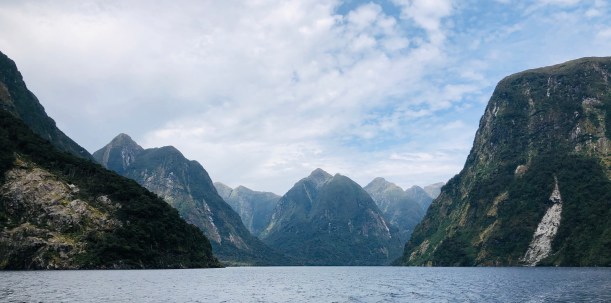
On to the Deep South for more mountains, stunning views, sunshine and sandflies! Our journey will take us from lakes to fiords via winding roads and hundreds of camper vans; in between we will continue our walks and try to get away from the crowds – it is Chinese New Year in addition to normal holidays so the major hubs of Arrowtown and Queenstown are packed and best avoided at peak times. Continue reading →
The next stage of our journey takes us to the South Island. We leave Wellington by ferry, dumping the car, and three and half hours later are in Picton where we collect another. Like everything so far in New Zealand it’s all gone like clockwork, on time, efficiently and with a smile.
View from Te Mata Peak out towards the sea, Hawkes Bay
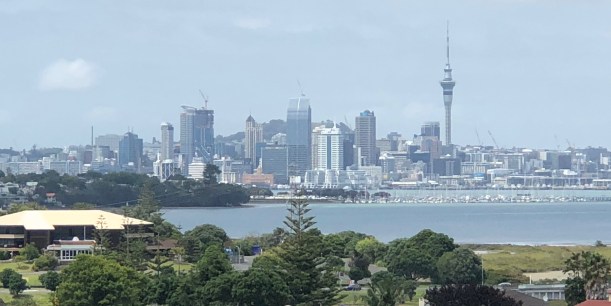
New Year’s Day and it’s time to move on. We board the Waiheke ferry and then head south-eastwards then back up north towards the Coromandel Peninsula. Tommy entertains us with various podcasts to pass the time. When we reach the peninsula we decide to go the scenic route up the west side. Continue reading →
My New Zealand visit starts badly. I am so obsessed by the thought of the rigorous customs police confiscating our Solomon wooden carvings we have brought as gifts that I completely forget the banana I popped into my bag in the lounge, intending to eat it on the flight. Suffice to say, dear reader, I got done and it cost me $400 – ‘no criminal record’ the official says brightly. I have to admit the officials are charm itself – and I just feel a complete fool.
‘A long time ago in Kiri Vongsa’ sings Bunthynn, the United World Schools Education Officer as we set off from Banlung – to the tune of the Bethlehem carol. A jolly start to an adventure! If you want to see a map of our journey click here for a link to Ross’s website. Continue reading →
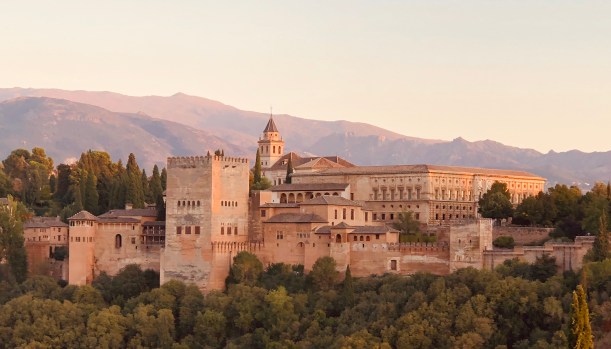
Alhambra in the dying light – see Charles V monstrous carbuncle square box towering over the elegant Islamic buildings
So here we are in Granada, home to Alhambra, which means the Red Fort. It is correct to simply call it Alhambra as ‘al’ means ‘the’ in Arabic. Granada itself is named after the old Jewish settlement, Medina-al-Granata, or Pomegranate City, the fruit being a symbol of fertility, which is said to contain the same number of seeds as the volumes of the Torah. We have a free day to explore before our extortionate tour; still nervous about whether we have been scammed, we are relieved to get a text confirming the meeting time. Phew! Continue reading →
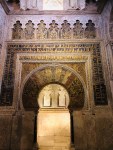
We leave Seville quite late (after our trip to the Alcazar) for Córdoba. On the way we detour to the most extraordinary site, the Madinat Al-Zahra (the shining city) built from 940 AD by the first Caliph of el-Andalus, Abd al Rahman III. Very little remains as, after the fall of the Umayyad Caliphate, the city was ransacked for its stone and marble. It was not excavated until 1911, and now only one-tenth of the site has been revealed. The museum showcases the extraordinary opulence of this period, with carved marble columns, gold ornaments and jewellery, bronzes and ceramic vessels. Continue reading →
At the Plaza de Espagna in Seville with Don Quixote
We have been promising ourselves a trip around the sights of Andalucía for some time and booked it all rather last minute. As it turns out, the experience has been so rich, and we have taken so many photos, that I am forced to divide our week into blogs for each of the three main cities: Seville, Córdoba and Granada. Continue reading →
View out over the vineyards from Chateau Malherbes
This is our fourth visit to the splendiferous Villa du Soleil. This year our hosts JB&C invite our other chums R&C with a brief to come armed with Brexit parodies to the tune of Gilbert & Sullivan…(these can be seen on my Instagram account). As well as a garish shirt competition, it is a tradition to play musical games and quizzes to counteract the effects of copious amounts of rosé. Continue reading →
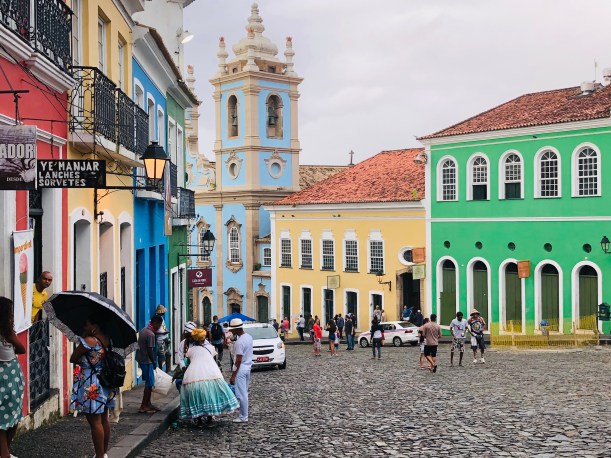
The slave church in the slave market square with a woman in candomble dress
It’s still raining when we arrive in Salvador, Brazil’s former capital, site of the first landing in 1501 by Amerigo Vespucci and centre of the slave trade. It is the most African part of Brazil with 80% of people having African heritage and where traditional African religions survive today with the numerous Candomblé cults. There is even a choir that sings in Yoruba.