vickygoestravelling

my journey to health and well being via exotic destinations


2 Comments

in which we eat lots of yummy food in Taiwan

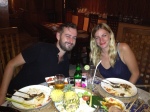
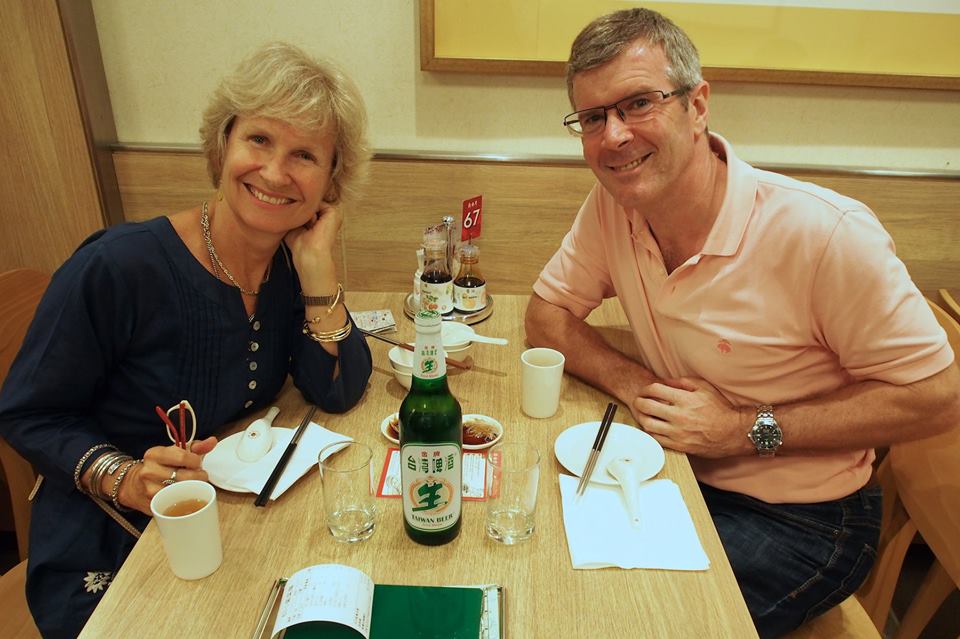
Ross and I at Din Tai Fung

Ross and I at Din Tai Fung

Food glorious food! Singaporeans come to Taiwan just to eat, and having spent a week there, I understand why! And it’s not only visitors who love to eat – it’s the locals too – every day there were hundreds of Taiwanese queuing for afternoon tea in our hotel, renowned for its tea-time spread, not tea as we know it by the way; and the breakfast buffet mirrored that. Delicate, slim, bejewelled and perfectly-groomed business ladies, piled their plates high course after course. One morning this tiny woman put away 6 slices of papaya, a mound of deep fried fish, a pile of beef and green vegetables, then topped it all with some french pancakes, swathed in syrup…A kinder person than I said perhaps that was her meal for the day!

How to cram so much taste into a blog is a challenge, so here goes….

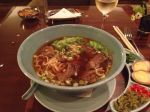
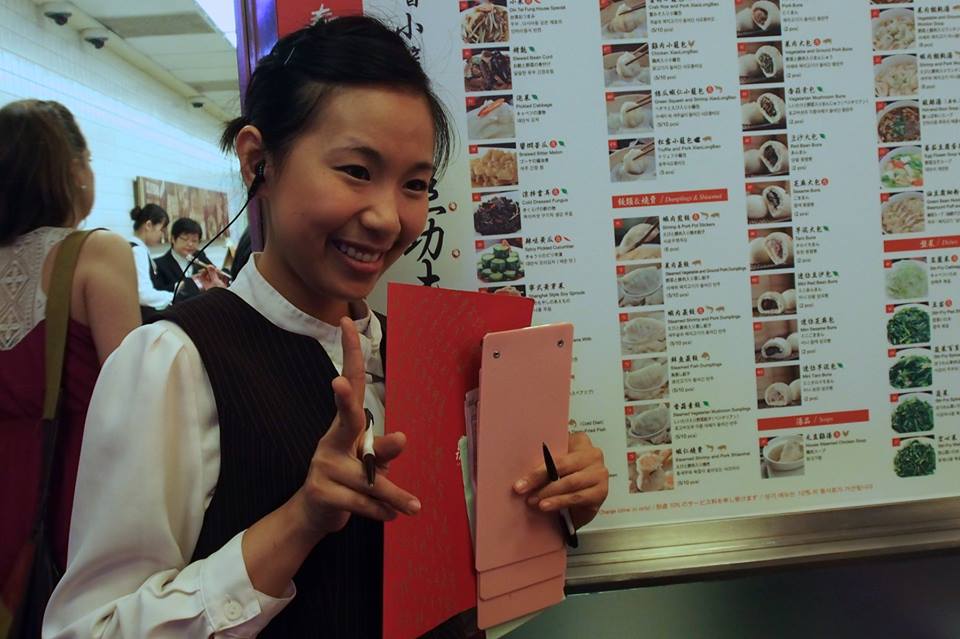
First stop was Din Tai Fung’s original Taipei restaurant which has set the benchmark for all its outposts including in Singapore. We were welcomed by a gorgeous girl, who advised on our (poor), choices, steering us to the favourites, Xiaolongbao, or pork dumplings. Din Tai Fung 1Despite the formica table tops and the 1950s original decor, we had a fine feast. A great welcome to Taipei.
The next-door restaurant, Kaochi, recommended by the hotel, was much less good, despite the benefit of numbers, expert local advice and fluent Mandarin, as we went with Ross’s team from Novartis. It was the only time in Taipei that we had poor service, with rather un-charming waiting staff and indifferent food – the big seafood stew/steam boat was insipid and the deep fried prawns decidedly soggy. The drunken chicken, a local specialty, was cold and rather disgusting. Oh well…

Looks good at Kaochi, but...

Looks good at Kaochi, but…

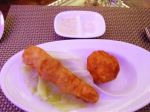
Another recommendation by the hotel was far more successful: rather exhausted by a long day out, we asked for a local seafood restaurant and were directed round the corner (next to the Welcome hotel if anyone tries to find it) to a family restaurant where we had a fragrantly flavoured steamed pomfret with a squid, and a mushroom and basil stir-fry – the squid was crispy and smoky and the mushrooms dried and pungent. We noticed, as the other customers left, they all had ‘carry-outs’ – and not left-overs. Inquiry revealed this restaurant specialised in selling bags of dried anchovies, which I found on sale later in Chiufen. Another local delicacy, obviously.

steamed pomfret

steamed pomfret

stir-fried squid with mushrooms and basil

stir-fried squid with mushrooms and basil

But venturing out on our own, whether to Tamshui where, although we didn’t eat (having had an indifferent self-service lunch at the Ju Ming museum), we came and saw the locals enjoying a grand day out.
the century eggs...

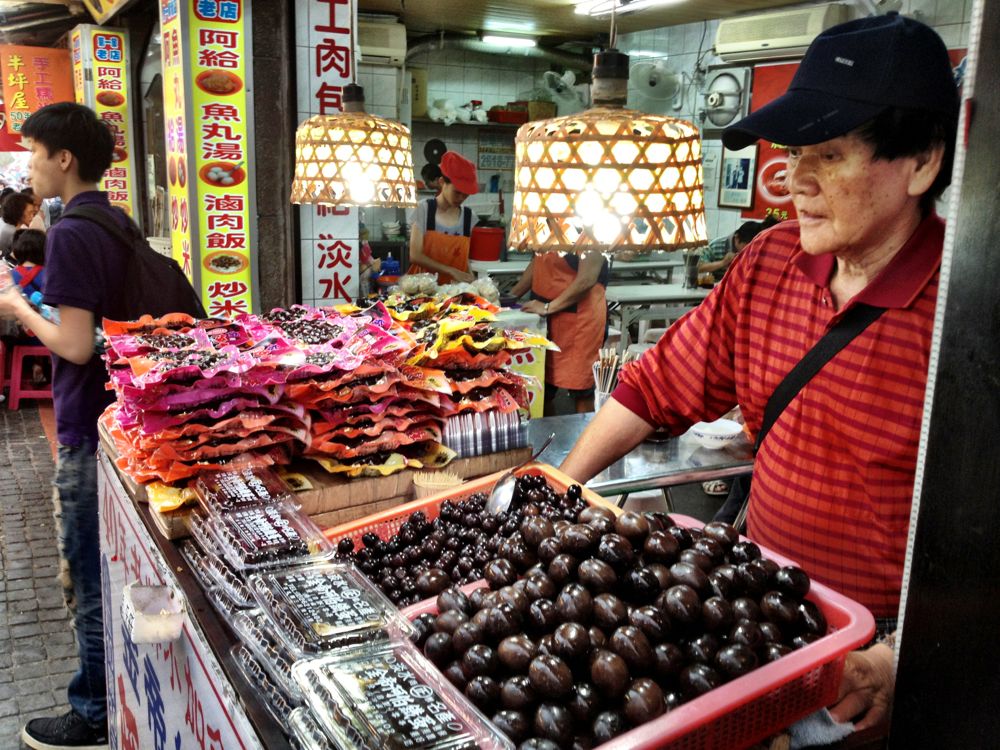
the century eggs…

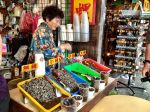
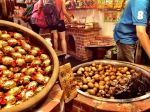
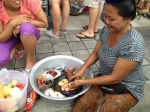
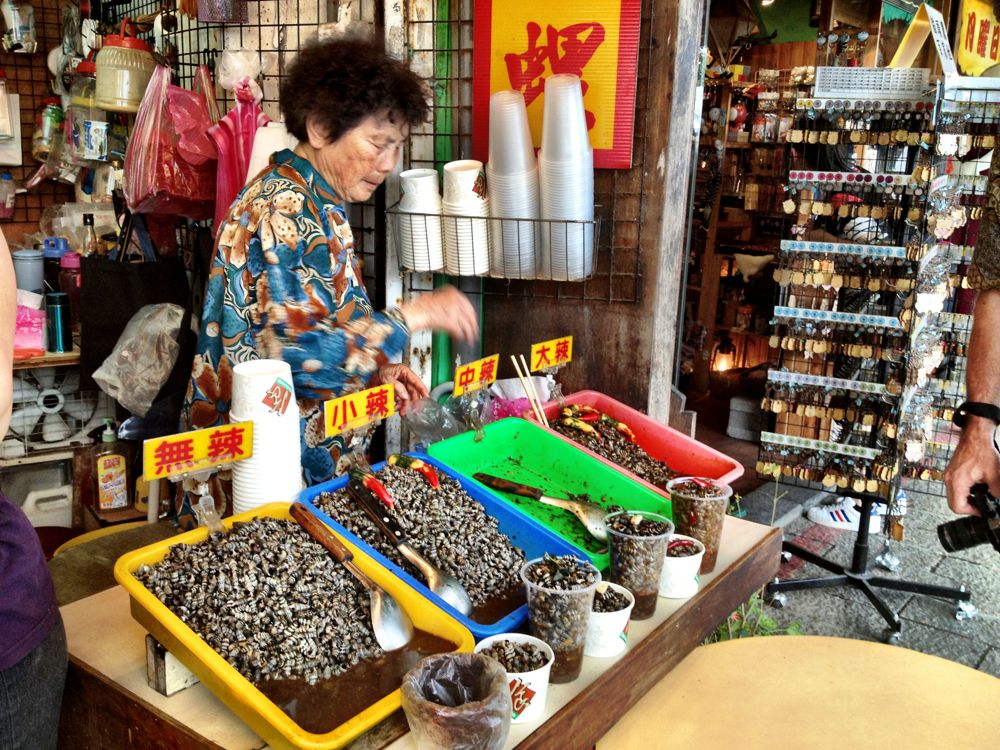
The local specialities are the century eggs, seen here, and some rather disgusting looking snails, being bought by the cup.
Taiwanese Molly Malone...

Taiwanese Molly Malone…

The Taiwanese have a very sweet tooth, and here we found a stall selling a wide variety of nougat in all sorts of hues. It felt like a feast day, but I guess Sunday is always like this, crowded streets and families all enjoying themselves.

Nougat ahoy!

Nougat ahoy!

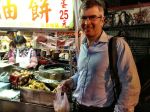
Taiwan is of course renowned for its Night Markets and street food. One rainy evening we ventured out by MRT, Taiwan’s super-efficient metro system, to visit Shihlin, the most famous night market of all. Our colleagues were surprised we were going there to EAT; they had gone simply for a post-prandial shop, but as shopping is generally low on my agenda (although I did come away with a US$5 Longchamp rip-off, which is almost perfect), it was the food we were most interested in.

The safe BBQ stall, pork wrapped around broccoli and squid, all cut up and placed in a  bag with chilli sauce

The safe BBQ stall, pork wrapped around broccoli and squid, all cut up and placed in a bag with chilli sauce

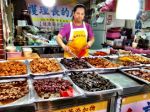
Bowled over by the garish amounts of junk on display – shop upon shop of cheap clothing, shoes and bags – we finally found the food stalls. Untrue to say it was a tantalising array as we were nauseated by the most terrible smell, which we worried was of fat rancid from over-use, so were stuck (after one misadventure, a greasy deep-fried egg in batter thing that Ross ate) to BBQ squid and pork, and a safer-looking pork bun. we later found out that the smell was stinky tofu ‘tasted better than it smells’. Ha!
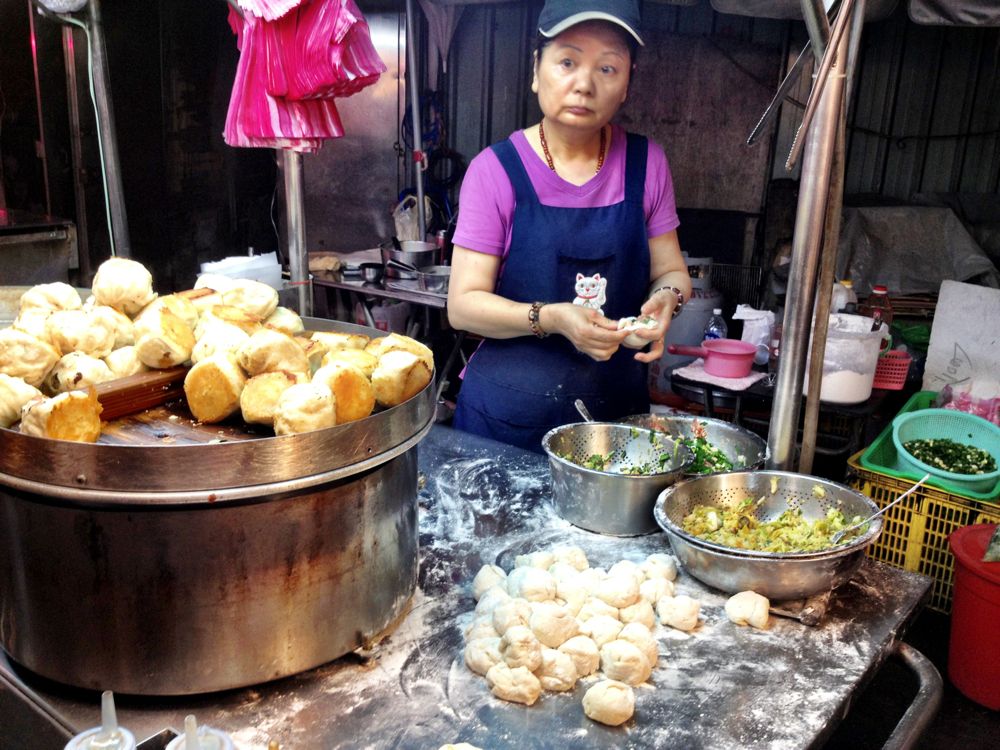
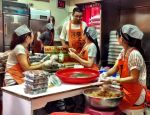
The safe pork bun stall - here we see her making them. Delicious!

The safe pork bun stall – here we see her making them. Delicious!

And of course, as in any Chinese food market there are what I call the unmentionables, which we always steer clear of. If you dont recognise it, dont eat it.
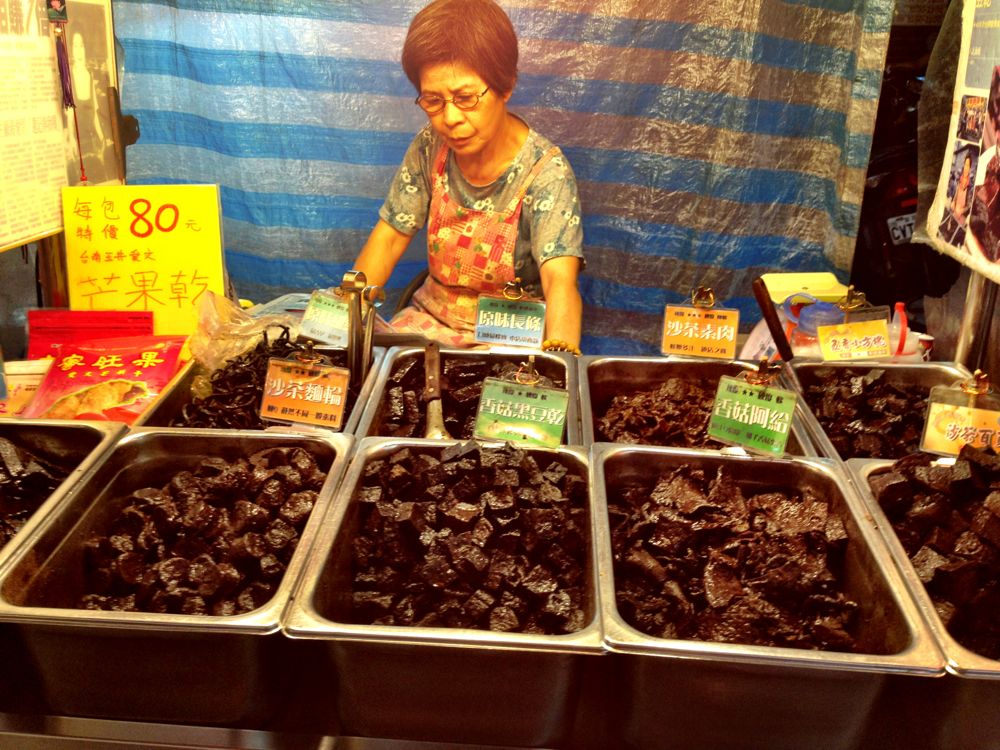
This is the largest assortment of innards I have seen for a while

This is the largest assortment of innards I have seen for a while

Another favourite place for local delicacies is the Chiufen ‘old’ street market; to some extent this is a tourist area, served by hundreds of buses containing visitors from the PRC,

raw pork buns on sale

raw pork buns on sale

but like the Taiwanese, they love buying the sweetmeats that are made here, especially the pineapple cake. I bought some oolong tea at a fraction of the price I saw later at the airport
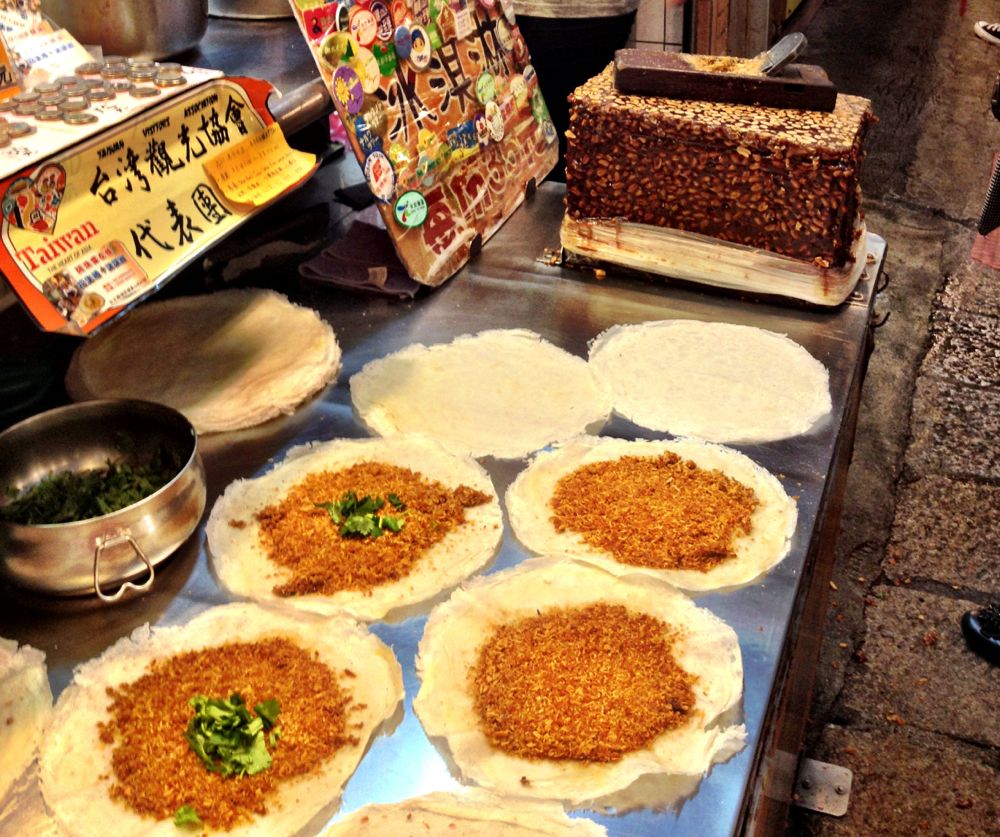
peanut brittle is shaved and put into crispy pancakes

peanut brittle is shaved and put into crispy pancakes

Specialities here included yam, taro and sweet potato dumplings with red bean sauce (not for me as I don’t have a sweet tooth) and row upon row of raw pork buns which people buy to take home. I was hungry but could not find anything I recognised so missed lunch!

Taro, yam and sweet potato dumplings

Taro, yam and sweet potato dumplings

I know its unadventurous, but do remember I was a vegetarian for a long time and remain squeamish, especially in Chinese cultures where organic and animal-friendly rearing are unknown phrases. Shark fin is ubiquitous here, as are tanks full of the most enormous groupers, lobsters, crabs and even octopus.

Taipei 101 grand dining room

Taipei 101 grand dining room

So from the cheap to the the lavish – a banquet at Taipei 101. The second tallest building in the world – and the tallest before the Burj al Arab – we simply had to go. The only way to avoid the massive queues to get to the top is to have meal, admittedly at NT$ 1960, excluding wine, not the cheapest, but US$50 for a 9 course feast is not that bad frankly, and all in a art deco dining room, resplendent with Wedgwood and Noritake chinaware, chandeliers and an 86th floor view.

View from Taipei 101

View from Taipei 101

Annoyingly the menu came on an iPad which even the waitress, complete with mask – always a bit off-putting as not only could we not read the menu but we couldn’t understand a word she said – could not work, so we took the easy option and plumped for the set menu.
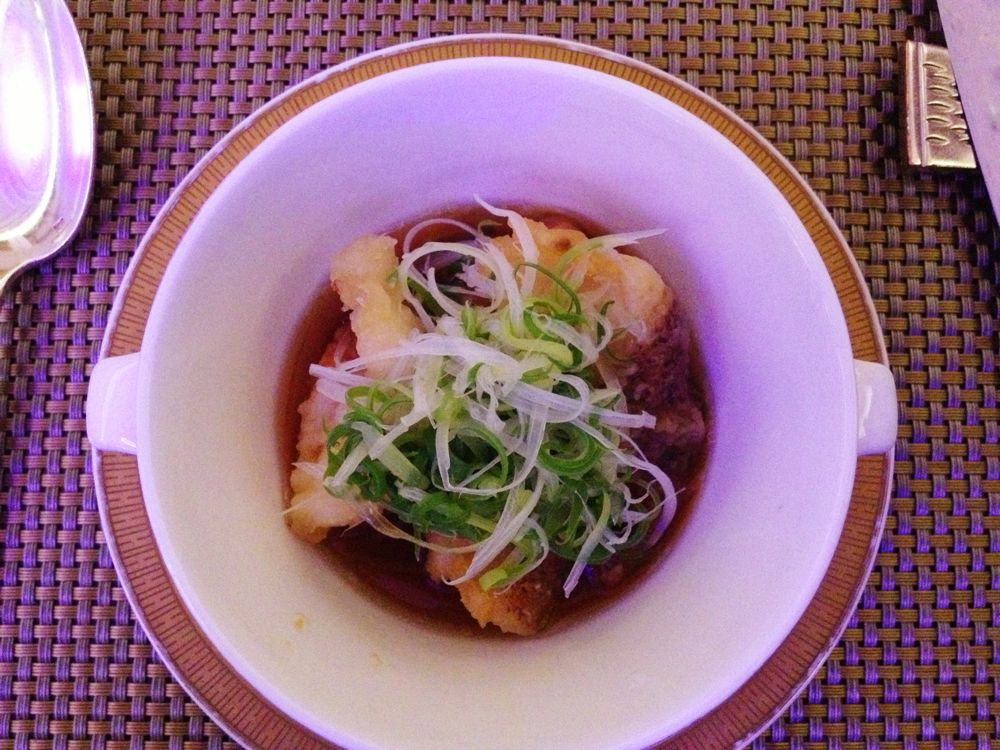
Grouper at 101

Grouper at 101

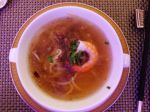
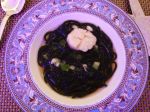
Scallop with seaweed noodles

Scallop with seaweed noodles

It may not have been exactly what I would have chosen, but it was all good and worth every penny for the ambiance.

Replete after 9 courses and a bottle of La Postolle sauv blanc - well-priced for the record

Replete after 9 courses and a bottle of La Postalle sauv blanc – well-priced for the record

But perhaps the highlights of our trip were dining with Ross’s colleagues – not only for the camaraderie, but also for their expertise. On the last evening to celebrate the end of the job, we were taken to Taipei’s ‘in’ place, Ding Wang Spicy Hotpot.

Ross and Jennifer watching the expert adding to the hot pot

Ross and Jennifer watching the expert adding to the hot pot

Here you can have a shared seafood/veg broth and a meat one, spicy, robustly flavoured with duck’s blood – and yes I did try that (rather like liver in fact); you then choose your added ingredients, ranging from tofu and bean curd, to scallops, abalone, calamari, crab and fish balls, slices of meat and so on, finishing off with some fresh veg at the end.
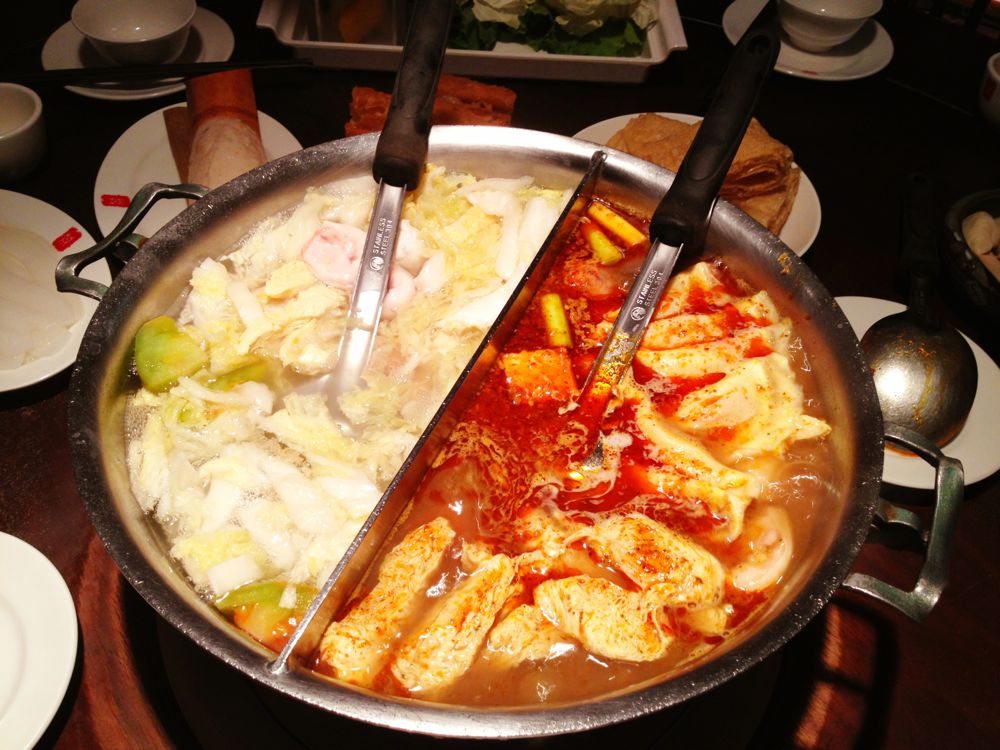
Ding Tang hot pot

Ding Wang hot pot

The principle is the same as for fondue. It was delicious, although I do prefer the more fragrant Cambodian variety – lemon grass, fresh herbs, mint and lime leaves as predominant flavours in oriental cooking.

making the crispy bread - rather like a tandoor

making the crispy bread – rather like a tandoor

The last breakfast was just round the corner, Ku Hang, up some stairs and typically Taiwanese. Great bowls of sweet soya bean milk (rather like baby rice, so not very nice!) and a salty bean curd porridge, with crispy soya bean (better), but best were the delicious home-made crispy rolls, some with onions, some halved with fried eggs plopped in the middle, and egg pancakes.
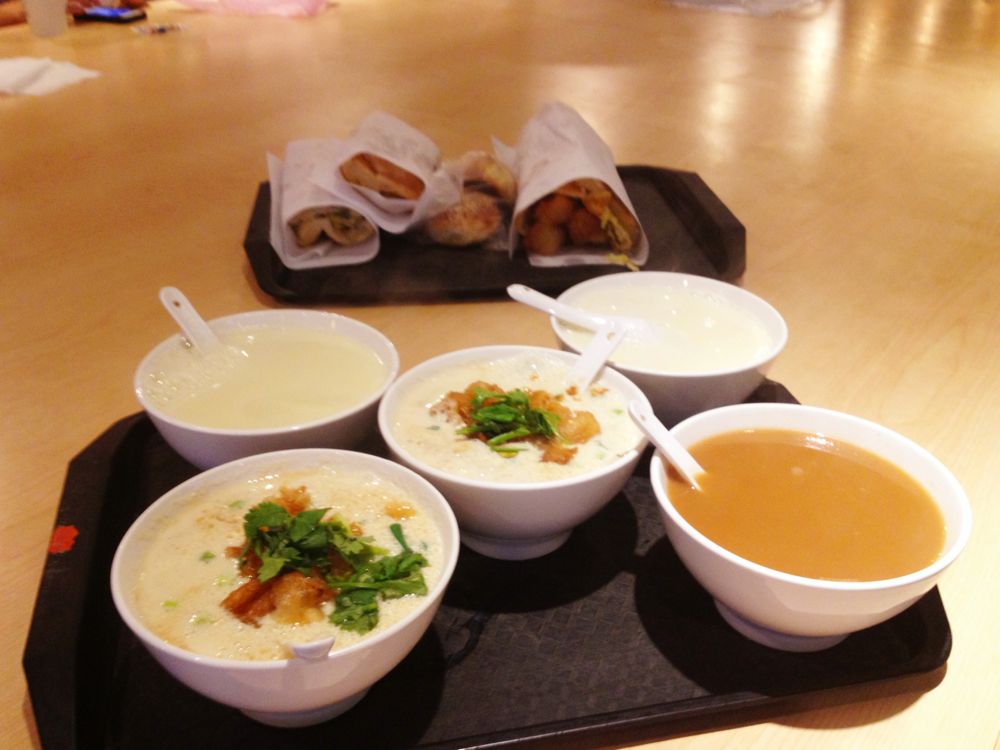
Breakfast Taipei style

Breakfast Taipei style

Normally queues snake out the door but today (we were good and early) we only had to queue for a few minutes.

A fine end to a gastronomic journey.

Ross with Sean (left) and Han Wei (right)

Ross with Sean (left) and Han Wei (right)


Leave a comment

in which we visit Taiwan (part 2) and I go solo

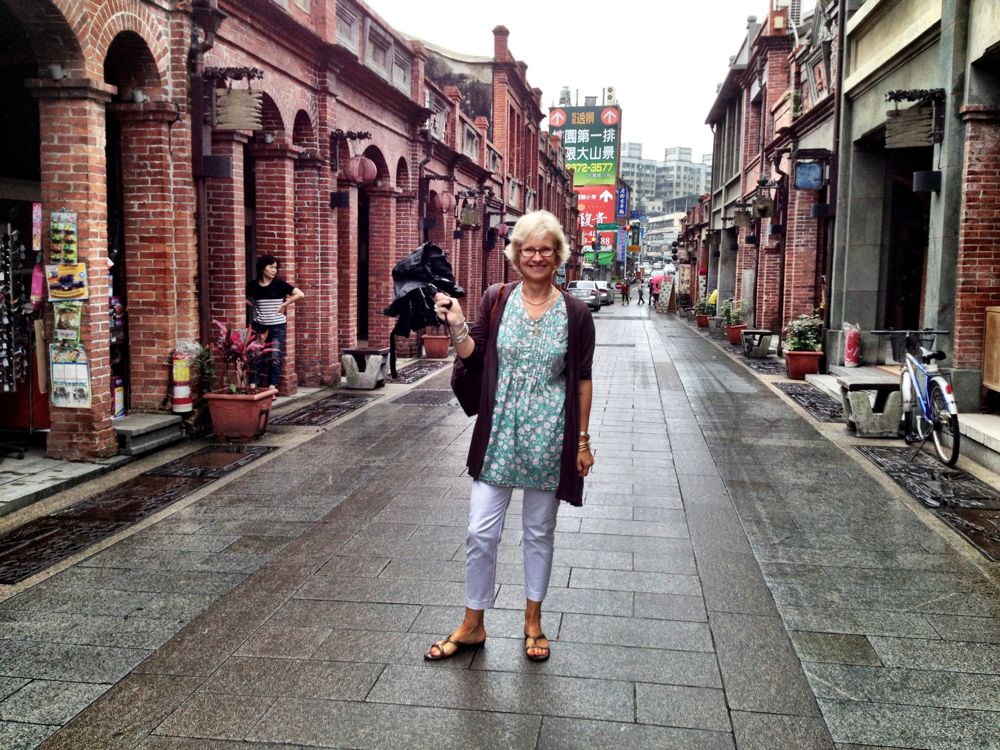
in Sanhsia 'old street

in Sanhsia ‘old street

Being accompanying spouse this week meant I had a lot of time on my hands. Undaunted by my previous solo forays, I booked a couple of tours to while away the time in between reading and cataloguing my mother’s letters (by the way we have reached 1957, and I am born to much excitement after 11 years of marriage).

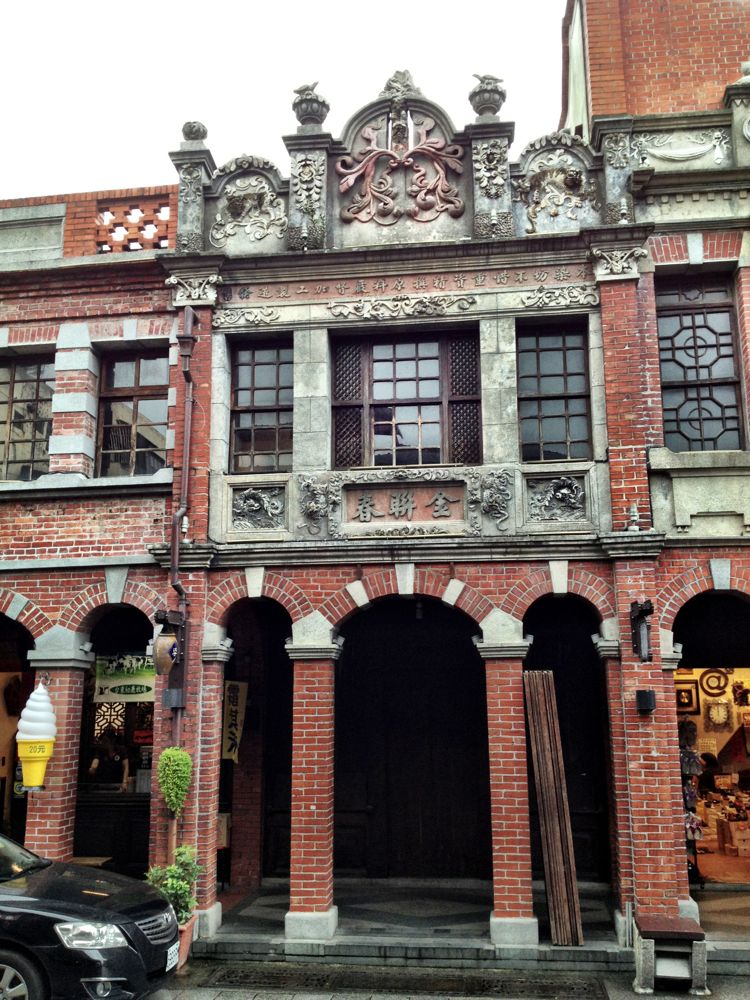
Taiwan part2_02

turn of 19 century house, Sanhsia

I hit gold on the first outing, and had W all to myself. W, who in the temple as we were looking at our Zodiac signs – being 55, I was a pig, asked, ‘Am I 46 or 58?’ ‘Oh 46,’said I gallantly. ‘Heh heh,’ he chortles ‘ 58, dye my hair yesterday’. Such a character, and 12th generation Taiwanese.

Sitting beside him in the front seat I was privileged to learn much about Taiwan, its people and its politics. How the KMT, despite winning the last election (by a slim margin) is very disliked – the President only has 13% popularity rating – and they only got in because many businessmen with interests in China told their workers to vote KMT, whose mantra is ‘One China’. The fiercely independent original Taiwanese do not want to become a province of China – this is after all how they feel the world considers them, as they are not recognised in the UN.

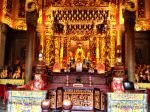
Sanhsia Tsushih Temple

Sanhsia Tsushih Temple

The current trouble with the Philippines has exacerbated this sense of isolation – Aquino is treating them as an unimportant scion of the greater power, hence the Taiwanese aggression: ‘We should fight them, we have armies and weapons’, says W. After the war many – doctors and teachers especially – went to Japan rather than live under the KMT yoke.

As part of this One China campaign, the government opened up travel to Taiwan two years ago – every day 6000 Chinese come in by plane. The Taiwanese fear this is another means of the PRC trying to control their economy.

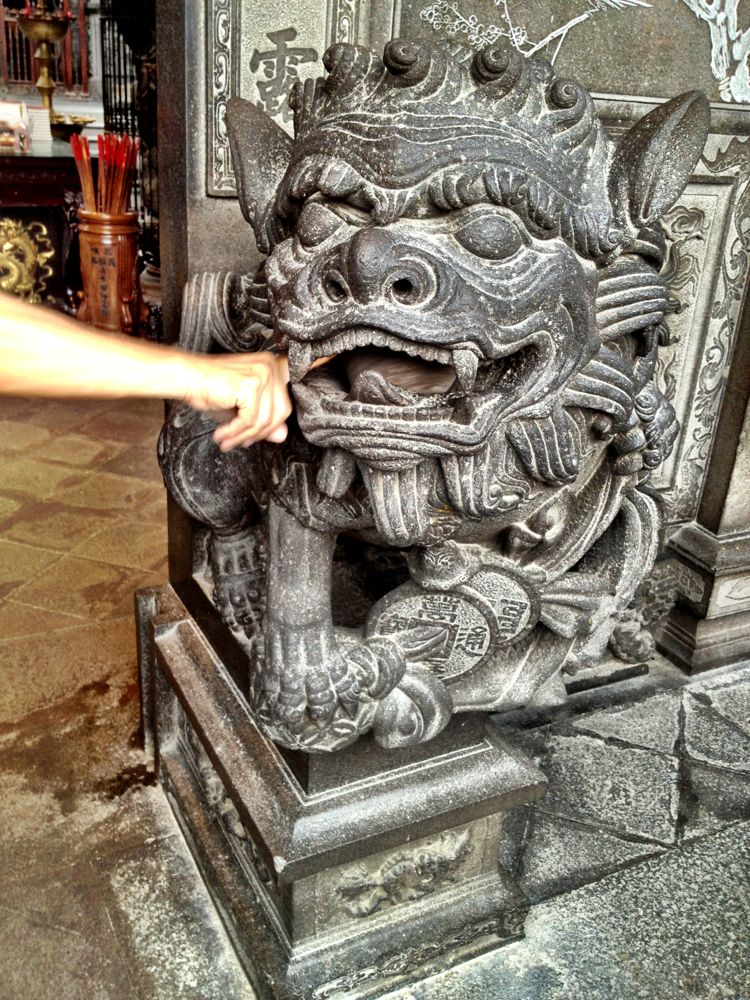
Carved temple guardian - even ball in his mouth is from one piece of stone

Carved temple guardian – even ball in his mouth is from one piece of stone

Apart from the Chinese en masse having few manners – as I had noticed already, see Taiwan part 1 – some of the tour operators have also upset the locals by not paying their bills, so it’s a cash only basis now! Another great injustice, in Taiwanese eyes, is the $30,000 per month paid to Chinese students to study here. This does seem outrageous, as Taiwanese students get nothing

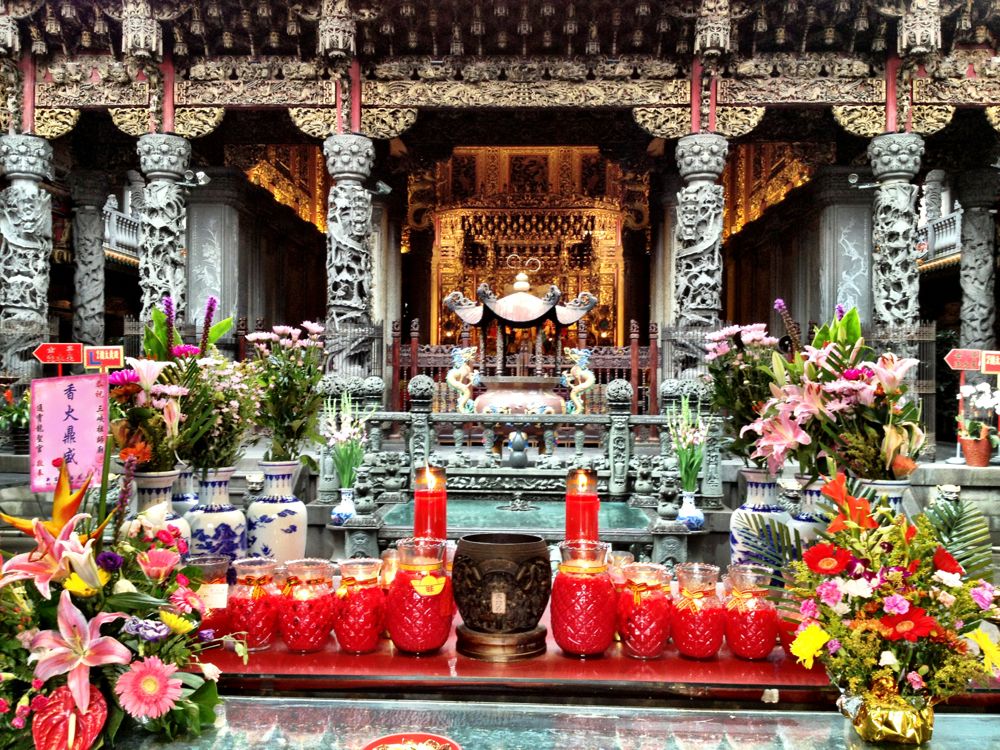
Our objective was Sanhsia, home to an old Ming dynasty Taoist temple, made from elaborately carved stone and camphor wood, and one of the last remaining ‘old’ streets in Taiwan, now cleaned up and kitted out for tourists, but uncharacteristically tastefully so. W told me a lovely story about an Afro-American woman, who worked in a restaurant in the US, and who had a regular Taiwanese customer, to whom she always gave extra large servings. Eventually he asked her why she did this. ‘Oh, when I visited Taiwan and all the temples I was thrilled to find it is the only place in the world where the Gods are Black.’ ‘And it’s true’, exclaimed W ‘they are Black, but only because all the incense has made them so!’

The yellow paint is where the gold will go later

The yellow paint is where the gold will go later

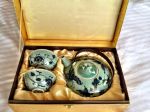
Next stop a porcelain factory and showroom, where I meet the artists who decorate the vases with elaborate designs, including in gold imported from Germany, and learn about the various firings that result in the high quality ware that is on display. Inspired by the National Palace museum exhibits, I am thrilled to find some modern day celadon ware and buy a teapot and matching cups.
The master-craftsman: 30 years

The master-craftsman: 30 years

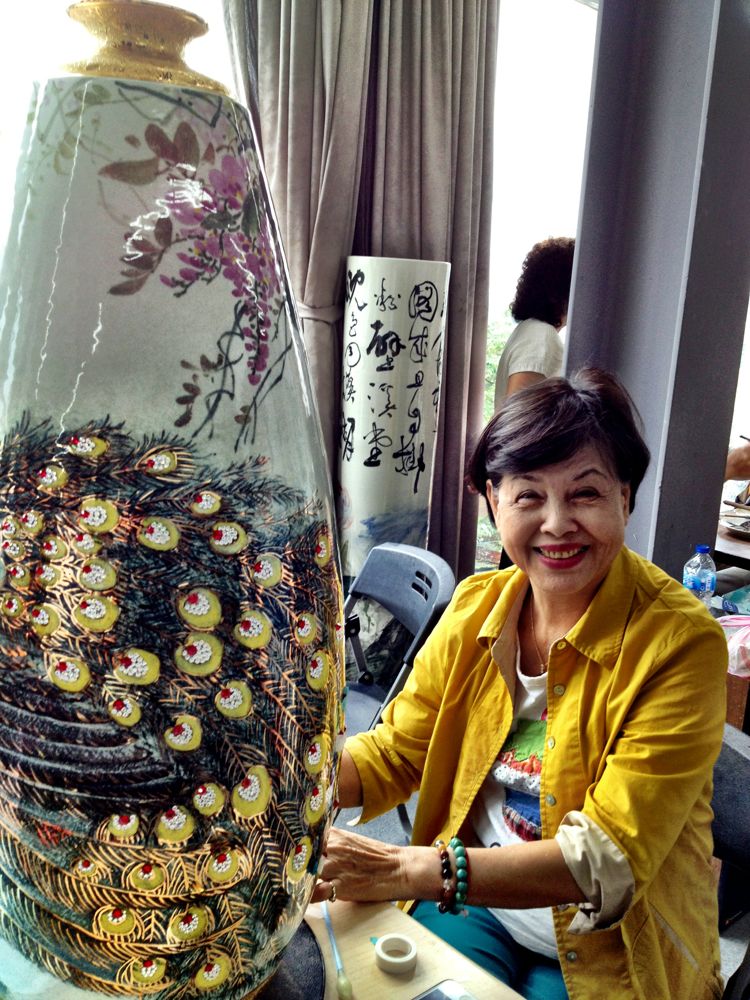
The factory charmingly has a workshop for folk to come and paint their own designs on china, and I meet an engaging 80 year-old who is sticking gold and diamante sequins on to her intricately painted peacock vase.

The 80 year-old, with her gorgeous vase

The 80 year-old, with her gorgeous vase

My tour group by the Nanya rock formations...

My tour group by the Nanya rock formations…

My second tour to the Chiufen Gold Mining Village was interesting in other ways. This time, ironically, I was part of a Chinese tour, although Danny also spoke English and gave briefings for my benefit. Five ladies, two from Singapore, three from PRC and a gay guy: but I worked out that these were more up-market visitors than the normal busloads we meet, as there were no flags or megaphones, and they also spoke a little English.

in the 'old' street at Chiufen

in the ‘old’ street at Chiufen

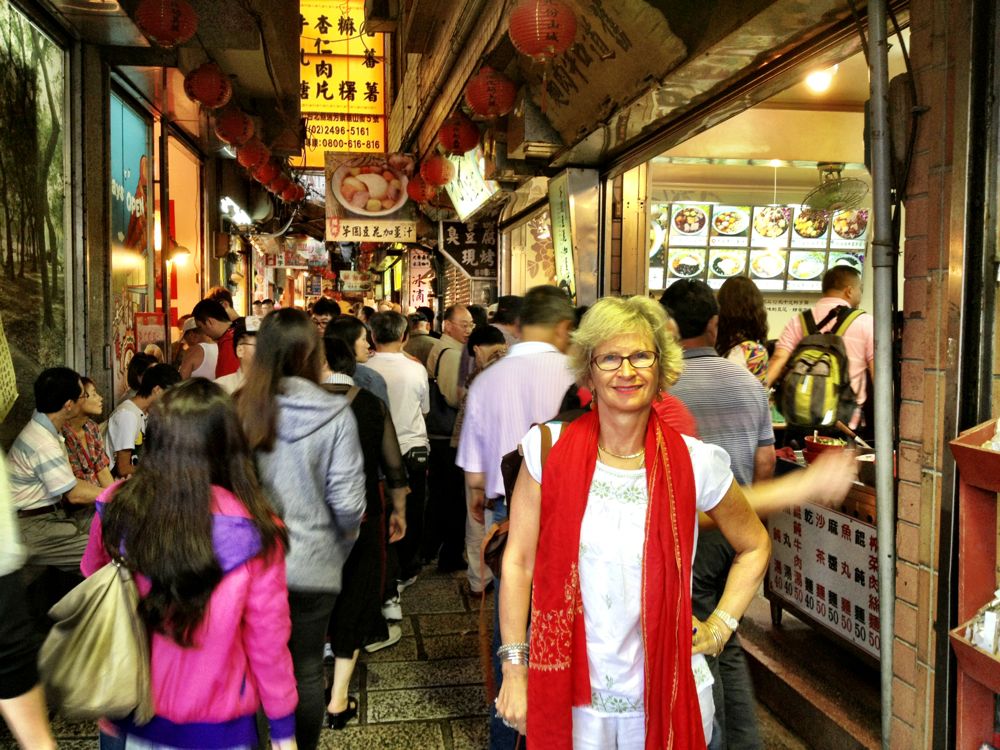
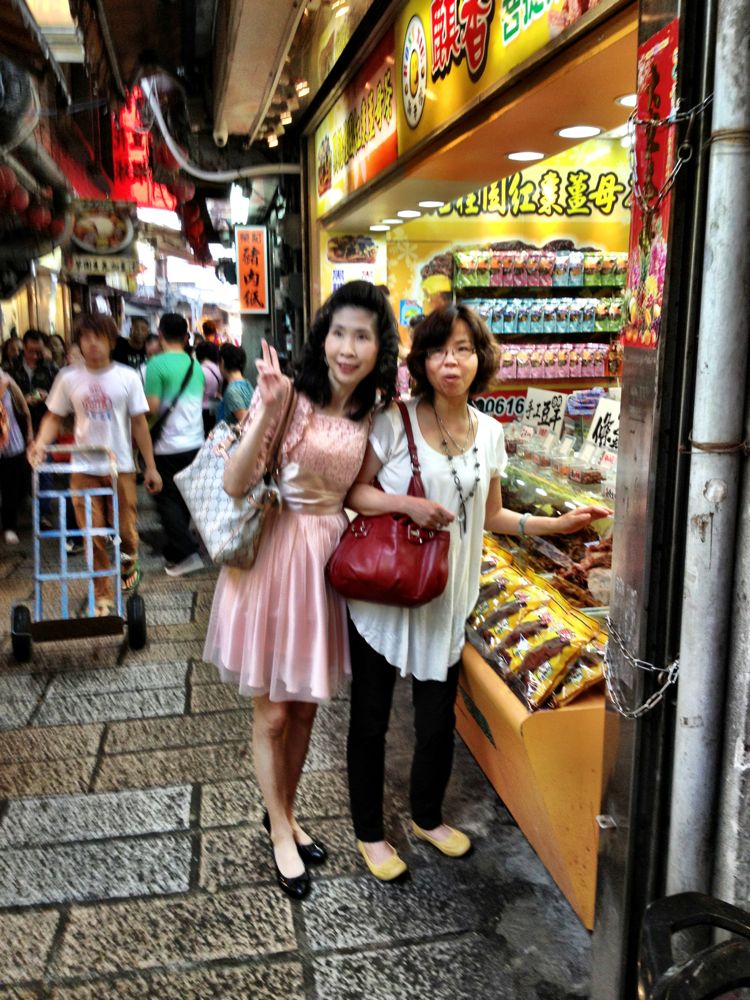
Our route took us to more wretched rock formations, where I was photographed by some ladies from Tamshui, who told me I was ‘beautiful’ – well, that made up for the ‘attraction’, and a couple of uninteresting stops, until we wound up to the old gold-mining village, which boasts a mile-long ‘old’ street, not unlike the Shilin Night Market we had visited the night before, complete with food stalls – contents ranging from disgusting innards to delicious-looking pastries,  and other local delicacies, purveyors of leather and clothes, and a more up-market variety of shop selling oolong tea and nicely wrapped sweetmeats.

Hundres of tourists mill around in Chiufen

Hundres of tourists mill around in Chiufen

Ladies pose in front of sweetmeat stall

Ladies pose in front of sweetmeat stall

Yet again, besieged by hundreds of visitors and many, many tour buses navigating the winding U bends in an alarming manner, horns blaring at poor unsuspecting walkers like me!

In between my tours, I went to the gym which was full of elderly gentlemen exercising, including one old boy who beat his chest in order to emit loud belches! Perhaps it was him I witnessed the next day hawking and spitting in the pool, or perhaps he was the one practicing his putting poolside!

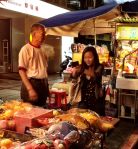
Emperor eggs - as they are and 'gift-wrapped'!

Emperor eggs – as they are and ‘gift-wrapped’!

One thing is certain – and I asked all the chaps in our group, the Taiwanese women are among the most beautiful in the Far East. Many of them are tall and willowy, with long legs, often clad only in the shortest of skirts or hot pants. Paleness is a sign of great beauty here, so many of them have milky-white complexions and are beautifully coiffed and made-up. Sorry, no photos!

In between my adventures I deigned to go out with Ross – to the Shilin Night Market, Taipei 101 and to various eateries, all to be revealed in next blog, for foodies!

People seem to love it here – whether it’s due to the charming people or delicious food I am not sure. Interestingly I was told that, like China, where there are still one-child restrictions, some professional families in Taiwan CHOOSE not to have children as they are so career minded. Not unlike the new breed of Superwoman in Singapore, who choose to remain single. I must investigate all of this further – for another time.

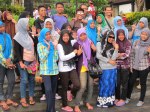
School kids saying Hi! THe ubiquitous 'peace' sign

School kids saying Hi! THe ubiquitous ‘peace’ sign


5 Comments

in which I visit the largest slum in Asia
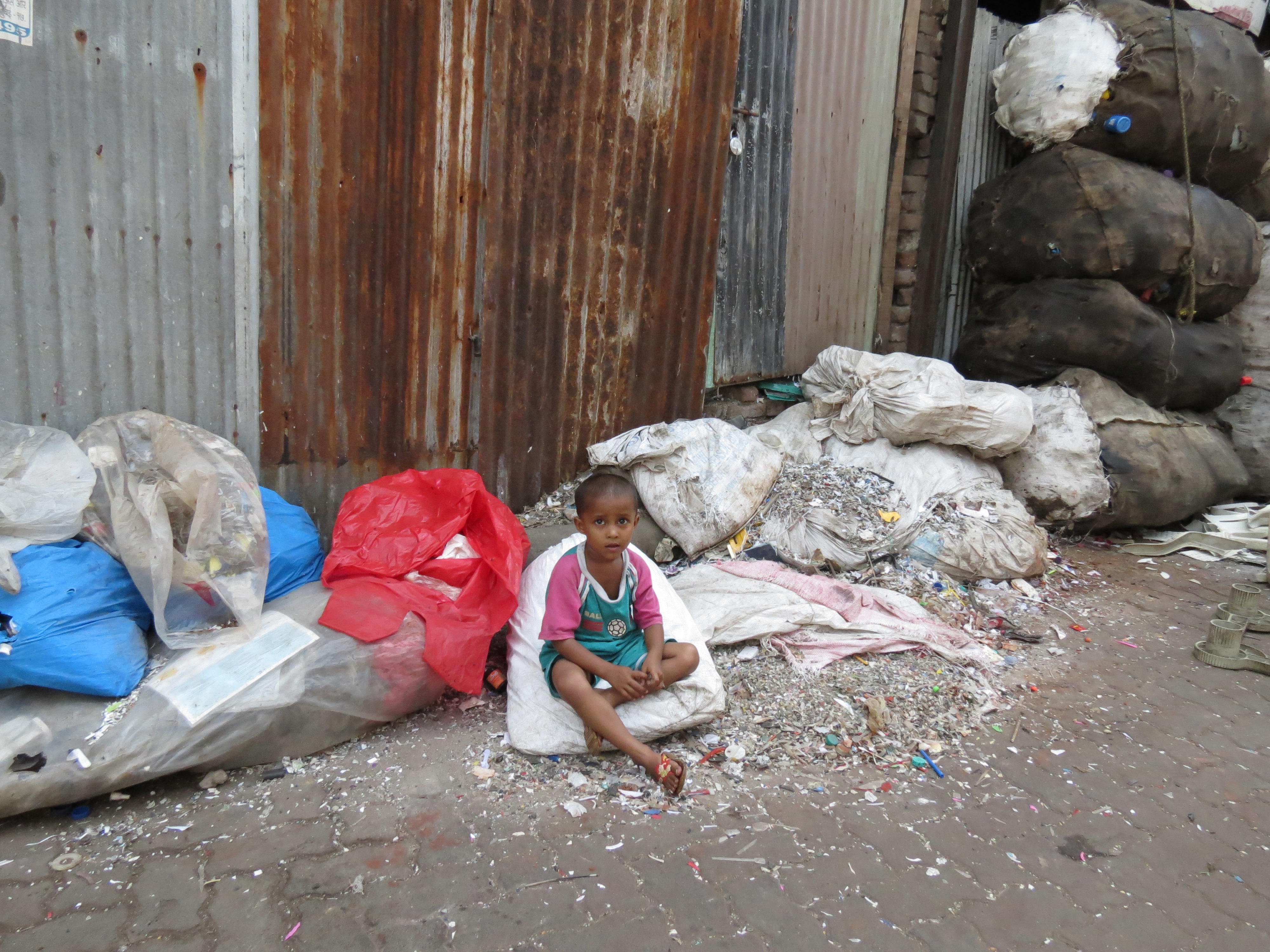
Curious slum child - head shaved for lice
Curious slum child – head shaved for lice
Mumbai is certainly a city of contrasts. From the moment I arrived and saw Katherine Boo’s airport slum as described in Beyond the Beautiful Forevers, it was impossible to escape all the pavement dwellers and beggars. The wretched of the earth, Frantz Fanon called them. It is heartbreaking to see hundreds of people camping on the streets, cooking, eating, sleeping, playing, and even laughing and joking. And yet a recent survey shows that Mumbai is ranked  6th in the world’s billionaire cities, with 26. Probably the richest of these is Amitabh Bachan or ‘AB’ as he is fondly known, who has built the most expensive tower block in the city – just to live in.

AB's monster billion dollar apartment dwarfs everything around it

AB’s monster billion dollar apartment dwarfs everything around it

Then there’s the Bollywood aspect. Everyone is star-struck: queues of people mob Shah Ruck Khan’s house (just below where I stayed at Bandra); he is the most popular star in the world  – his fans run into billions, as does his fortune!

extras - or starlets? - on set

extras – or starlets? – on set

When we came across a film crew on the sea front, the traffic (including us naturally) stopped to see who was there. ‘Ah that’s Abhay Diol – not a big star yet’ observed driver Mehtab, as we were chased away by officious security guards. I think he meant on Shah Ruck Khan scale as his bio reads as a major success story for a 37 year-old!

the sewer that features in Slumdog Millionaire, running out of Dharavi

the sewer that features in Slumdog Millionaire, running out of Dharavi

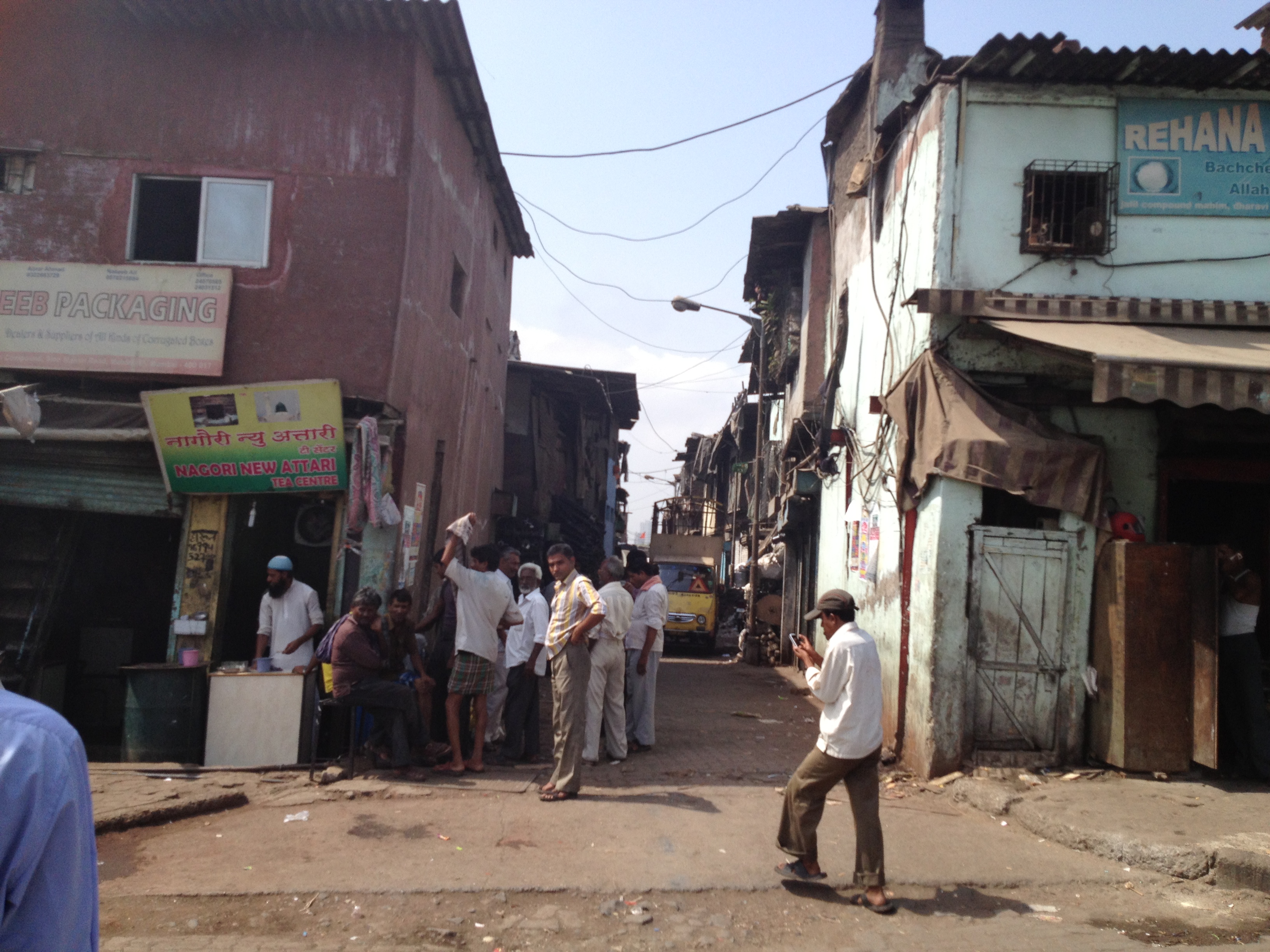
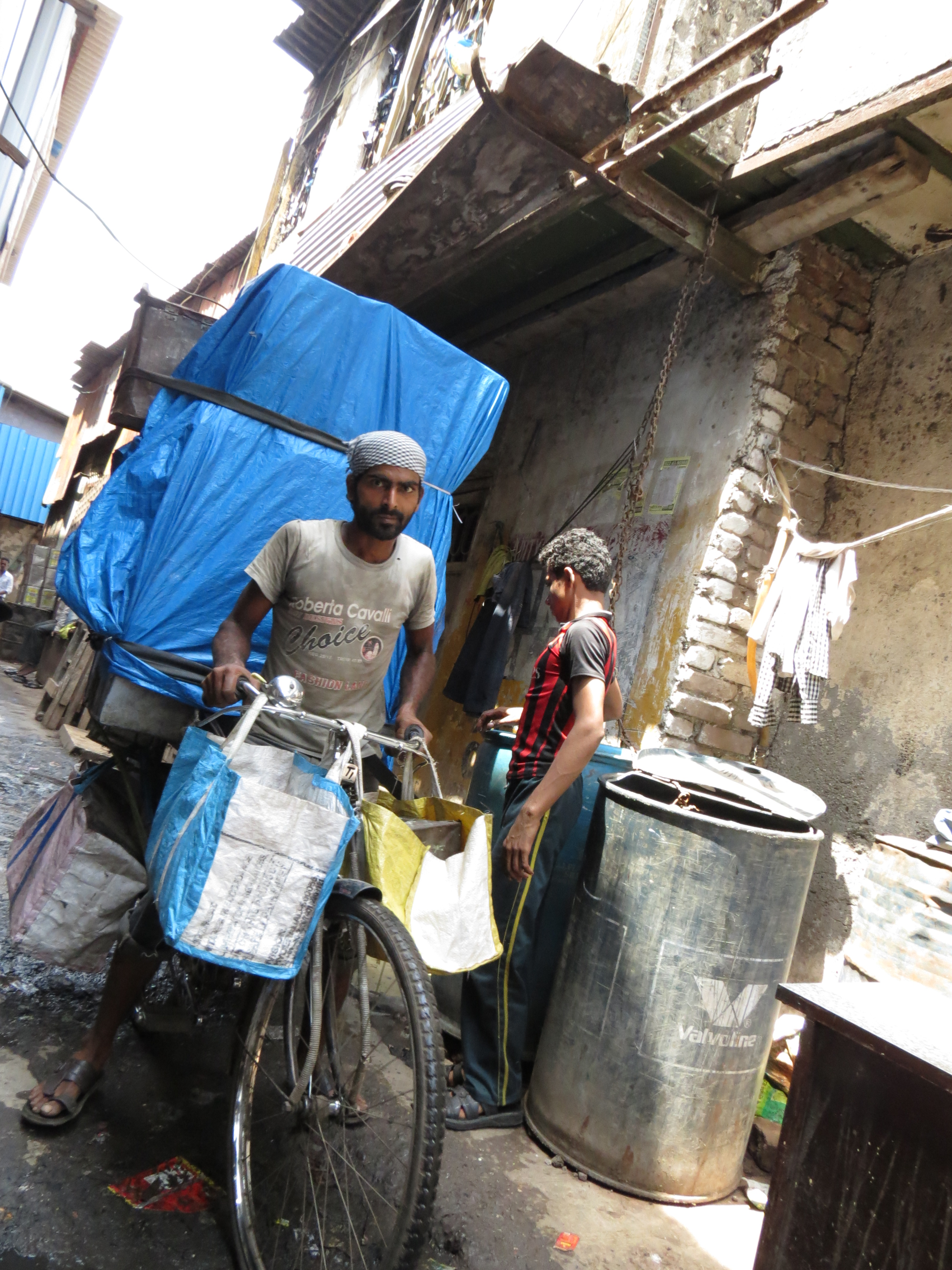
My week in Mumbai would not have been complete without a visit to Dharavi, the largest slum in Asia and where Slumdog Millionaire was filmed. We went with an NGO Reality Gives (www.realitygives.org), who invest 80% of the fees charged into projects to help women and children in particular, to provide schools, medical advice and care (especially on childbirth, birth control and disease). We are allowed into the slum only because we are with the charity – as a result there is a strict no photo policy although friend Cindy as a three-tour veteran is allowed to take surreptitious shots so long as she doesn’t look through the viewfinder…so some of the photos here are taken from waist height and through pot luck!

Deya

Deya

Our 19-year-old guide, Deya has his own sad tale: mother desperately ill and he was being laid off the next week, prior to the monsoon. Life is tough in India.

After an early breakfast at Leopold’s, made famous by Shantaram, we met our fellow visitors, a South African couple, the Butcher of Hermanus and his wife, both died-in-the-wool Afrikaners; totally uneducated and therefore interesting they had chosen to come. Many comparisons all day to Khayelitsha…of a rather superficial nature it has to be said.

the dhobi ghats

the dhobi ghats

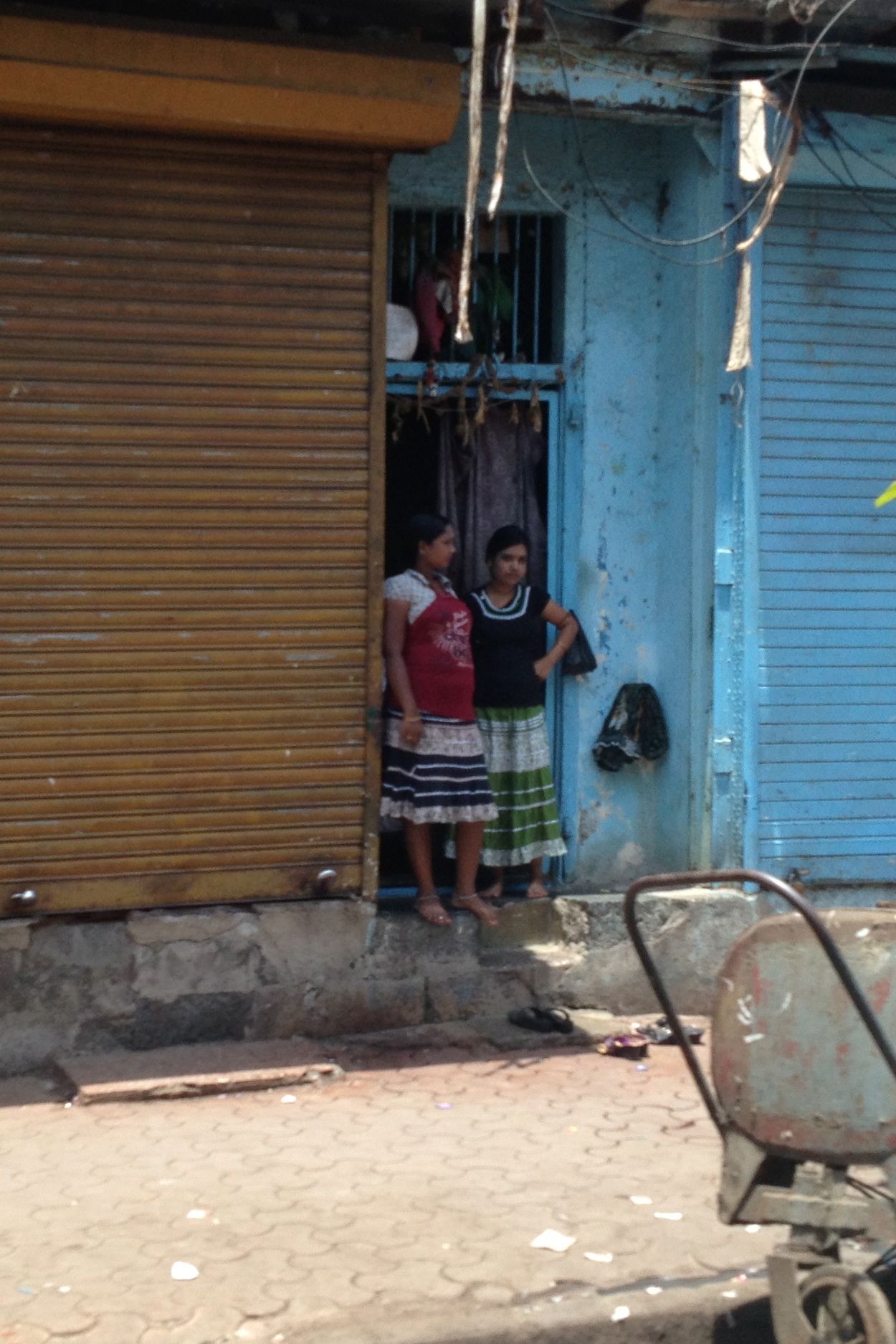
Our route to the slum took us via the dhobi ghats where the city’s laundry is done by 5000 migrant men in tiny booths, earning $3 a day; and the red light district where we craned our necks for prostitutes, obvious through their fancy clothes and heavily-made-up faces. 9 am is a little early for a working girl, however, and those we did see were camera shy.

We learned that a girl is bought for Rupees 30-40,000 and then spends her life trying to repay her buyer with her work. With a fee of as little as Rupees 250 a time it can take forever, and their forever is now about 39 years old. HIV ad AIDS is endemic; we learned from a Canadian woman, who works with their children, that they have had to give up on the mothers as they are simply not interested or able to be helped.

snapped these two shy prostitutes

snapped these two shy prostitutes

But their kids at least have a chance, although once the stigma of being a prostitute’s child is known, they often have to change school.

Deya knew his stuff all right and the facts are incredible. Dharavi is over 170 years old and was built on a mangrove swamp; it covers an area o175 sq km and is home to over 1m people. As 55% of people in Mumbai live in a slum it is not surprising that Dharavi contributes $665m to Mumbai’s productivity a year, thorough 10,000 businesses. How? You might well ask.

Dhravi 133 copy

Plastic being sorted on the roof ready for melting down and being made into tiny beads for re-selling

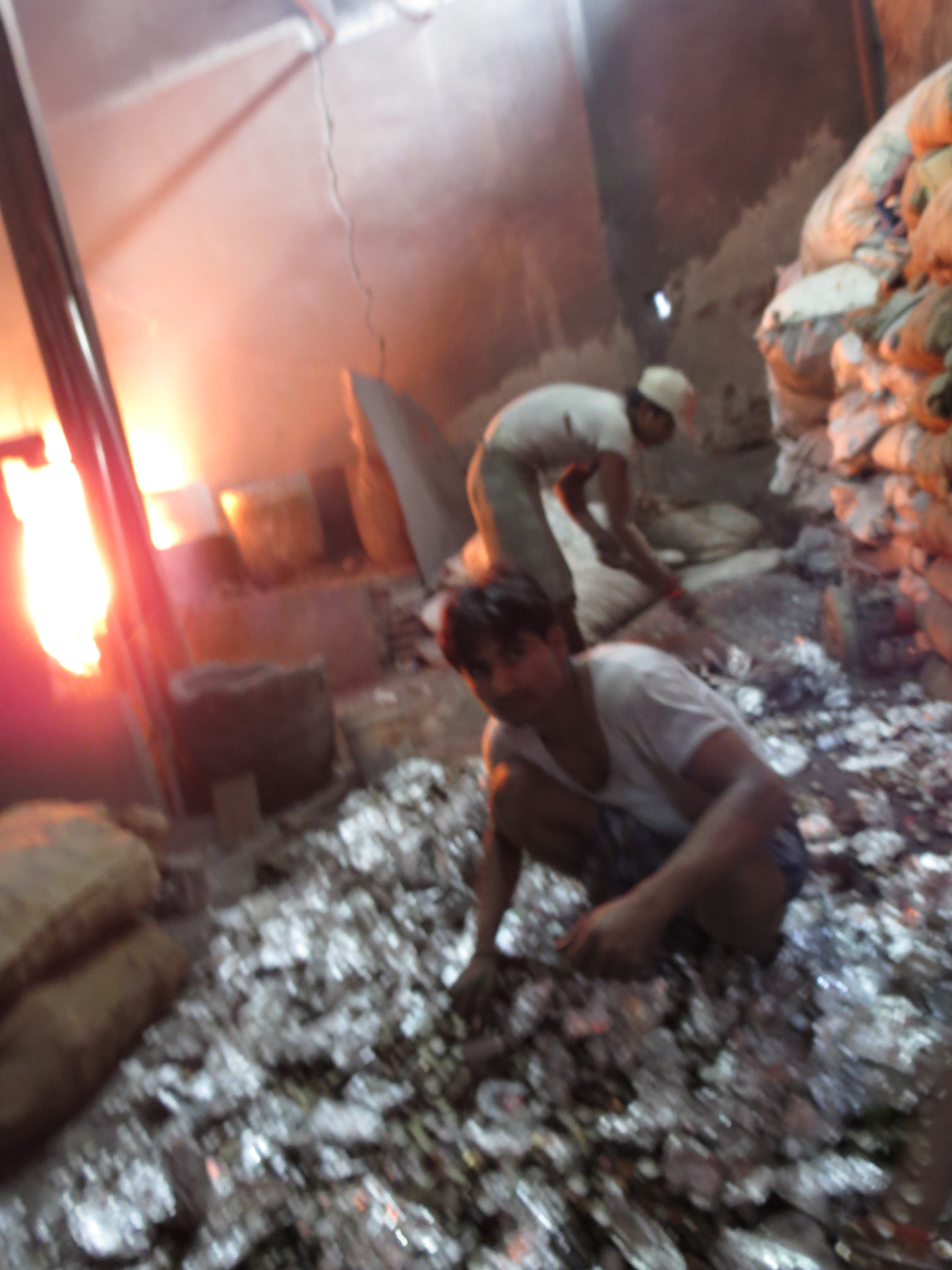
If you have read Boo’s fascinating account of life in the airport slum (Beyond the Beautiful Forevers) you will know that recycling is the key to it all. It seems all Mumbai’s waste (in fact 80% is recycled) arrives in Dharavi – bottle tops and aluminum for smelting in giant vats; plastic – not just bottles, but chairs and large items are made into tiny beads and are put in enormous sacks; paint tins are painstakingly stripped of labels and scrubbed; iron is put in cauldrons over a furnace and is made into ingots. All of this is carried out in dingy, airless rooms, with toxic fumes and no mind to health and safety.

sorting the aluminium

sorting the aluminium

Dhravi 148 copy

Sitting in a sea of plastic recycling

The workers are peasant farmers from Uttar Pradesh who migrate to the slum for 9 months of the year, returning only during the monsoon for planting. They work 12 hours a day, eat and sleep in these cells, leaving only to defecate, either in one of the disgusting public loos, or in the ‘air-conditioned’ toilet in the mangrove swamps. Plastic workers earn $2-3 per day; the iron crushers $4. But with 2012 seeing the worst drought of recent years, these men have little choice if they are to support their families and buy seeds for the planting season. The rate of suicides in agrarian communities caused by debt has never been higher.

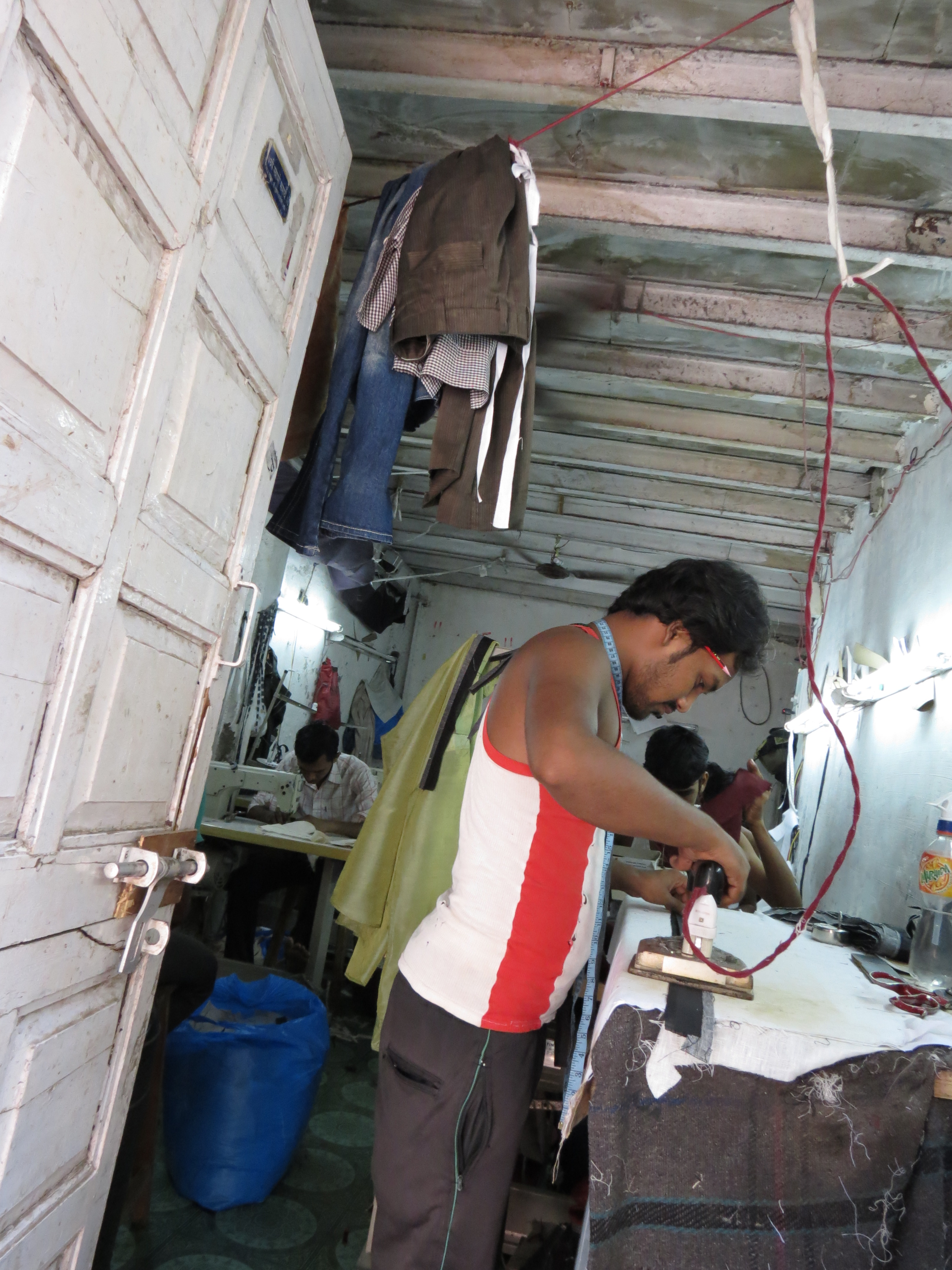
There are other industries too – cloth dyers, potters, tailors and tanners – the largest leather works in India is in Dharavi.

Leaving the industrial area for the domestic quarters seemed like a relief – at least we were not being roasted by open fires and by the sun, which was burning in the high 30s. First we entered the Muslim area, where there were home industries such as bakeries (supplying the whole of India and even exported!) and a disgusting black soap made from unmentionable ingredients judging from the smell. But the streets were narrow, over open sewers and, in some cases, completely dark. Kids were everywhere, including a smiling but severely handicapped boy who reminded us of ET, with bulging eyes and shrivelled legs. He was being lovingly cared for by his older sister.

The elder siblings are often the carers

The elder siblings are often the carers

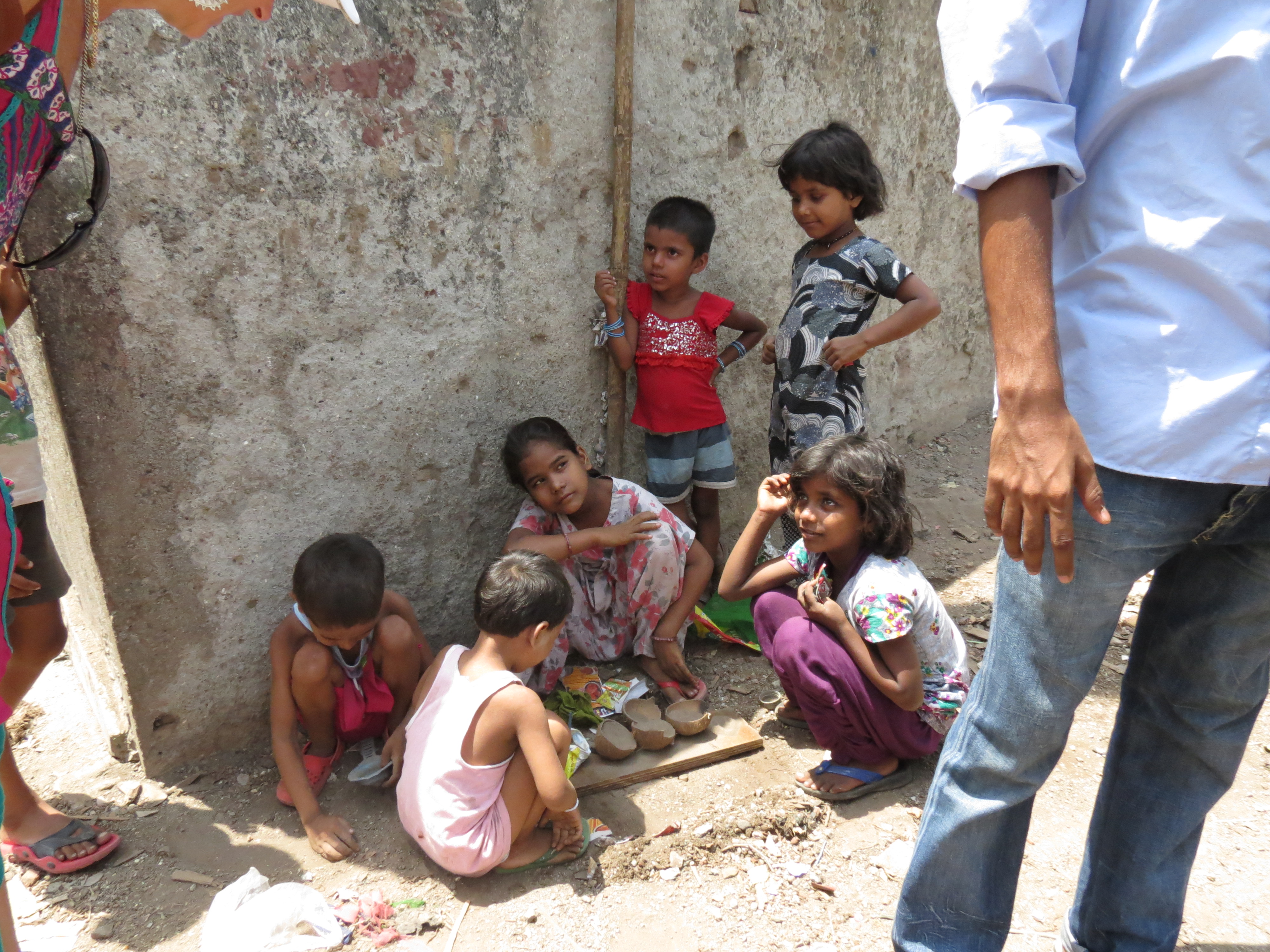
On the odd street corner there was a tiny shop, its plastic glittering in the dark. We wound round and round until we came to an open area – which was in effect a rubbish tip of smouldering, stinking detritus, with young boys playing a boisterous game of cricket and some even younger kids playing shop, making little pies out of dust and piling them high. Facing on to this nightmare were the public loos; the smell was stomach turning.

Dhravi 182 copy

Kids playing ‘shop’ on the stinking rubbish heap

On, on we went, stopping to step over two dead rats, over open sewers, alleys awash with rubbish and stagnant water, pausing by the slaughter house which even the Butcher declined to enter – the smell of rotting and recently killed meat proving too much for him. ‘I don’t actually kill the animals – I only cut them up’, he told us.

Dhravi 171

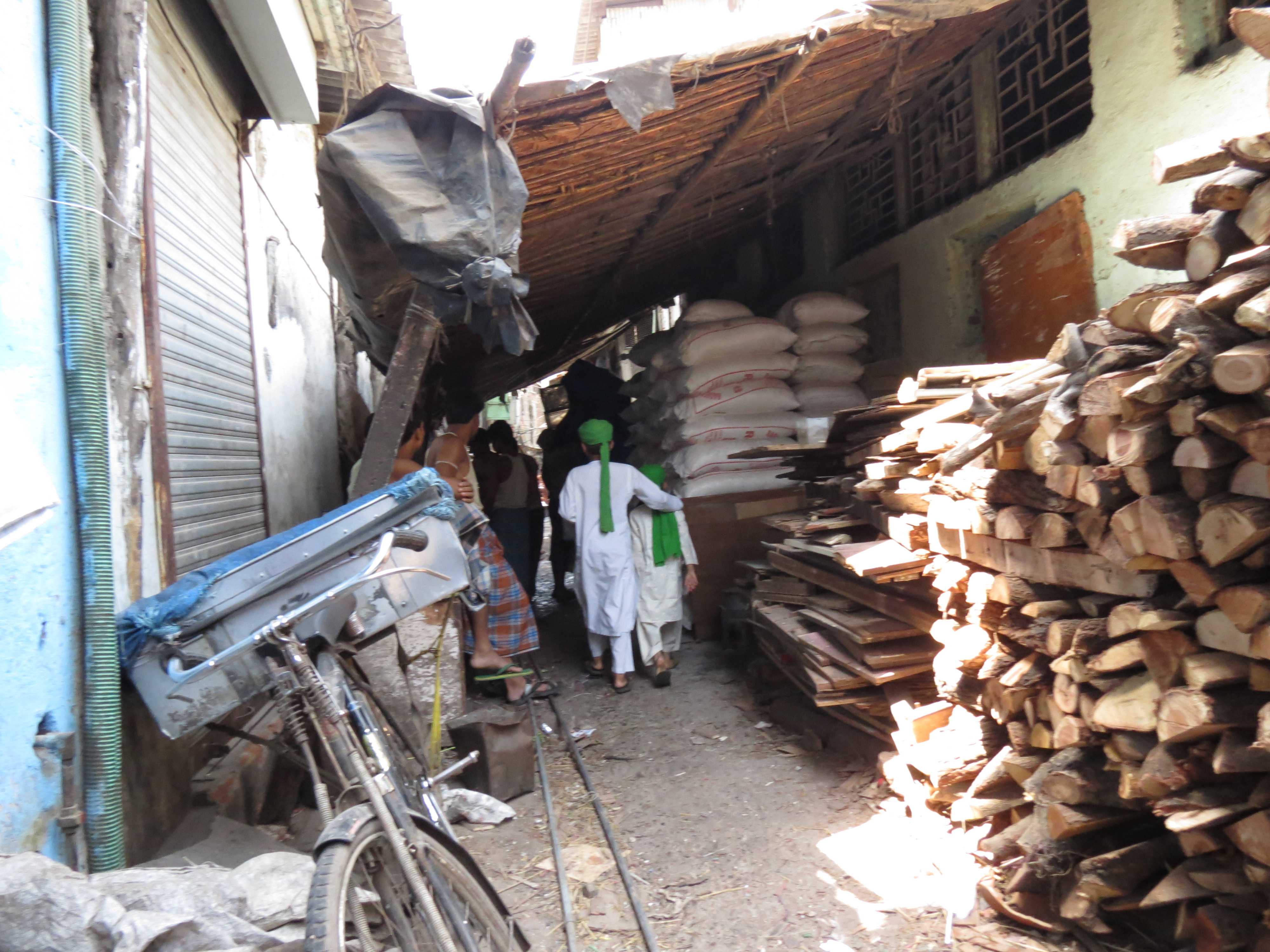
Muslim boys on their way to Friday prayers

Now we were in the Hindu area, houses slightly larger – these are the homes of the millionaires we were told. Larger than the standard 10sq meters, which rent at $60 pm or can be bought for the equivalent of R1m (£12,000), some had several floors. ‘The millionaires are happy here as the authorities don’t come; they don’t pay tax, and they choose to live here because of the sense of community; many have lived here for generations,’ Deya told us. In fact only 4% of the population pays tax, but some of these guys probably should!

Dhravi 160 copy

Bicycles are about all that can pass in the streets

The Hindu women’s home industry is papadom-making, rolling them out after expertly snipping just the right amount from the long dough sausage using a toe, one hand and some string. Then they are put out to dry in the sun. While we watched a small girl decided to squat over an open drain and do her business, right next to the drying papadoms; father then came to rinse her off – meanwhile she started helping herself to some of the drying condiments. ‘These are sold all over India’. Yikes! Never will I eat one again without ascertaining where it is made. We were all rather revolted by this episode it has to be said. But it is normal life in Dharavi…

Pots drying in the GUjerati area

Pots drying in the Gujerati area

Ironing is a profession

Ironing is a profession

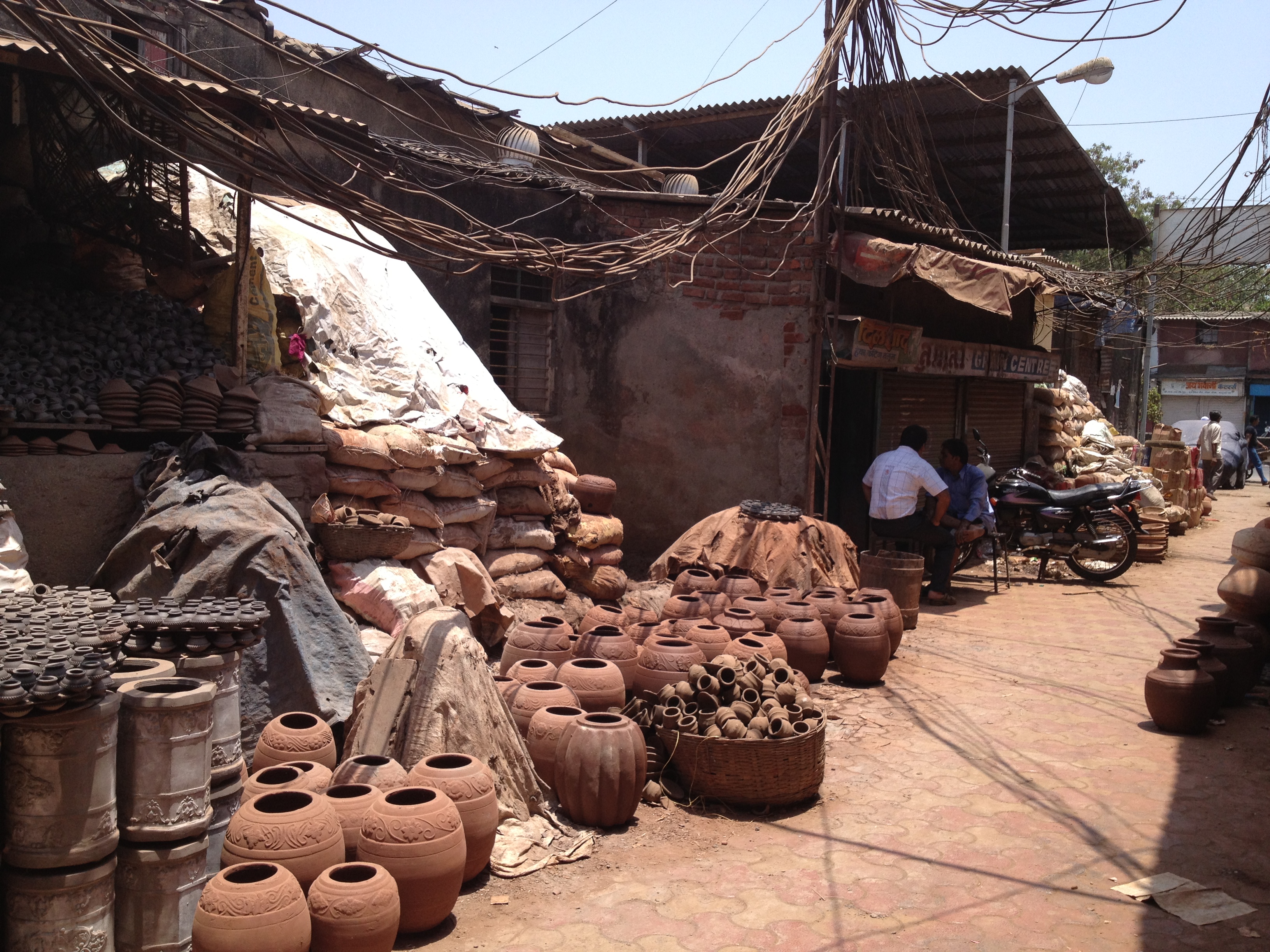
From there we made our way through the Tamil area, which was mostly shops, including those selling alcohol and, finally, to the Gujarati potters, who are churning out earthenware water and milk containers on their wheels, which are then baked in extremely hot kilns. Again a cottage industry.

It’s hard to describe the vibrancy of it all – the people milling around, the naughty children giving you high fives: ‘Hi, Hi,’ they all shout and wave as we wander by. The women, whether in Shalwar Khameez or sari, looking colourful, but most appear careworn and tired, either thin or with the obesity of poverty. I am not surprised – a woman’s life is very hard, whether on the street or in the slum. They are hugely outnumbered by men, and seem to have an endless supply of children who all need looking after, and all of this in addition to their work.

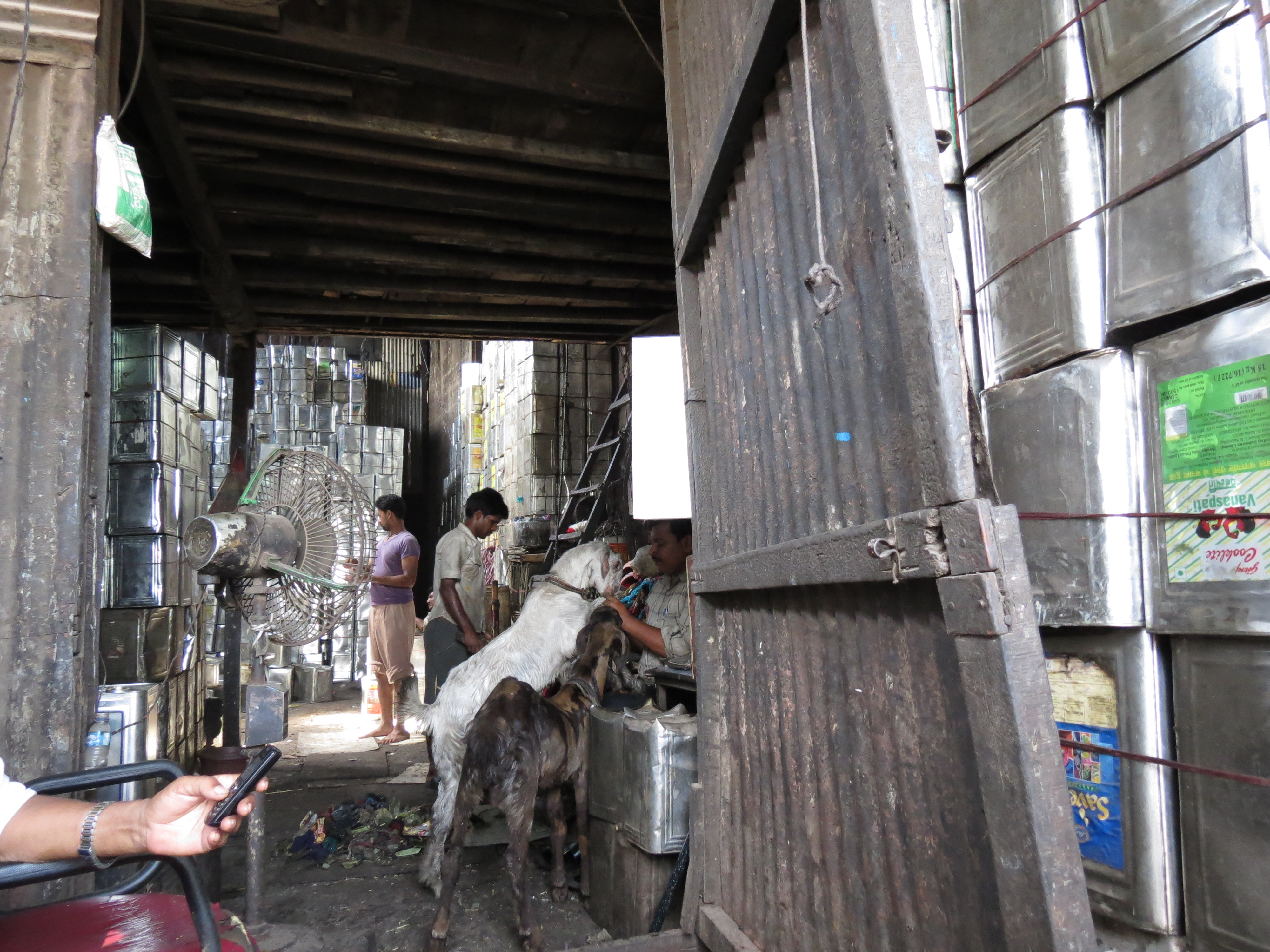
goats are everywhere; ghee tins on right ready for recycling

goats are everywhere; ghee tins on right ready for recycling

Animals are everywhere – goats, chickens, cats, rats – dead and alive; the occasional vicious dog rushing at us. Satellite dishes abound, and many houses have TV blaring out at us. In modern India it is a must-have for family life, and brightens the lives of the generations who share one small room, complete with a washing area and a cooking area, leaving room only for nose to tail sleeping.

Dharavi is an extraordinary place, a city within a city, self-sufficient in all ways, with no need for its dwellers to leave. But it is unsanitary and filthy, a poisonous hive of activity, however much its inhabitants purport to love it.

PS I added a few of Cindy’s nice shots into the Gallery – thanks Cindy for letting me use some of your photos for this blog. It would have been dull without it. And thank you for being such a good hostess!

outskirts of Dharavi

outskirts of Dharavi

a rather wider slum street!
a rather wider slum street


1 Comment

in which I go to Bali by myself

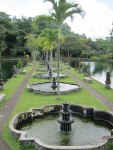
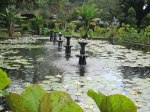
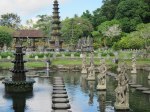
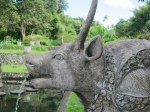
Tranquility rules at the Tirti Ganga Royal Baths

Tranquility rules at the Tirti Ganga Royal Baths

This picture is my image of Bali: calm, tranquil and peaceful…but it was not like that at all!

Bravely I decided to go on my own as Husband was off to Zurich on business. I contacted my daughter Louise’s friend Charley, who is living there, and she put me on to a local dive operation as the plan was to spend a couple of days in the south and then do a couple of days diving in the North East of the island.

At the Singapore Dive Show, I checked out Tulamben Wreck Divers and Tony reassured me that ‘the most dangerous thing in Bali is drunken Ozzies not the Balinese’. HA!

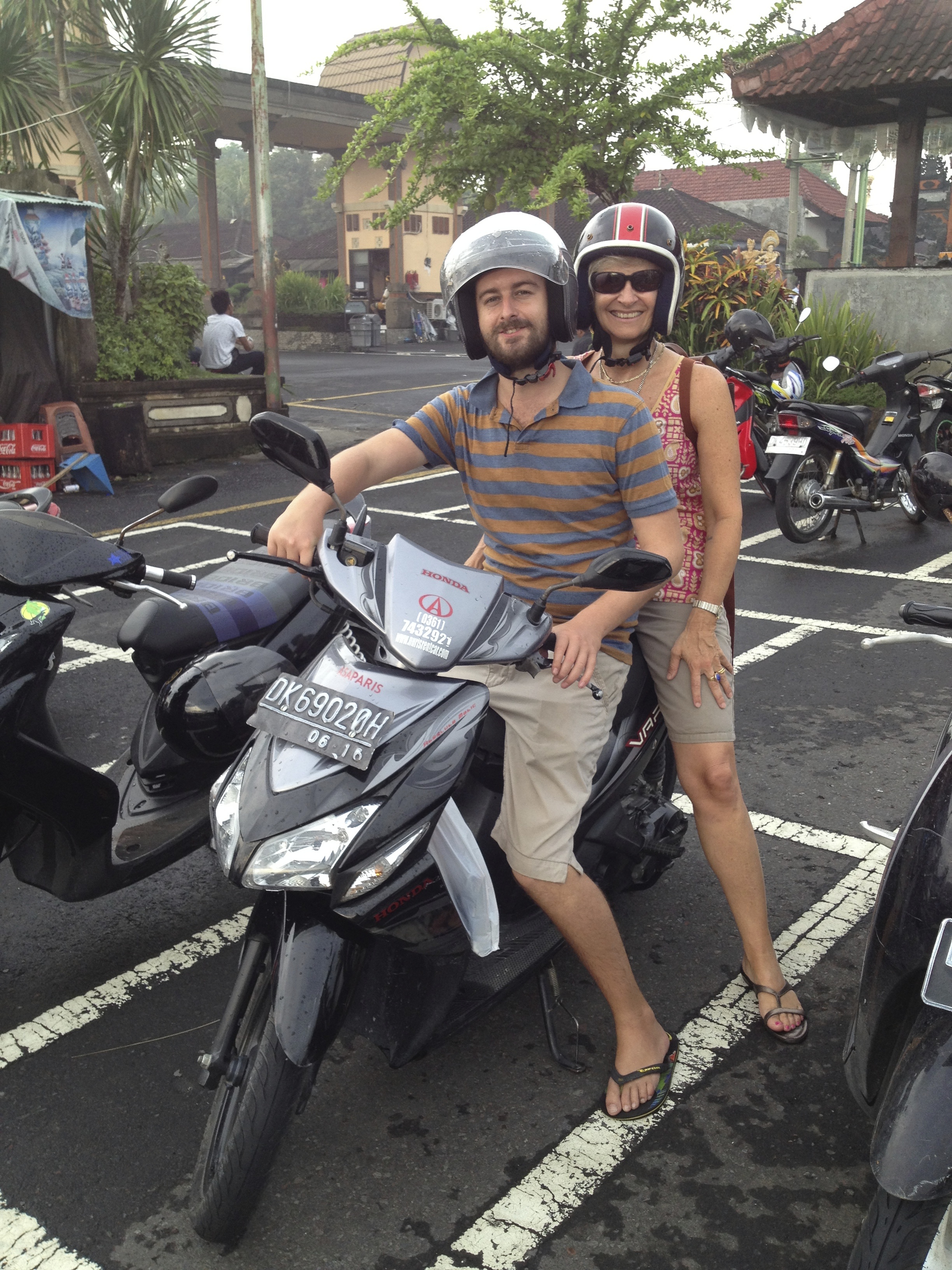
the intrepid bikers!

the intrepid bikers!

Off we set on the first night, me pillion to Kyle, Charley’s partner, she close behind. Traffic is mayhem in Bali, scooters all sides and all directions, but even so I was slightly unnerved when a bike drew abreast on our inside and I found myself looking into a pair of penetrating evil eyes as I simultaneously felt my bag being yanked from my shoulders  with an almighty ping as the strap gave way; before I could even utter a swear word, the scooter was gone and my bag was missing. With it was Rupiah 5million ($550) for my diving and hotel; credit cards, passport, two phones – and my pride. But Charley to the rescue, her shouting had scared the would-be thief off, and the bag was lying abandoned in the road…

Charley and Kyle after our narrow escape!

Charley and Kyle after our narrow escape!

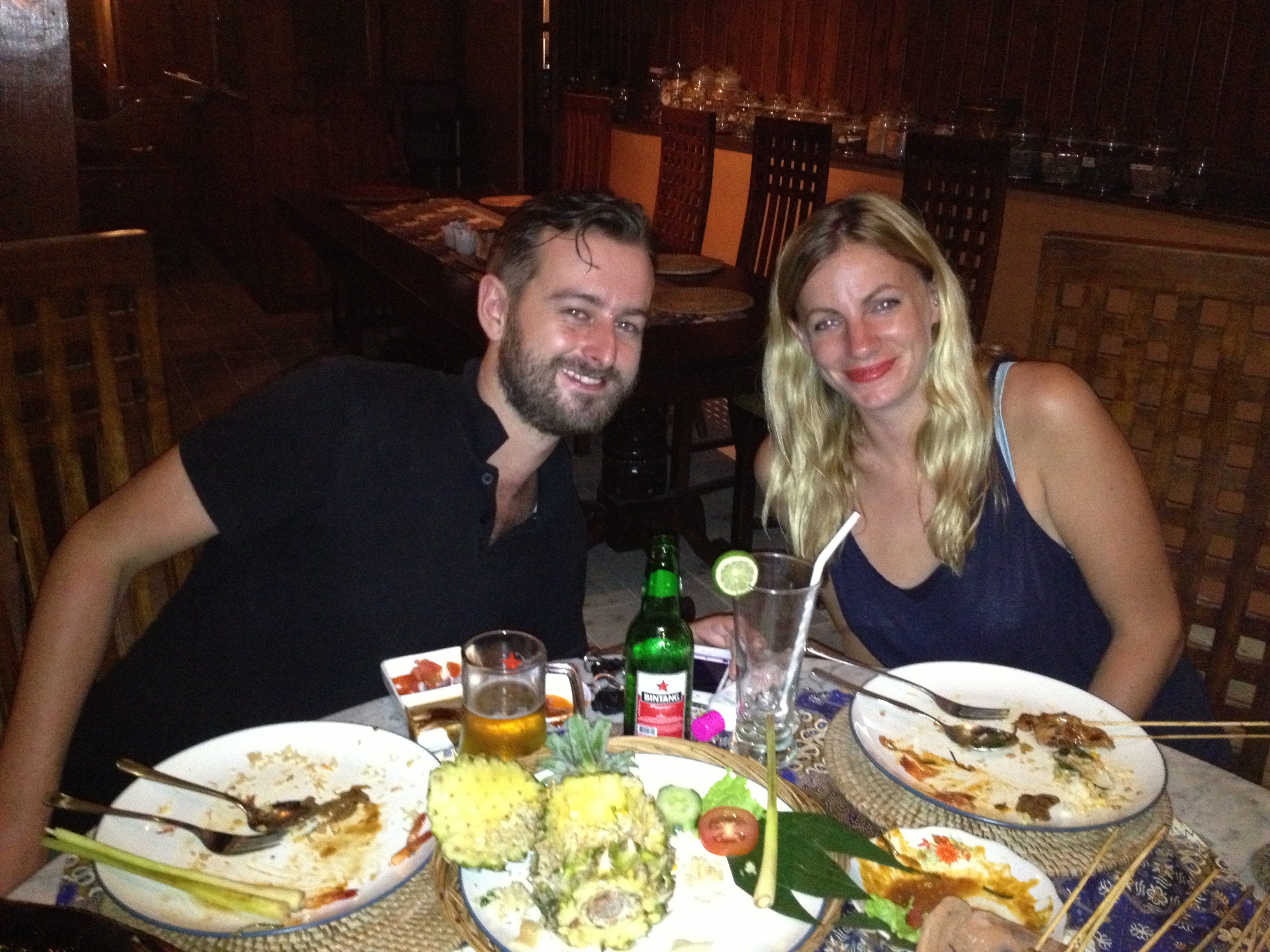
At dinner a rat scuttled round our feet! Welcome to Bali!

Charley and Kyle were great hosts and we whizzed around on the scooters getting soaked, visiting temples, surfers’ beaches and a Japanese restaurant with a local Jazz band, whose singer thought she was Janis Joplin! We shared a table with Indonesia’s runner up to its version of The Voice. There is no escape from popular ‘culture’.

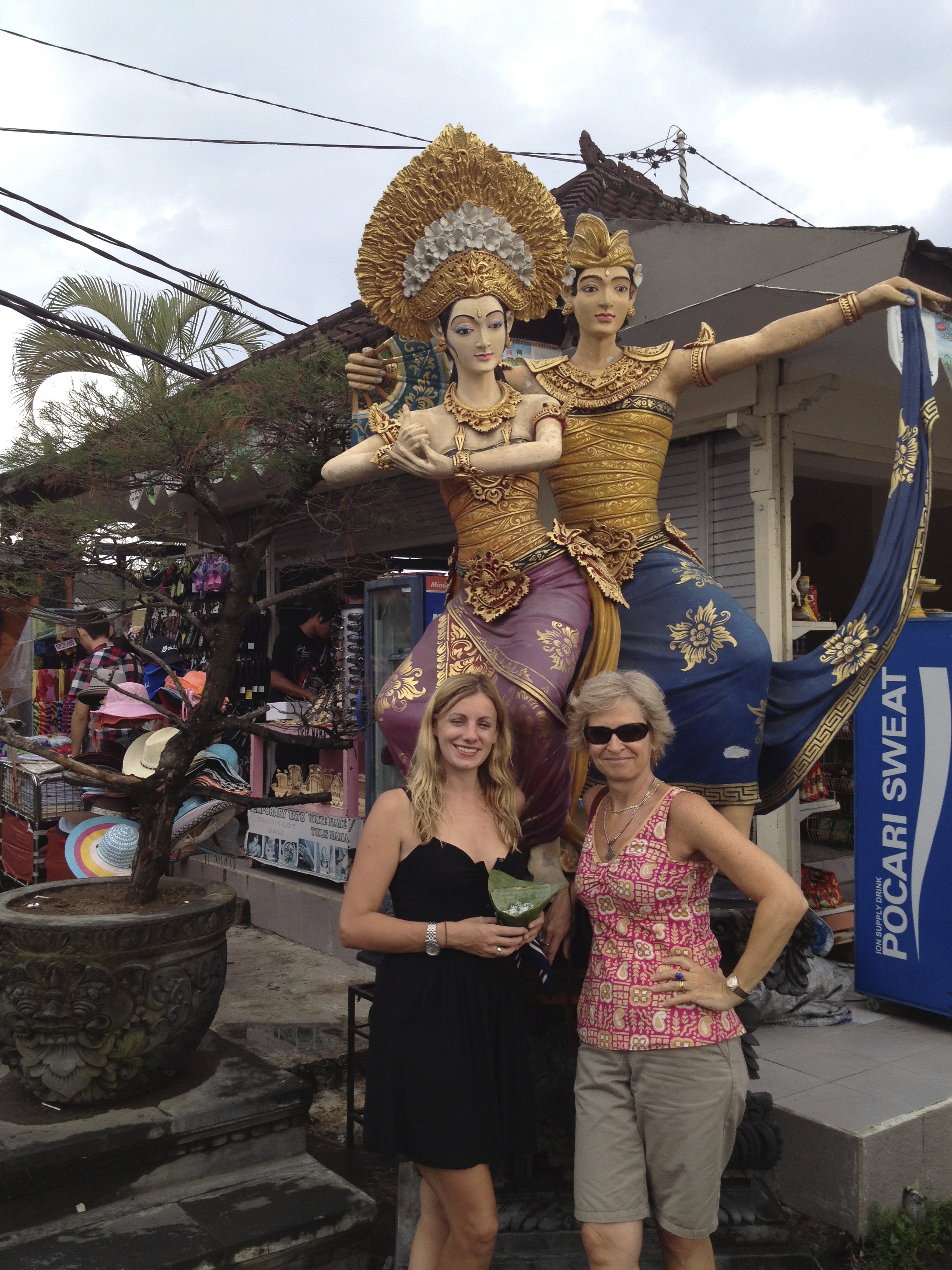
At Tanah Lot temple

At the tacky Tanah Lot temple

Two days later and I was picked up by the dive resort’s vehicle and we made our way through the countryside up to the NE corner, to Tulamben, home to Bali’s best dive site, the Liberty wreck, a US supply ship that was sunk by the Japanese in the war.

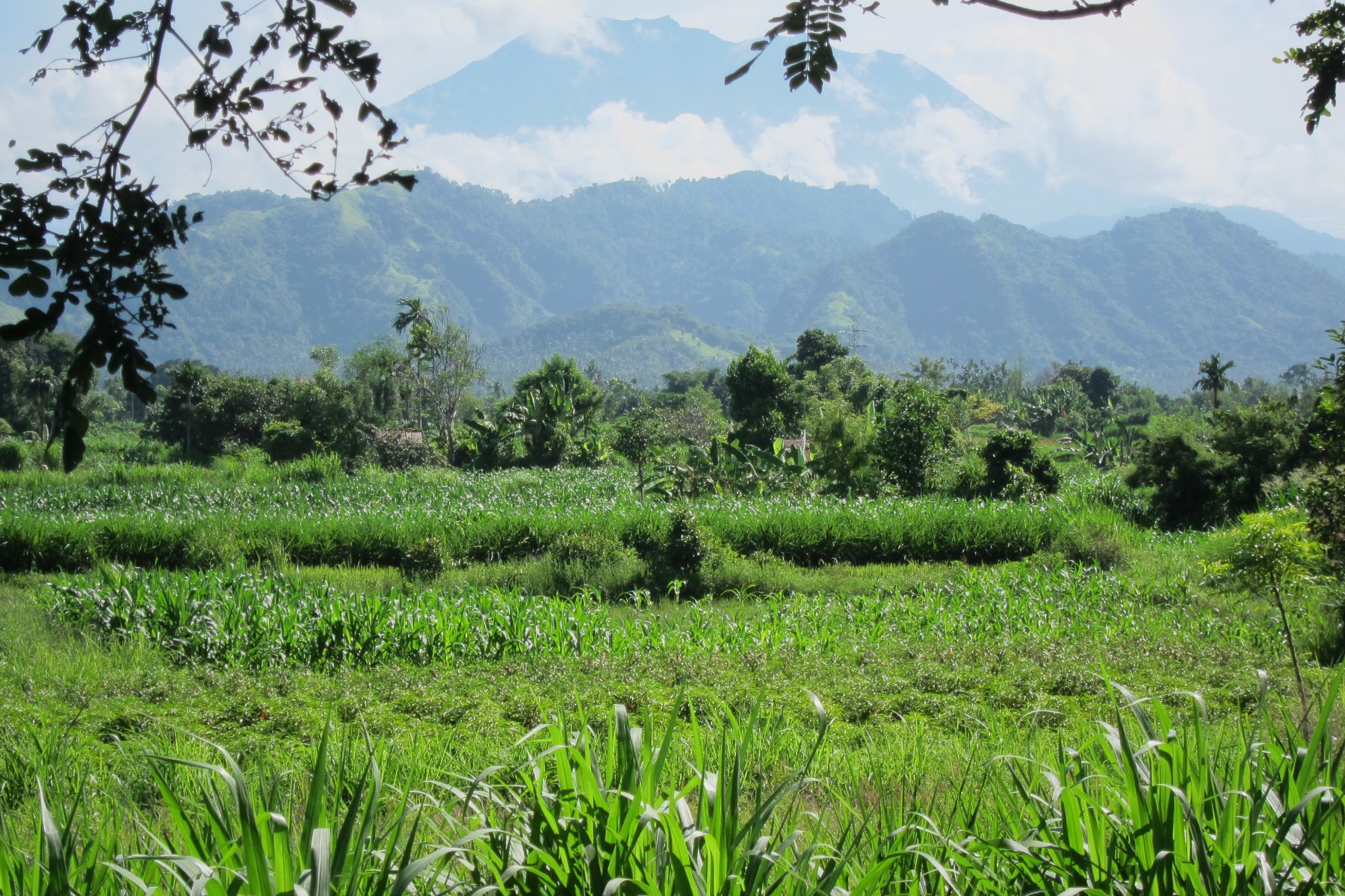
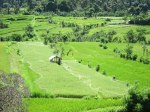
Paddy fields with Mt Agung in the background

Paddy fields with Mt Agung in the background

En route we passed paddy fields nestling under the Mt Agung, the largest volcano which last erupted in 1963. Pretty but not post-card…

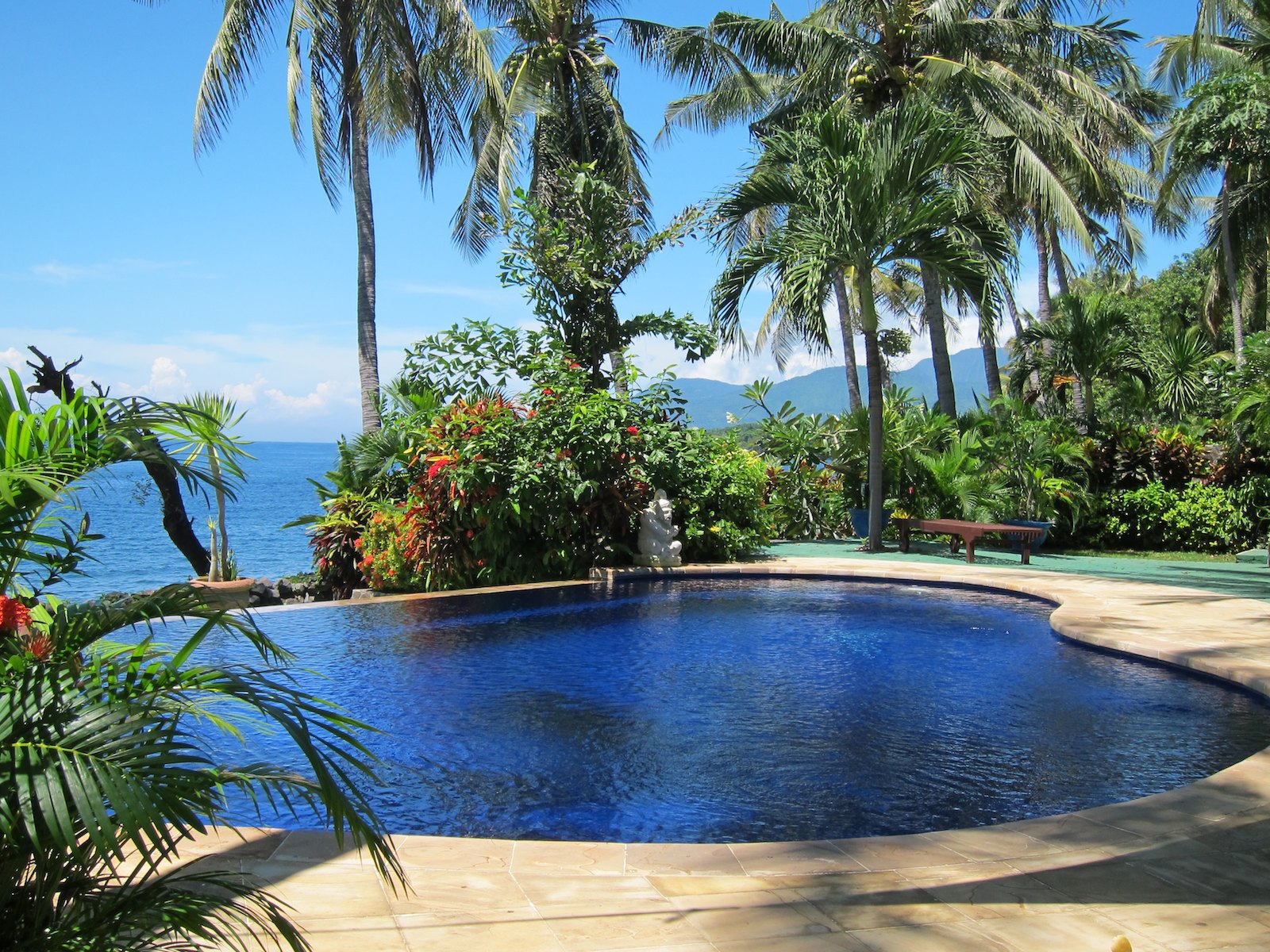
Tulumben Wreck Divers Beach VIllas

Tulumben Wreck Divers Beach Villas

Upgraded to a beach villa (see photo of pool) after a quick lunch of satay, I did my first dive. Disappointed that there were so many other divers and that my eyesight is now so bad that, without a prescription mask, I completely failed to see the three miniature sea-horses my guide proudly showed me! But I was proud of myself for my intrepid diving skills, donning weight belt and tanks (having walked or scooted to the beach in my wetsuit and bootees – what a sight!) before entering the sea via an excruciatingly rocky shore. Day 2 I actually did THREE dives…the first at 6.30 am to see a school of HUGE bump-head parrot fish.

The downside of being on one’s own in a remote place is that – apart from eating on my own – there is no-one to drink with, so had to resort to buying a quarter bottle of gin and a couple of tonics that I eked out over my two-night stay! Two nights was quite enough, however, as I had exhausted the novelty of diving in Bali by then and, as I agreed with a Spanish Dive Master I met, it was disappointing on an international scale. No complaints about the professionalism of Tulamben Wreck Divers, however, who were charming and helpful to a lone British woman!

Still feeling disappointed in Bali so far – Kuta and Seminyak were just one long strip of tawdry shops, bars and restaurants, and I had not seen a single grain of white sand, only black volcanic rocks – I decided to take the scenic route to the airport.

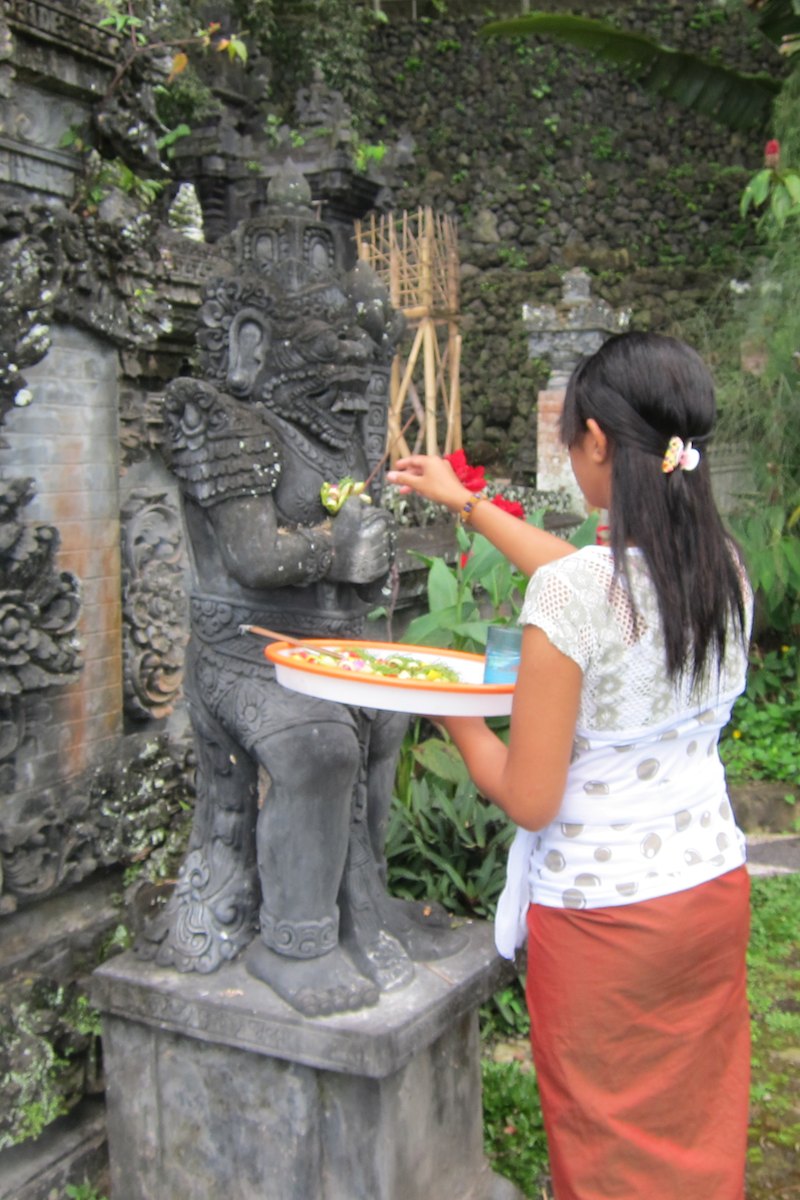
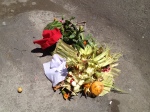
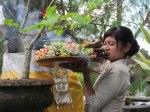
Morning offerings at Tirti Ganga Royal Baths

Morning offerings at Tirti Ganga Royal Bath

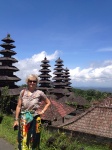
Chauffeured by my Britney&Bieber-loving driver, we went first to Tirti Ganga, the Royal Baths which were both beautiful and tranquil, luscious greens with calming water features (see top photo); as it was Full Moon, there were even more ceremonial offerings being laid at the ubiquitous shrines outside every home. From there we moved on to the most sacred temple, Pura Besakih, teeming with supplicants and gangs of giggling girls and boys having a great day out with their teachers. Forced to don a Bob Marley sarong, I looked a sight for sore eyes.

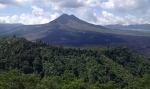
Annoyingly I began to notice a new trait in the Balinese – an avariciousness totally out of traditional character: I was stopped everywhere by uniformed men demanding  tourist tax, parking fees, and tips, and vendors as far as the eye can see, all with charming good nature of course. Even lunch, later at the Bangli overlooking the volcano caldera, was a rip-off: an uninspiring buffet for $10 each excluding drinks, which were exorbitant.

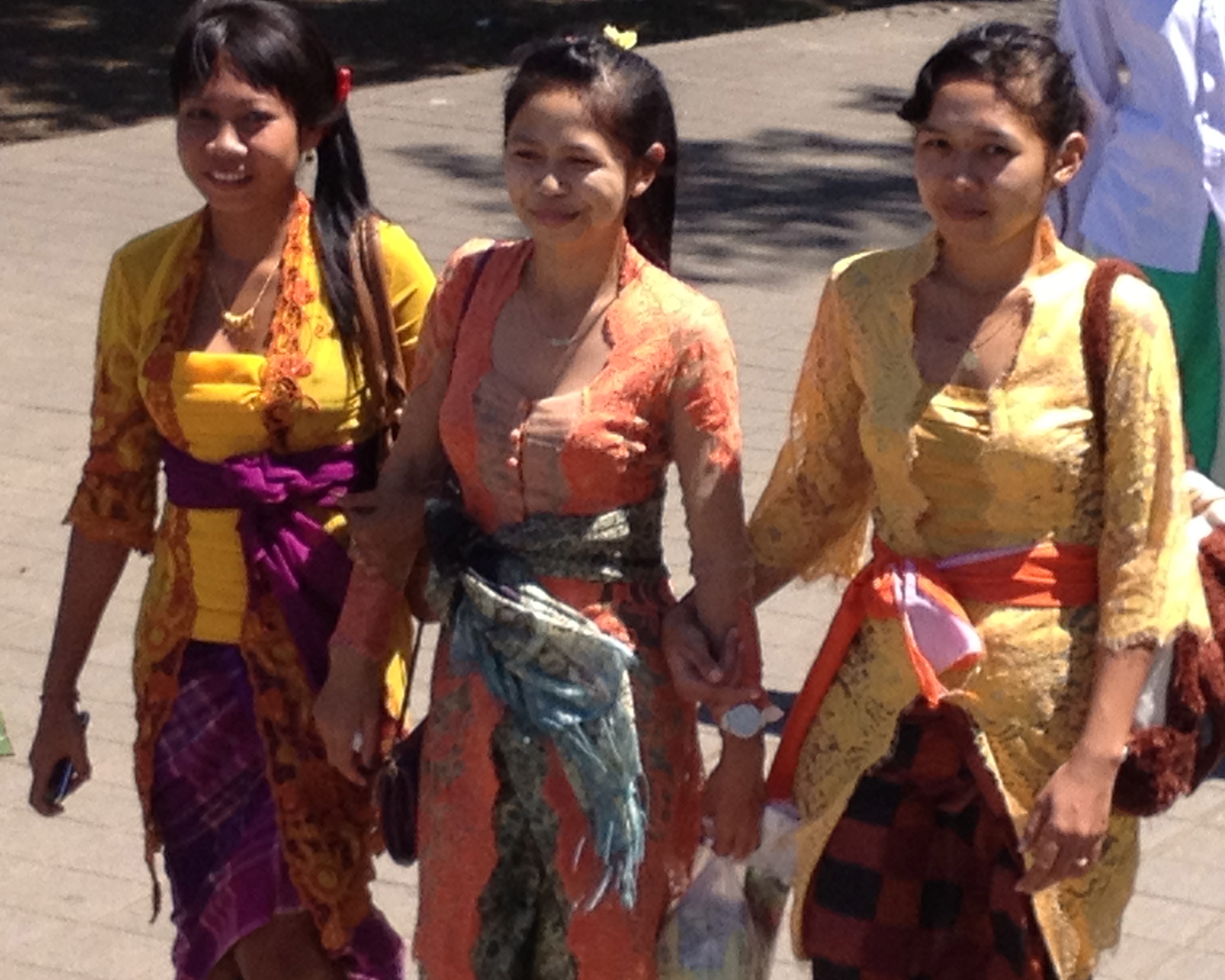
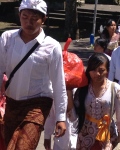
beautiful ladies celebrating the full moon at Pura Besakih

beautiful ladies celebrating the full moon at Pura Besakih

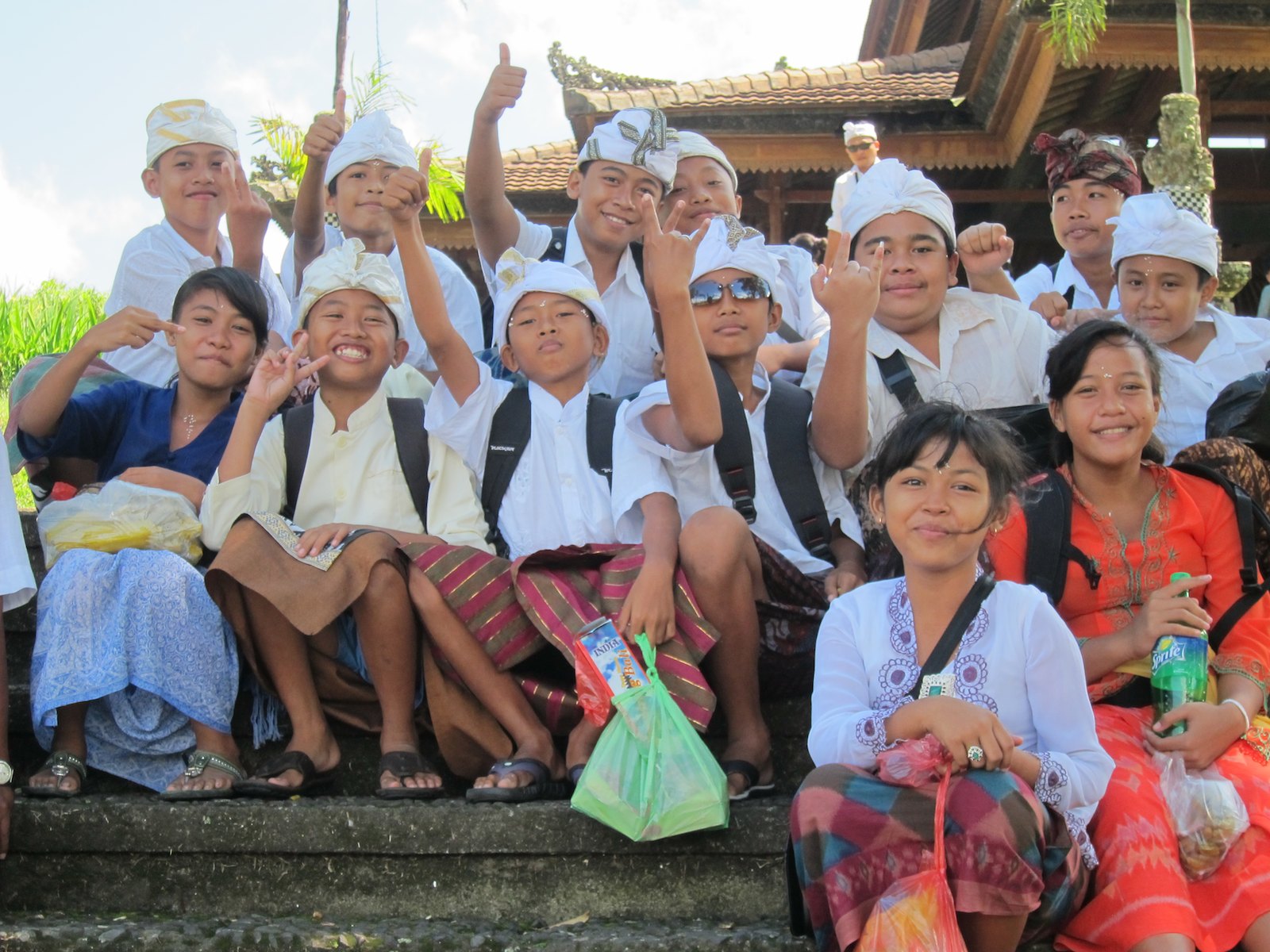
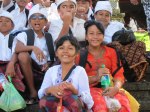
Nevertheless I loved the graceful women and the cheeky kids at the temple. Whatever else about Bali that  disappoints, the people are delightful, polite and friendly.

Cheeky kids at the temple

Cheeky kids at the temple

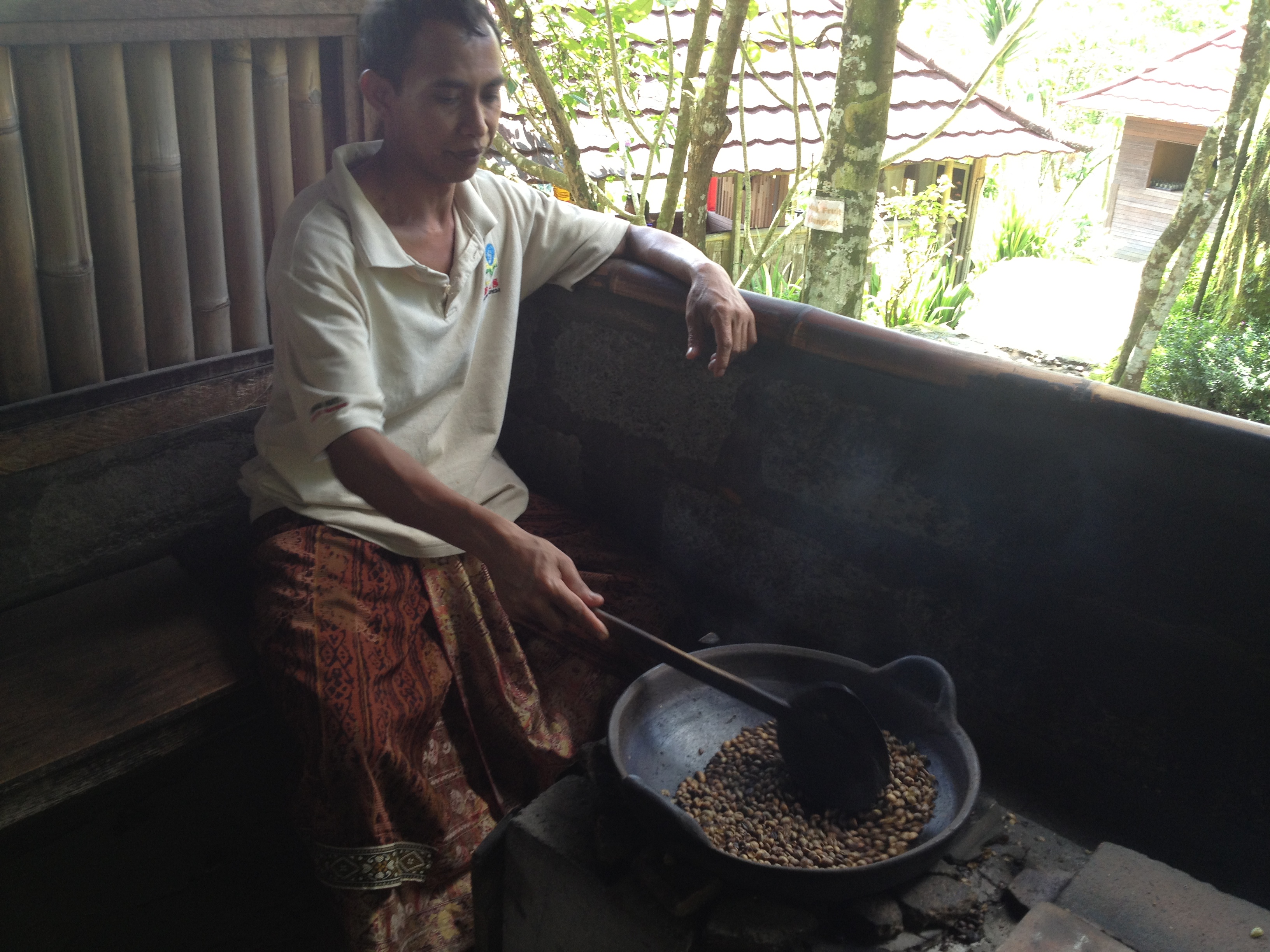
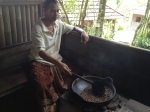
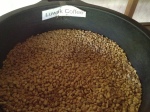
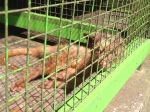
Finally from Mt Batur down to Ubud – another huge disappointment as this is the hippy sanctuary of yore, famed for arts and culture, now reduced to yet another high street of mediocrity – via a coffee estate, where I tried delicious Luwak coffee. This is made from beans that have been eaten by civet cats and passed out as poo. I saw it being roasted and dried, so my squeamishness was banished!

So ended my first foray in what I now call my ‘grown-up gap year’ – a time when I will be going off on my own as and when I am able, or forced to by circumstance, in order to take advantage of this amazing opporutnity to travel the Far East for the next couple of years.

roasting Luwak (civet) coffee

roasting Luwak (civet) coffee

Next week I am off to Hyderabad (with Husband) and then to Mumbai (alone) but to stay with friends…Watch this space!

CARPE DIEM!