
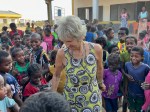

So here we are on our way to visit eight schools, the training centre and a local hub in three days! For the first 130 kms we whizz along on the best road we’ve seen, built by the Chinese. We pass a repair gang with its Chinese supervisor in his blue Mao suit. Once we leave this anomaly, we enter the world of truly awful roads – nothing we have experienced so far compares to this. A mixture of sand, rocks, ruts, 4WD-compulsory for the next three days. Progress is agonisingly slow. There is no other traffic apart from ox-carts and a mini bus once or twice a day. It’s too difficult for bicycles, and motorbikes are challenging – a dim European employed by UWS bought one and got horribly lost and had to be rescued. Of course there are no road signs!

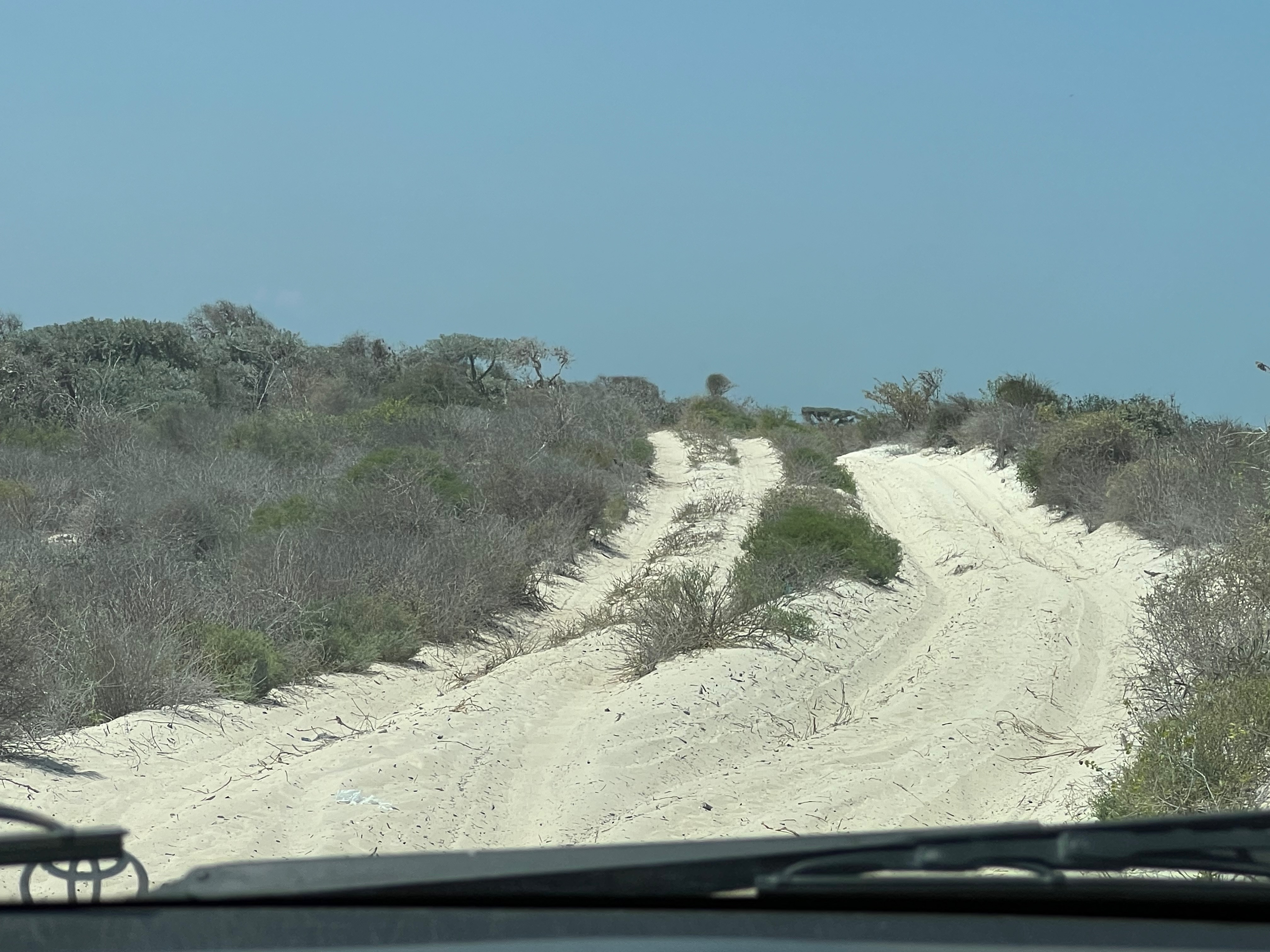
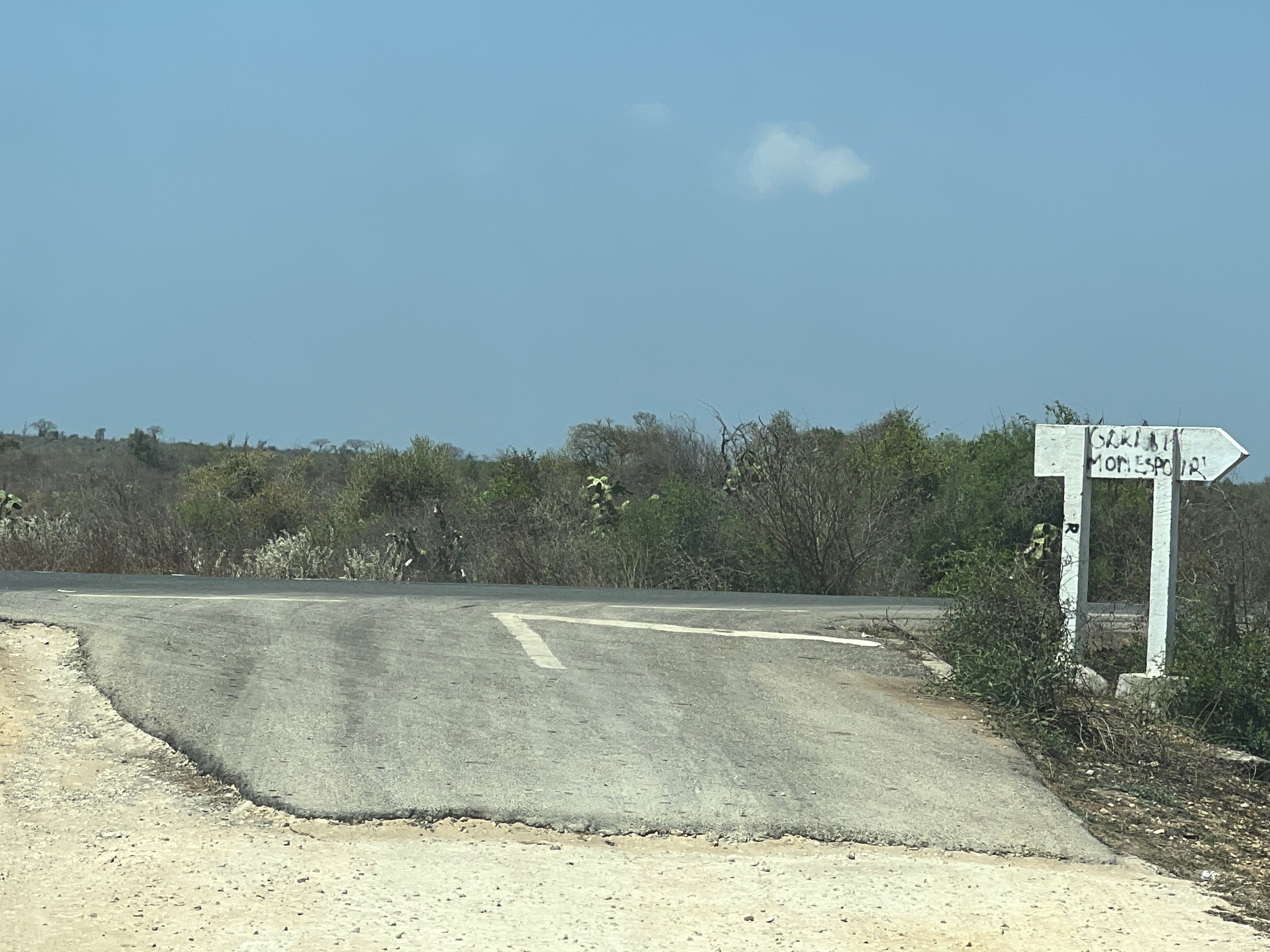
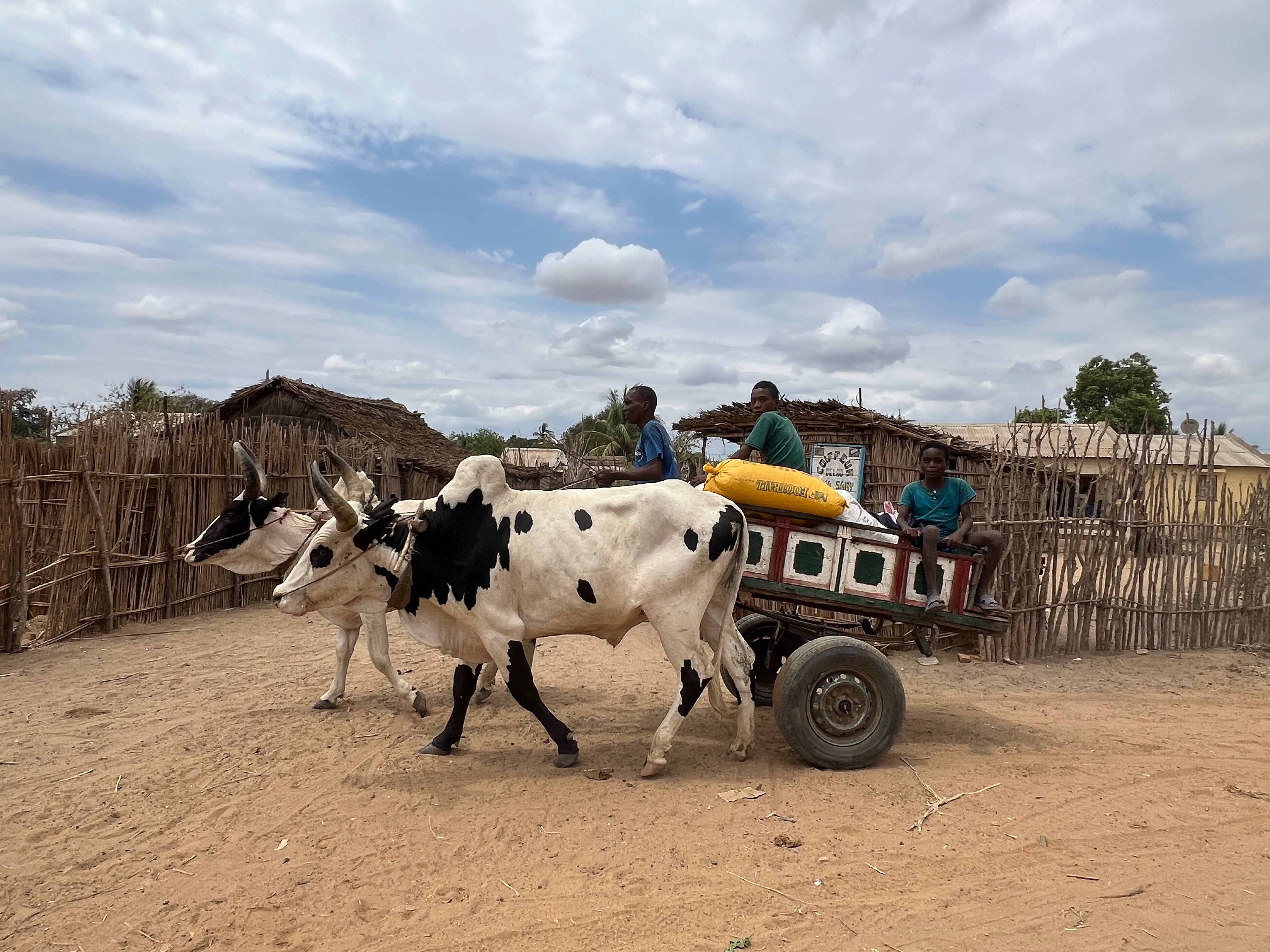
Traffic and roads – left is a road often impassable as it’s on a tidal mangrove swamp; right, the one and only dual carriageway; below, where the tarmac ends…and the regular form of transport.
As we pass through villages we see groups of young men armed with sticks – to protect the village from cattle rustlers. There are no police here, save the very occasional road block to check licences, tax and, for us, visas. Polite and friendly, deferential salutes all round (OK – sometimes a bit of swaggering jobsworth, goes with the sunglasses). There is no employment here unless you’re a teacher or a government functionary in the larger villages/small towns – everyone either farms or fishes. The main crops here are rice and various types of butter bean, now in season and being transported to market.
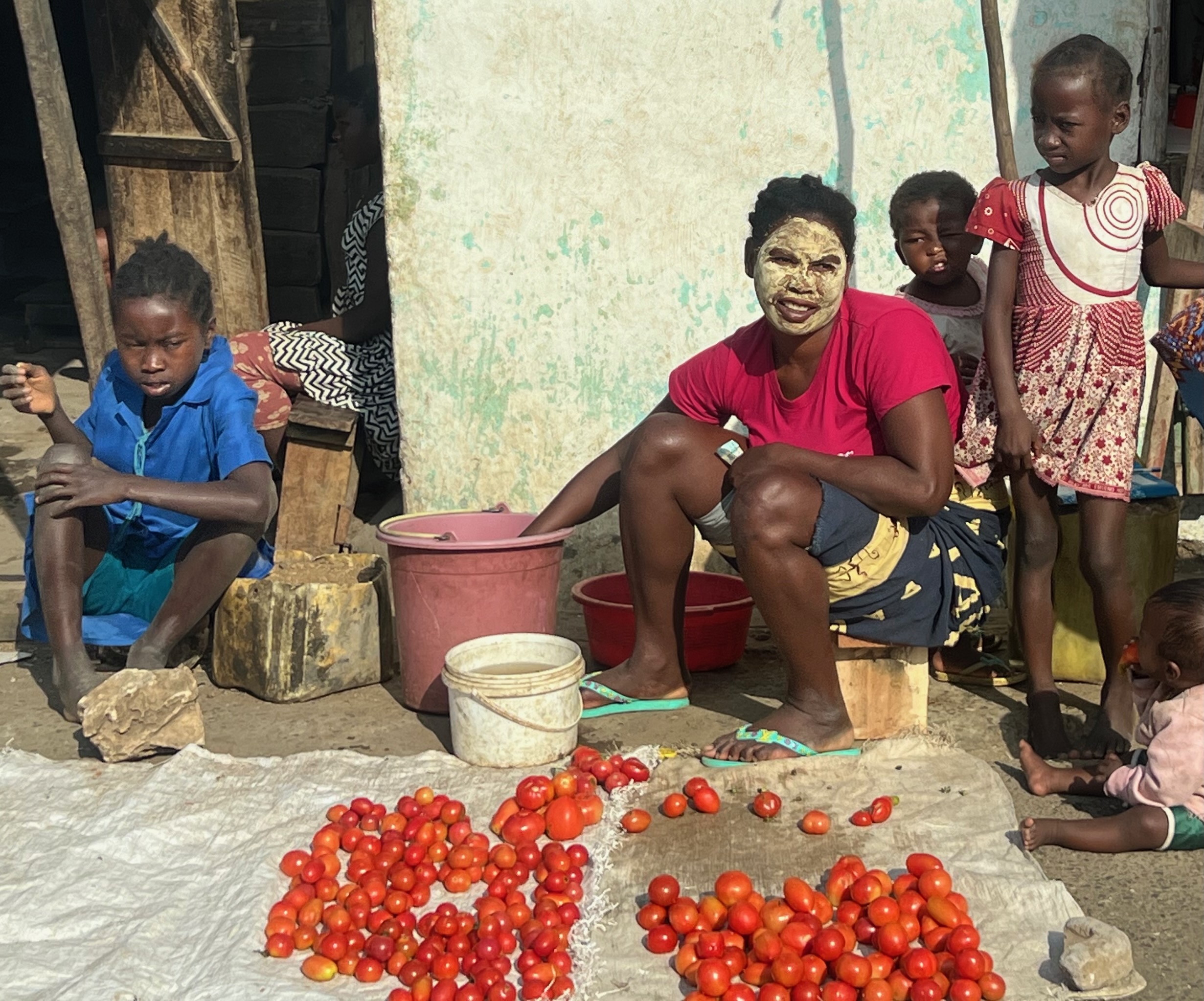

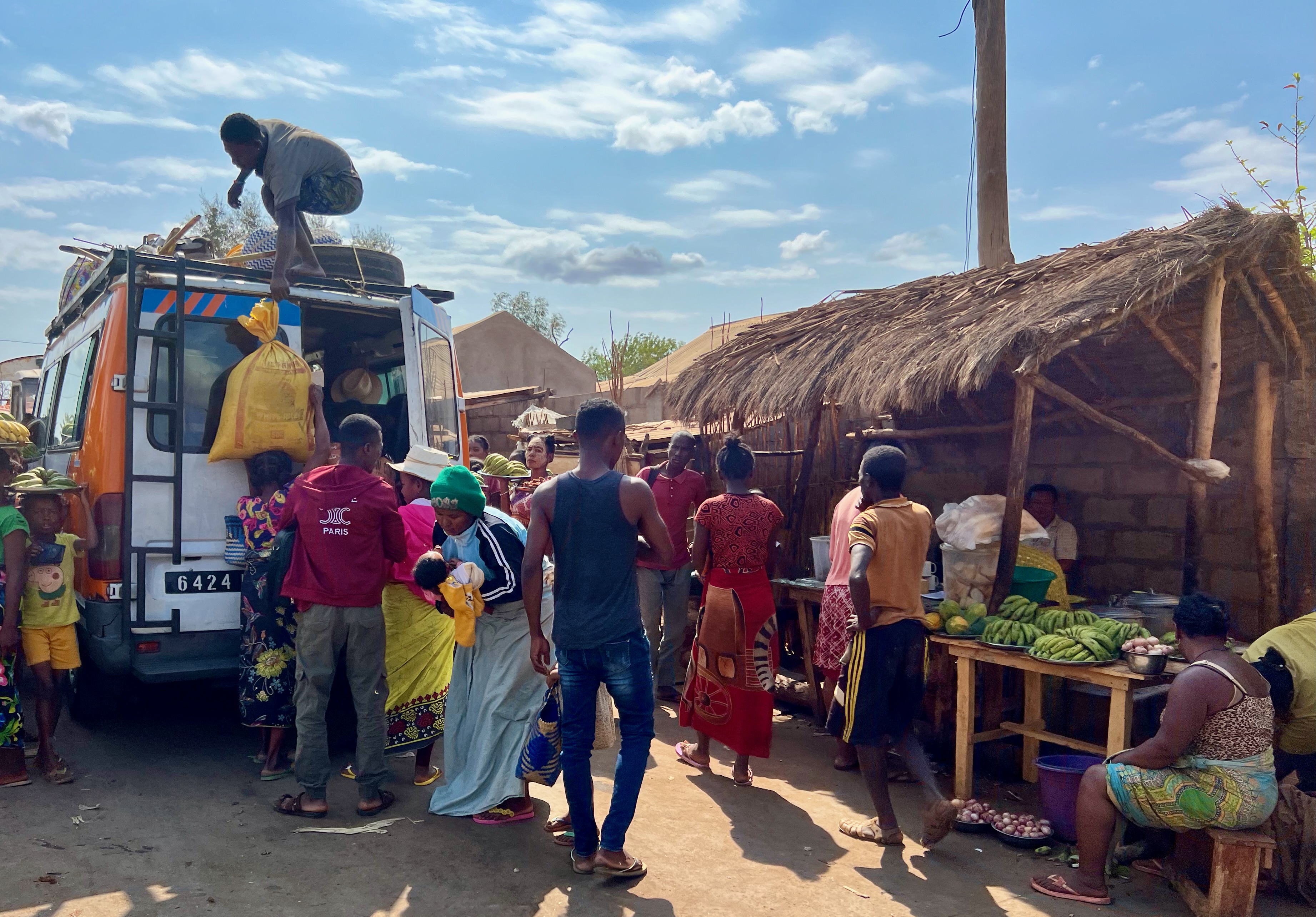
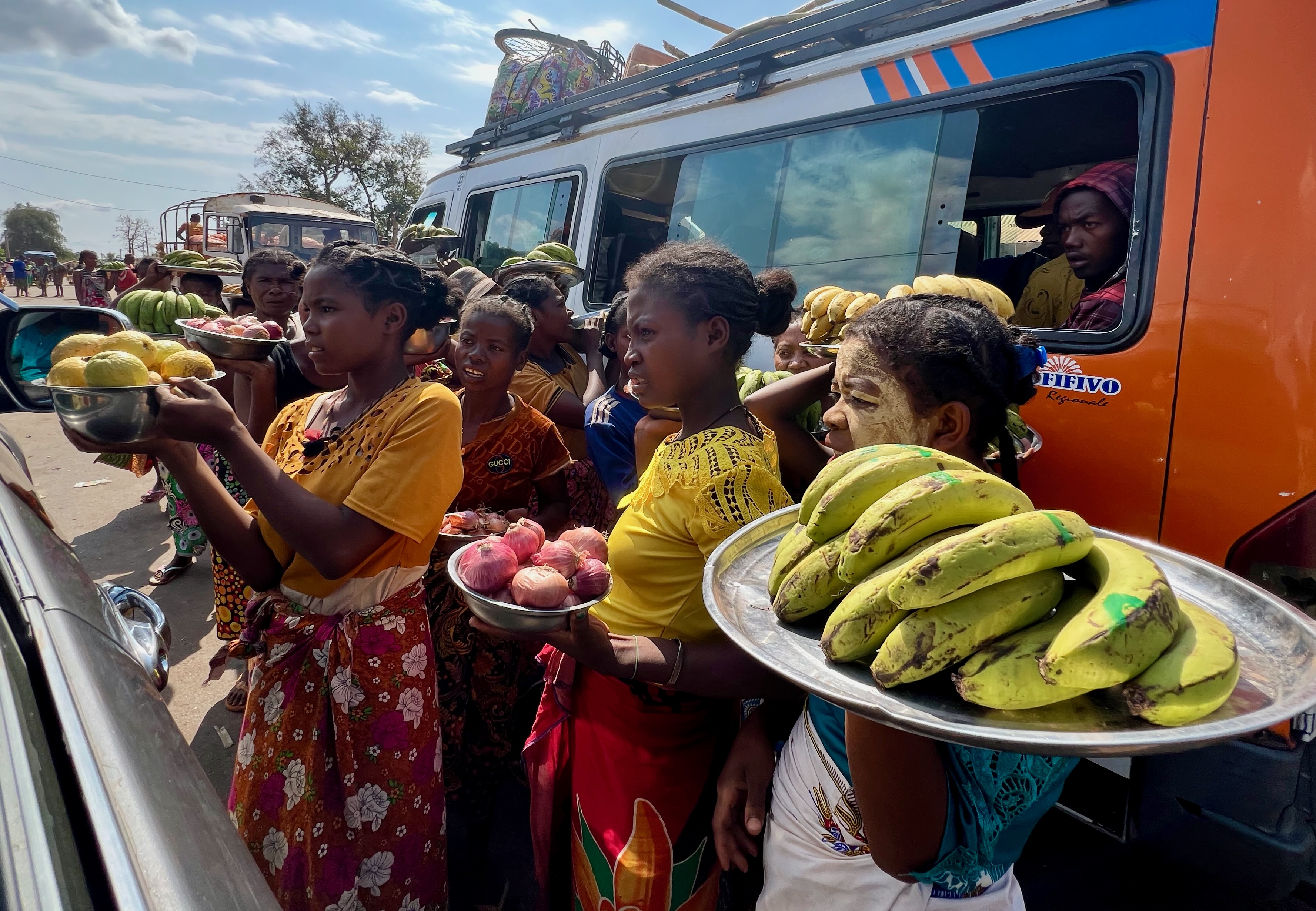

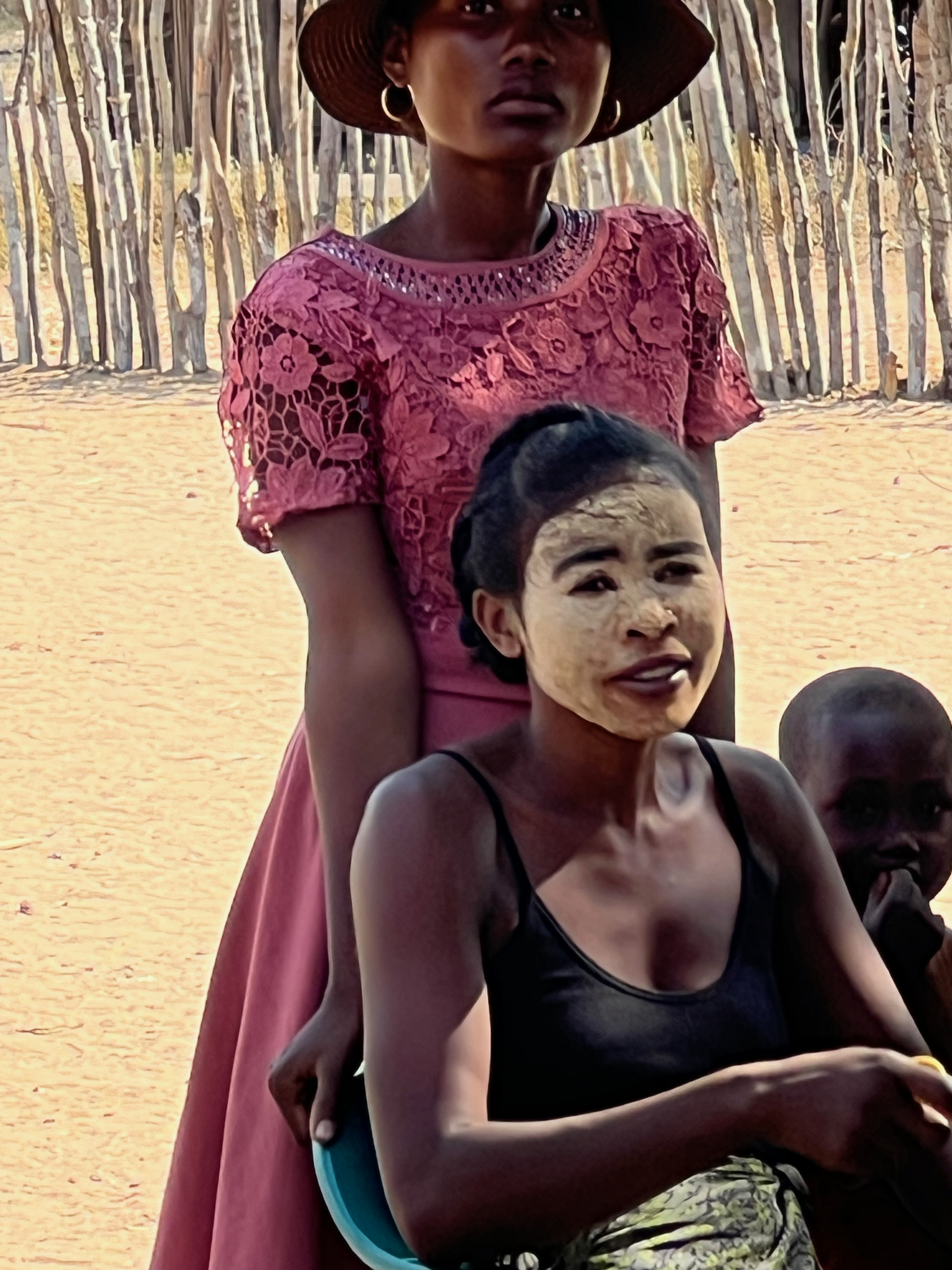
A typical market en route (on the main road) Note the ladies wearing their protective clay masks
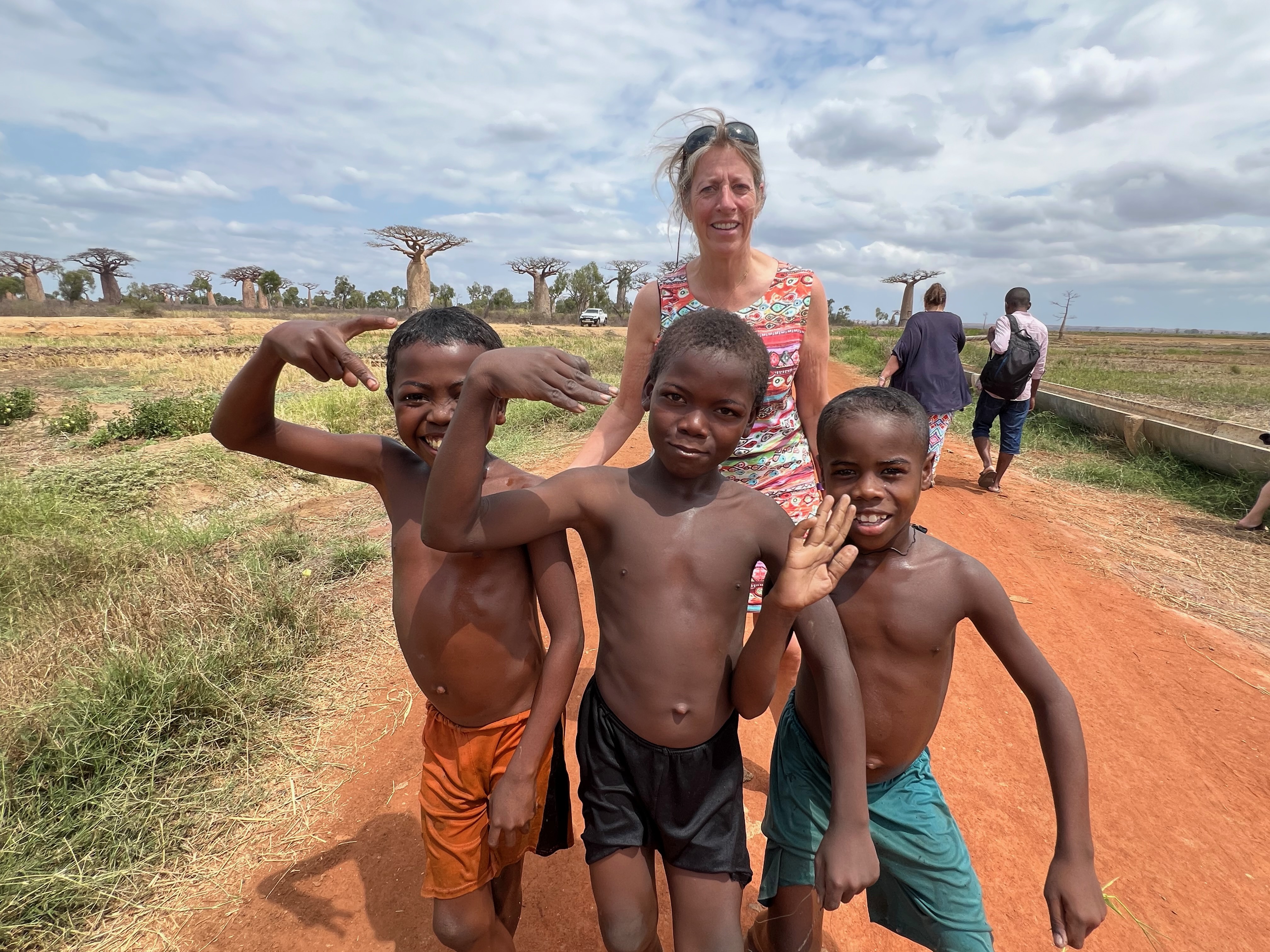
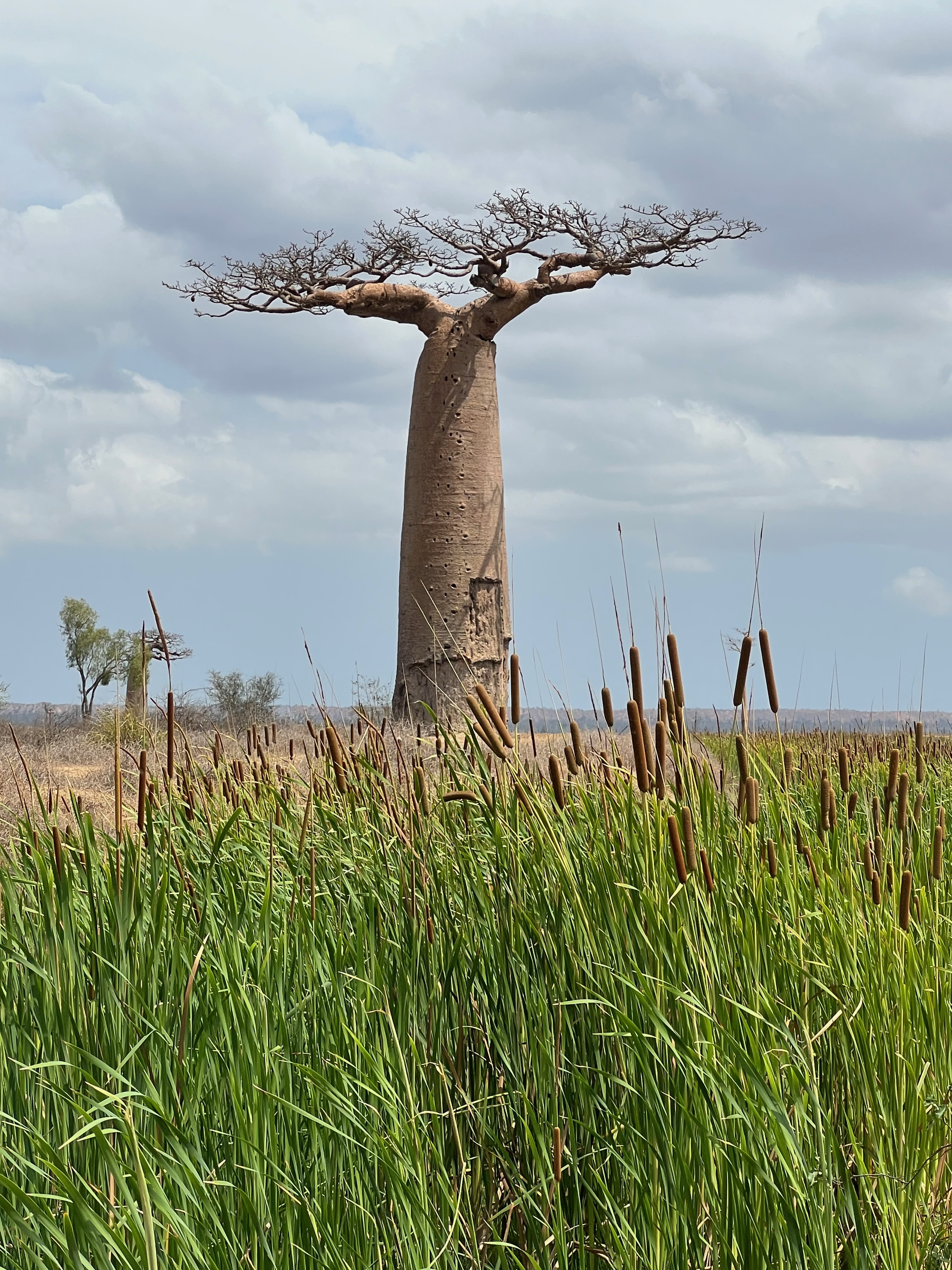
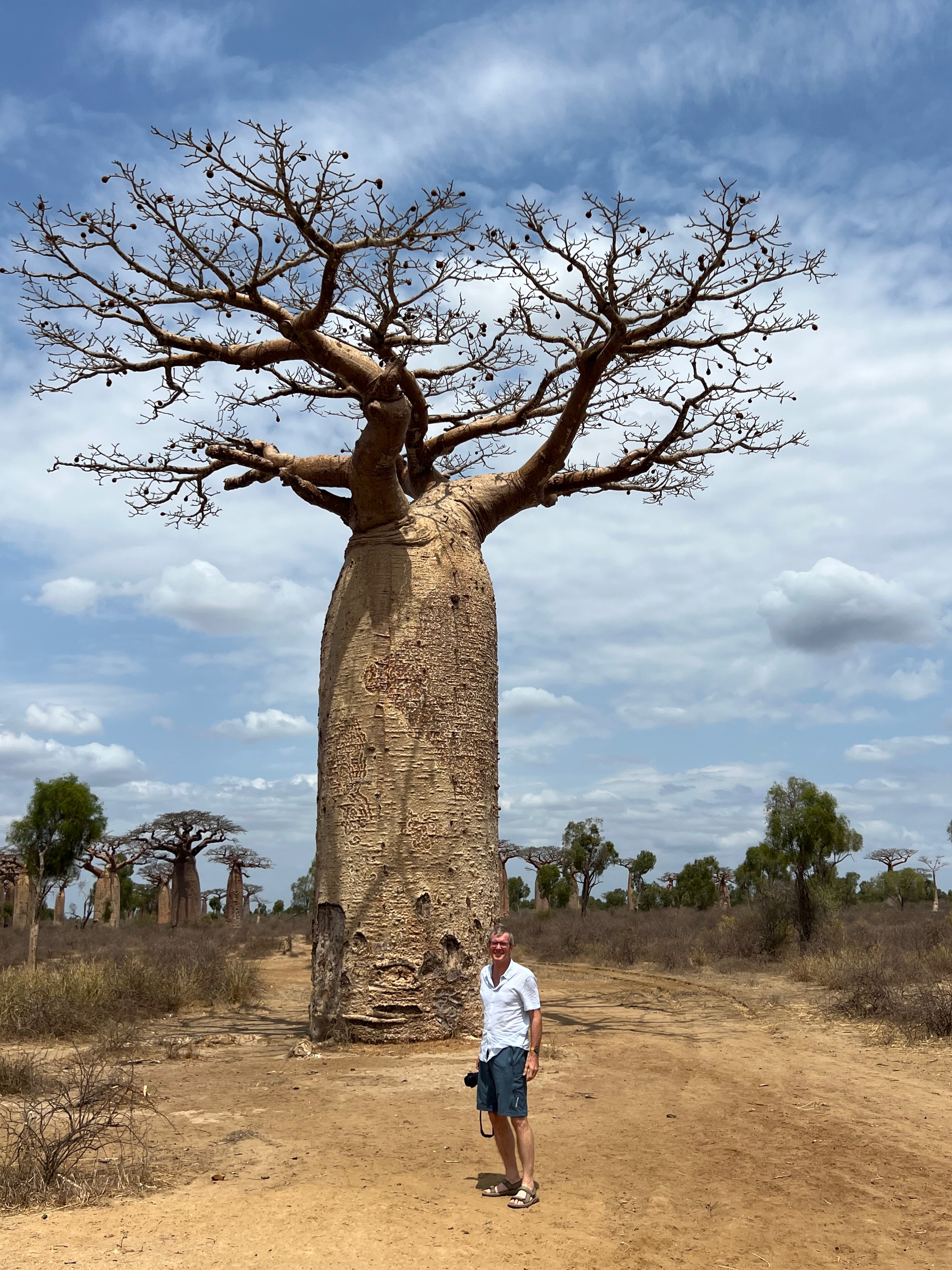
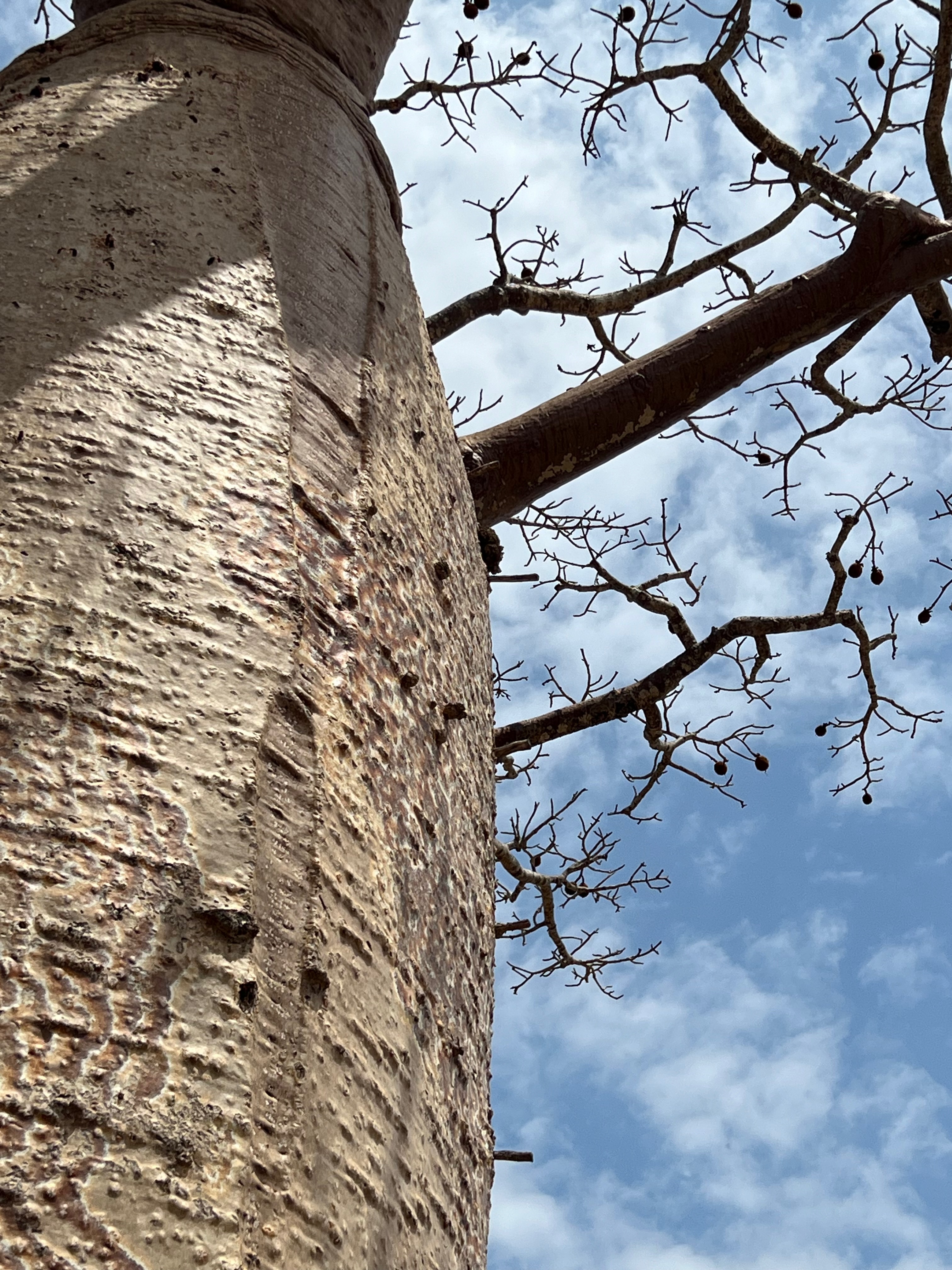
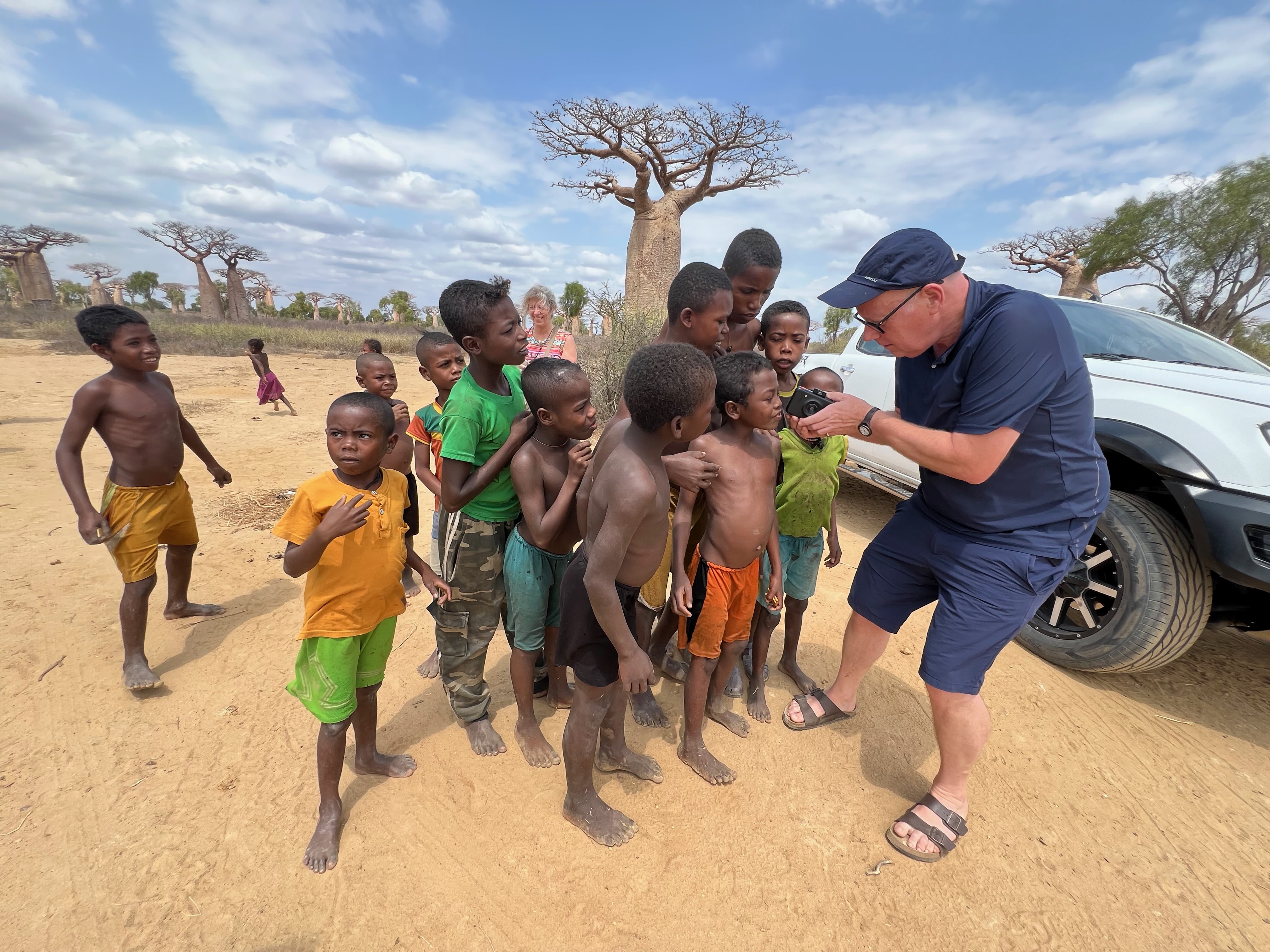
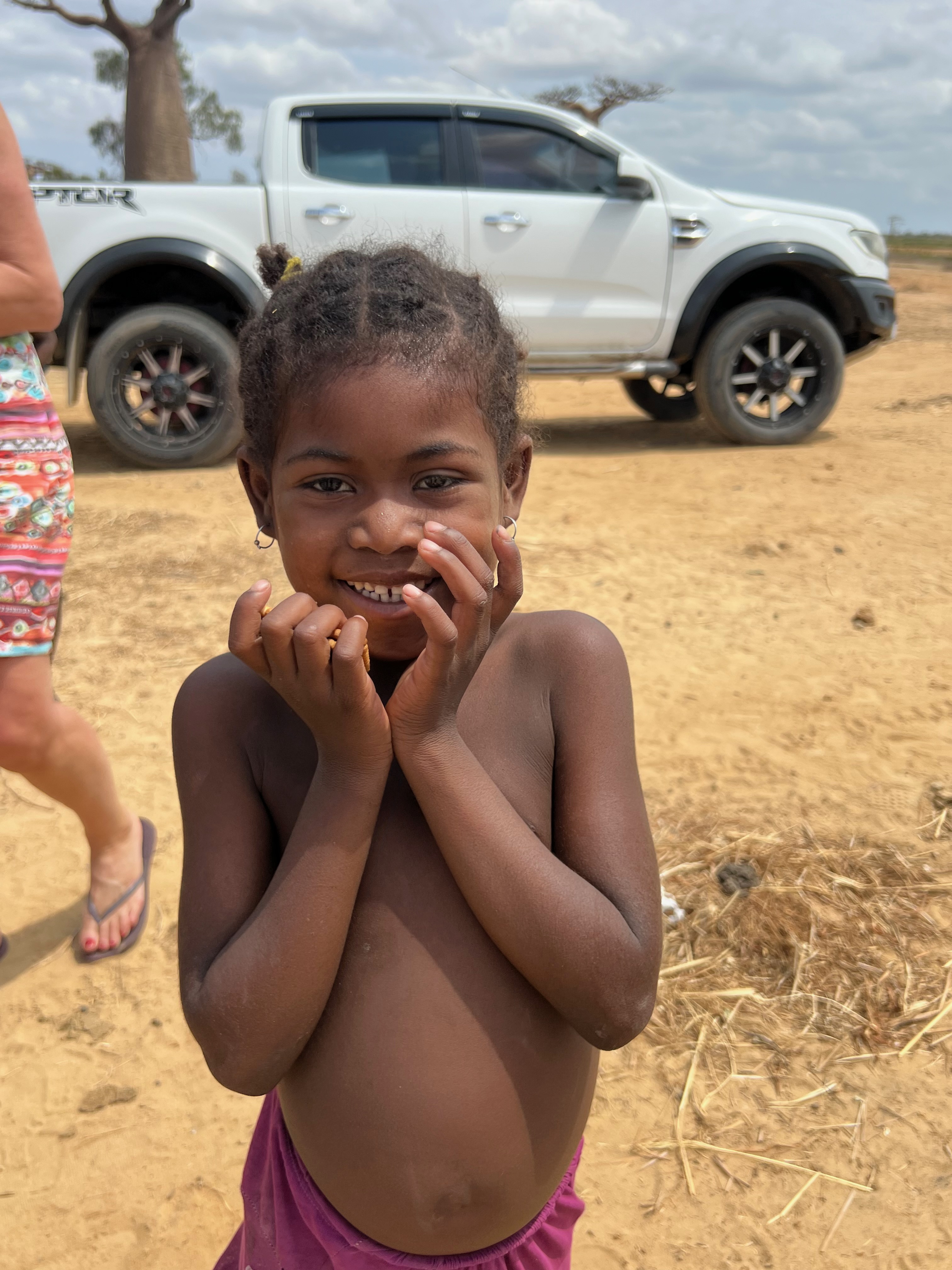
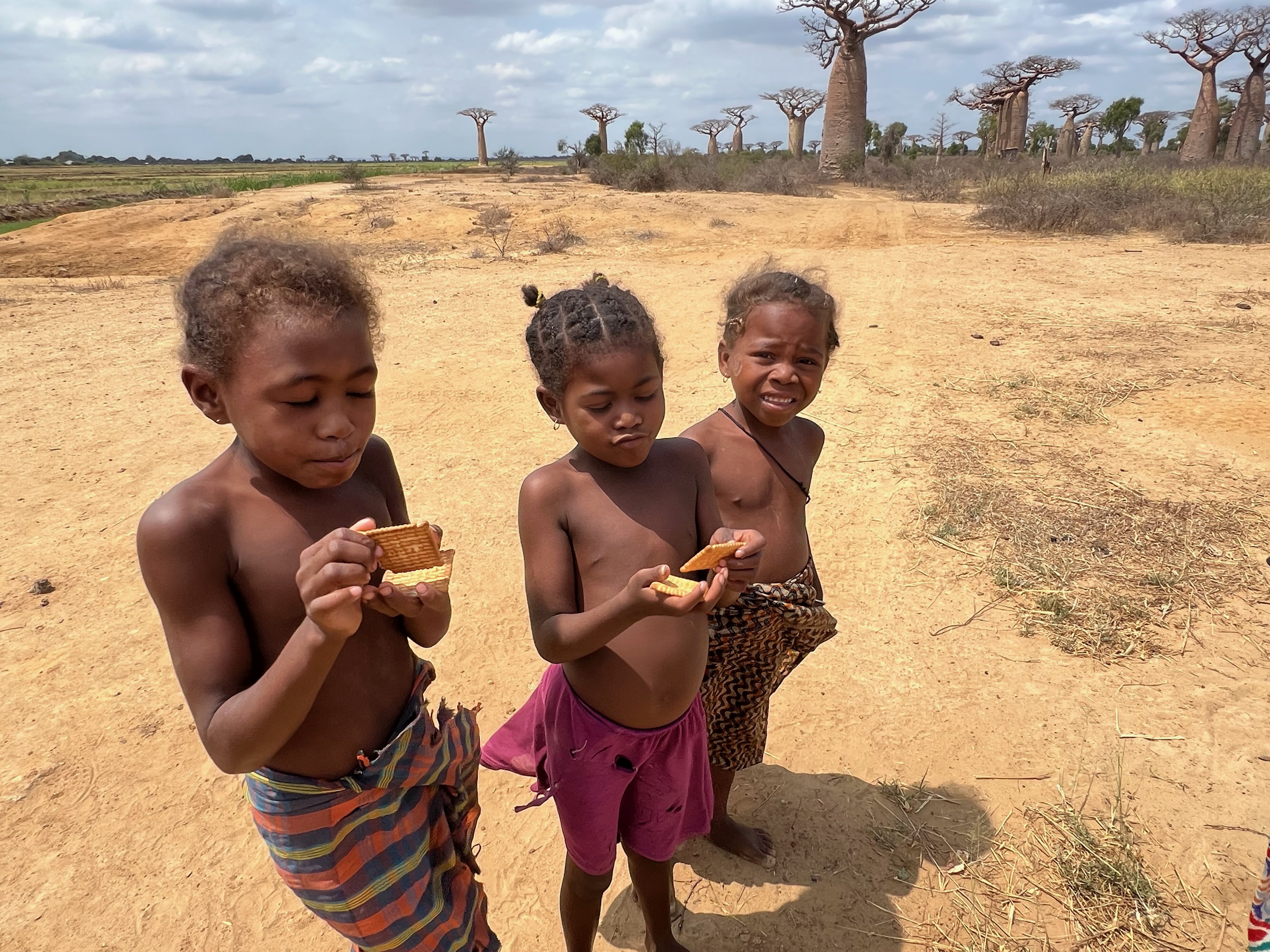
Our first stop is by forest of huge baobabs with pegs for climbing to harvest the fruit, now in season. As happens all over Africa, kids appear out of nowhere. They are mischievous and funny so we gave them biscuits and soap. Stephen has brought a polaroid with him which he uses here to great delight.


Finally we reach the UWS office for the northern region, Ambaikil. Office is an exaggeration! It’s a couple of rooms. They are currently hosting some volunteers from Tana, who plan to leave the next day, hauling a pousse pousse round the villages to raise awareness. There are still a lot of out-of-school children in this area, mainly due to poverty and their families needing them to help with farming or fishing.

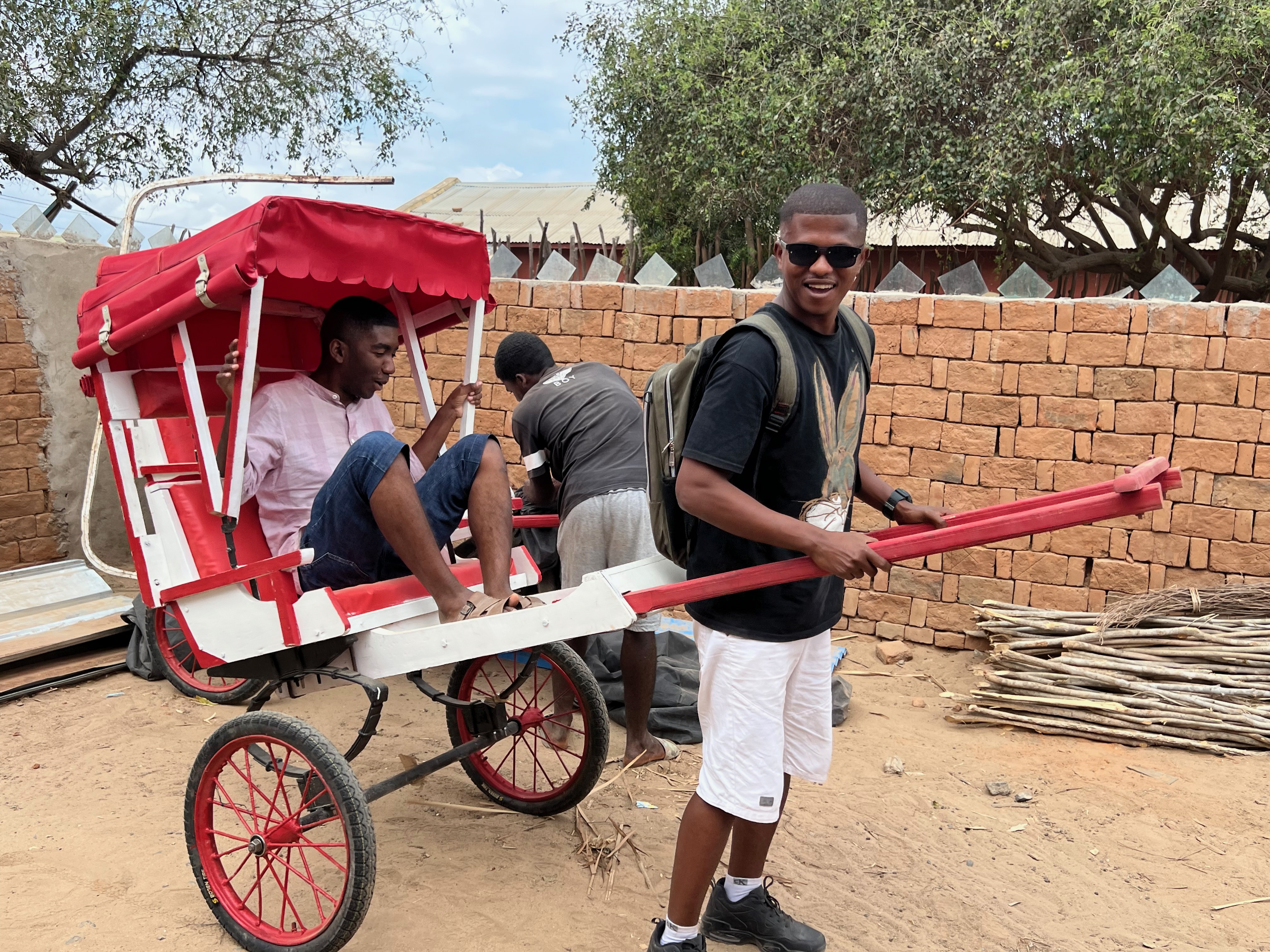


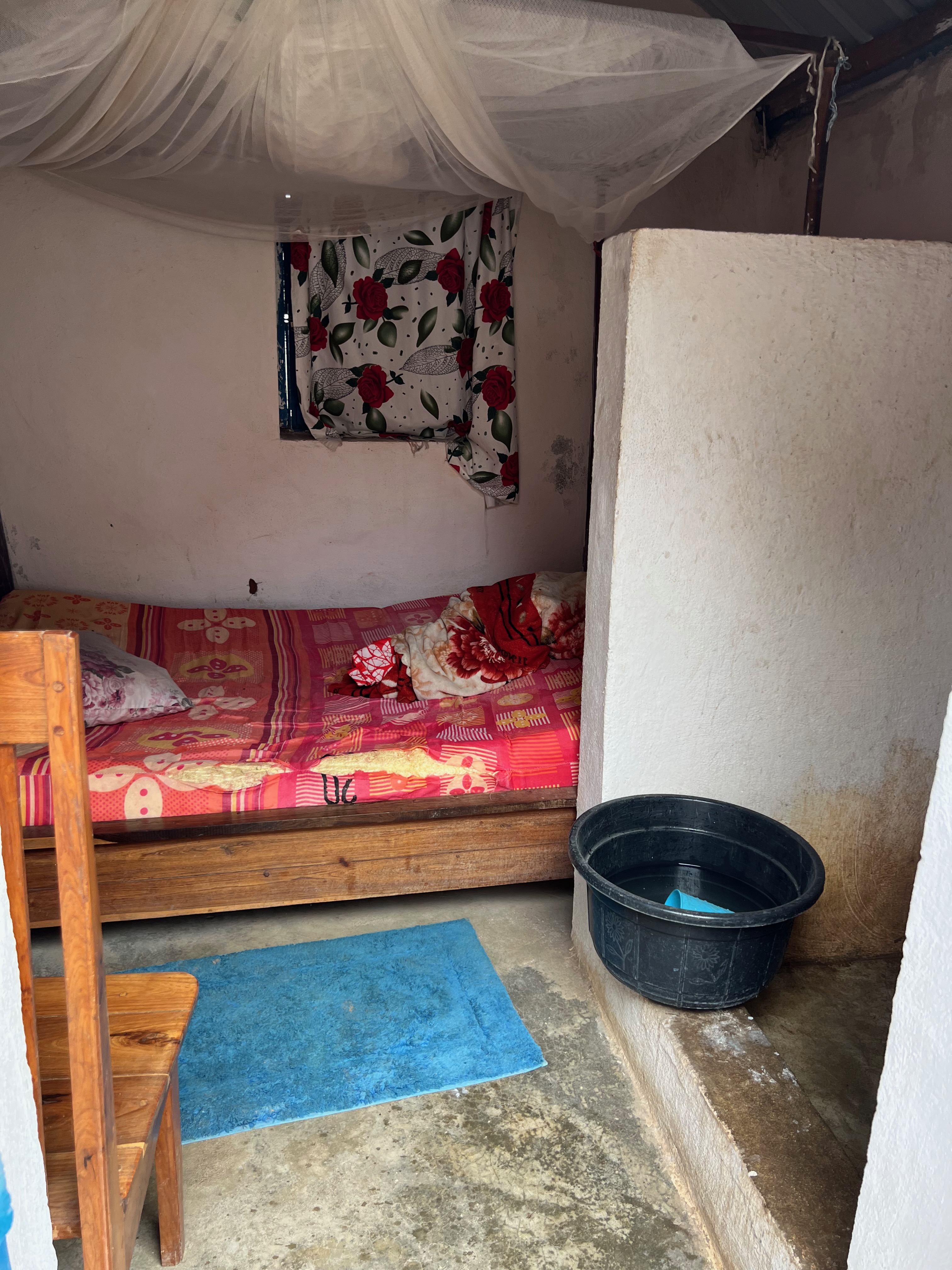

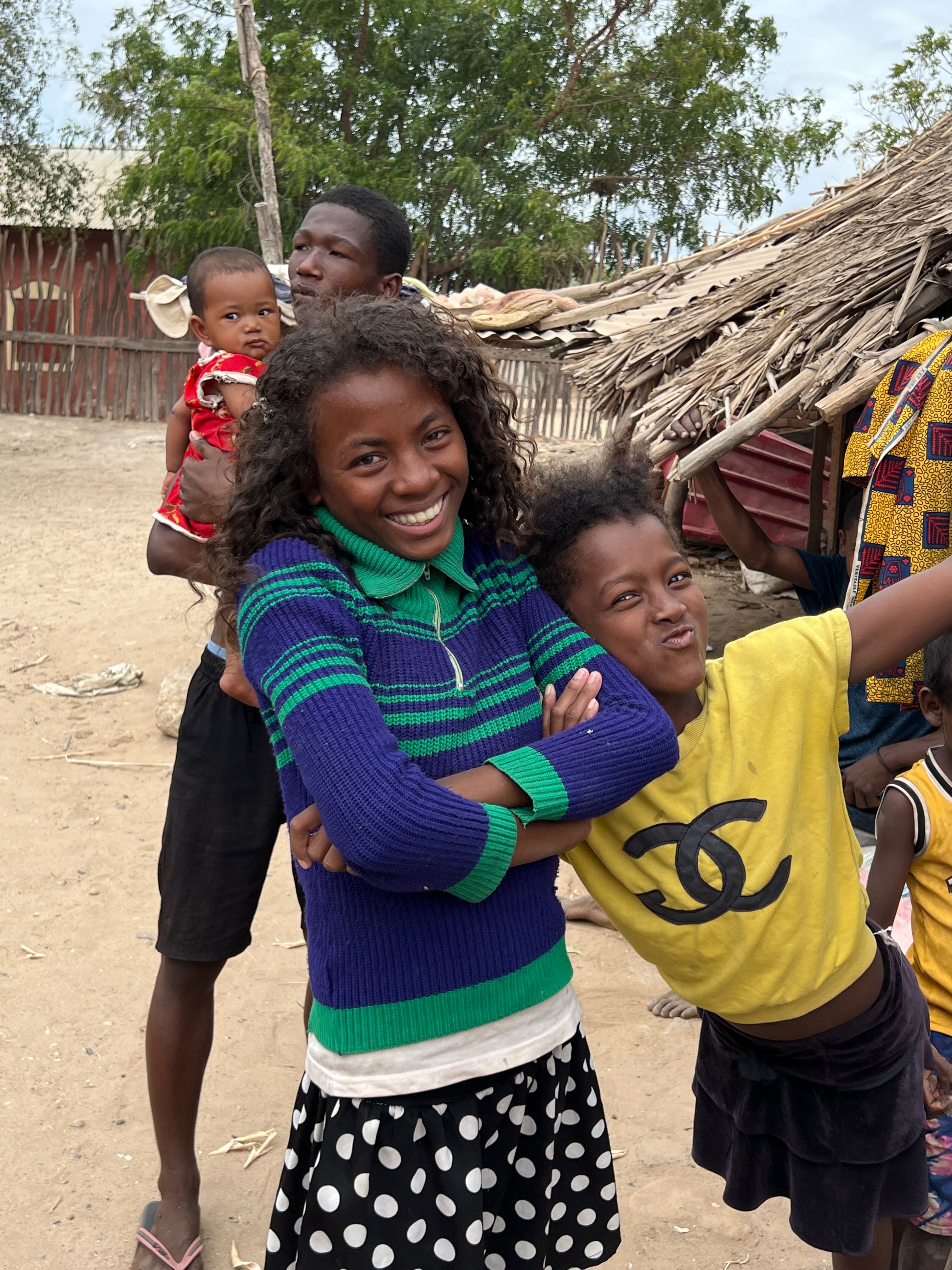
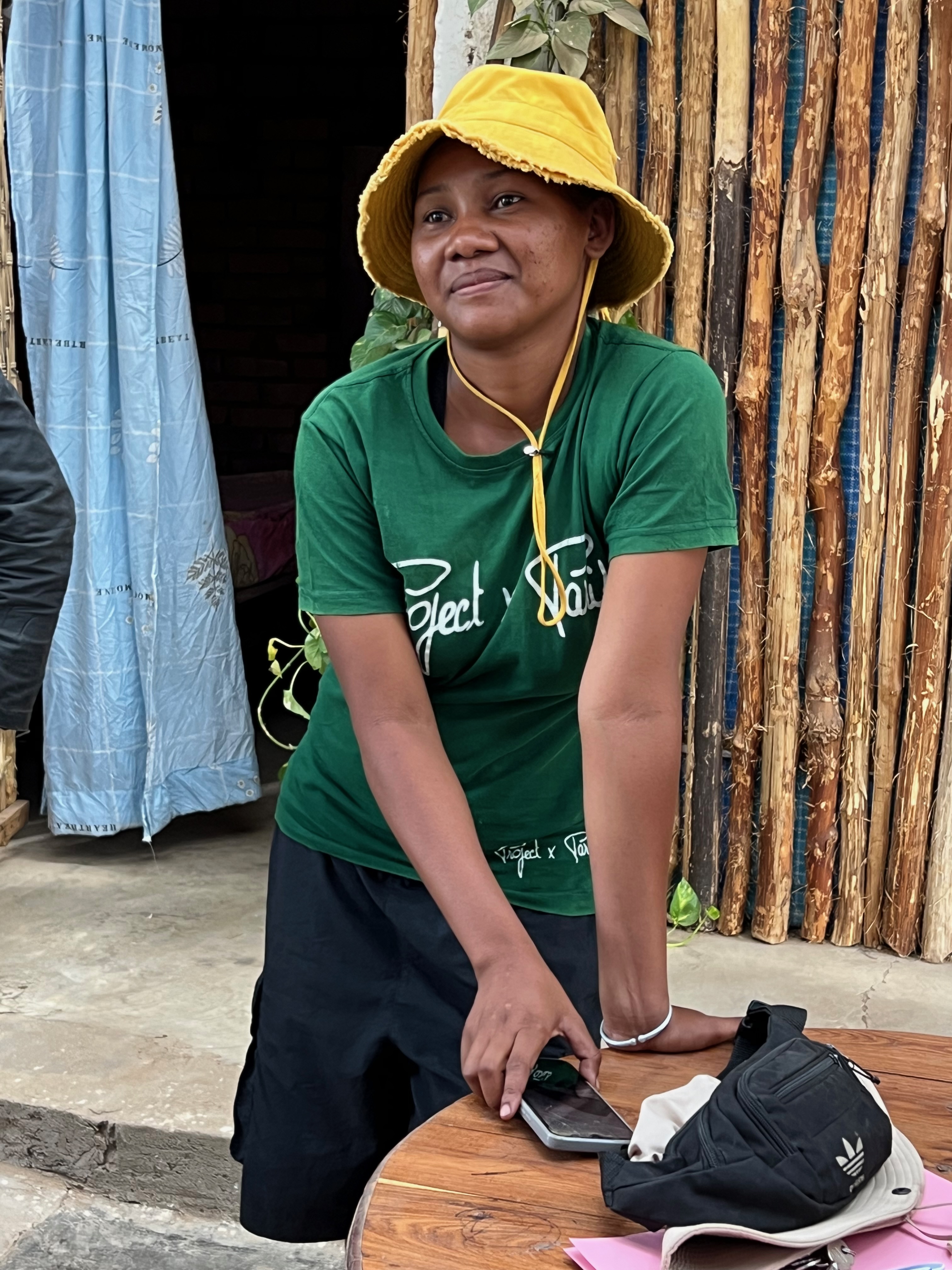
The office, then manager in her blue shirt, and the volunteers with the pousse pousse; the neighbour, her kids in her kitchen; the hotel where the volunteers are staying and where we have lunch, with its sole throne-like loo
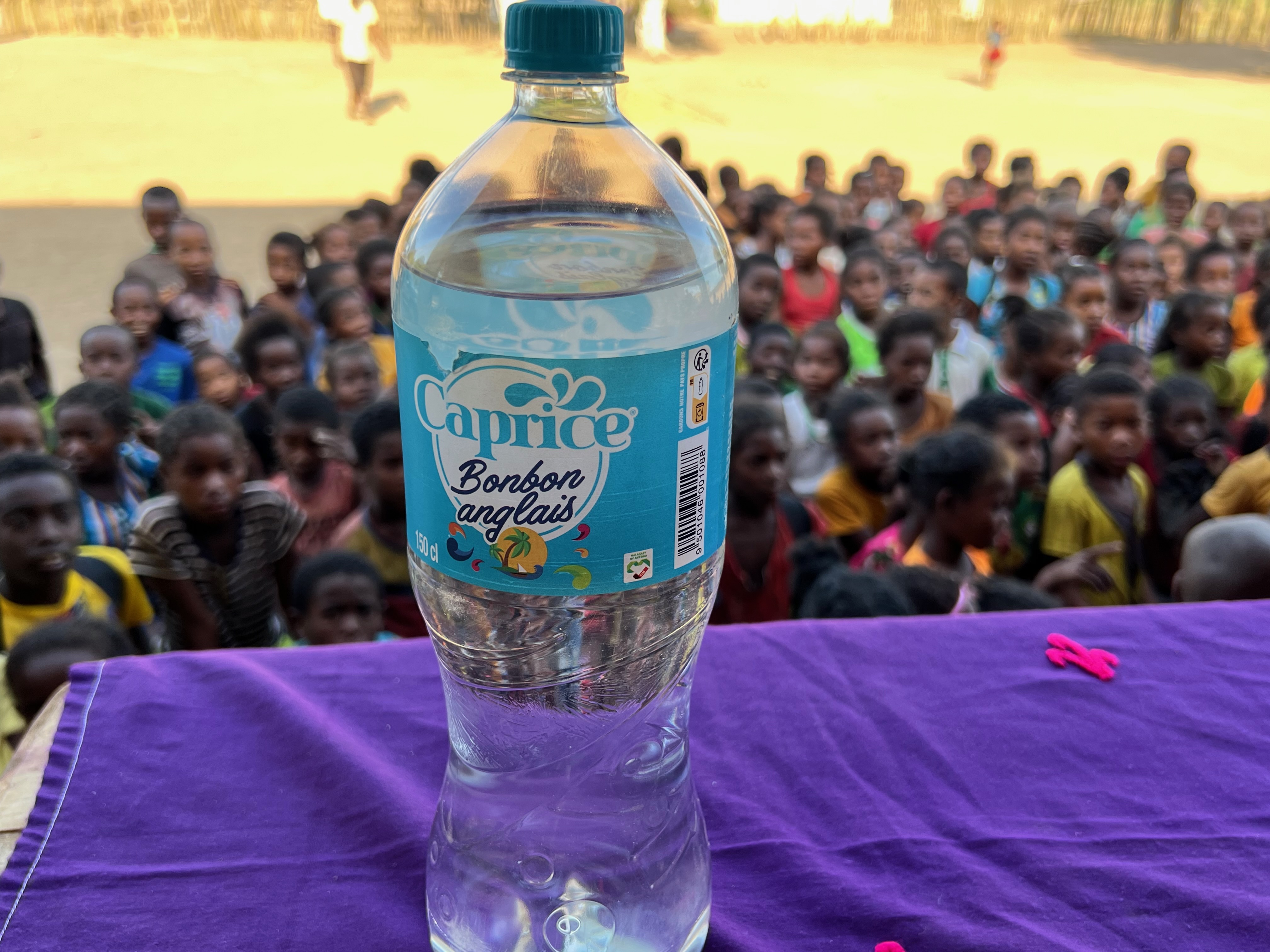
We sit down to a feast of a lunch – chicken, beans, rice (a mountain), a green soup, a delicious carrot and ginger salad, bananas, washed down with the worst drink I have ever tasted, misleadingly called Bon Bon Anglais (we thought it was lemonade and mixed it with beer early on, and had to chuck it – what a waste of good beer), Fanta and water. Each volunteer tells us what they wish to achieve out of the experience. Several speak French and we are blown away by one young woman, who’s here to bring women’s issues/tips for coping with menstrual problems in these remote communities. The young men are mostly interested in sport-related outcomes, which is good as we don’t see much evidence of anything other than rudimentary football. The school playground equipment tends to get overused and breaks quickly.


Mme Lydie’s hotel, the scene of our feast. Note Bon Bon Anglais, centre stage. Ross giving another speech! Janet trying carrot which she doesn’t normally eat and declares it delicious!
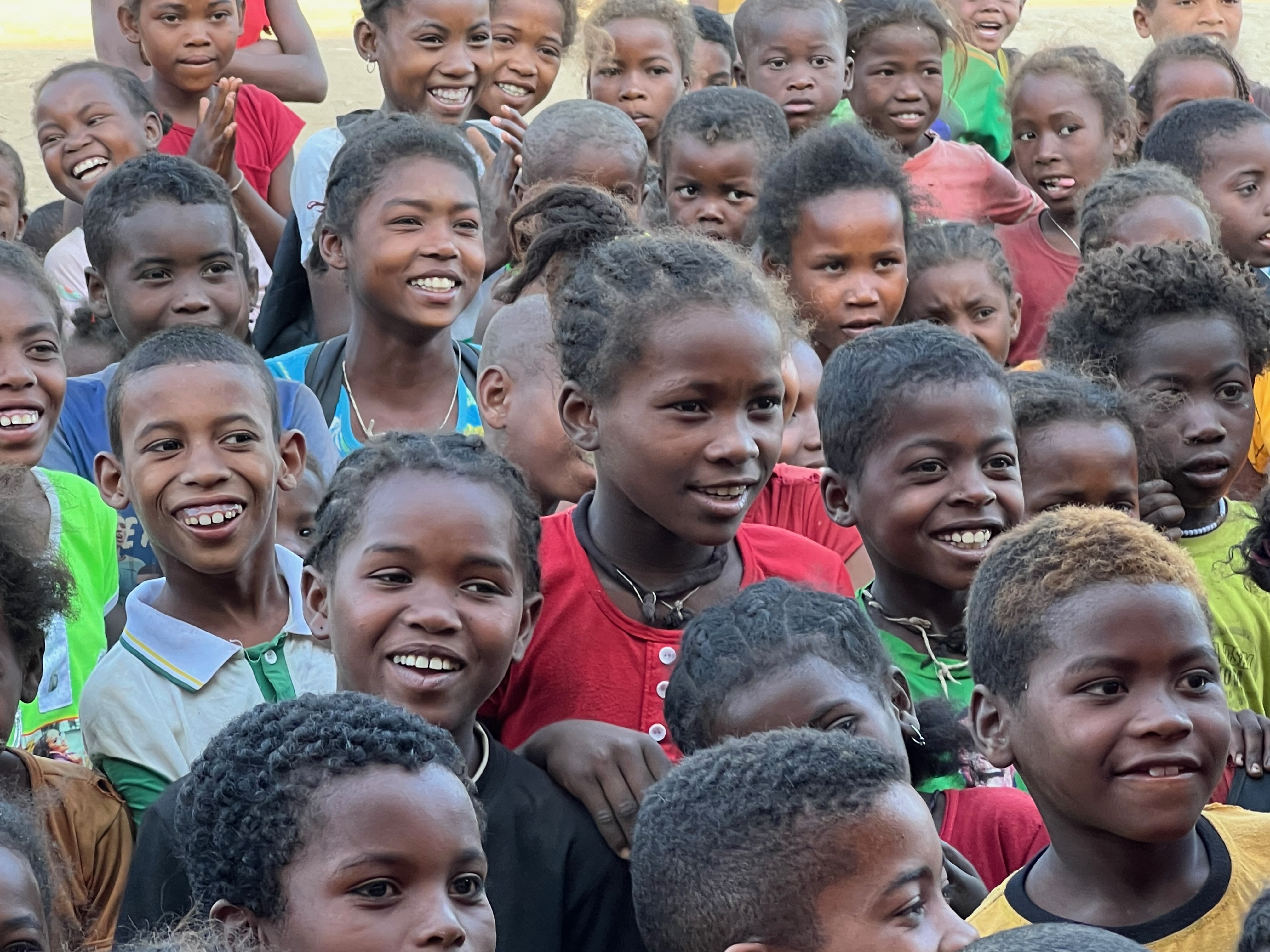
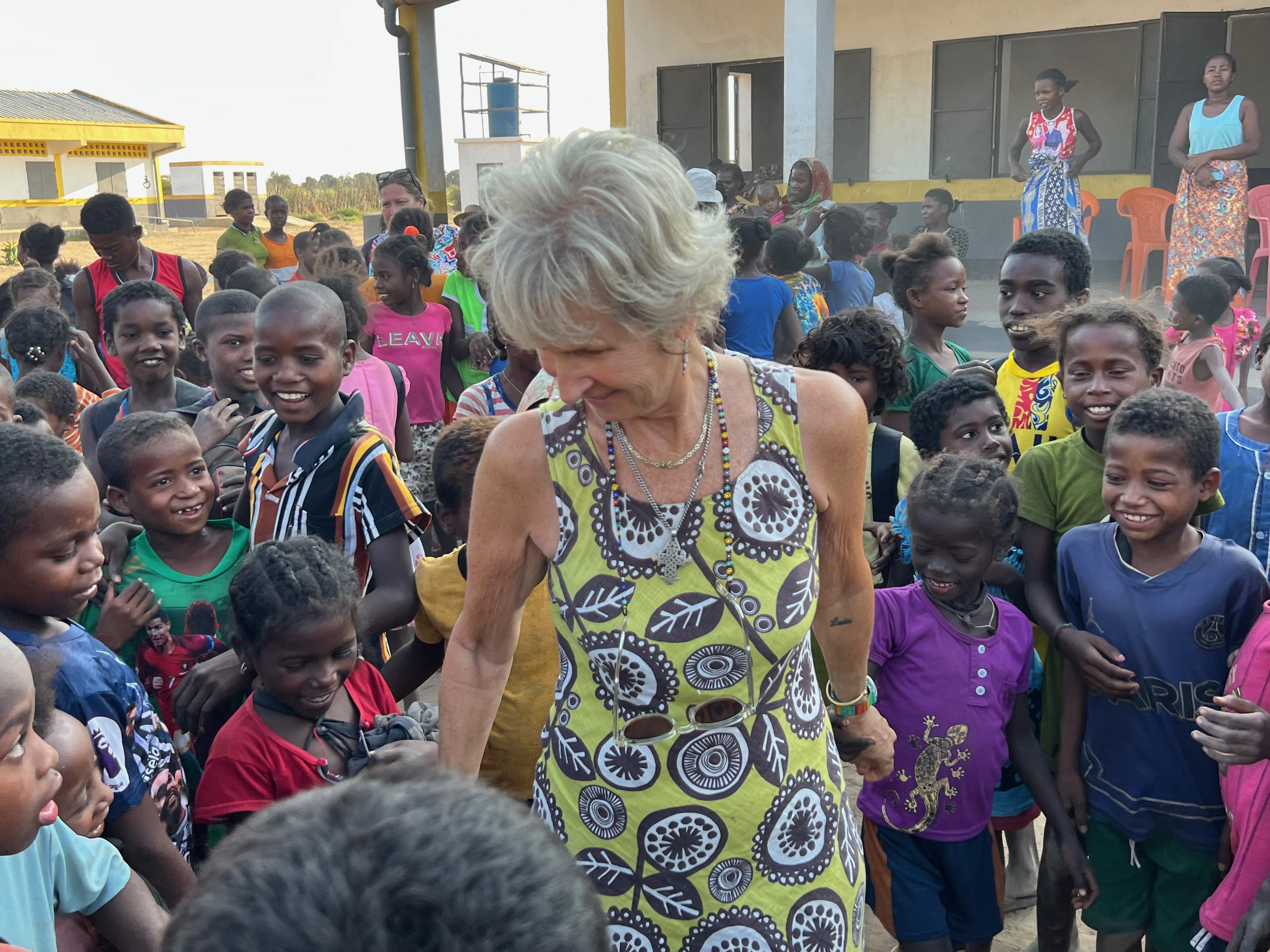
But we have schools to visit and lunch takes longer than expected, and they close by 4.30. The first stop is Antanivao, where the new buildings are not quite finished and the kids are waiting for us in their current classroom, under the trees. The enrolment is 600 kids in two shifts and 200 in kindergarten, but they all turn up at once for this excitement of the year. As our cars pull in adults run towards the school, and singing and clapping greet us as we arrive. It is truly moving.

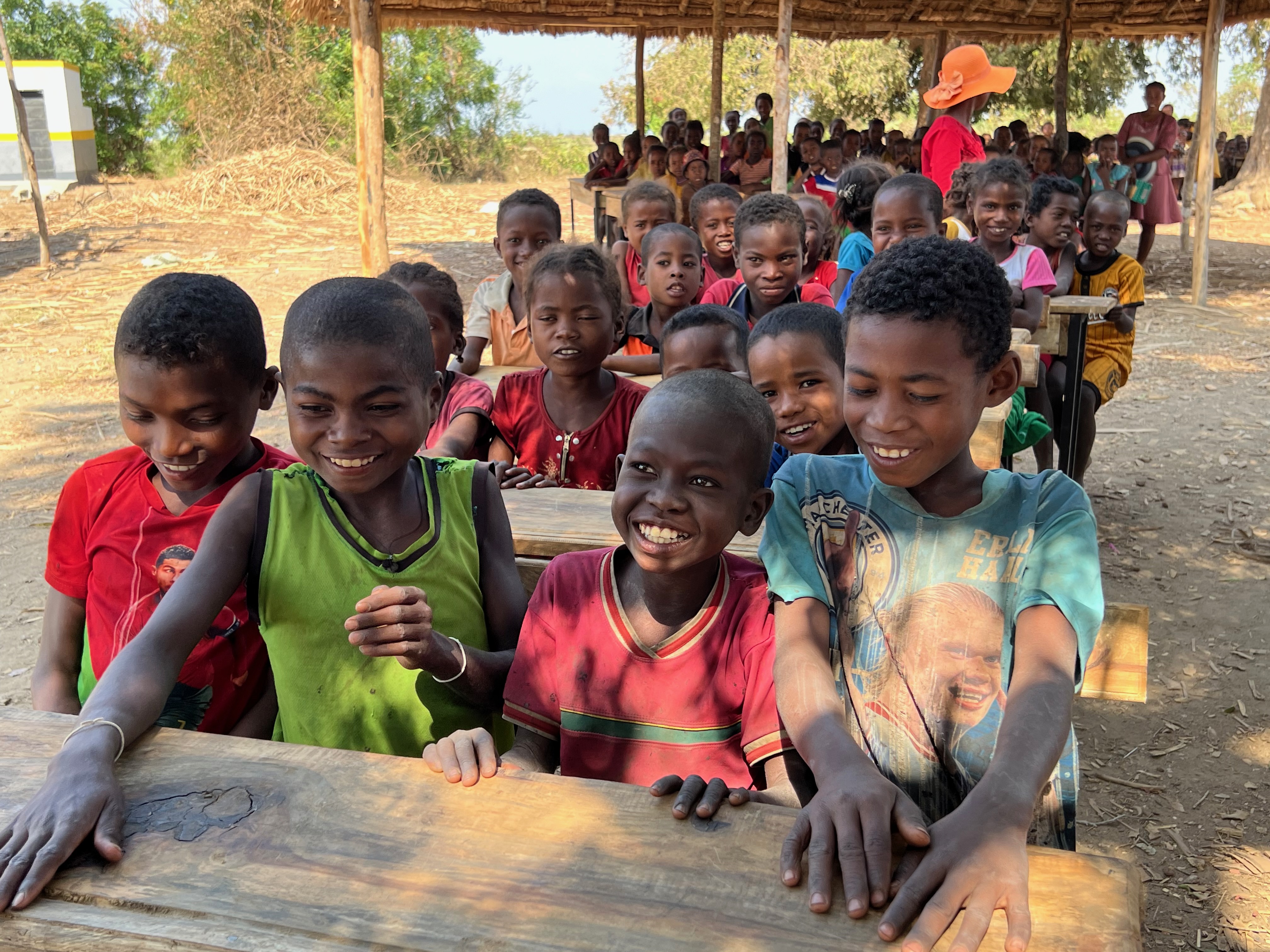
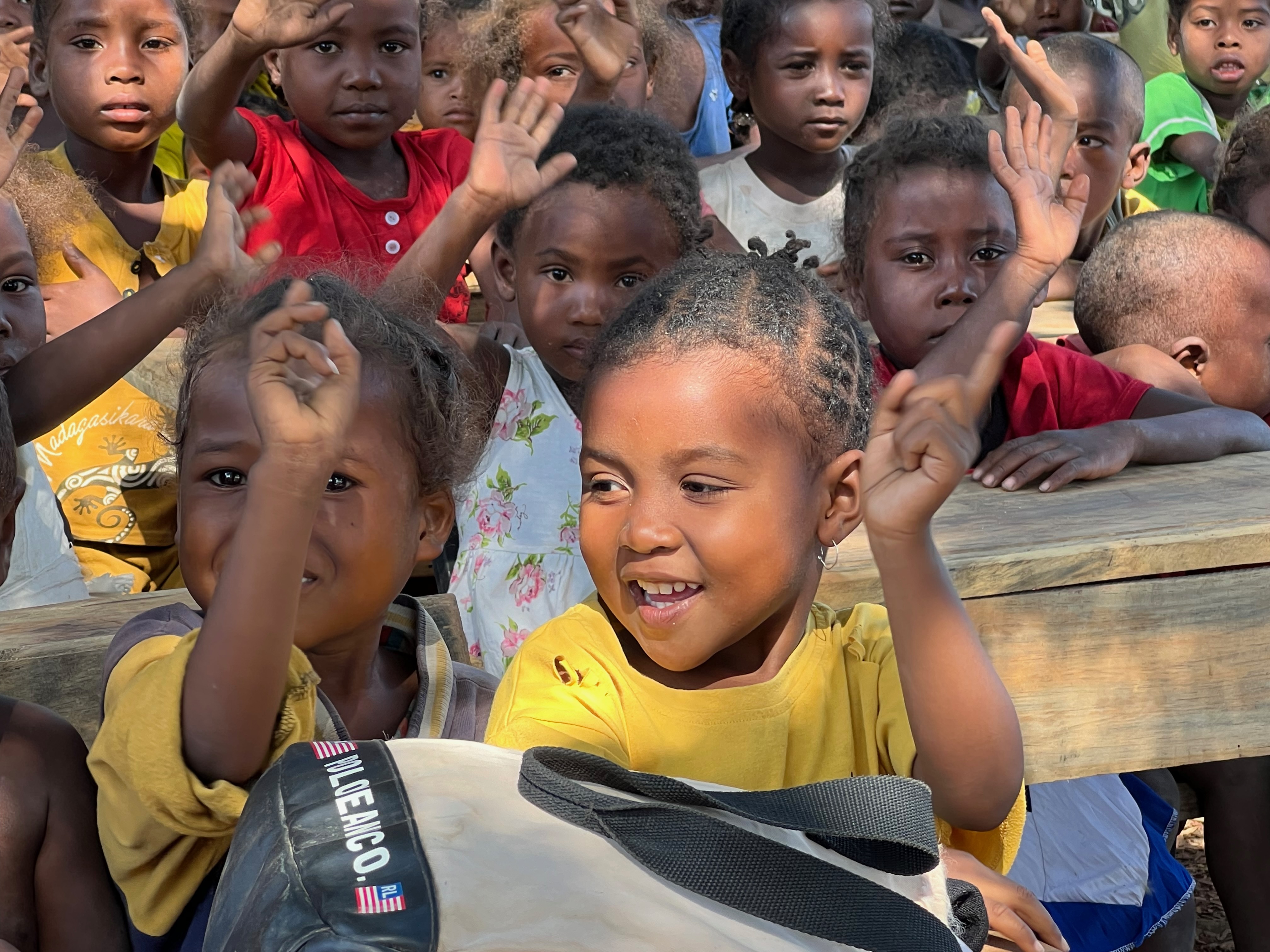
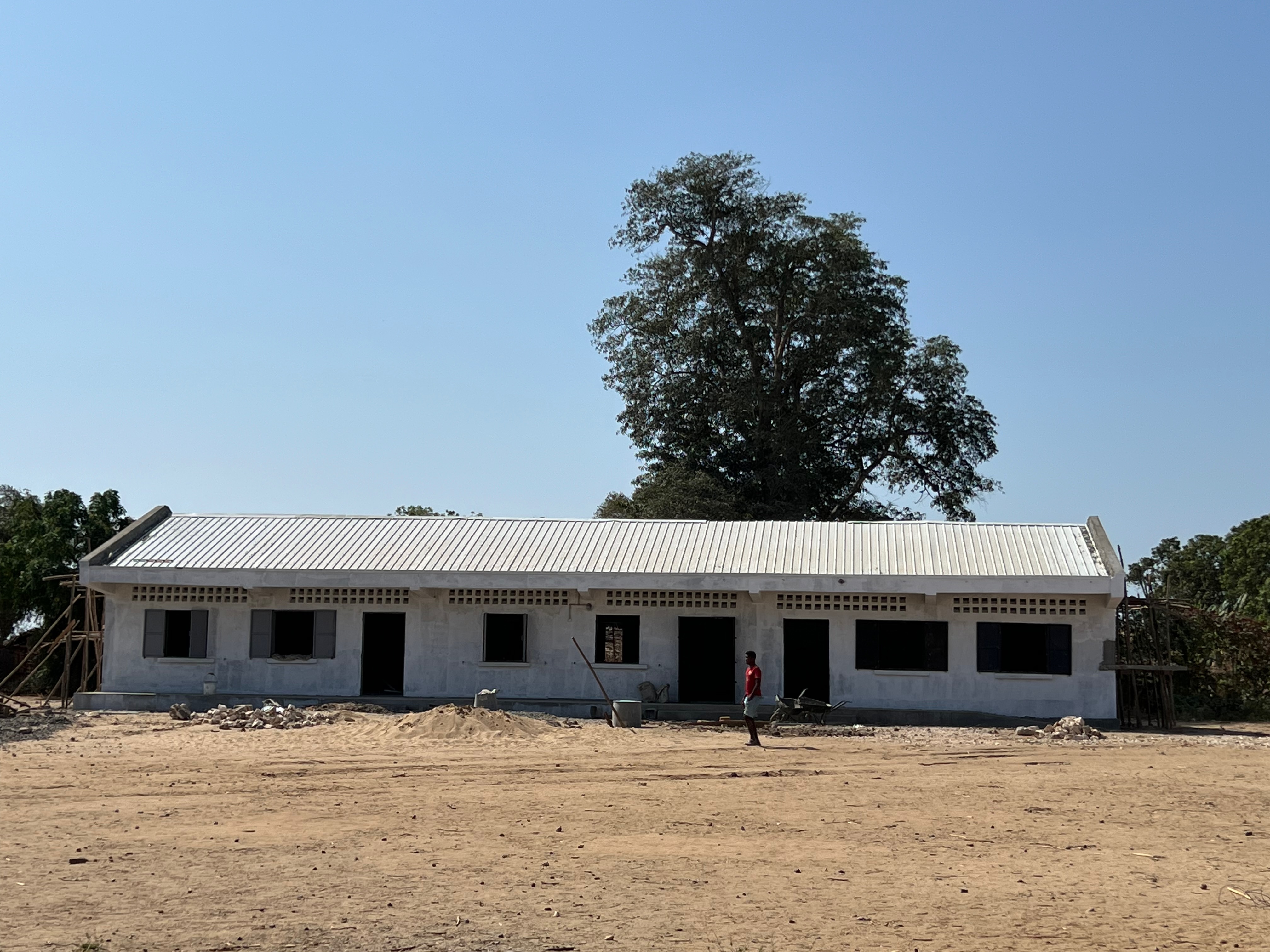

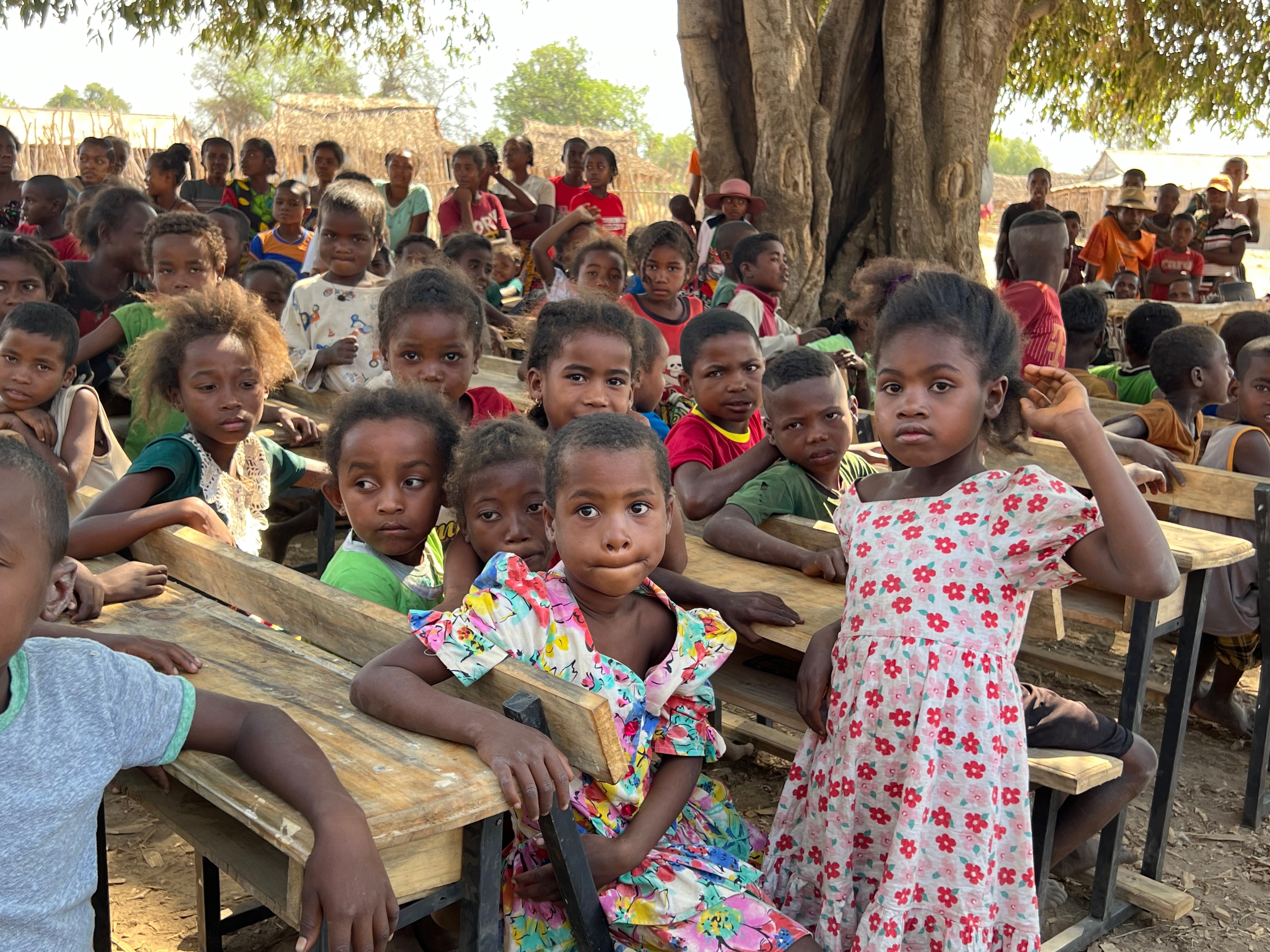
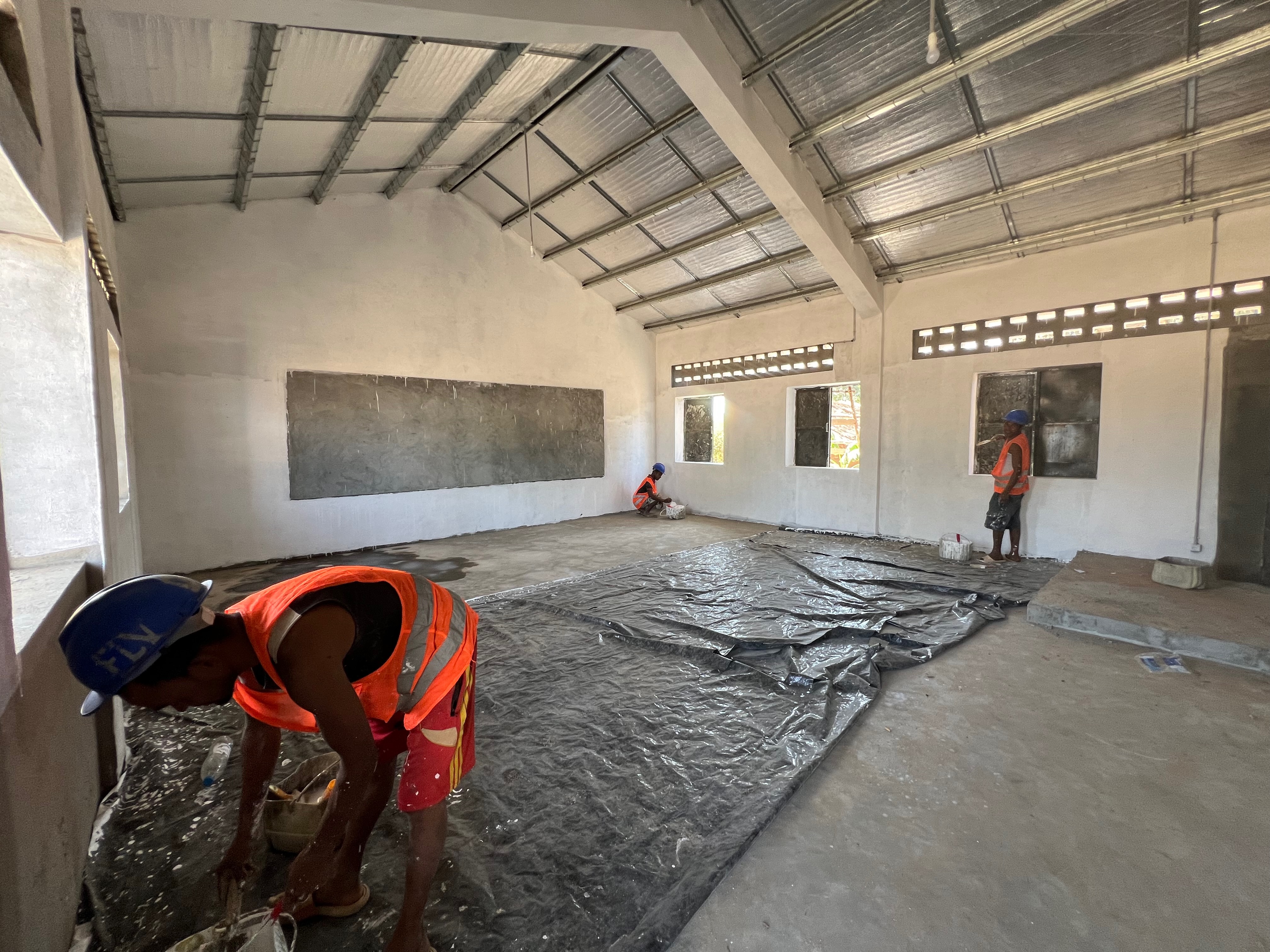
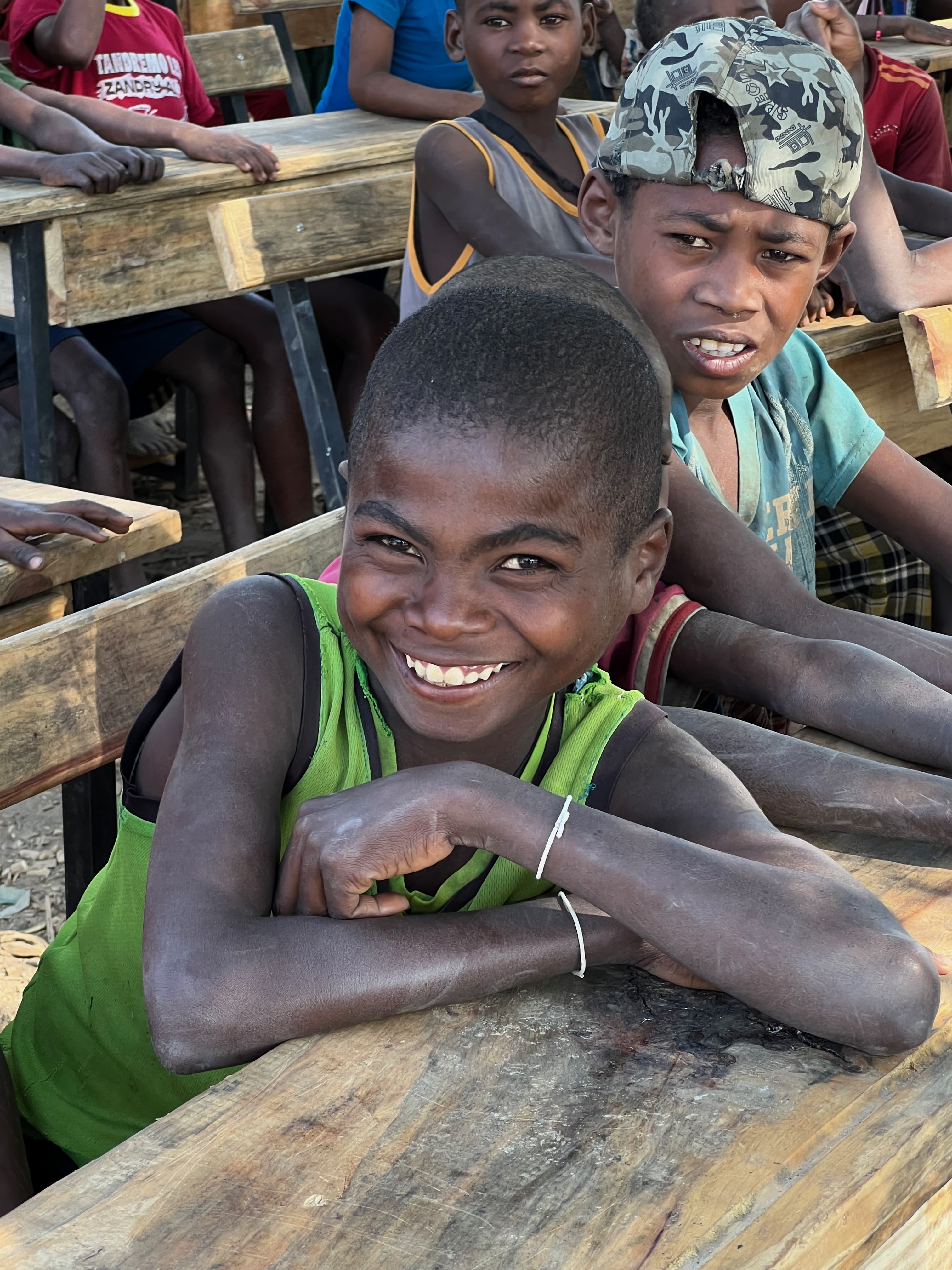


The almost completed Antanivao school – for now lessons are under the trees. The kids performed a lively song and this little girl gave a speech via a megaphone
Stephen brings us back to earth with his new persona of court jester, comprising fantastic methods of amusing kids who look at his silly walks and fist bumping with eyes on stalks, before dissolving into gales of laughter. As he’s the official photographer, this is simply brilliant. Ross and I have made a books and materials donation which is divided equally between all the schools, so there’s an official handover of dictionaries, and various counting games, including a rather strange computer one, which I’m not sure will fulfil its potential as it will be closely guarded by the teacher!


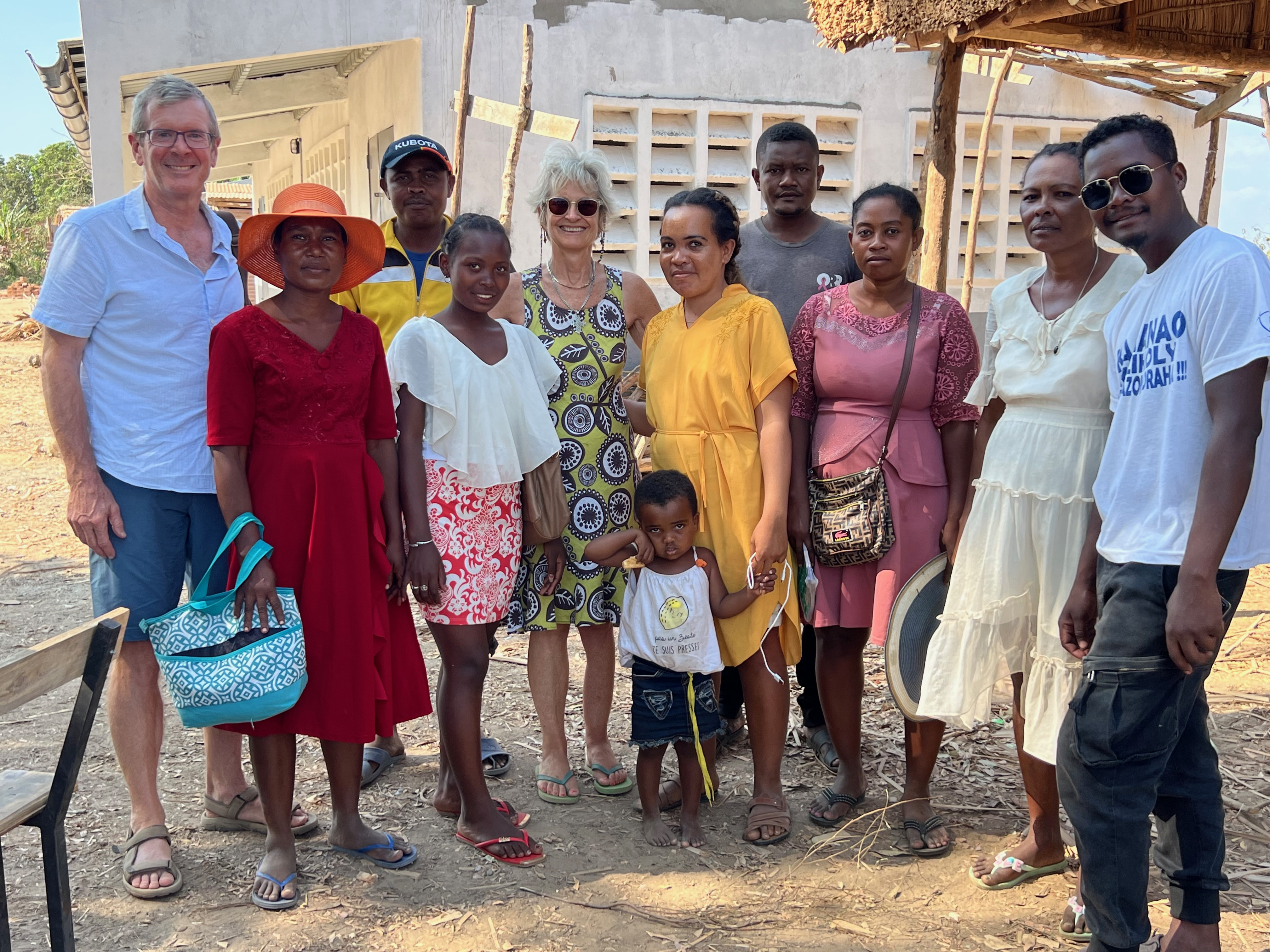
The polaroids cause hilarity; Ross and me with the teachers
Getting to school number two is challenging as we’ve hit market day, and annual bean pick-up day – all ready and waiting in huge sacks and being heaved into large trucks. Goodness knows how they navigate their way in and out of here! It’s gridlock with huge trucks unable to pass on the narrow roads and we are anxious about reaching before school shuts. Ox carts trot in between the chaos, Karine bumps into her sister-in-law who has a market stall. Its all crazy.
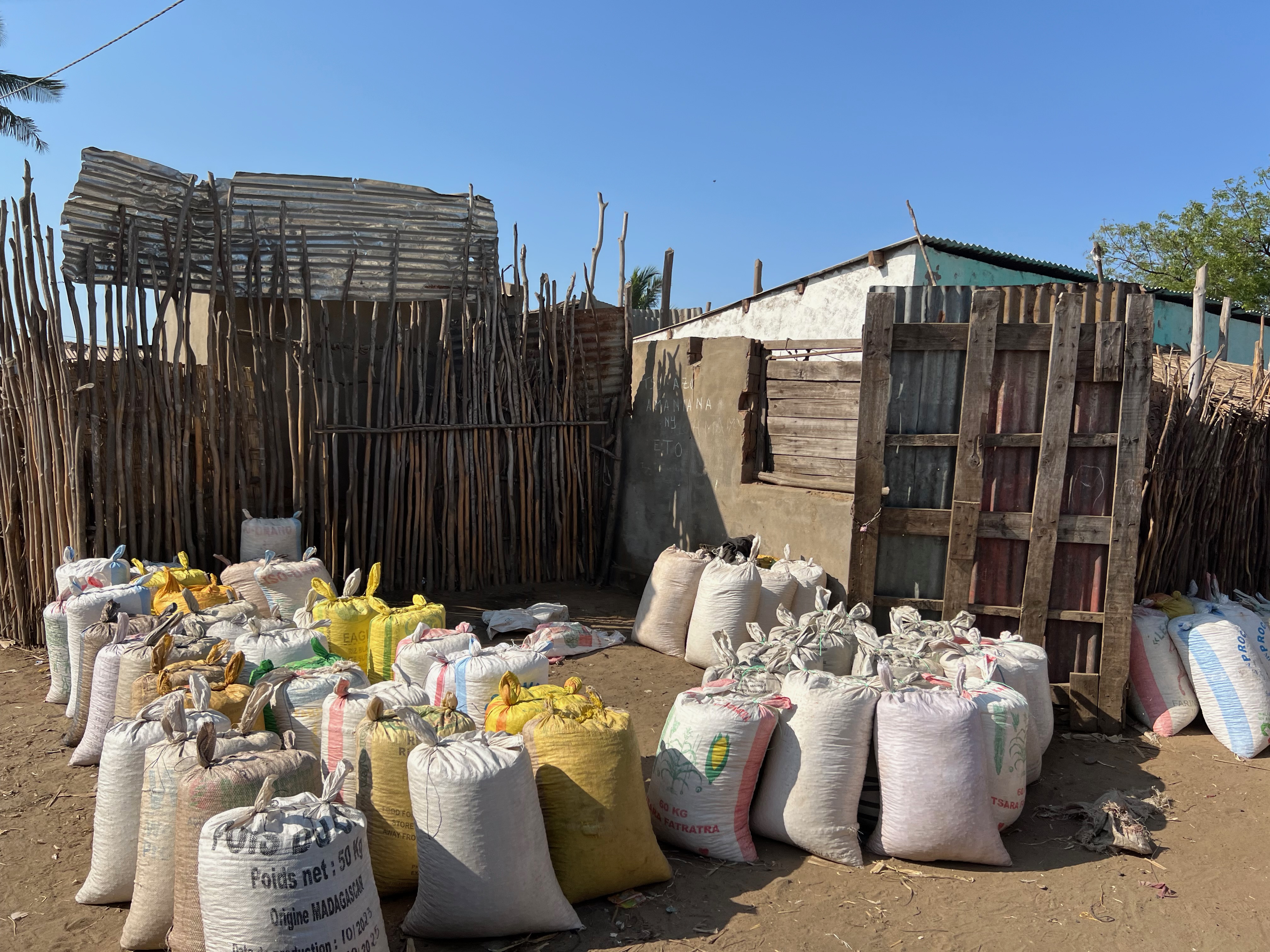


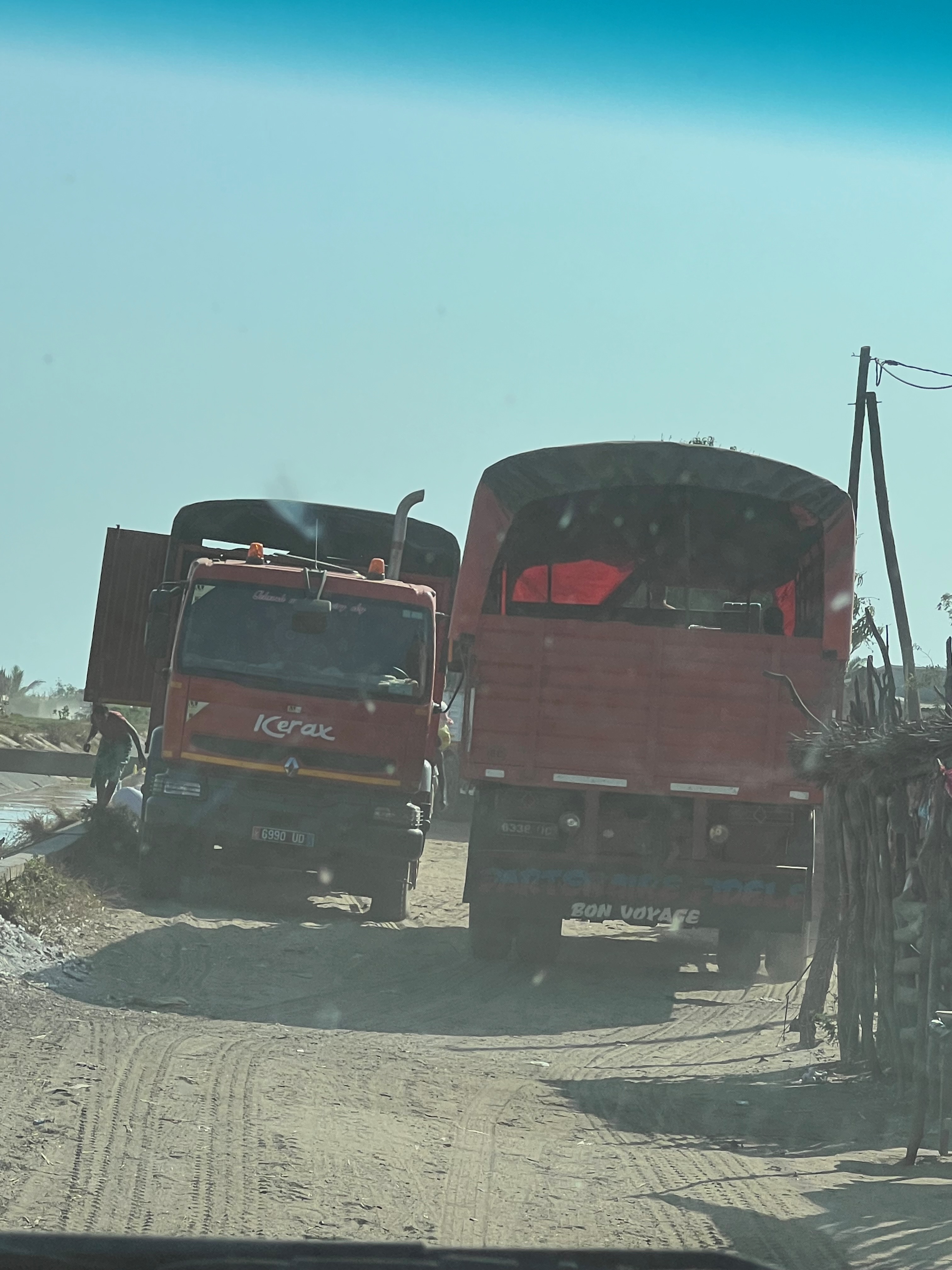
Finally we get shot of the village but now there are ox cart jams, sometimes six or eight deep in both directions, with stray cows trotting alongside. No place to pass! And the dust stirred up by the carts is unbelievable. My hair is standing on end by the end of the day.
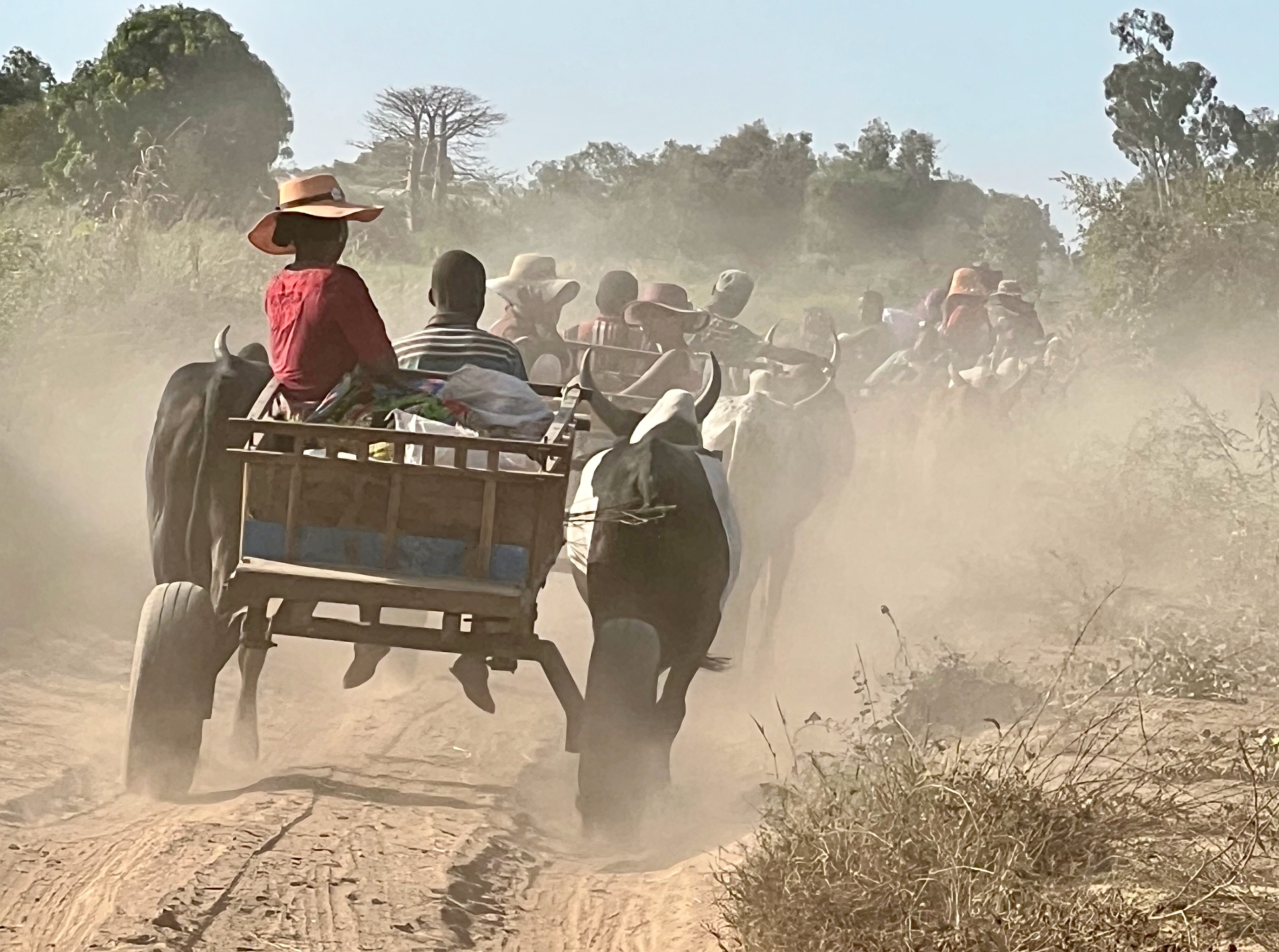


Traffic jam, Malagasy style – and the armed welcoming committee
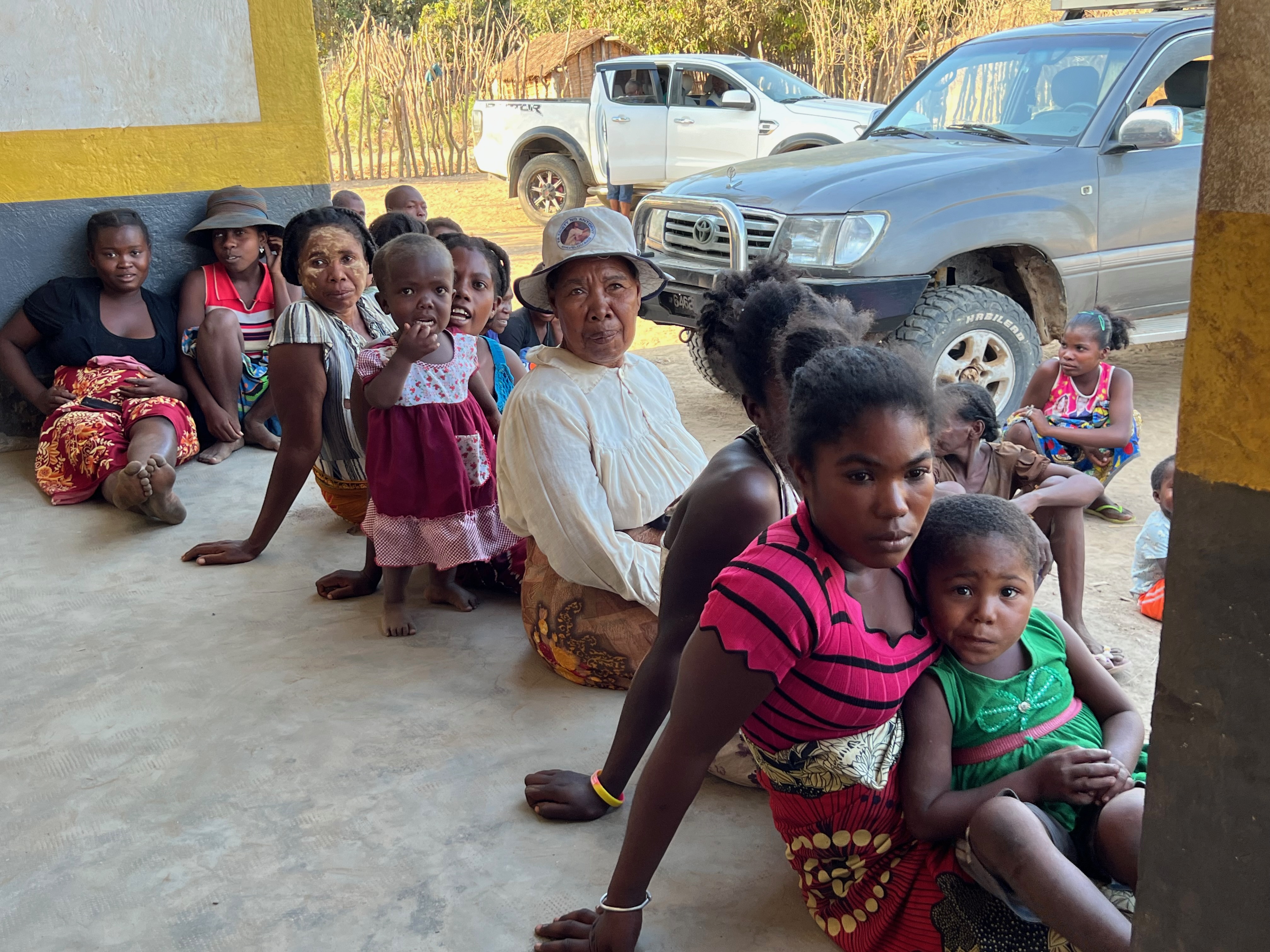
Finally we arrive at Ambalamoa behind six ox-carts and are clapped in by whooping kids. There is a welcoming committee of Gendarmes and, mysteriously the 540 enrolled kids have grown into 800 – we are later told they come to get the school bag and then melt into the bush to help their parents. Luckily only about half the kids turned up; we are mobbed with enthusiastic hand-shaking. White people are obviously quite a novelty, so much so that when I put on my best Granny act and poke the lovely babies (they are all as plump as butter, probably because they breastfeed for 2-3 years), they first look dubious and then howl!

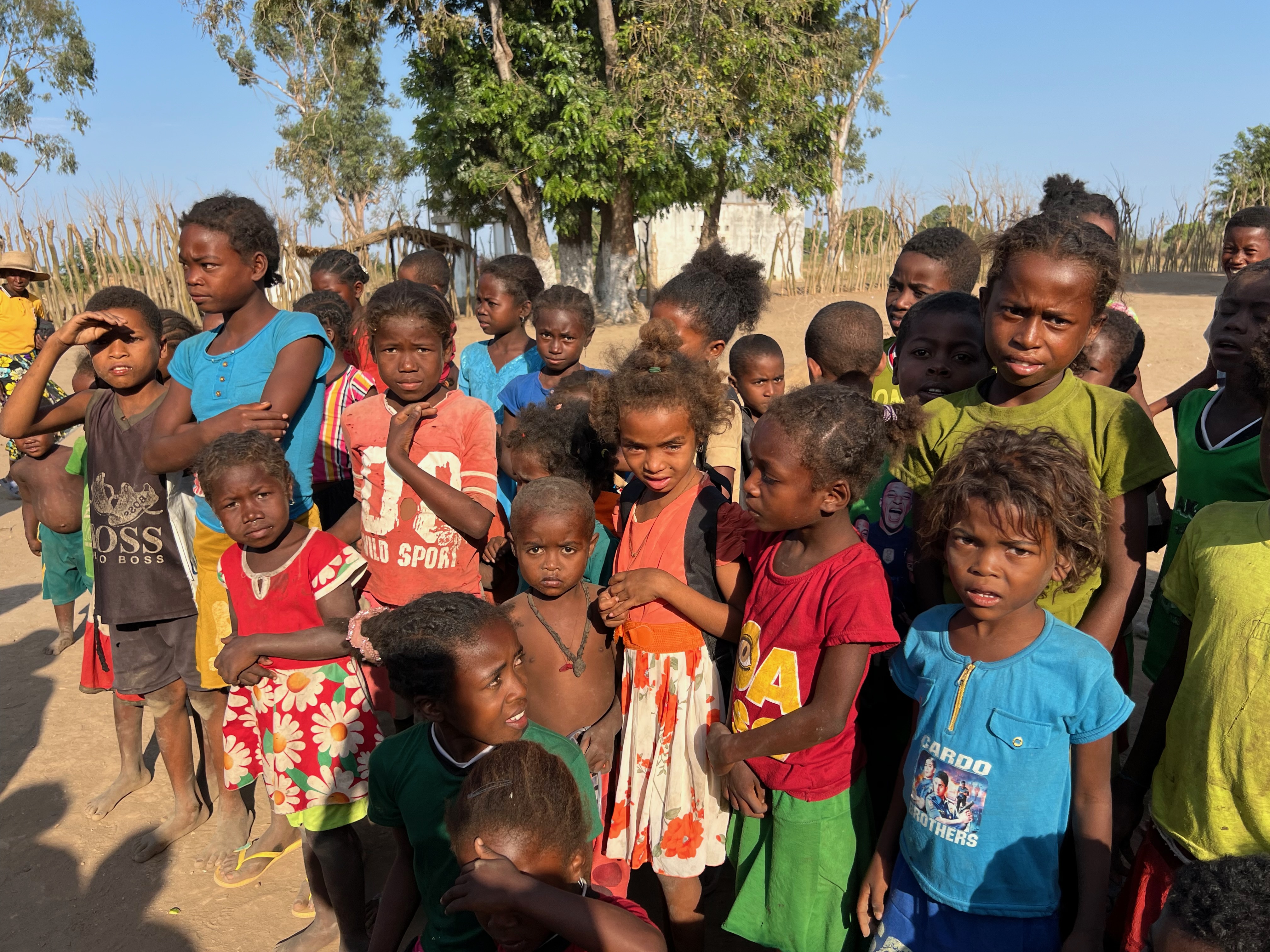
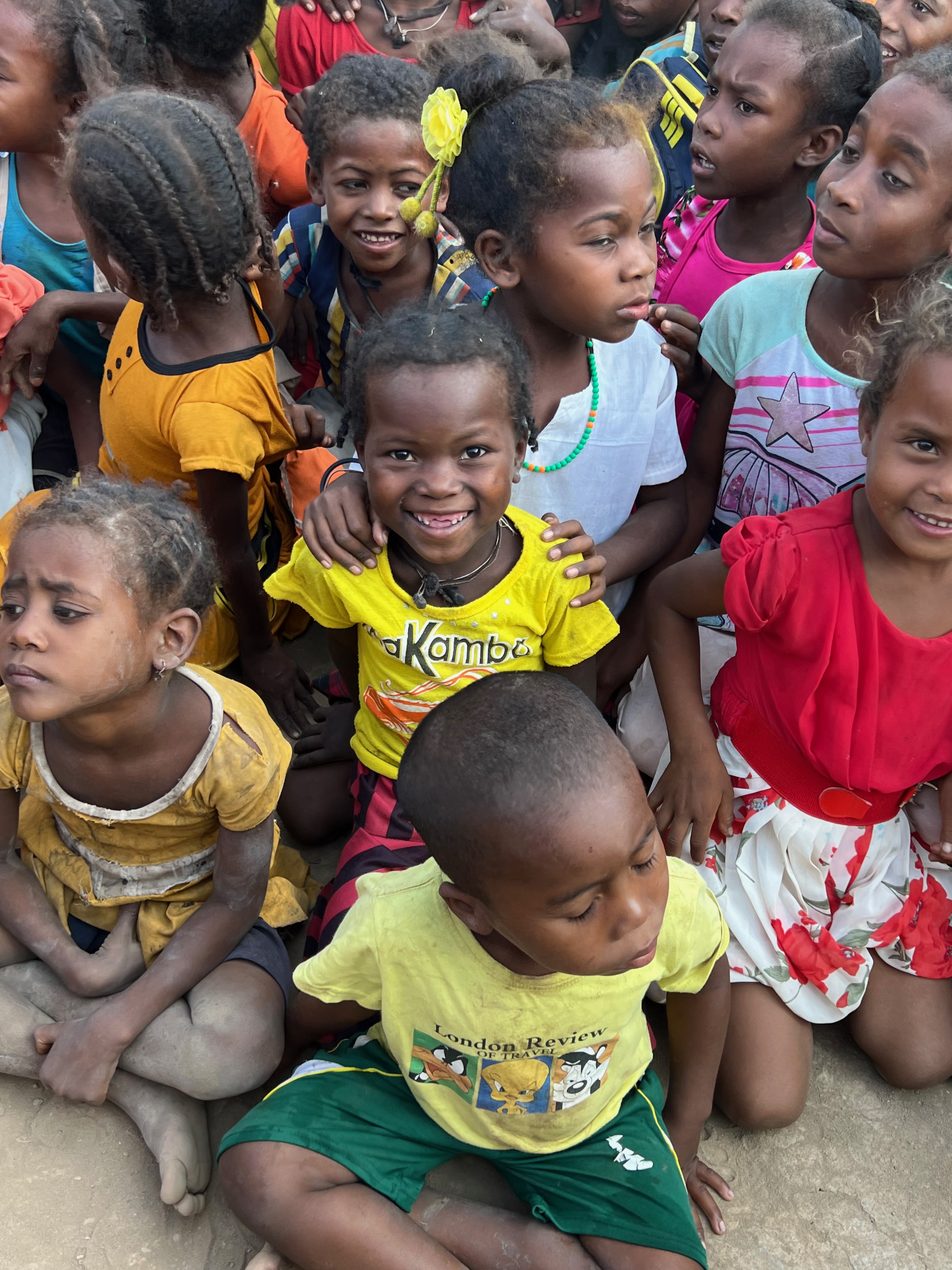

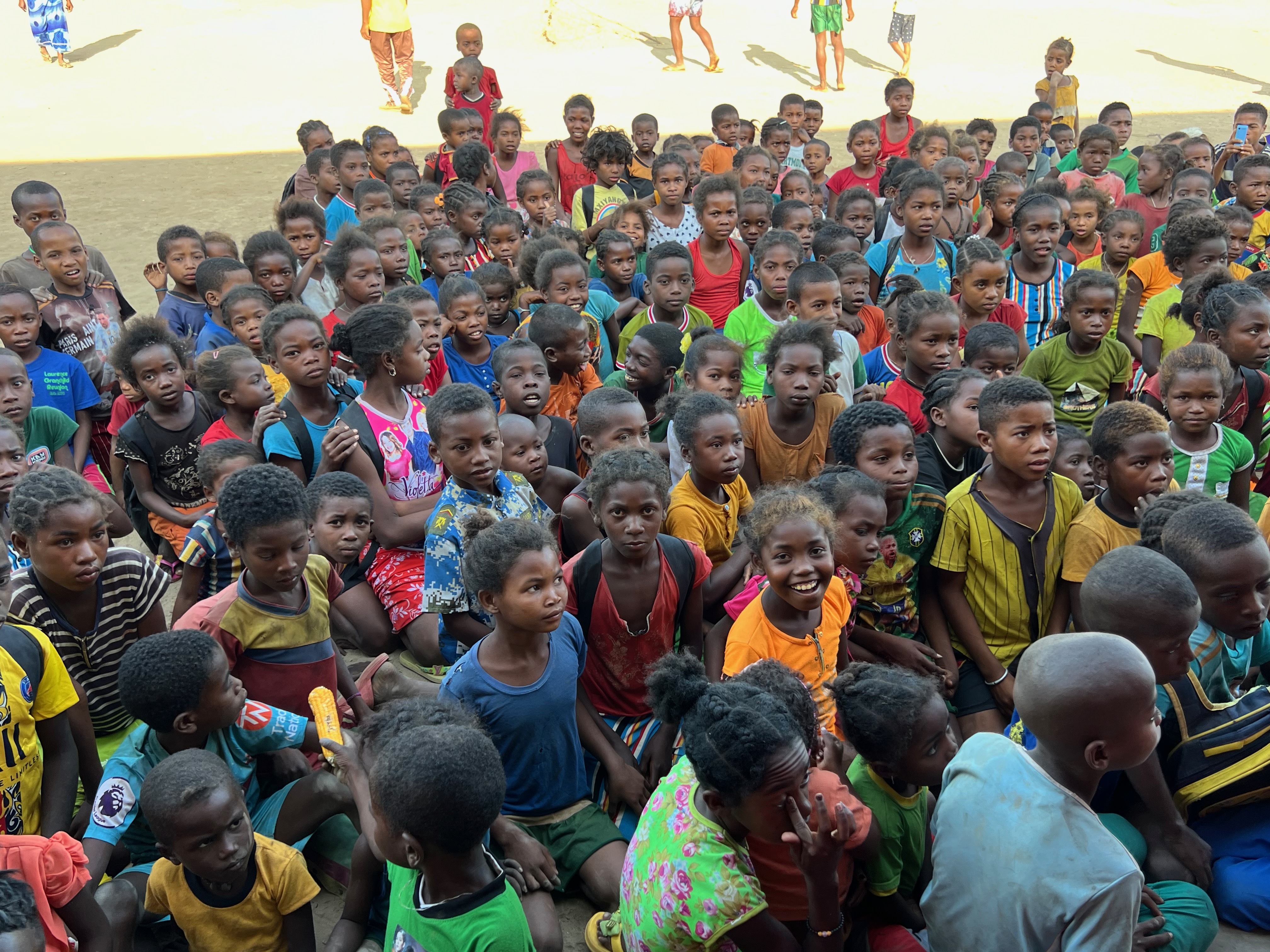




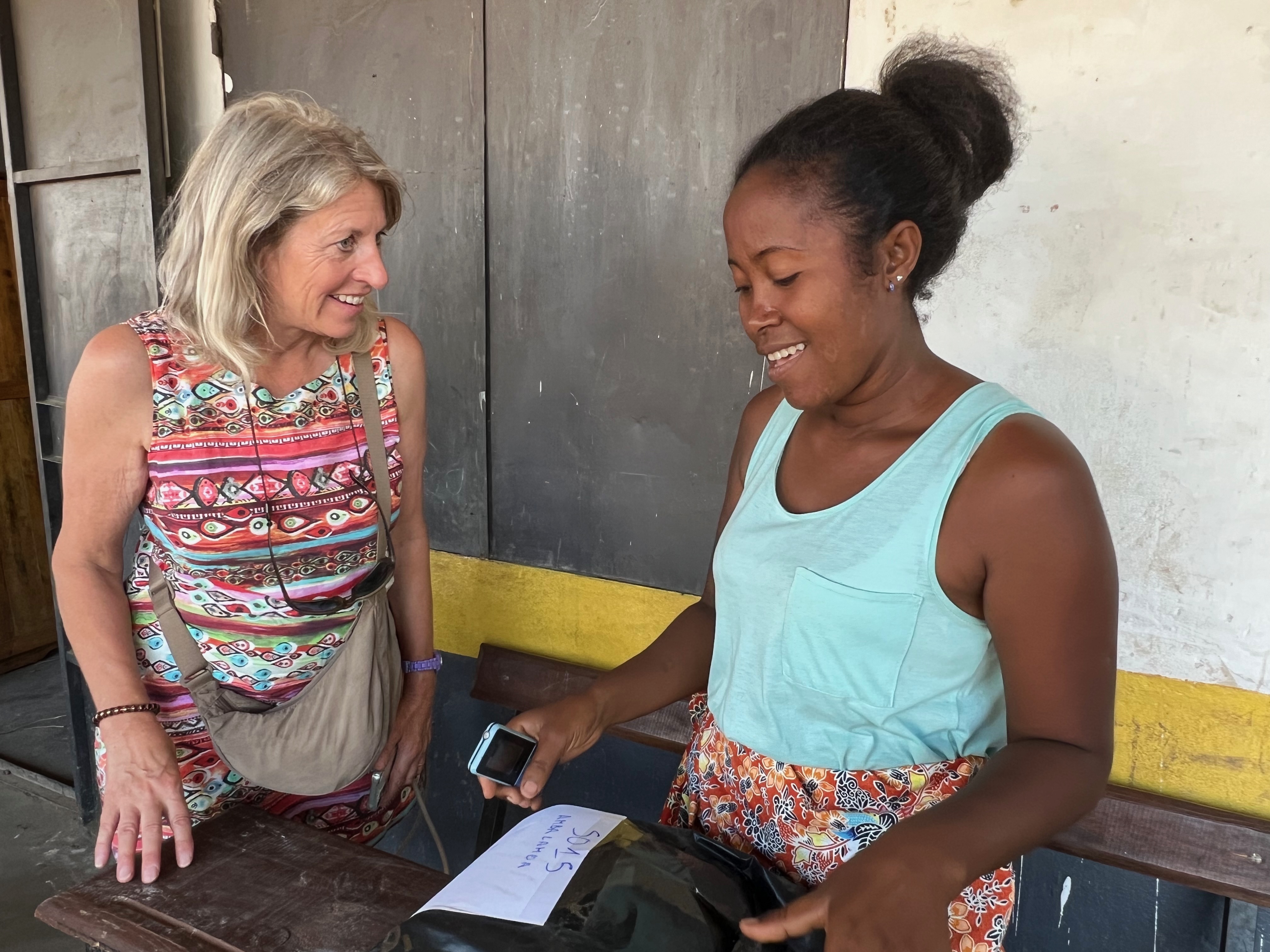
An enthusiastic welcome at Ambalamoa – the officials (Karine, Hiaro, Janet and Ross), inspect the school, and below, make speeches while handing over the gifts. The Head looks baffled by the computer game (!) – and the vile and ubiquitous Bon Bon Anglais is ready and waiting. In defence to the fact the village is so poor, we don’t touch the drinks, while I do my best royal impersonation with the children
We manage to extricate ourselves at 5pm, handover ceremony completed and some speeches from the headteacher and the head of the FEFFE, the parents association. Now the sun is low in the sky, the light is soft and glowing; there is less traffic. Suddenly six or severn motorbikes shoot by, with two astride, carrying machine guns. Richard, Karine’s husband and driver, knows something is up! A few minutes later we are stopped by a couple of loitering gendarmes, who tell us two zebu had been stolen by four men. The cows have even recovered but the men are on the loose so we must be careful!



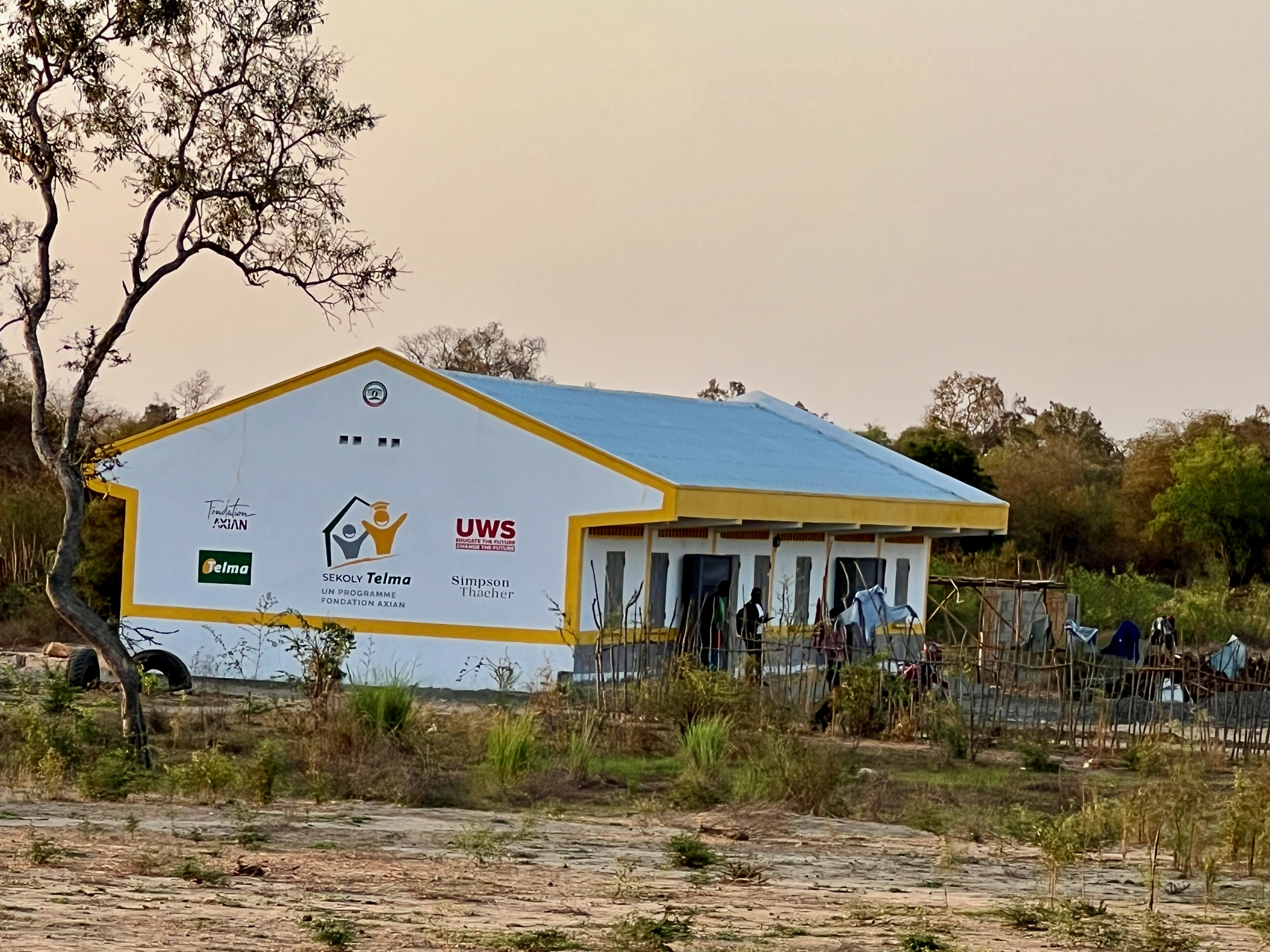
We pass another UWS school – we decide an impromptu visit would freak them out so we don’t stop
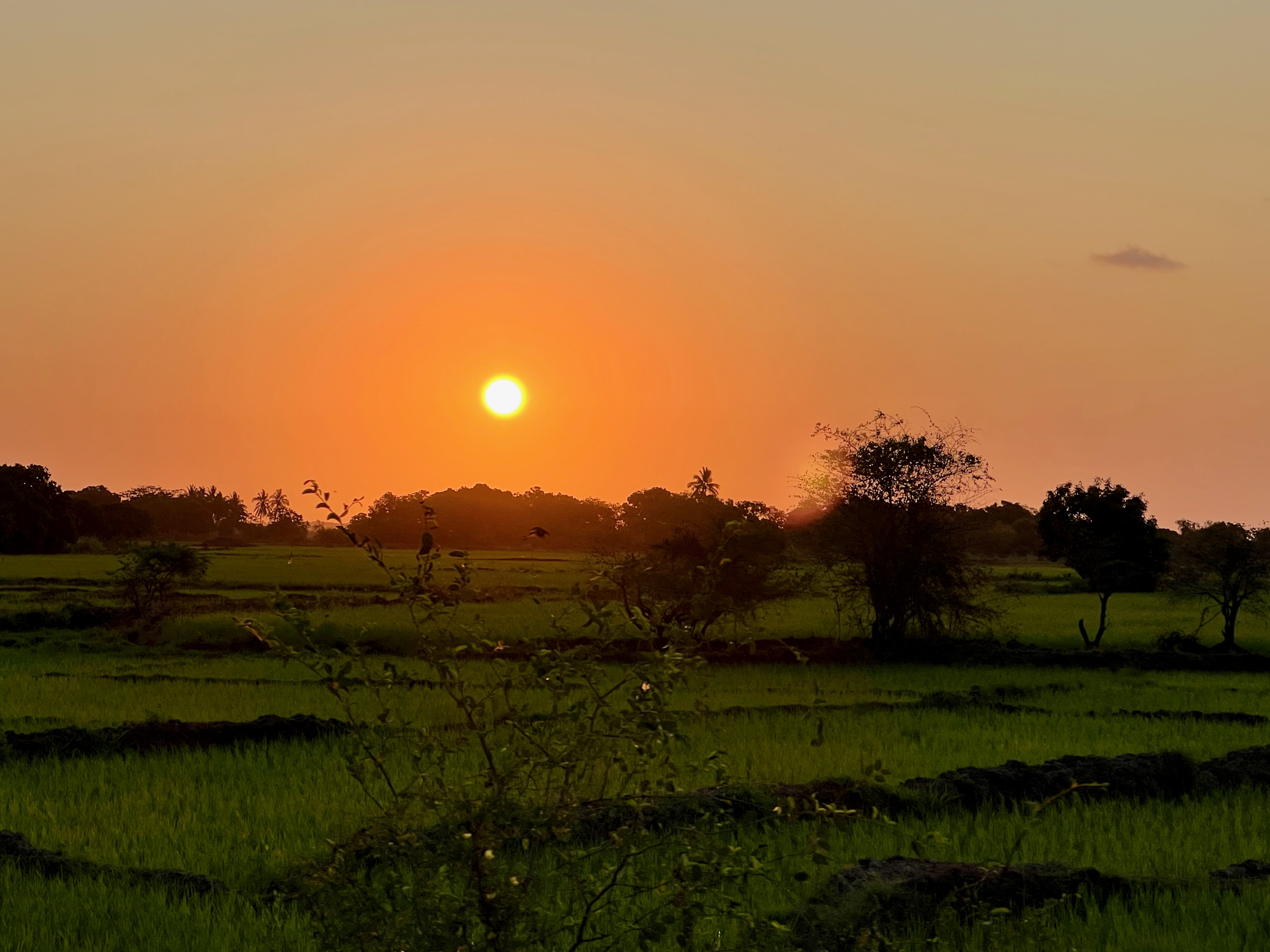
The sun sets over paddies and baobabs and darkness begins to fall. We spot a sign to chez Katia, our homestay for the night and bump down an interminable track – even Richard is doubtful Karine knows where she’s going! But we are all wrong…
The home stay is a couple of large bungalows by the sea (which we only discover the next morning when we walk a along a deserted white sand beach, picking up sand dollars) and we dine well on calamari and shrimps with home-grown veg, washed down by copious beers and a shot of whisky at end. The following morning Katia proudly shows how she has made her desert bloom – I’m envious of her courgettes, aubergines, chillies, kale, tomatoes, vanilla, beans, and admire her tortoises, including some tiny baby ones.
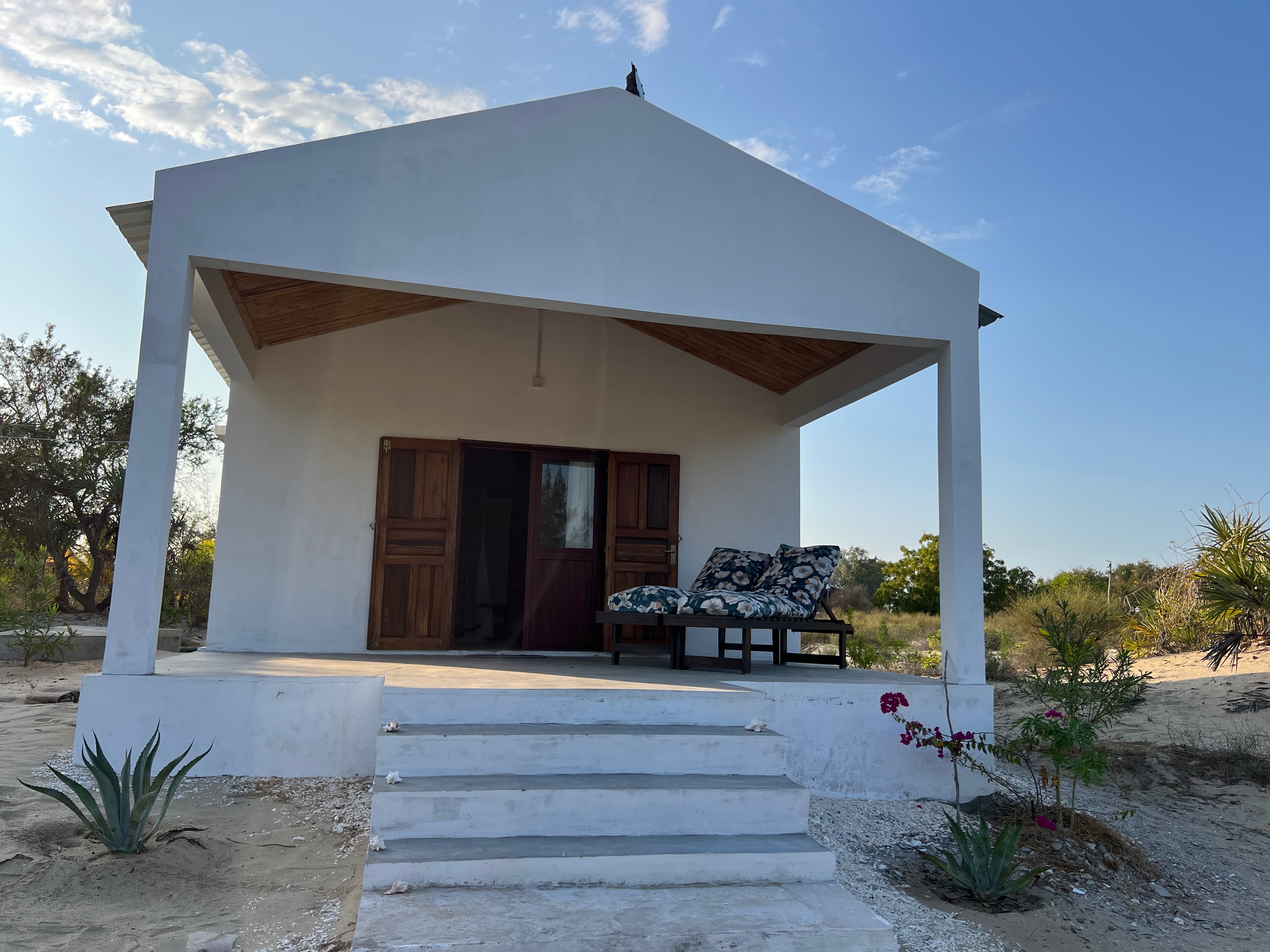
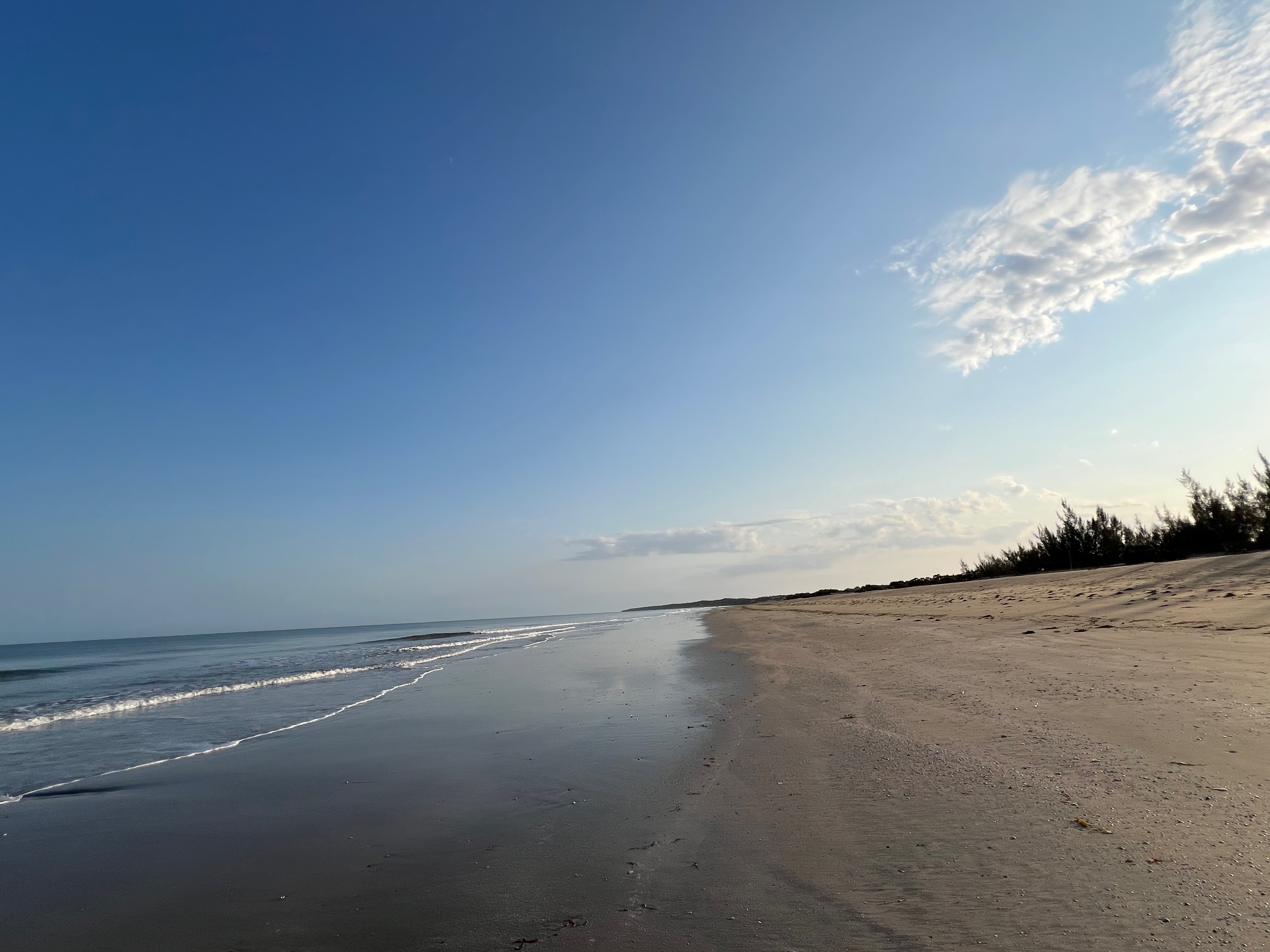
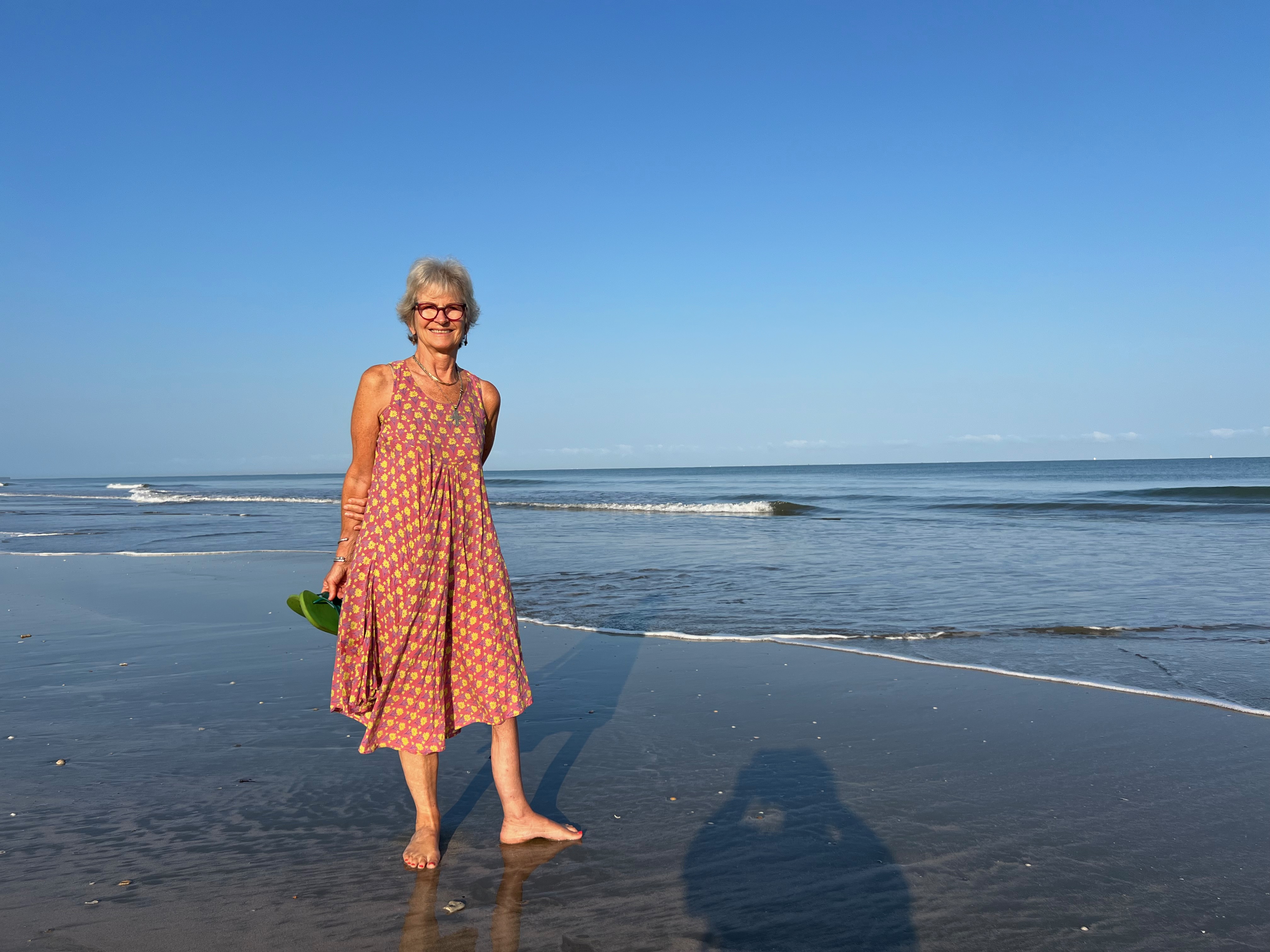
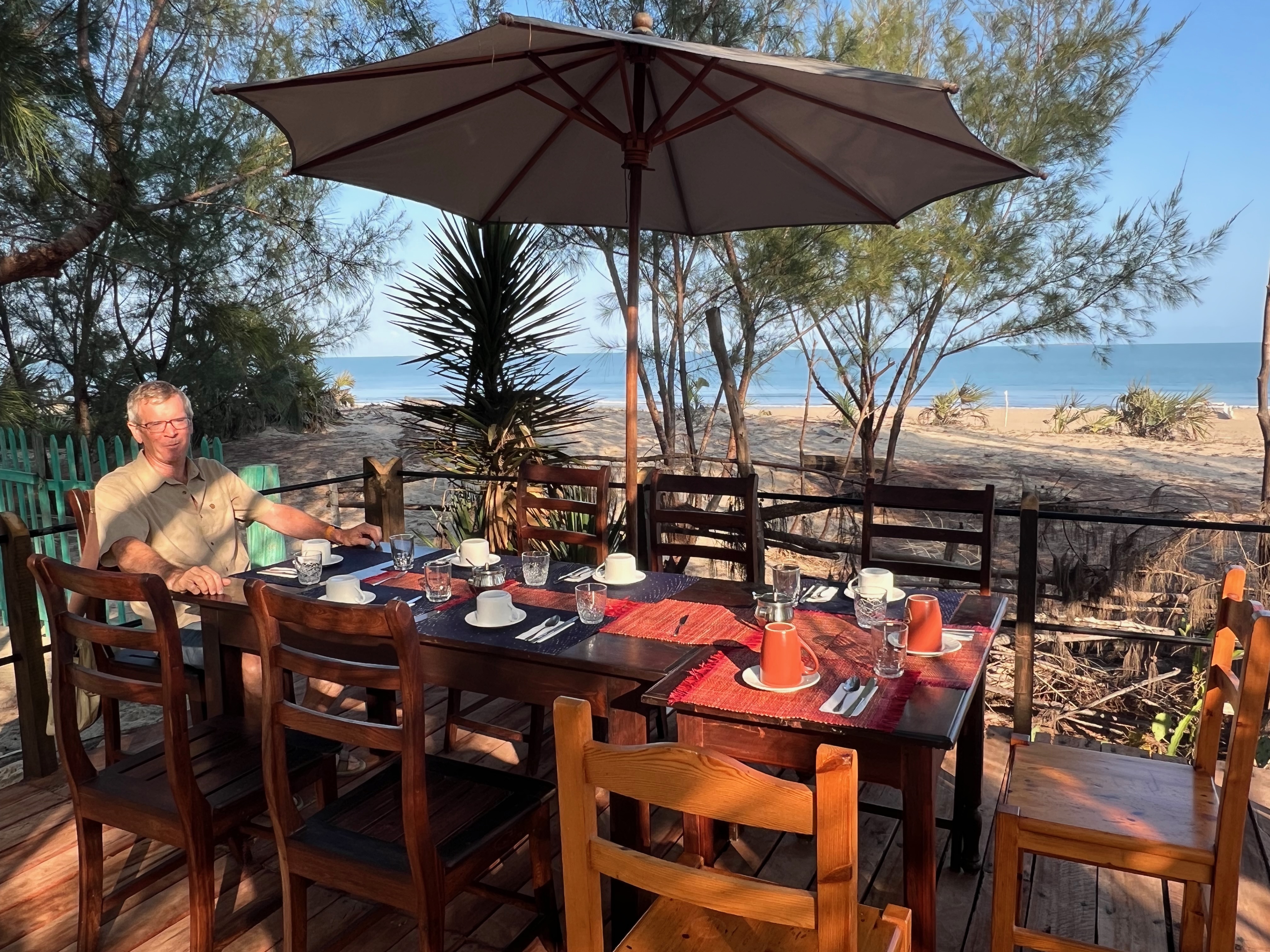
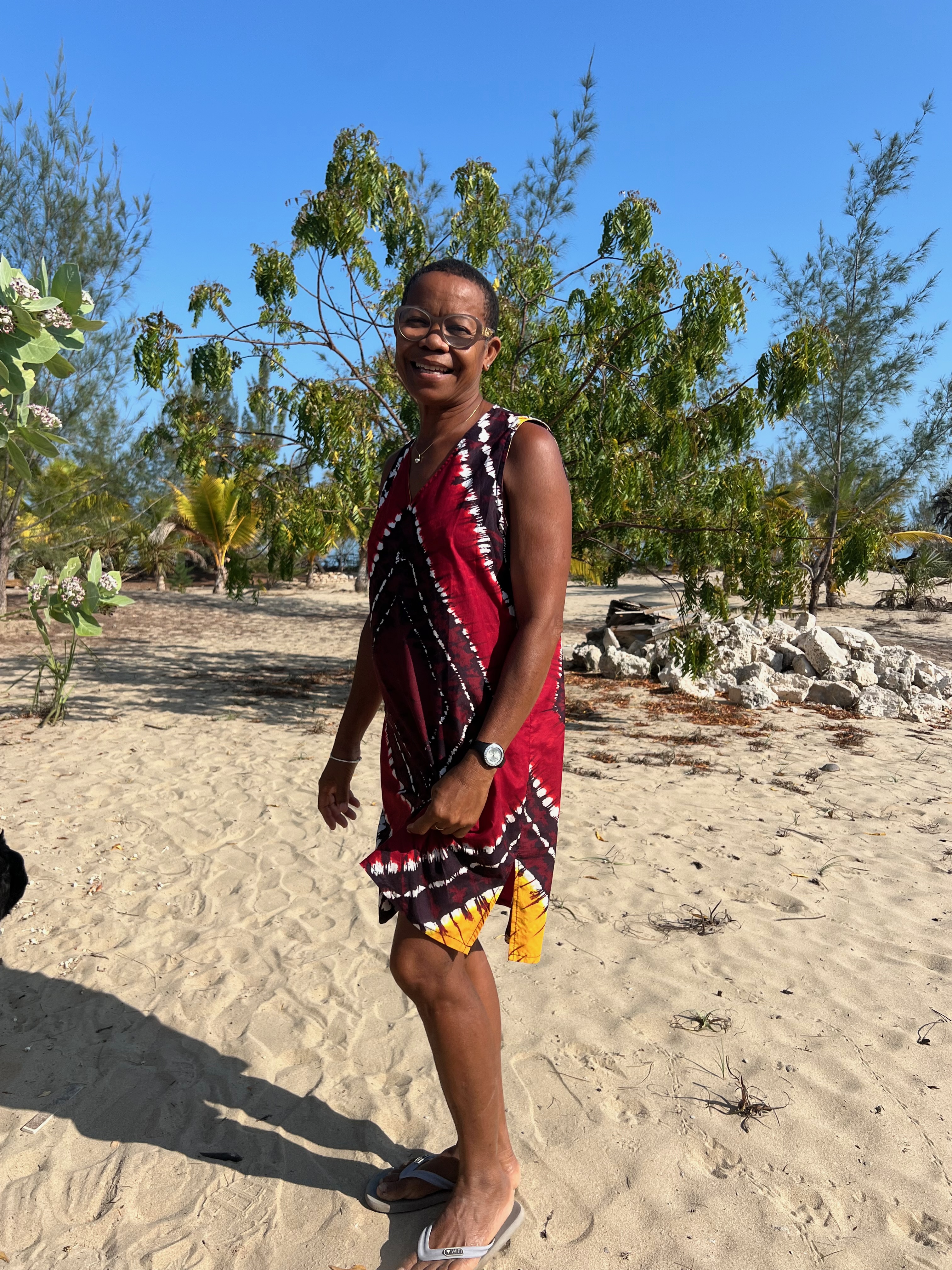

Perfect breakfast spot; Katia and one of her baby tortoises
Thanks to Karine and the UWS Madagascar team for hosting us and for arranging such an excellent and organised trip
You can donate to UWS here

 vickygoestravelling