

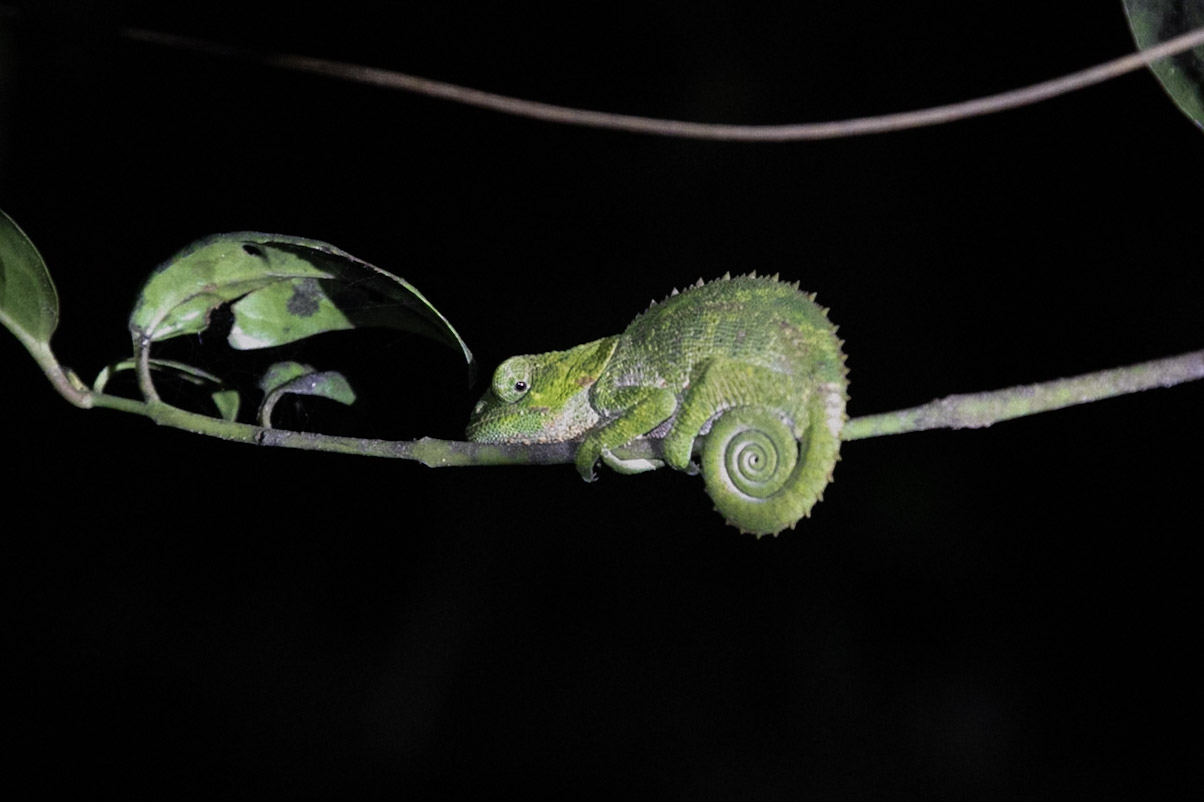

Blue-leg chameleon and small bamboo lemur
Another long journey today, ten hours to Ranomafana. But we are never bored as the countryside is stunning, consisting of fertile terraces and valleys, interspersed with huge granite boulders. There is a stretch of indigenous forest, the last remaining in this area; Madagascar has lost 80% of its forest thanks to mankind. It has been replaced with fast-growing eucalyptus and pines for building and firewood. Colourful lantana line the way. Everyone is working in the fields, preparing for planting, watering potatoes by hand in their geometric raised-bed rows. Ducks and geese waddle round all villages – apparently they return every night, a natural homing instinct.
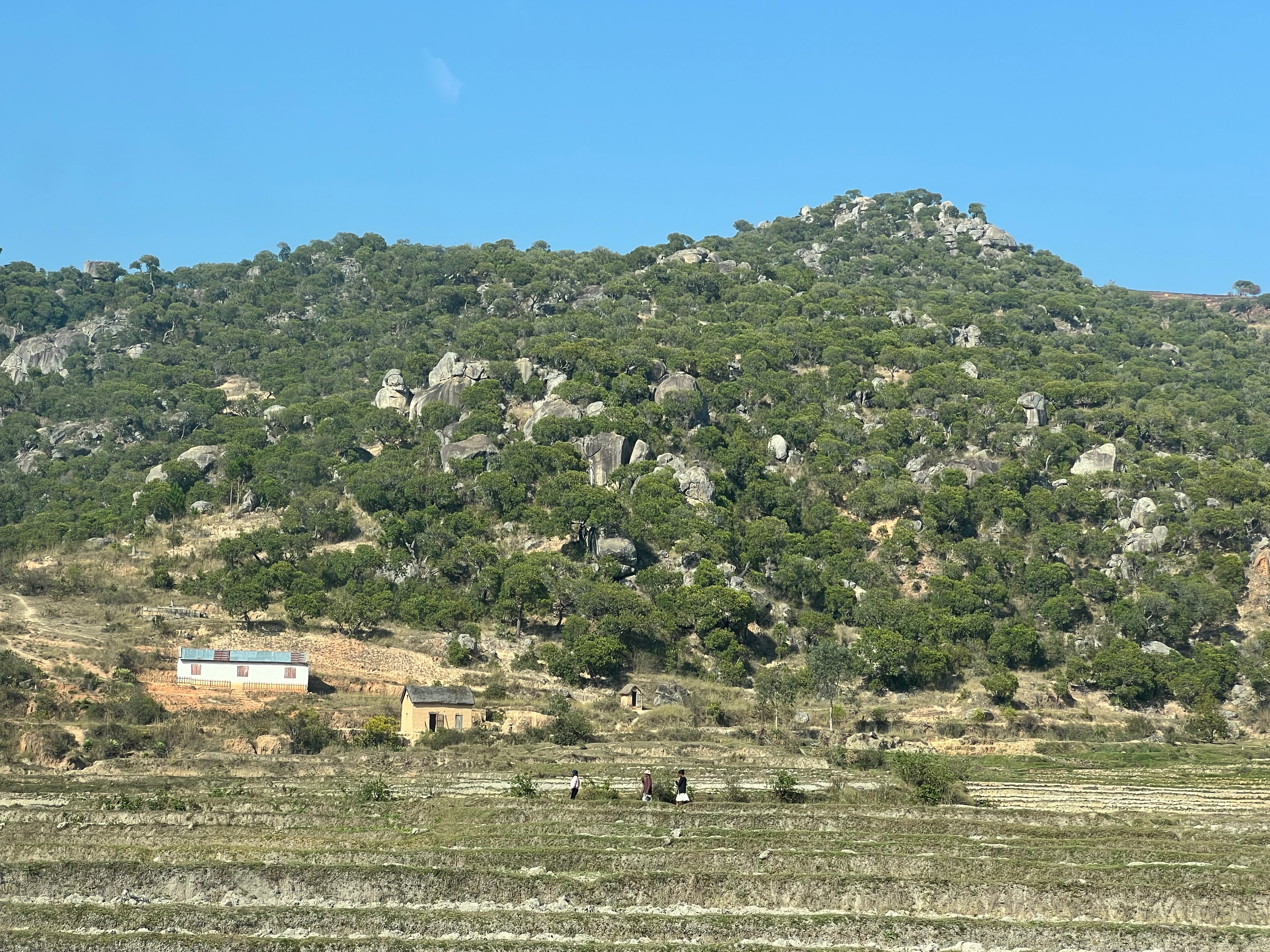
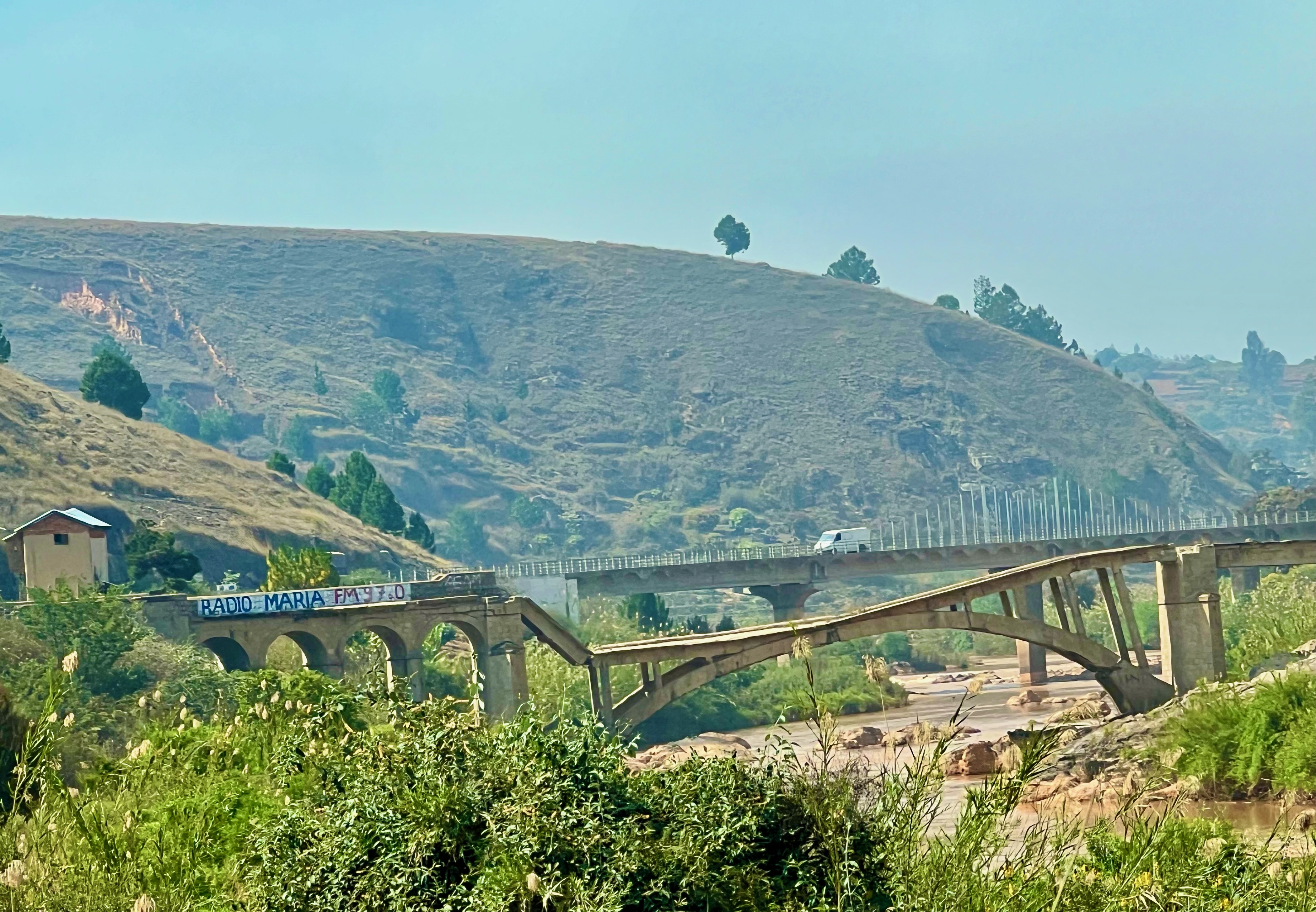

Some sad indigenous forest amidst the rocky granite outcrops; a broken bridge, symbolic of the state of the RN7; terracing
The roadside stalls have given way to moonshine, honey, wooden chopping boards, ladles and fruits. We stop at a market full of vibrant women, all dressed in their best, with fine hats, local and European style. Apparently this is to attract men! Marriages are no longer arranged, but love-based. Families live together and look after grandparents, daughters go to the husband’s family and are buried in his family’s tomb. In the old days there was a bride price, but now it’s a excuse for a feast of rice and zebu – and turkey (they also eat that at Christmas) if the family is feeling rich. Washed down with finest moonshine. The weekly market is thus a dating opportunity! We create quite a stir as we wander through.


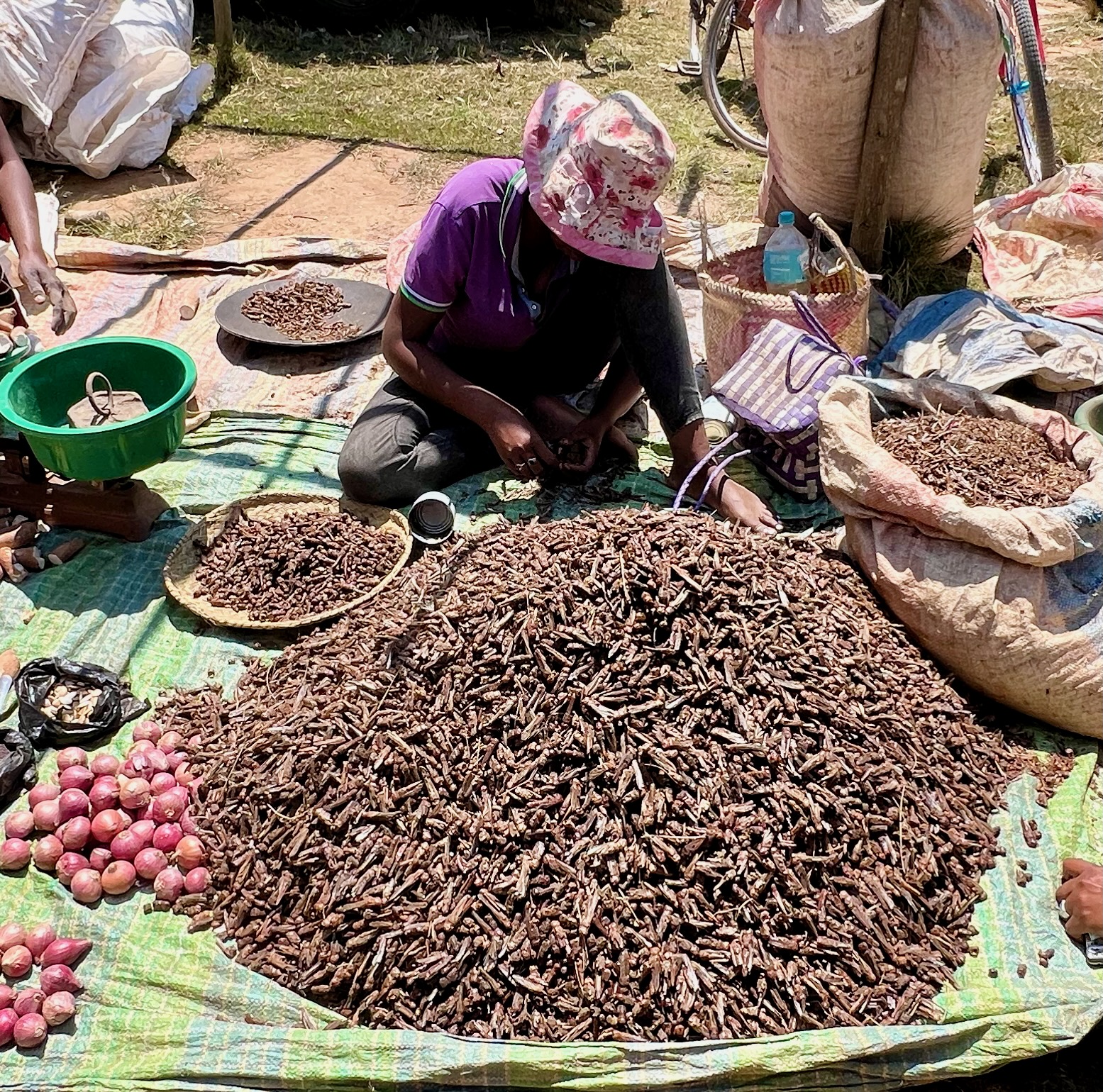
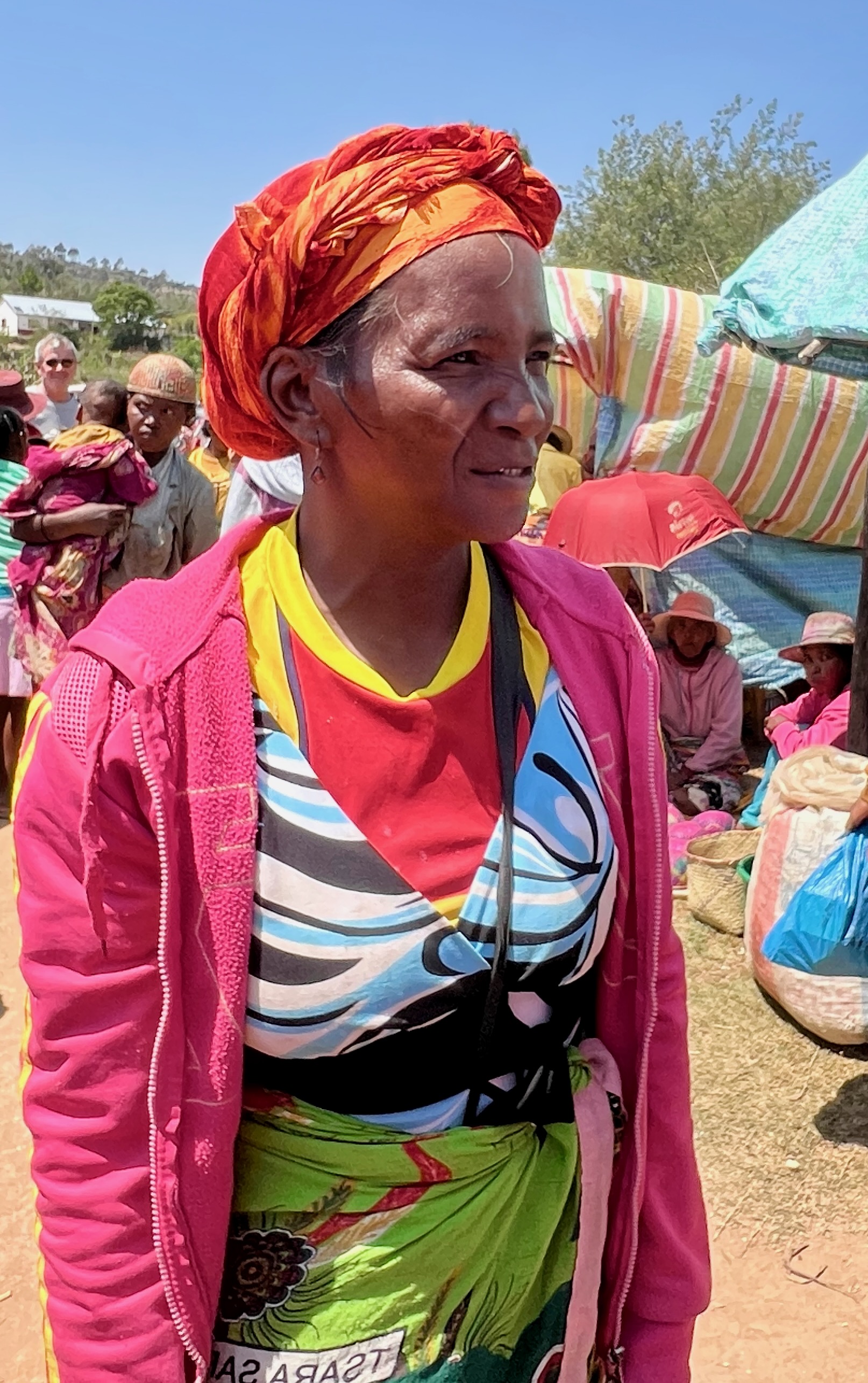
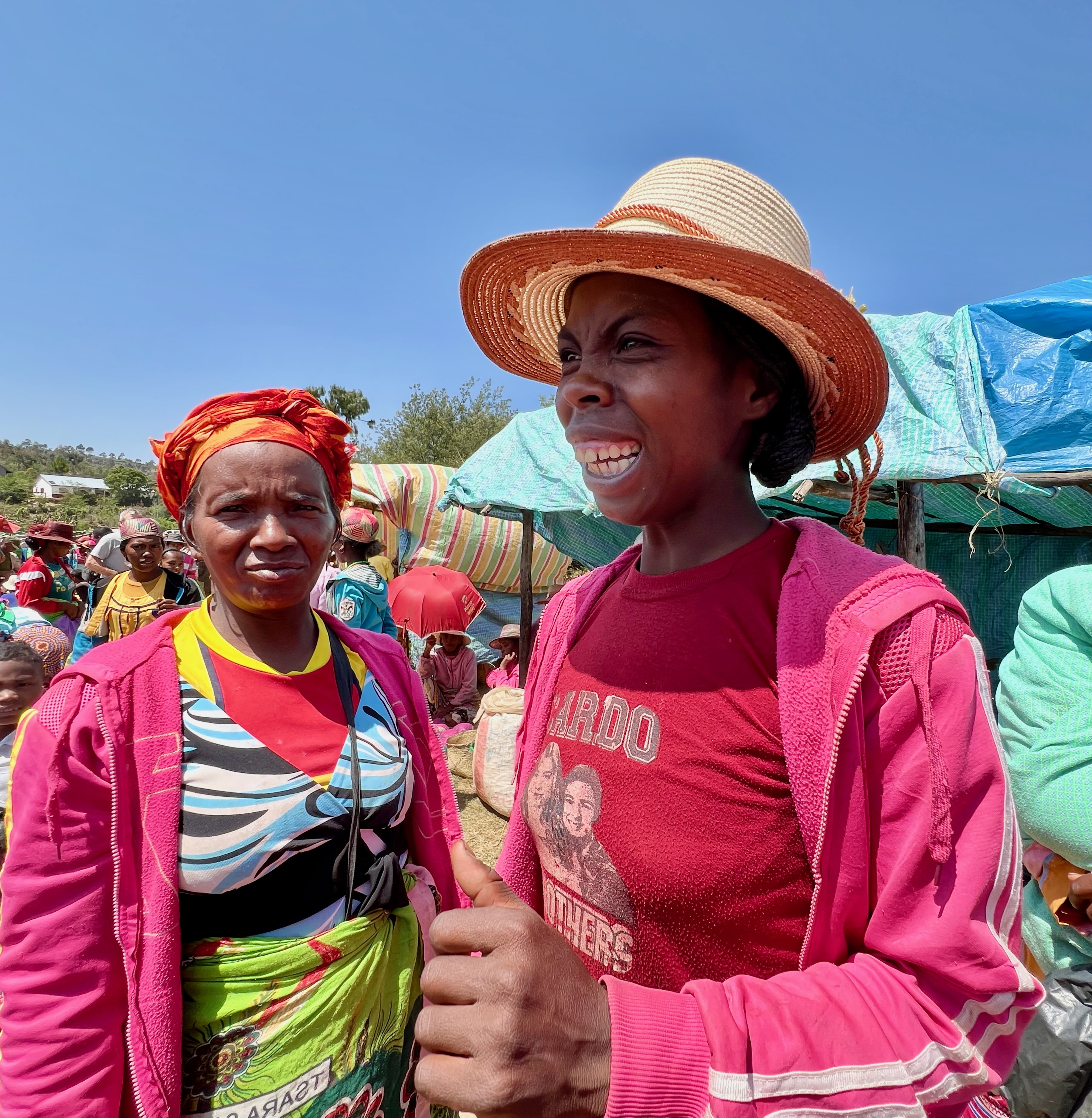
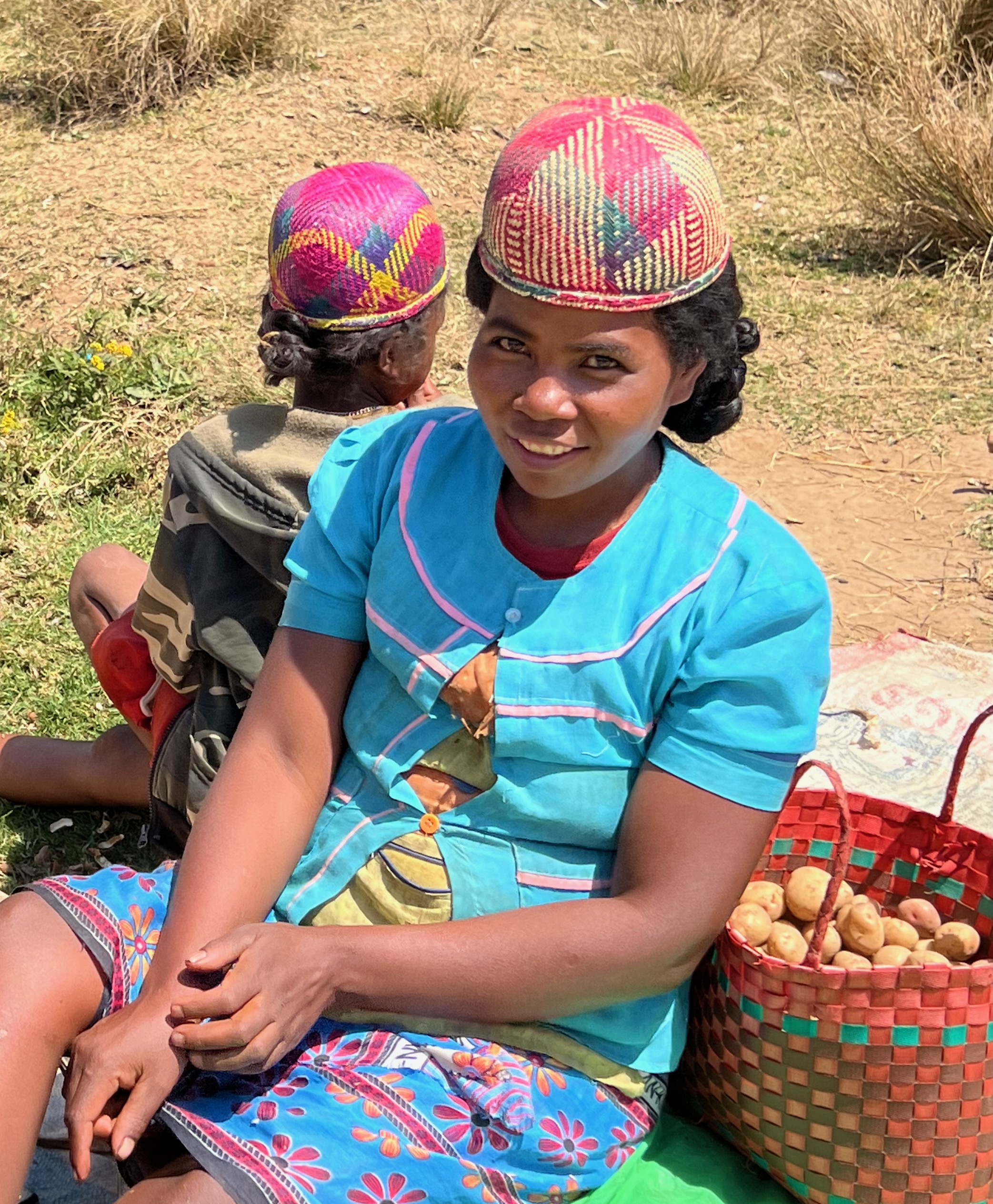


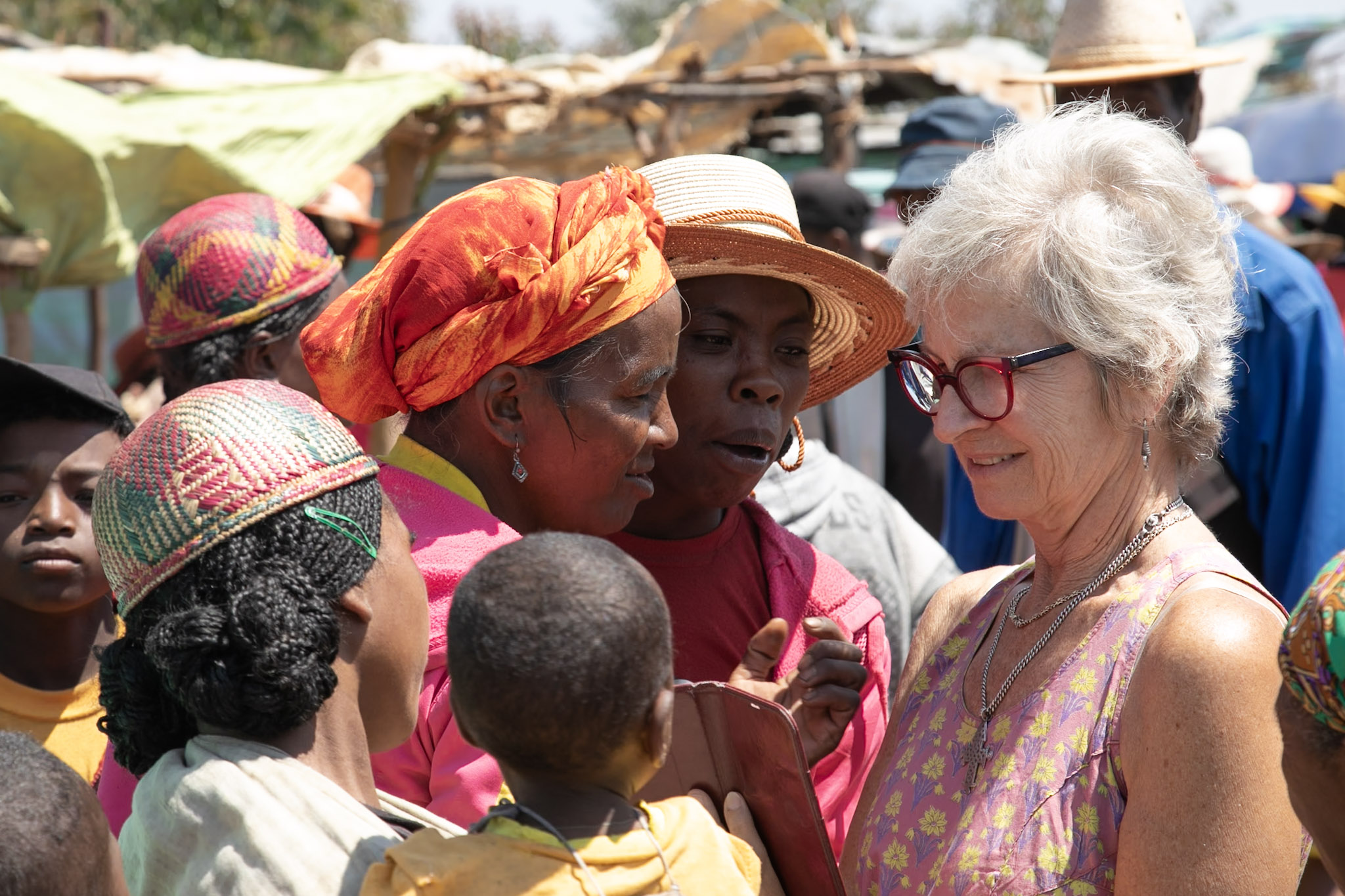
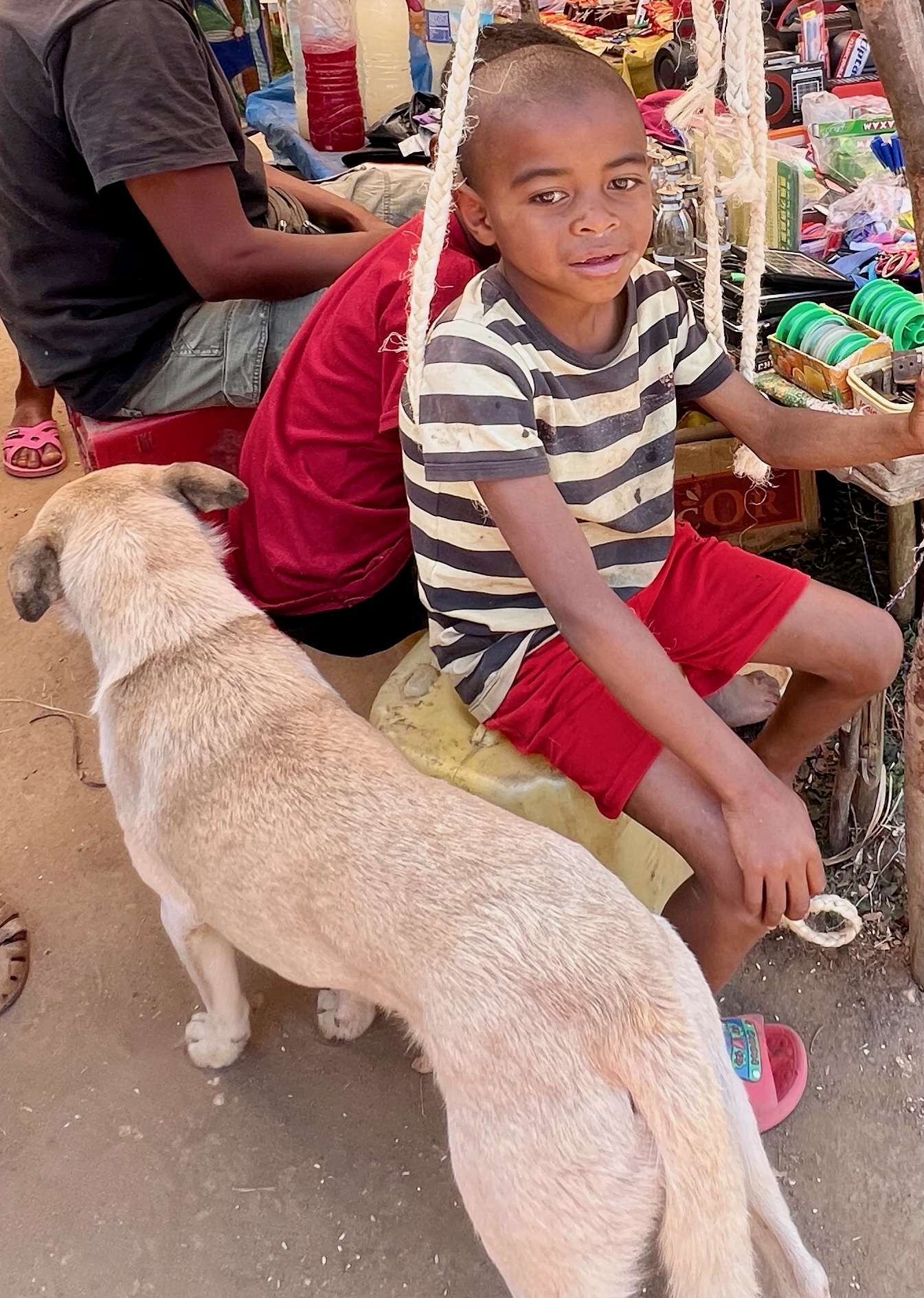
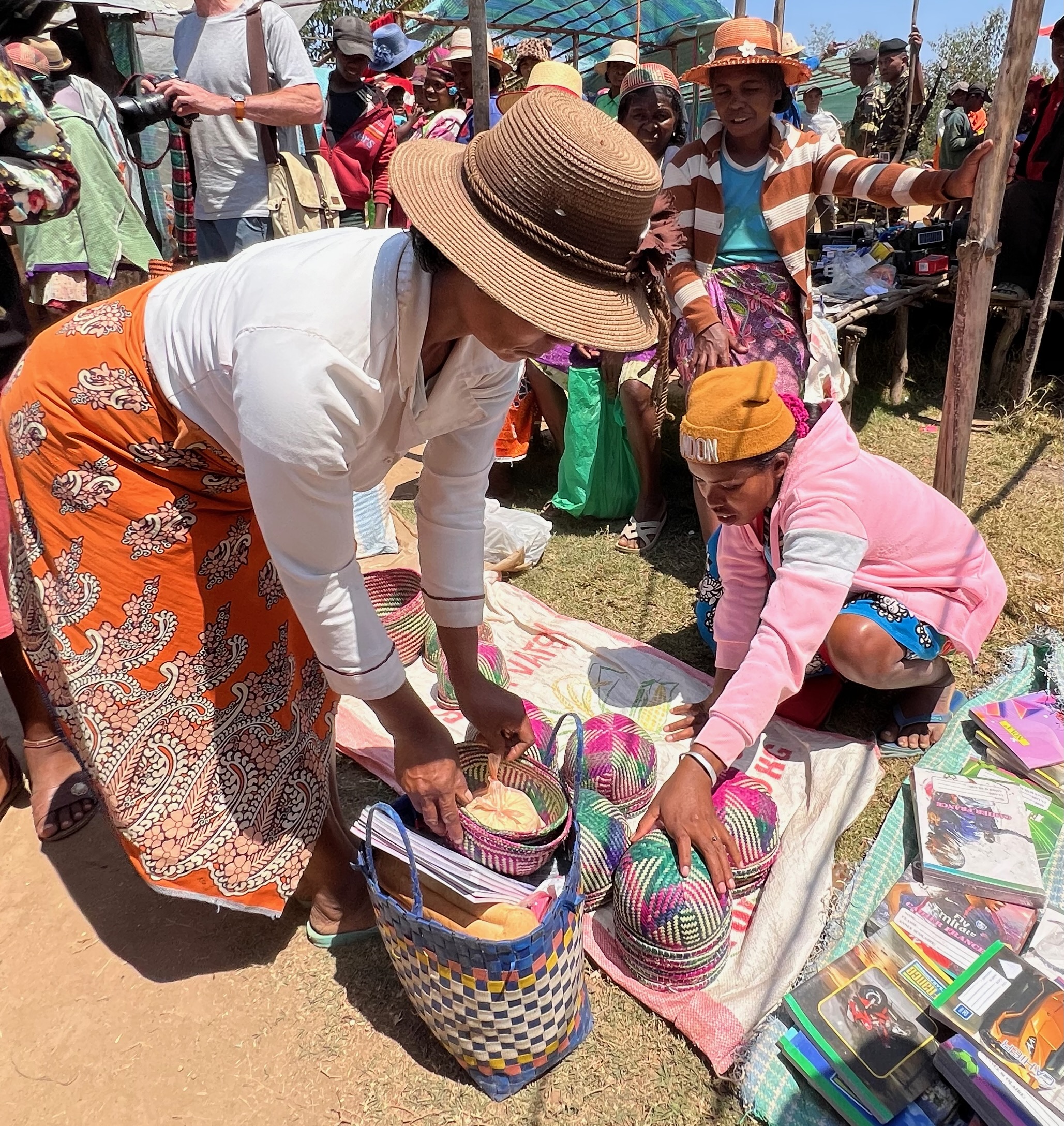


It’s all about the hat! note the big pile of locusts near the top and the wonderful assortment of hats including the local woven caps; the ladies love their photos; Janet tries one on for size
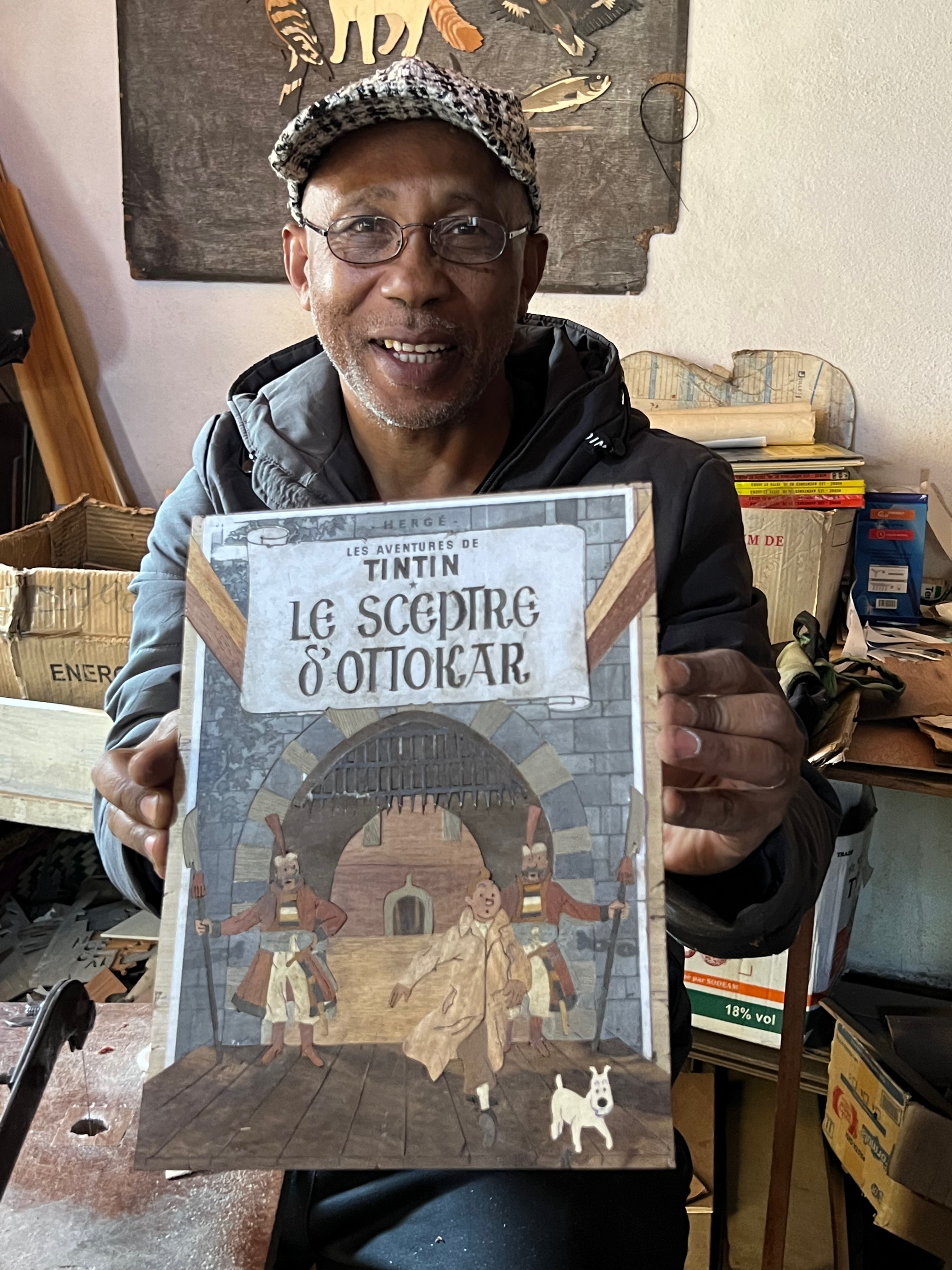
The houses are becoming grander and some intricately decorated as we approach Ambositra, ‘town of the good life’. Some even have glass windows! We drop in on a marquetry workshop where we are shown how its done. We are tickled that the main output seems to be variations on the theme of Tin Tin – in Madagascar. Janet buys a lovely picture but we have no room so settle on a small Tintin and Snowy box for Tommy and a wooden deux cheveaux for Claudie [she loves it btw]! Waiting to pounce as we leave is a cooperative of women selling locally produced raw silk scarves, so I get one for Anna. They are very lovely.



We have lunch in a partially-finished petrol station car park and befriend some little children who obviously frequent the area waiting for scraps. They strike lucky with fruit, hard boiled eggs and biscuits.
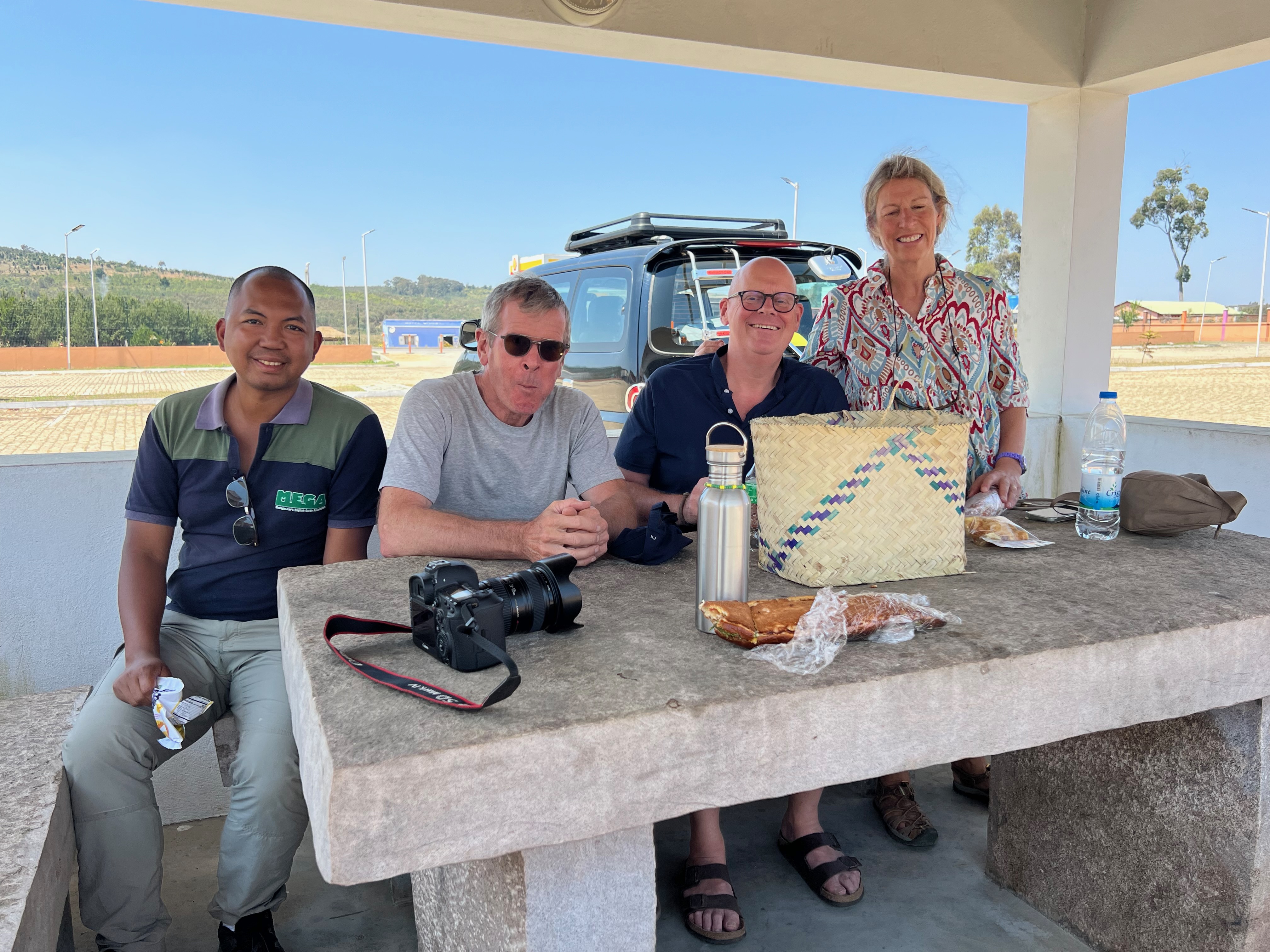


Stephen enjoying a crisp sandwich in the car park and our new friends
Finally we approach the national park, turning off the main road. We are amused to see people freewheeling down the road on their handcarts – very dangerous, no steering to speak of and a rudimentary brake. We are relieved to get to our hotel, the Ny Tanana, which has a large and freezing pool, but is otherwise pretty basic. We are surprised by an Intrepid coach-load, who make a lot of noise and smoke heavily – a horror we are destined to encounter in several places. As ever the staff is lovely.
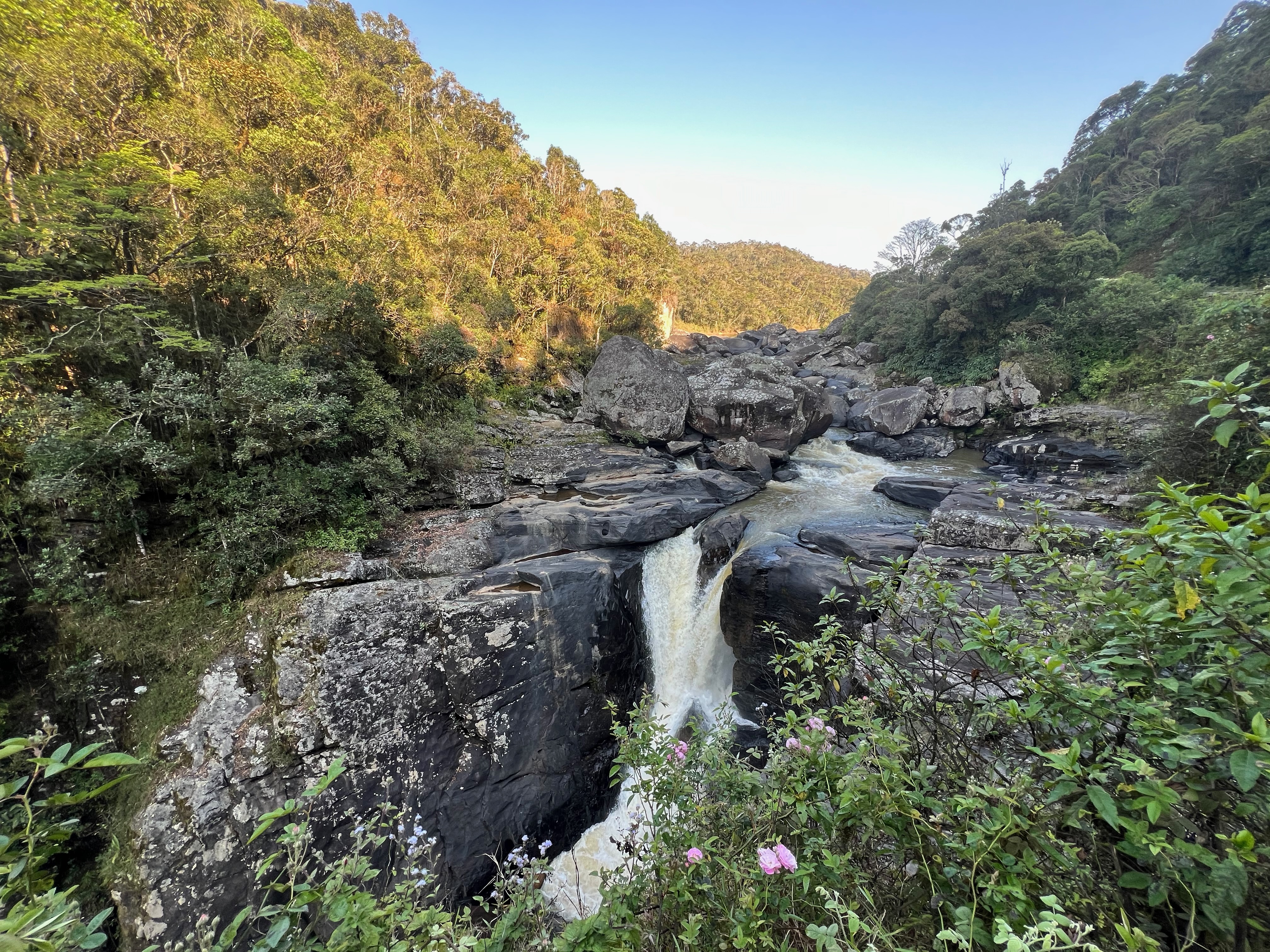
The river that marks the boundary to the park
The next morning we rise early to pick up our guides Theo and his son, the spotter, Andu, from Ranomafana village before heading to the park. Theo has been involved with lemur research from before the park was even started so we are in good hands. There are six species in the park (red-bellied, small bamboo, red fronted brown, greater bamboo, mouse and fat-tailed dwarf) and we see them all which is extremely lucky – we see two as we walk down the first steps (the park is hilly with lots of up and down), feeding not far from the path.

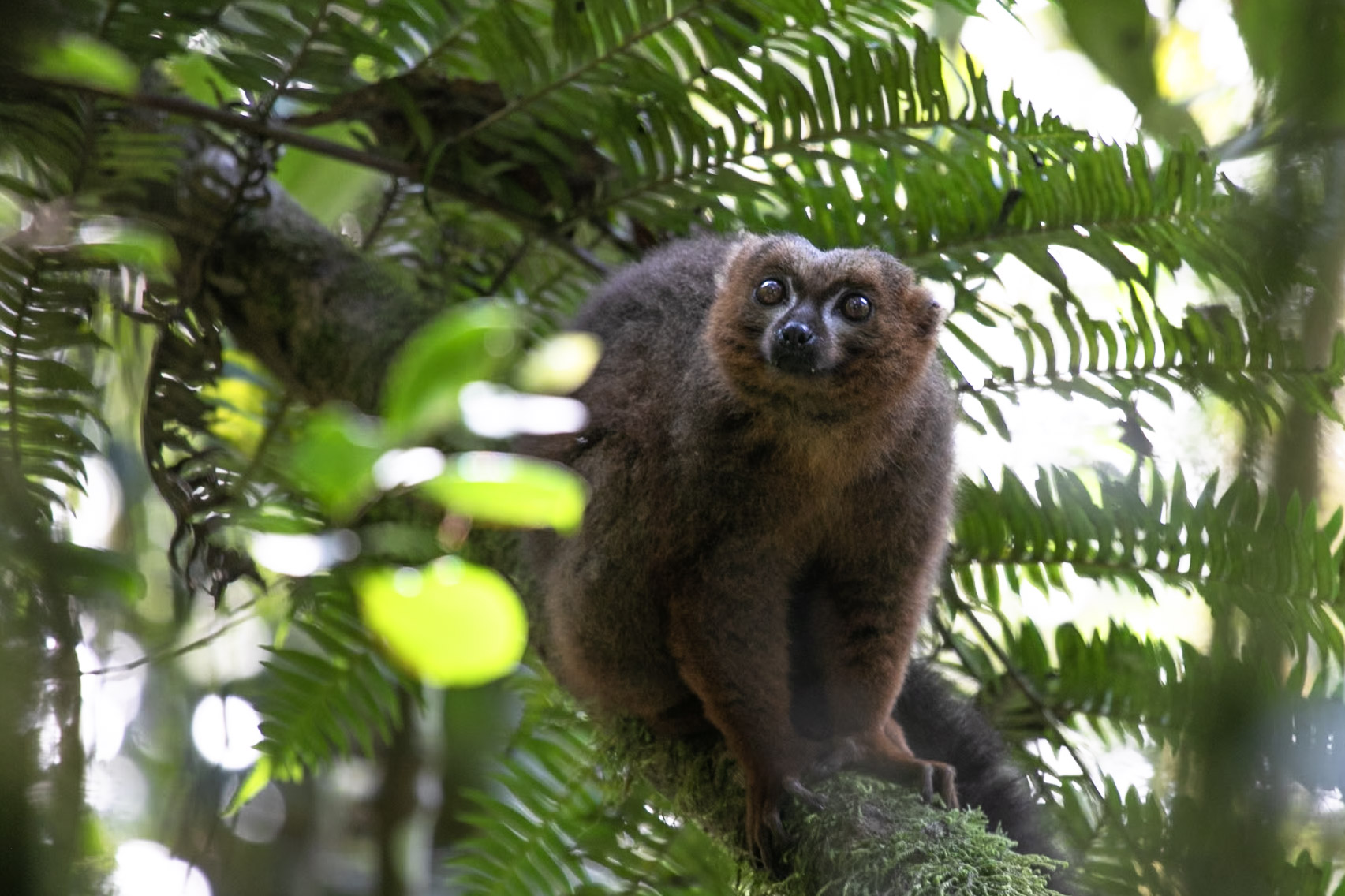
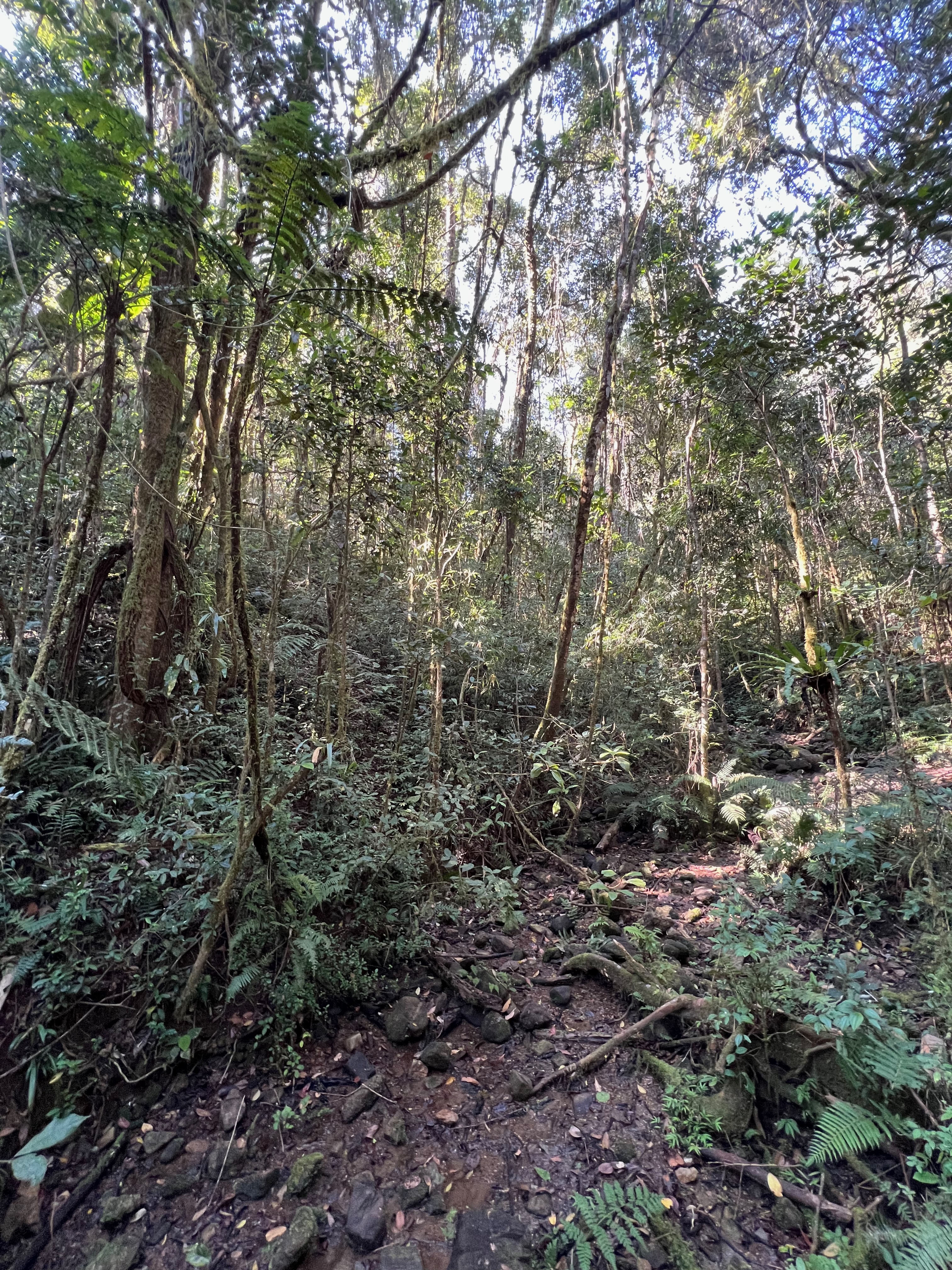


Walking into the park; the rainforest; the red-bellied lemur and ancestral graves which remain, moss-covered, for eternity
The system is that the spotter goes ahead and, through various yells and mobile calls, we are directed to the lemur. Luckily we have arrived early so get a half hour lead on some of the groups, and are first to find the sole remaining female greater bamboo lemur. Soon we are besieged by lots of ill-mannered and jostling photographers (one has a camera so large she has to have a porter, and another pushes everyone out of her way to get to the front). As we lie down and try to look upward, savouring the experience of being in the rainforest with one of the rarest animals in the country, Janet says ‘Oh it’s raining’. We disabuse her of this fantasy pointing out it’s the lemurs peeing on us! Very lucky!


Lemur watching! This is the rare and sole-surviving greater bamboo lemur. Janet getting peed on!
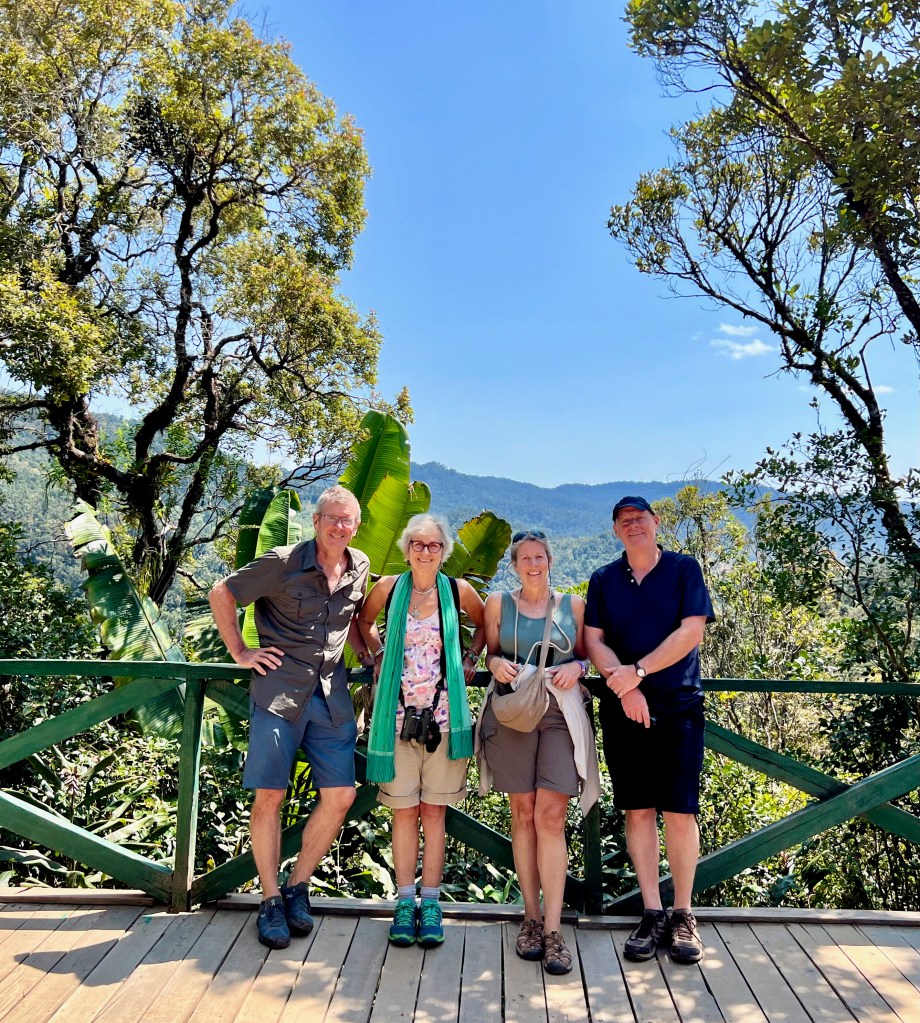
Theo has been tipped off that we like all wildlife so we see some rare birds, the endemic Pita/ground roller, an indigenous vanga on a nest, the satanic leaf gecko and the strange giraffe-necked weevil. Having ticked off our lemurs and walked to the view point, we retire for lunch, pretty hot and sweaty. I even brave the pool!


The satanic leaf gecko; the giraffe neck weevil; our hotel the Ny Tanana and the freezing pool
In the evening we go on a night walk with torches. We are amazingly lucky as we not only see the mouse lemur (which they encourage by rubbing bananas on the branch) but also the much rarer fat-tailed dwarf lemur, plus several types of chameleon, a Malagasy specialty. It is so dark, save the head torches, and the stars brilliant against a totally black sky. No light pollution here. Magical.


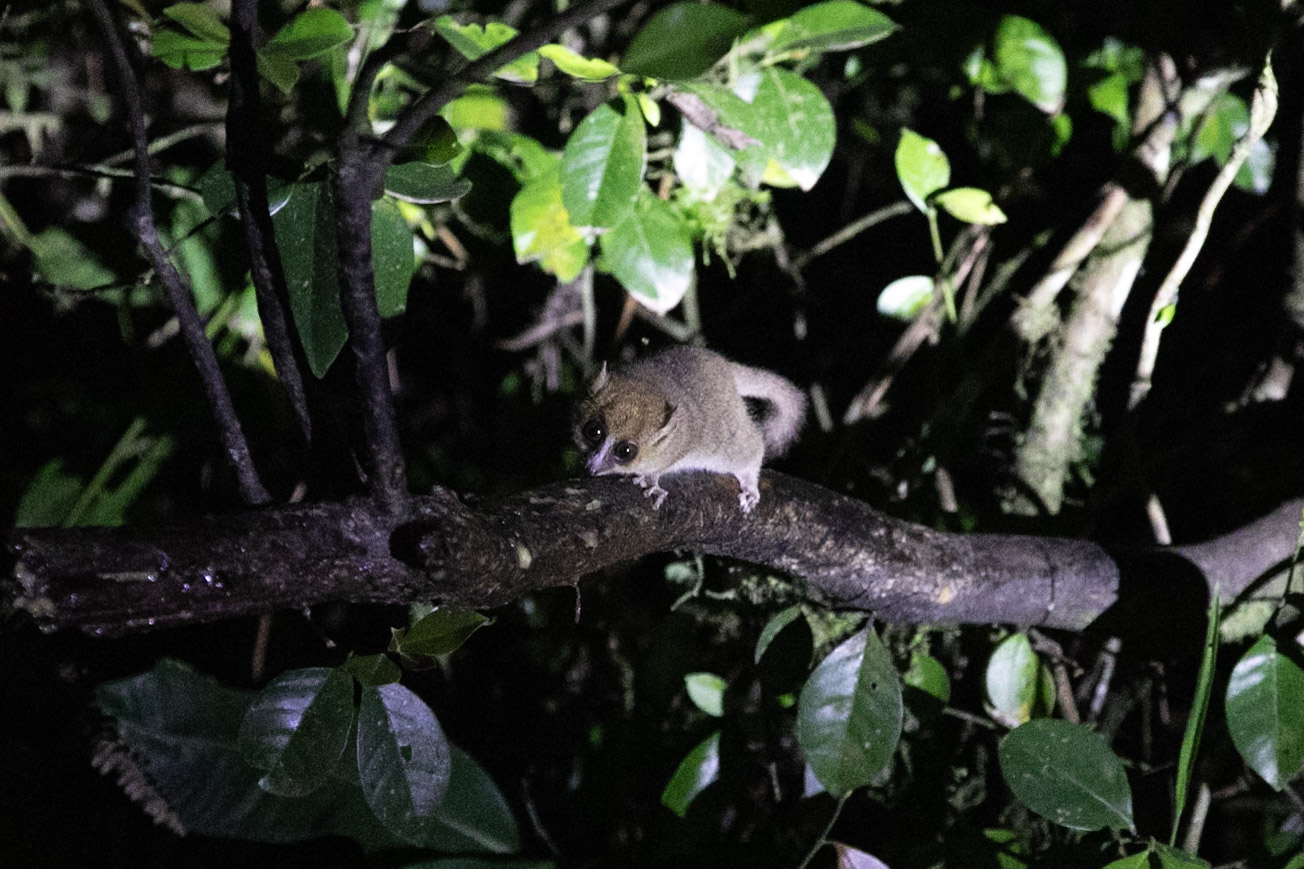

The blue leg chameleon has changed colour; a fat-tailed dwarf lemur; a mouse lemur, and this big one I took, no idea who he is! All other lemur and chameleon pics taken by Ross!

 vickygoestravelling