


We are in Madagascar to visit the UWS project to build schools and provide education to some of the world’s poorest children. We started discussing this in 2020 during Covid while I was still a trustee (nine years!) of UWS. Covid obviously had a big impact on our plans and indeed Madagascar as you will see.
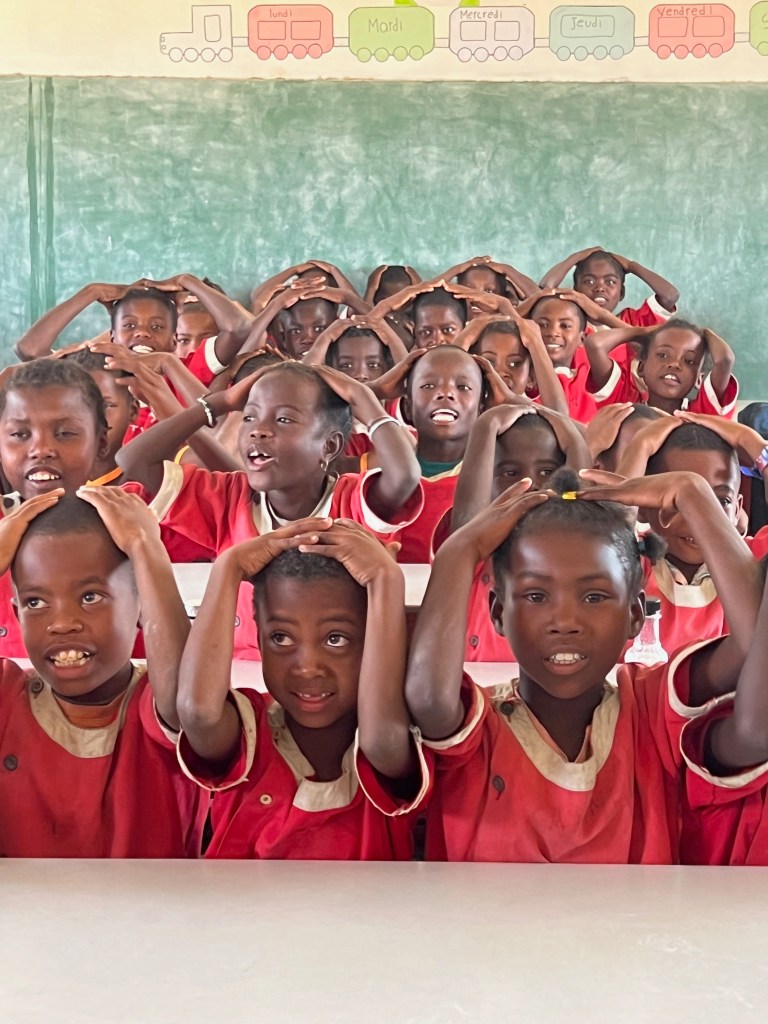

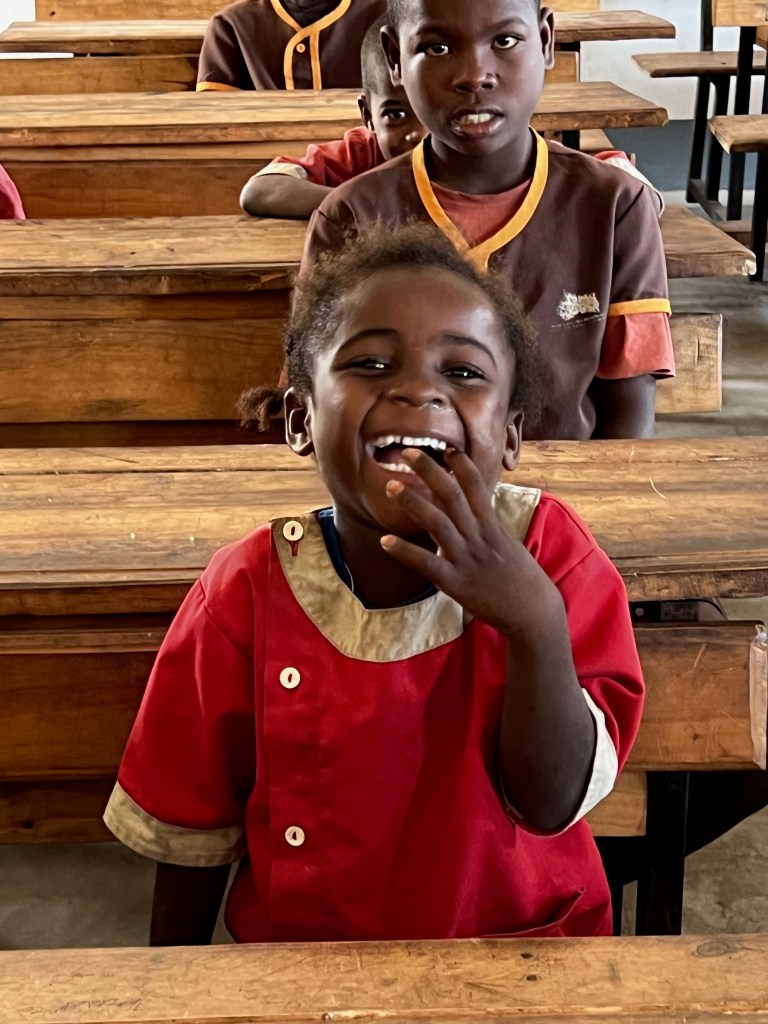

I had always promised myself I would visit Madagascar, high on the wish list, and combine seeing the schools and some lemurs! So here we are with fellow trustees Ross (who is now head of Audit and Finance Committee) and Janet Bidwell, an education specialist, and her husband Stephen.
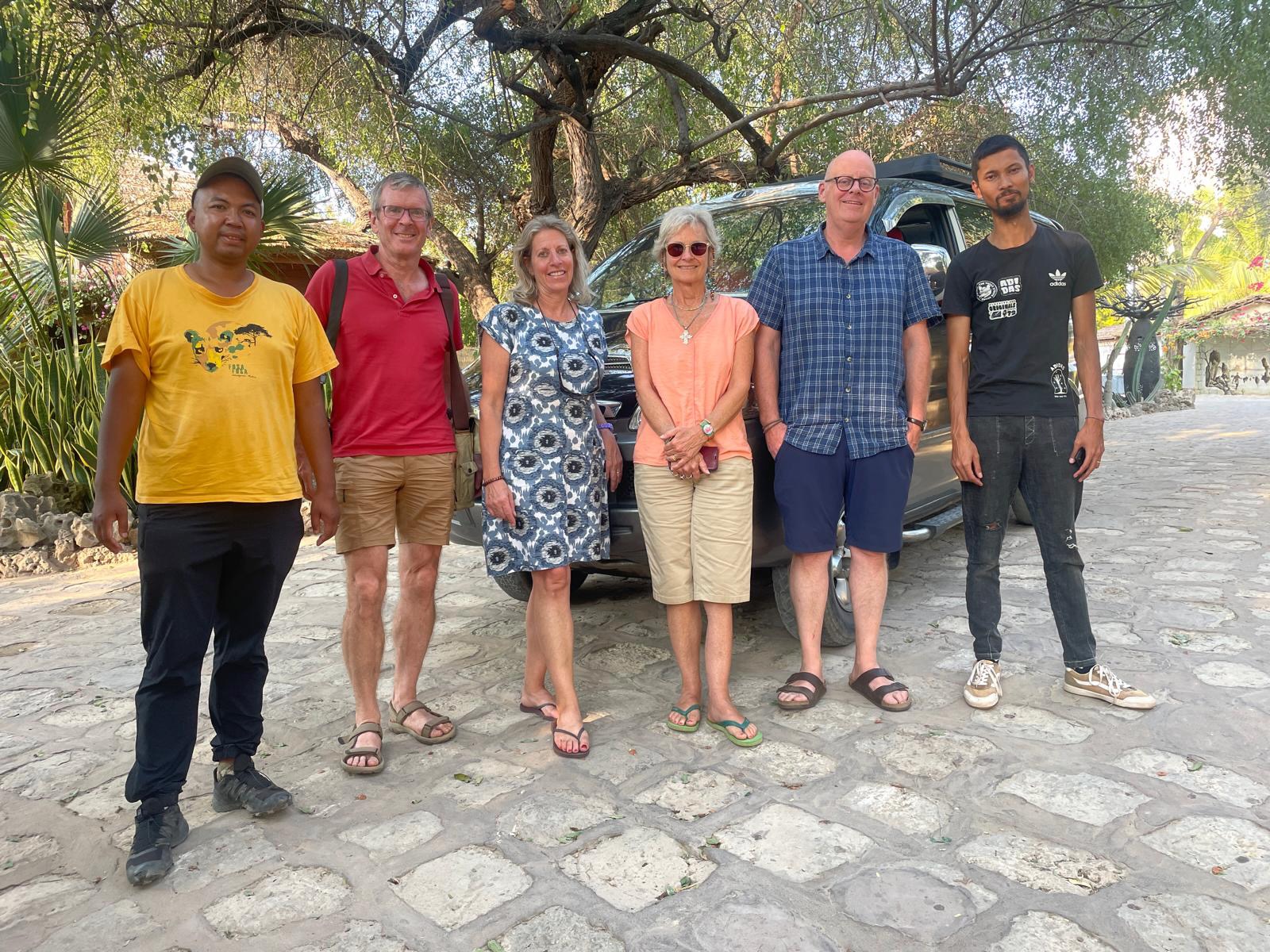
The dream team, with our guide, Fan, on the left, and trusty driver, Lalaina
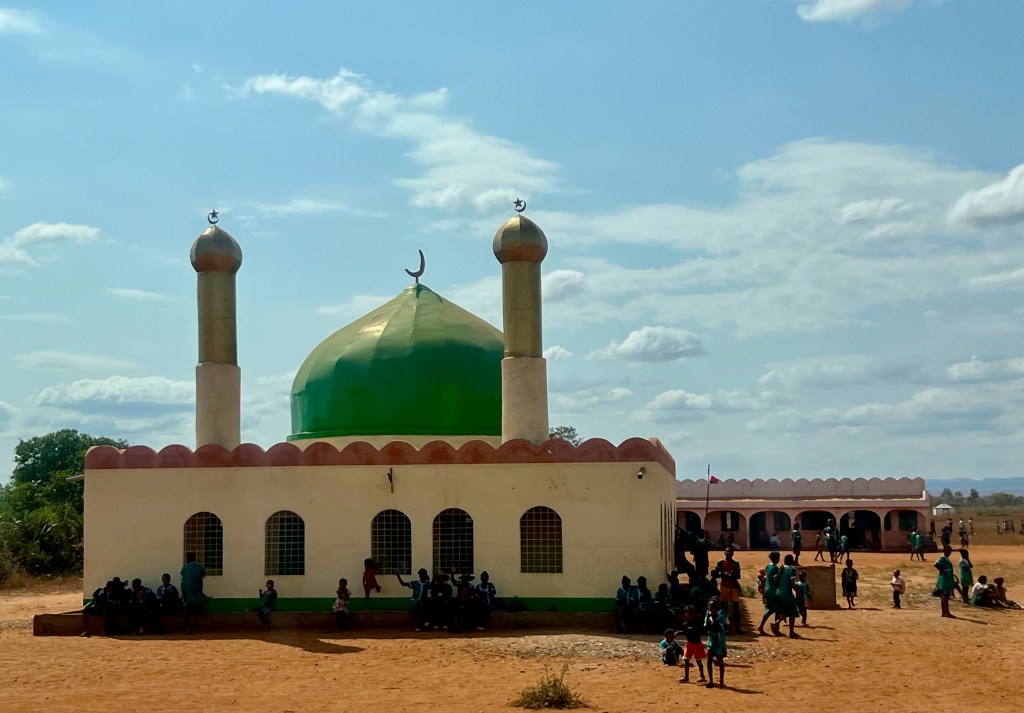
But first some facts and figures about Madagascar, a country of 30 m inhabitants, majority Christian but with 7% Muslim, mostly on the coast. It gained Independence from France in 1960 – they had been colonists since 1890s. There was a farmer and student revolution in 1972 to get rid the first republic who had retained strong French influence despite independence. There have been a number of other influences since – especially from the communists: the Presidential palace was built by Chinese during the communist era 1972-91.
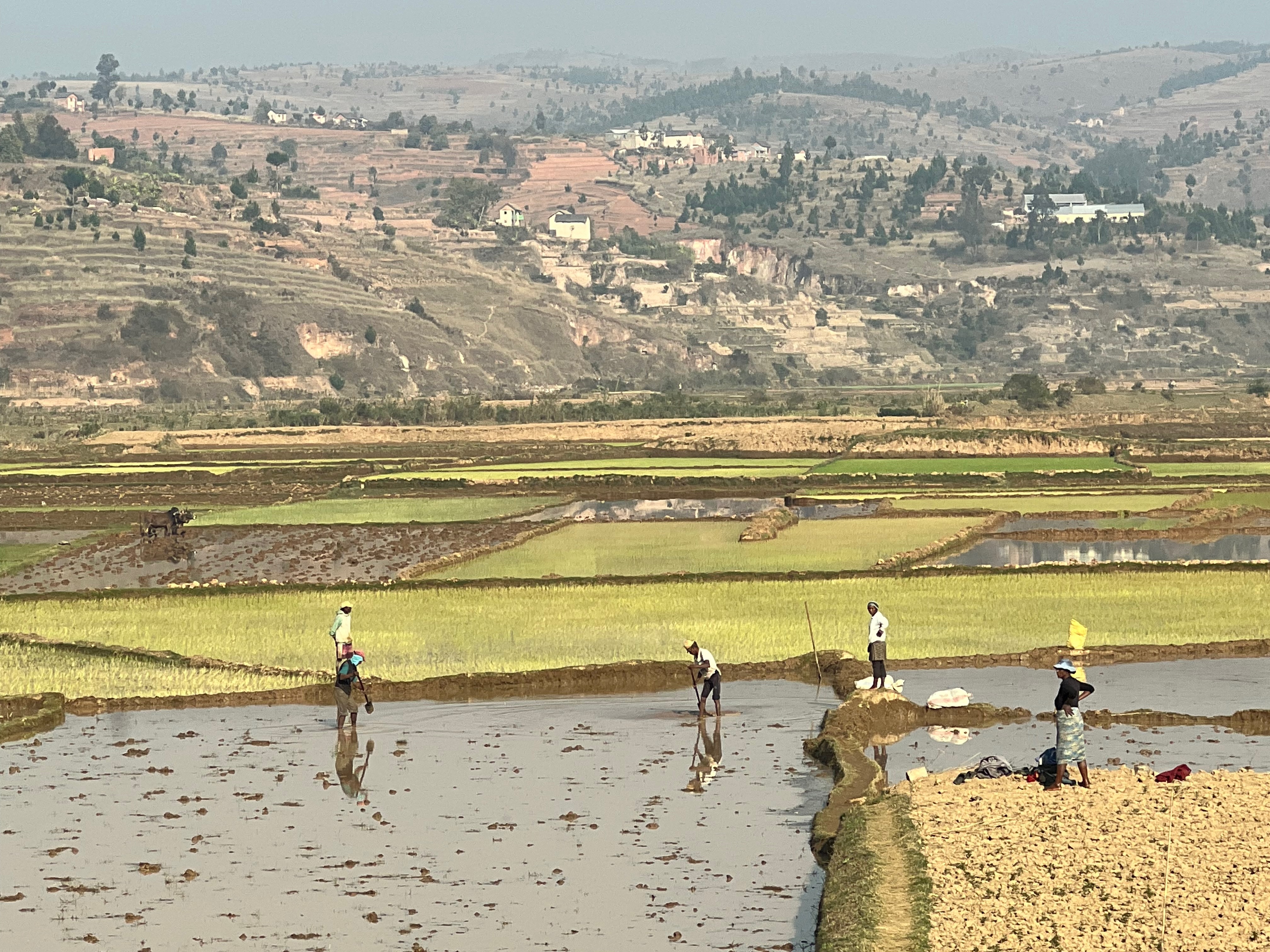
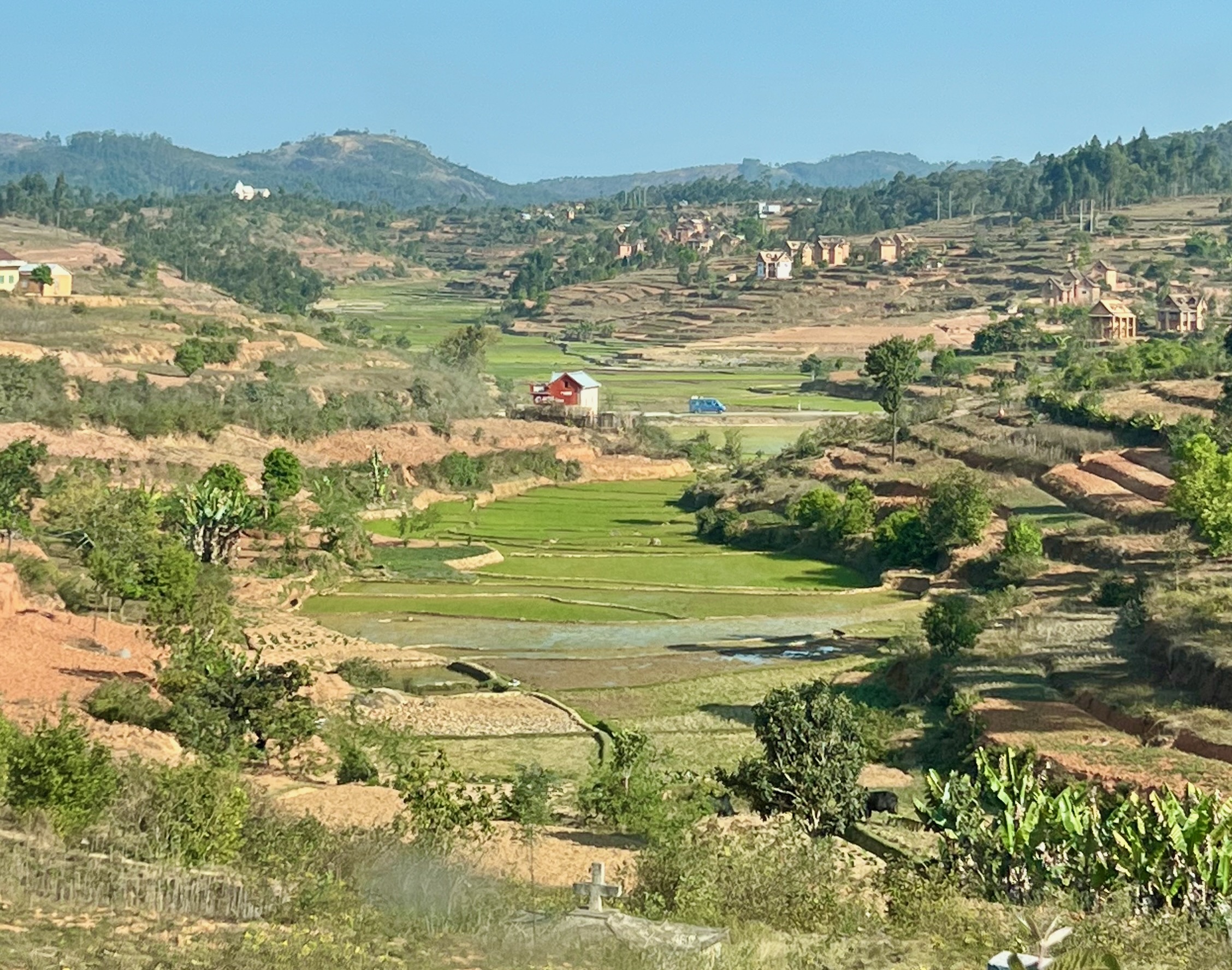
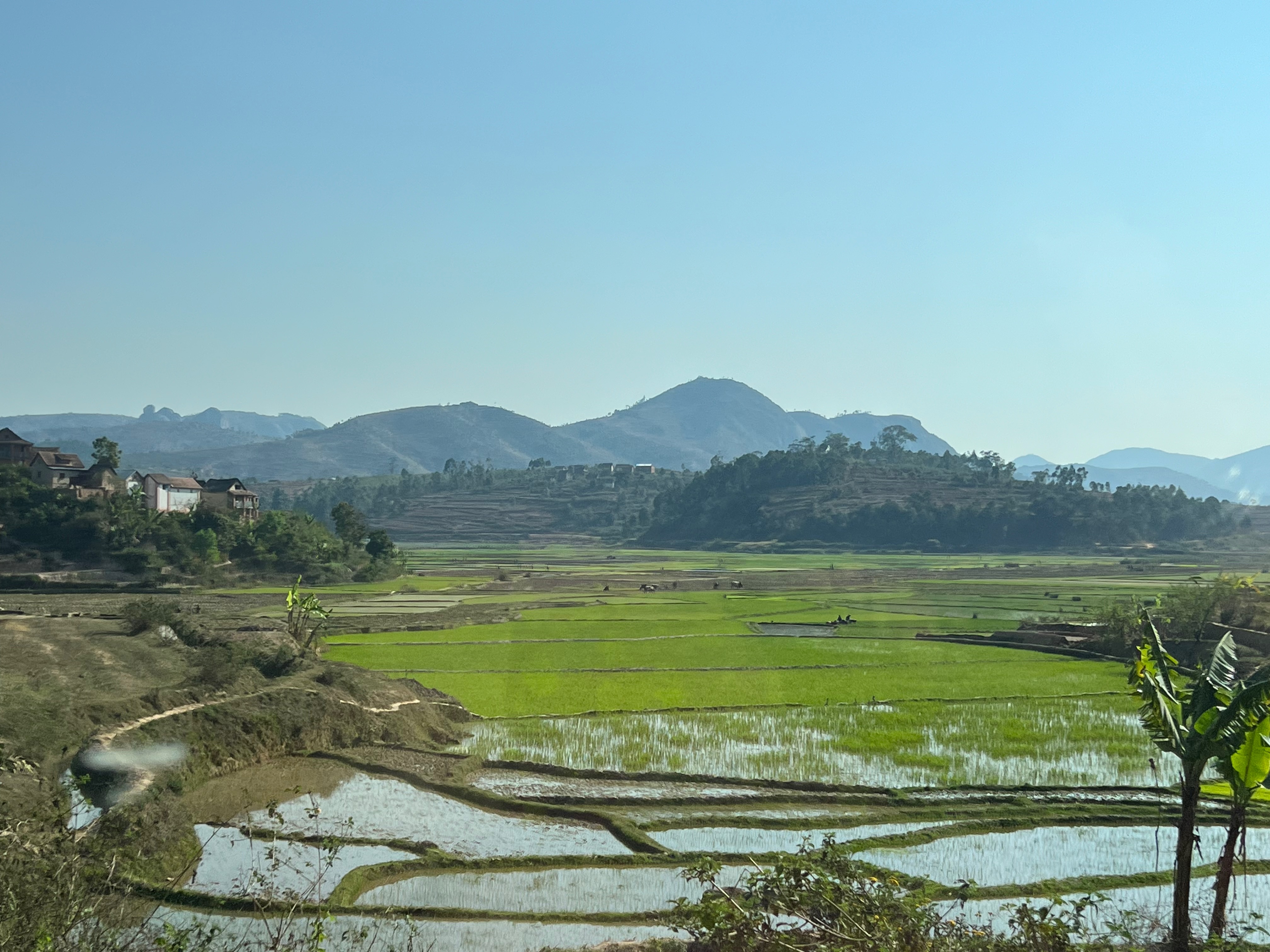
Typical landscapes with paddy fields
Tana is a sprawling and polluted city at 1100m with over 5 m people. The tradition is to have big families and there is a high birth rate – in cities the average is now 3 kids; and in the countryside 4 – although everyone we meet in the latter seemed to have between six and eight! 60% of the population are teenagers, and only 2-3 % over 60. The average life expectancy is 68 for women and 64 for men. Only 2% people speak English and French is the business language and taught in primary schools – including ours in the the remotest part of the island! The average wage in Tana is ariary 300k p/E 60 for the lowest paid factory worker.
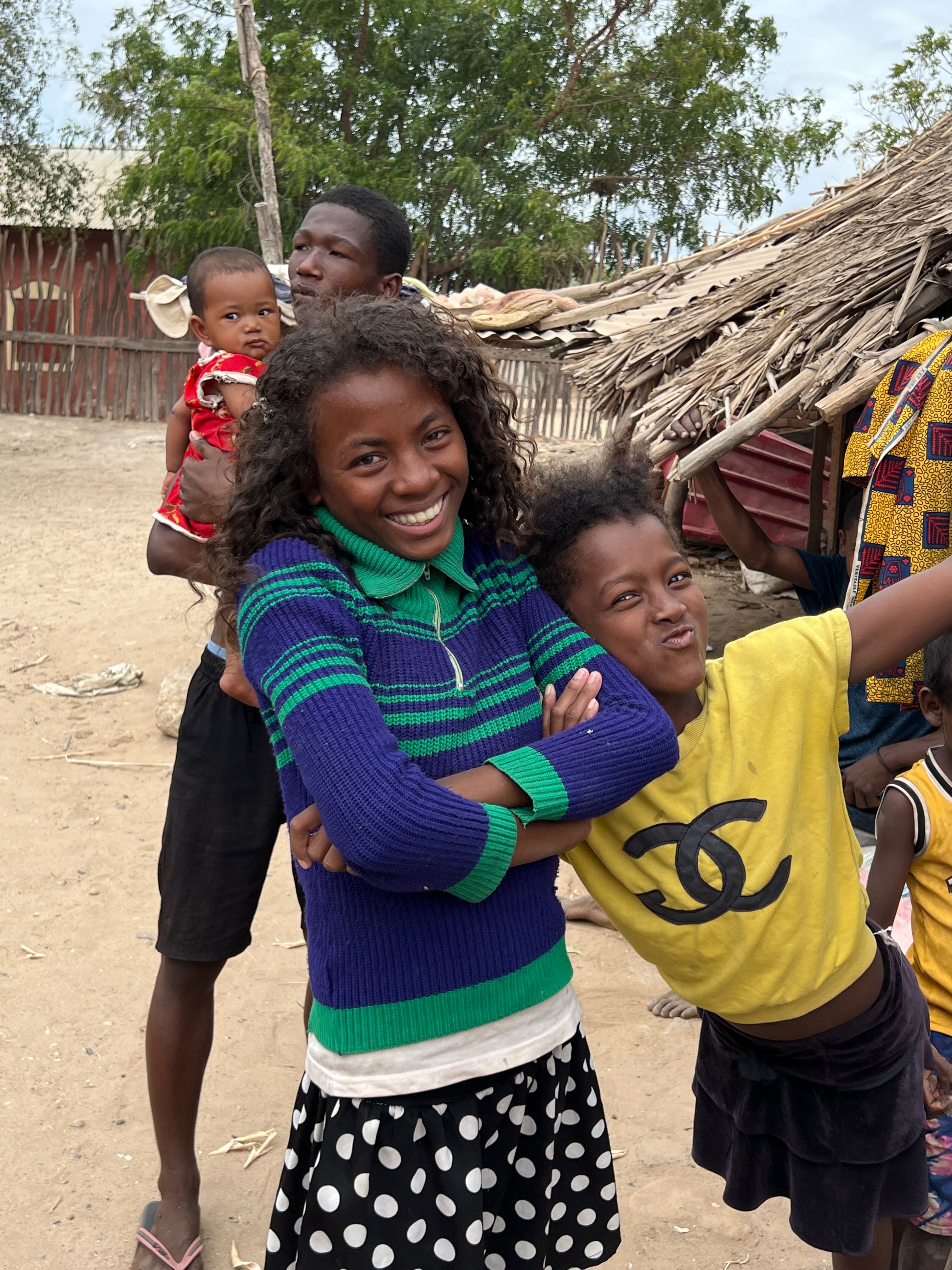
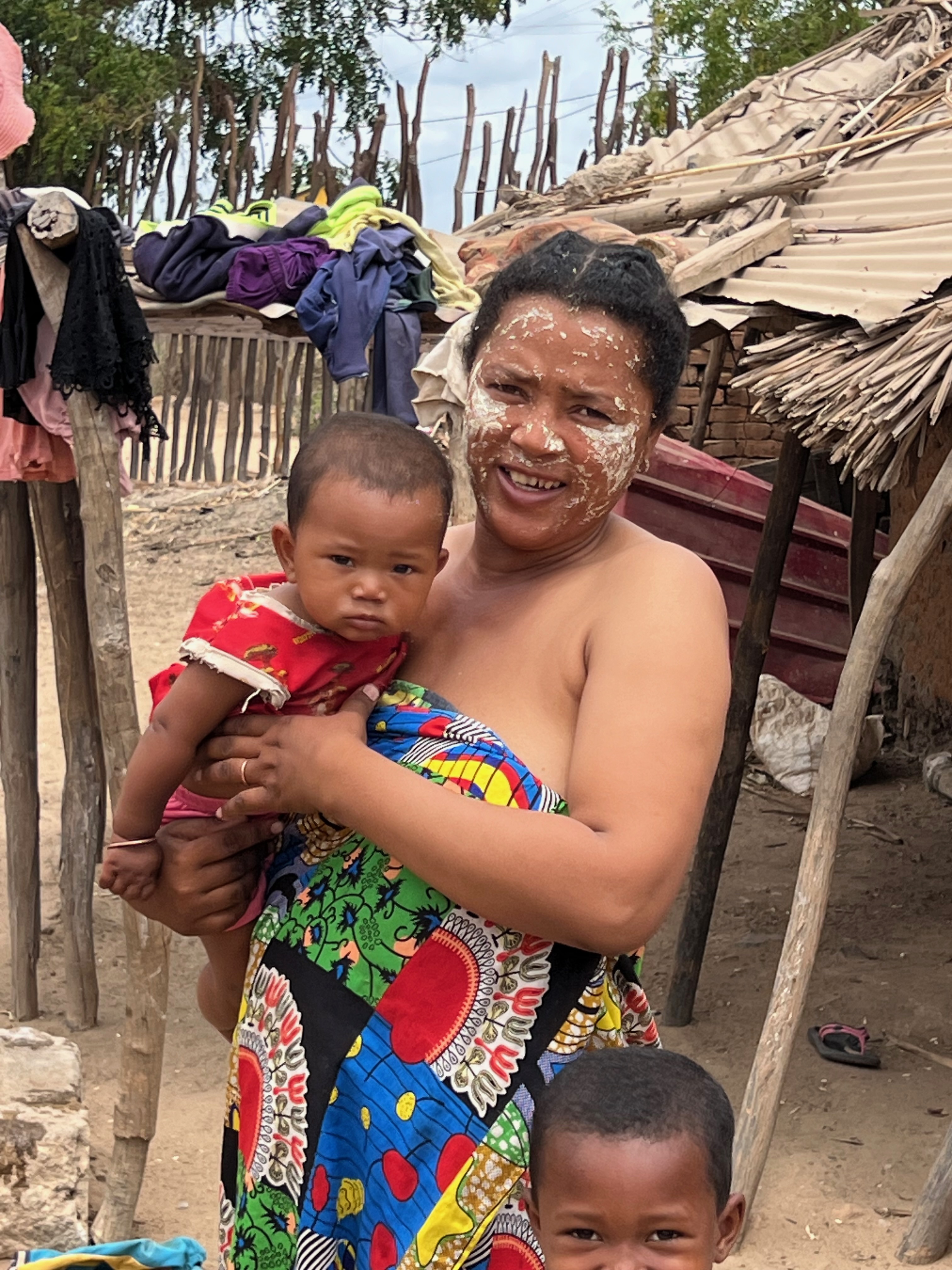
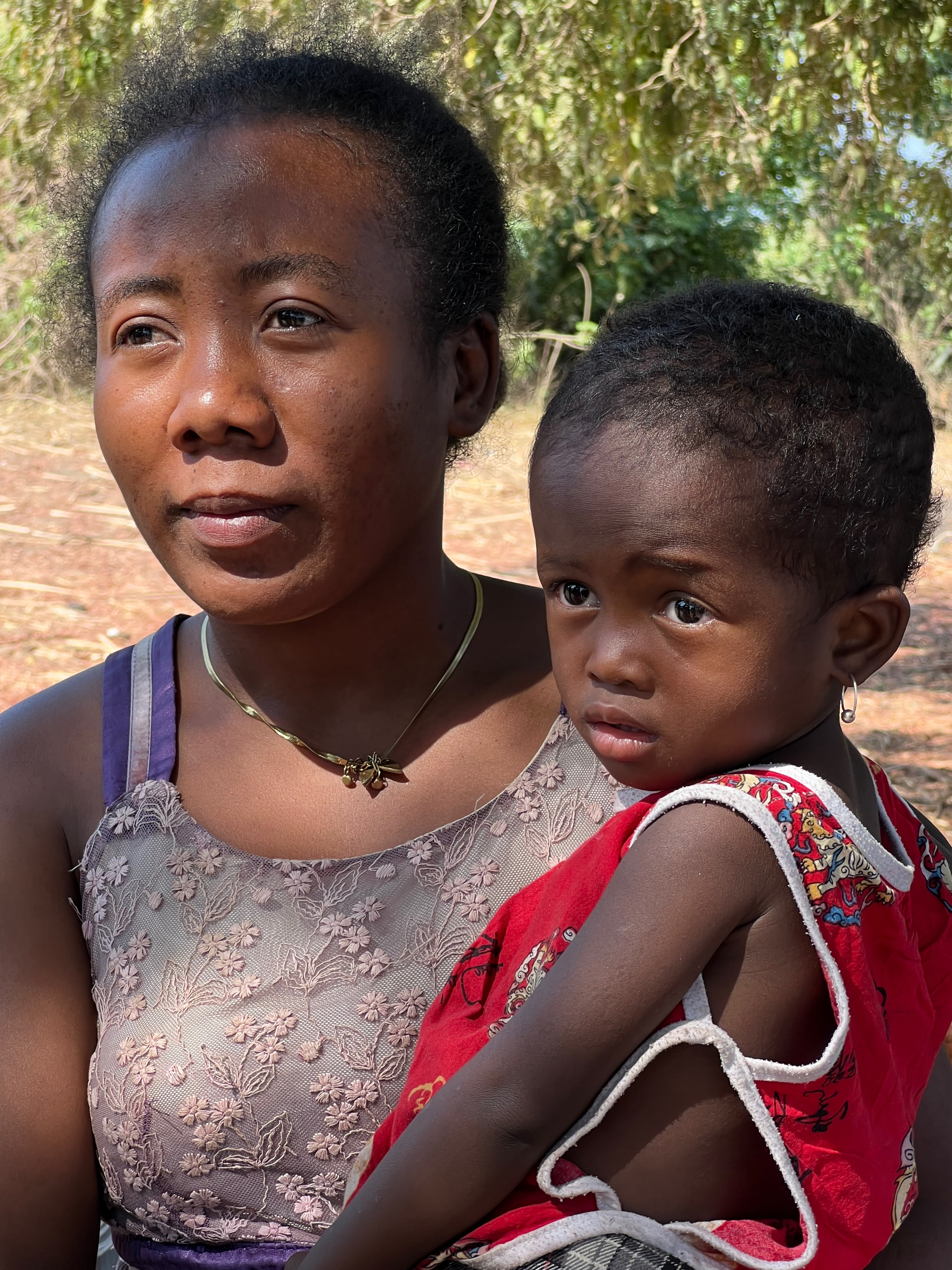
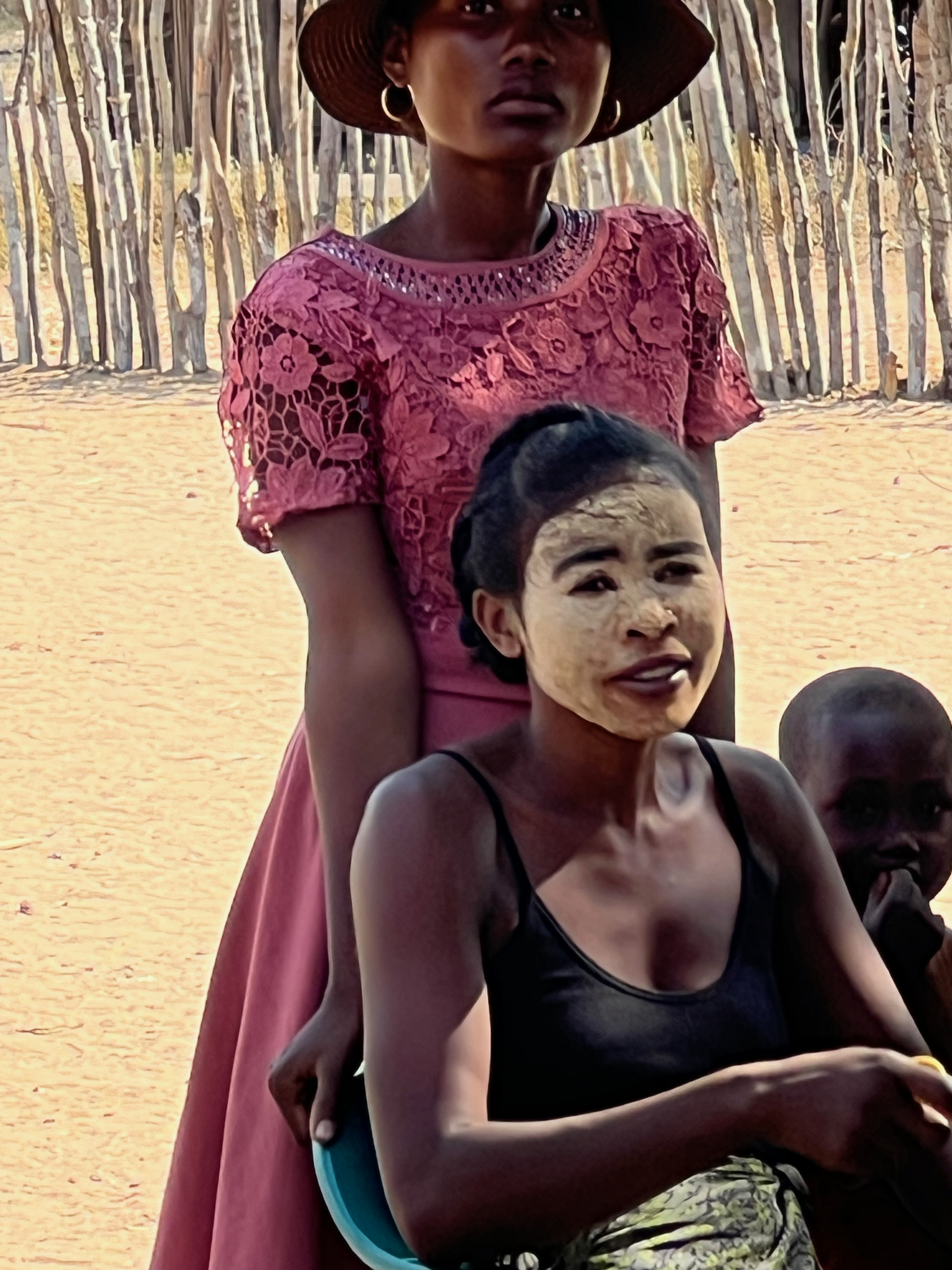

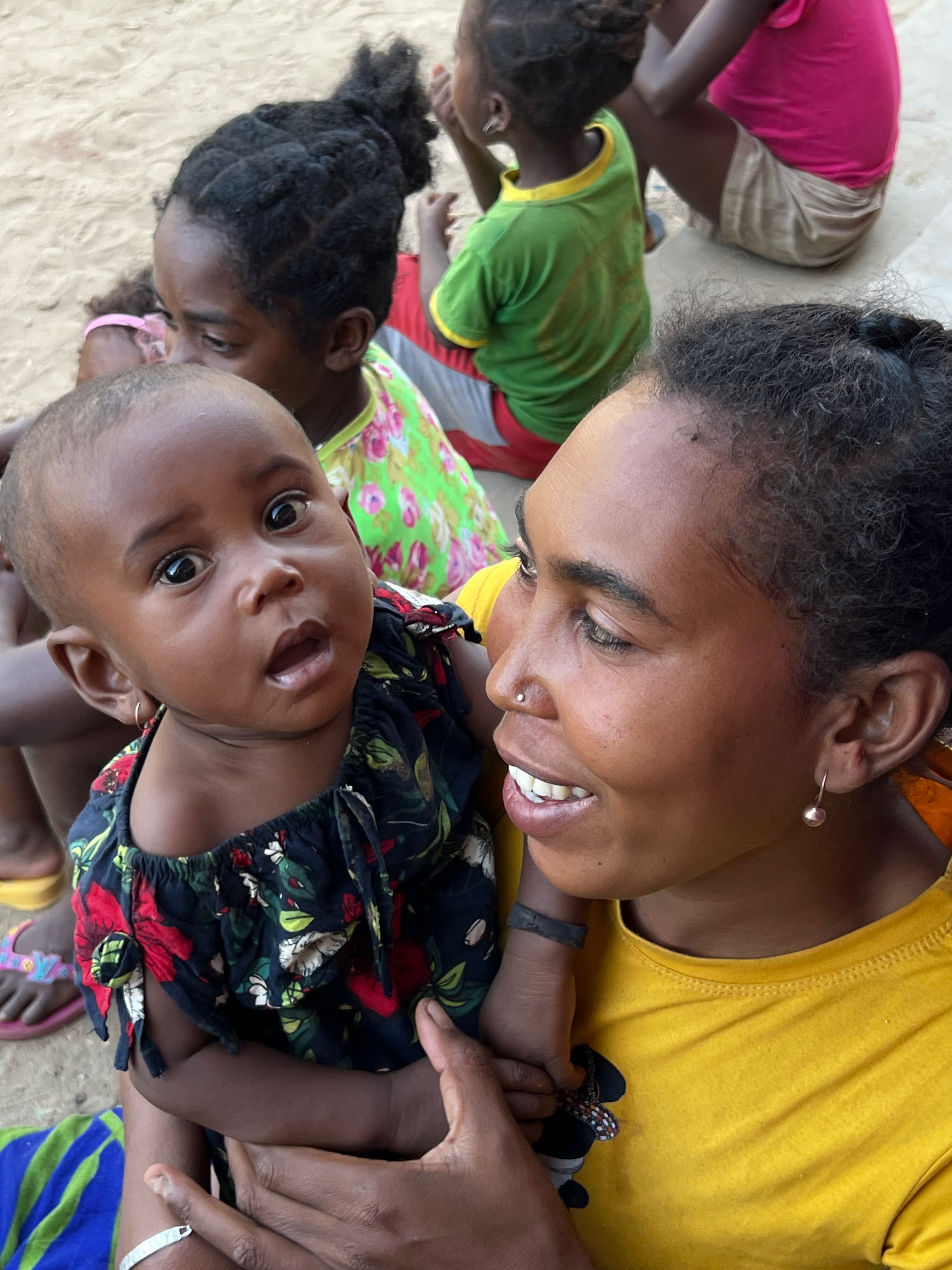
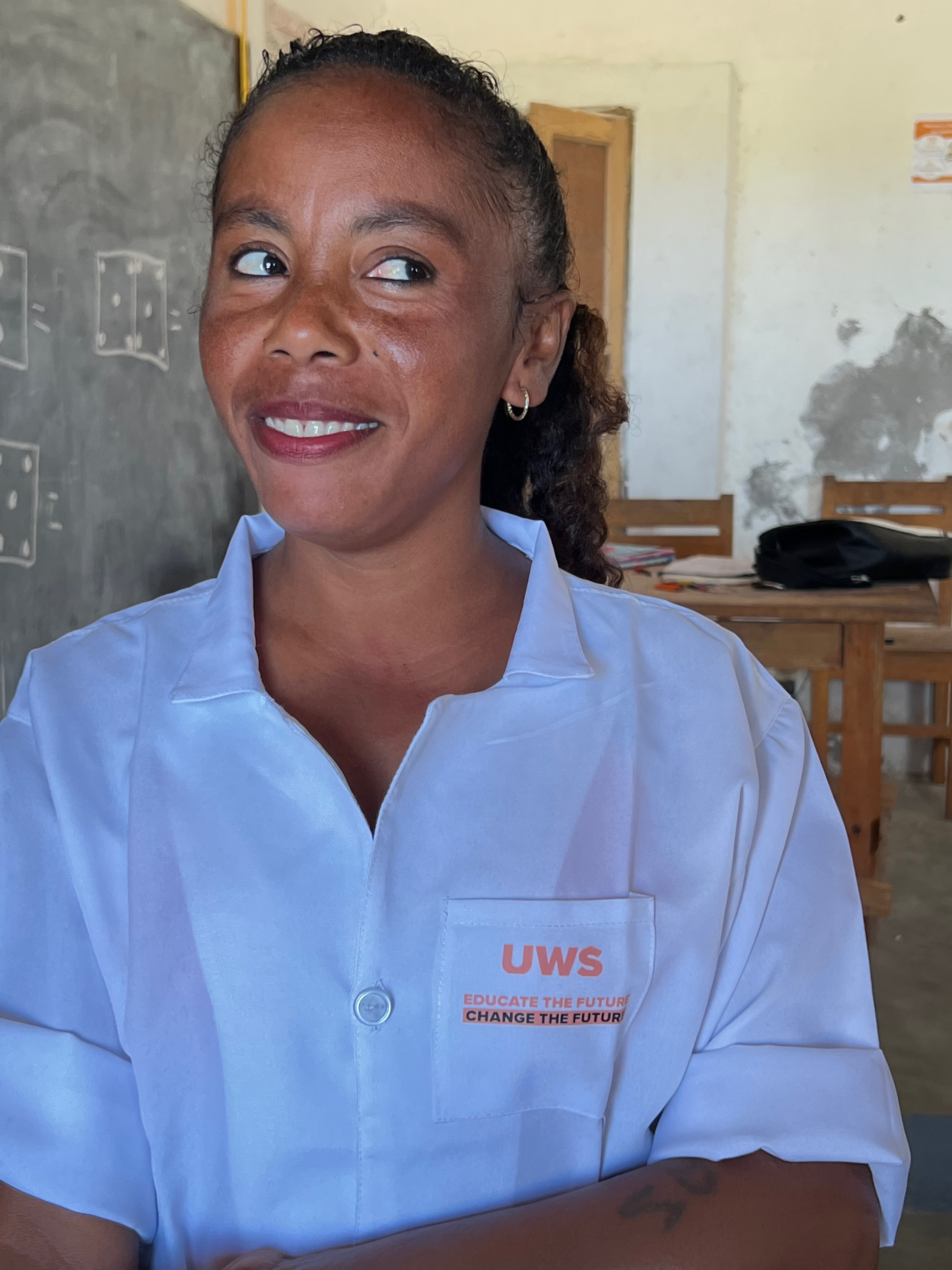
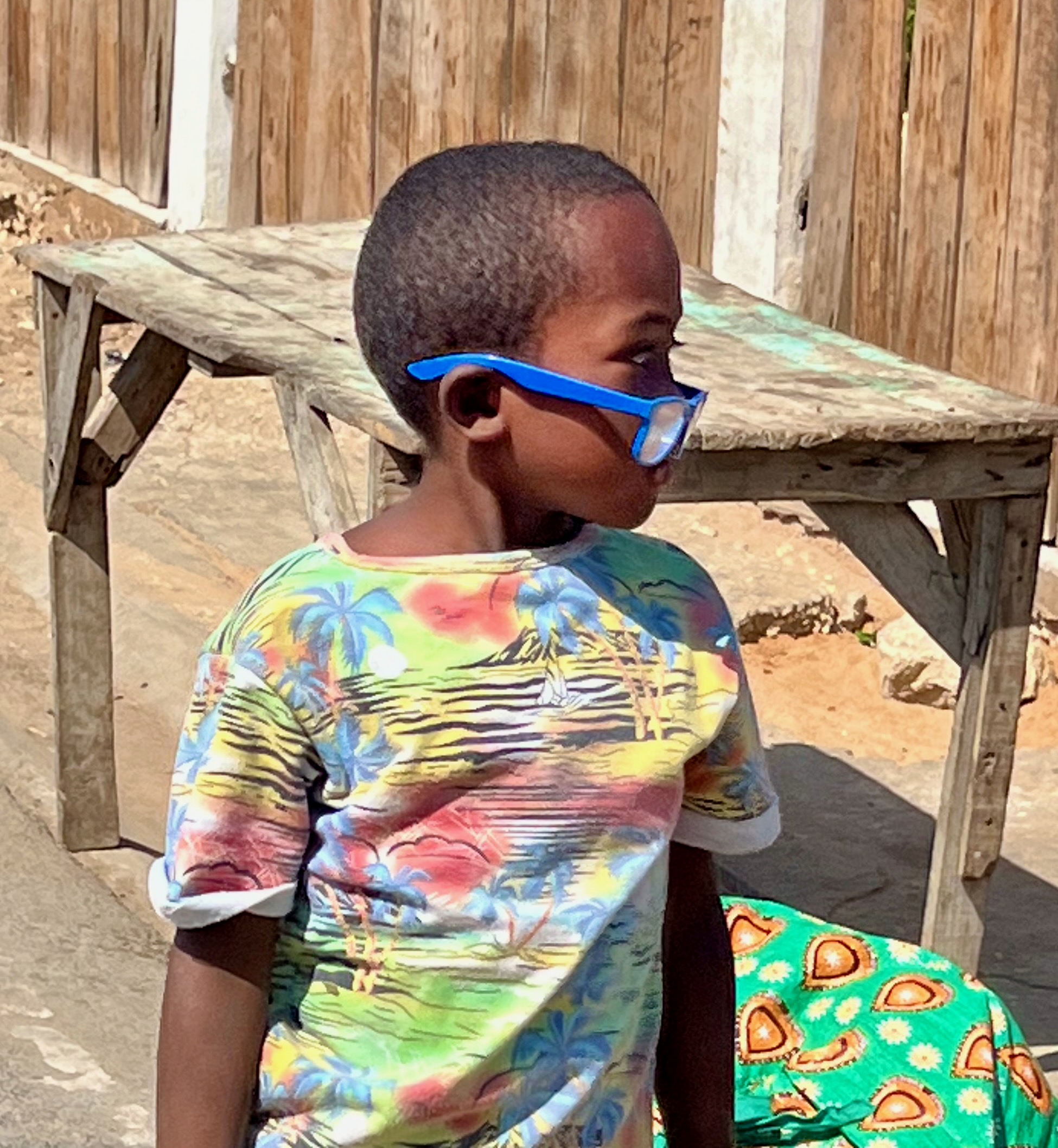

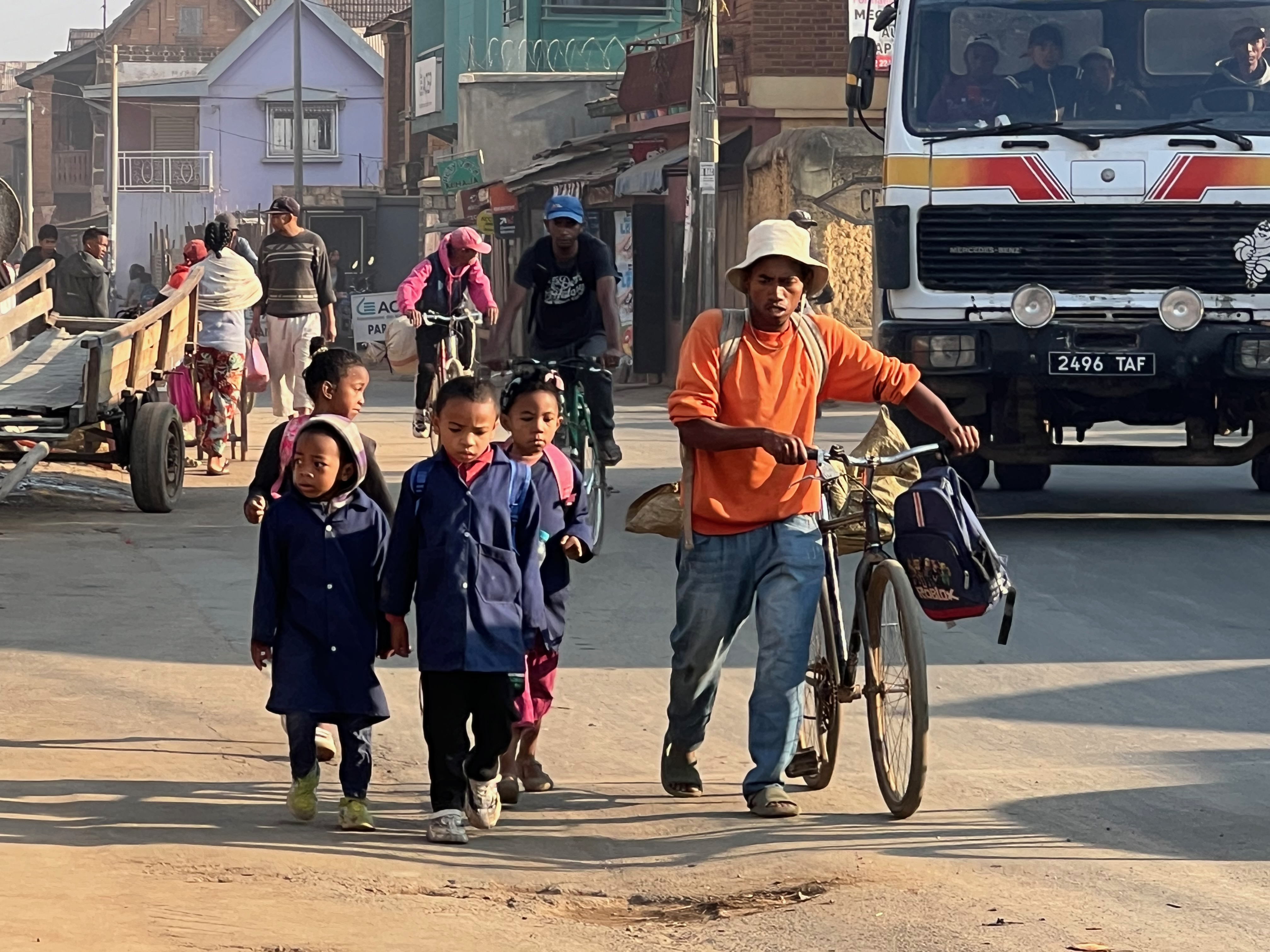
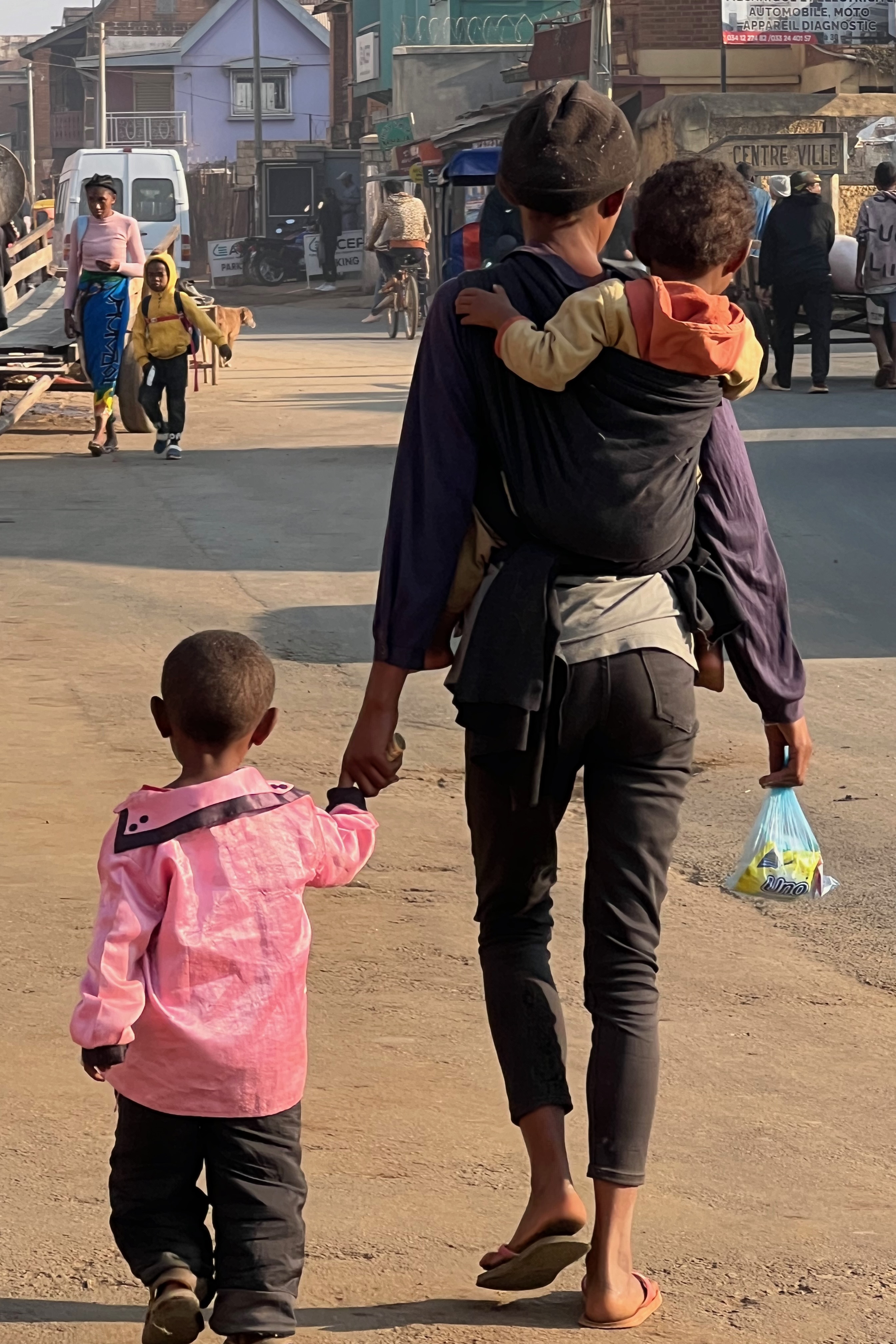
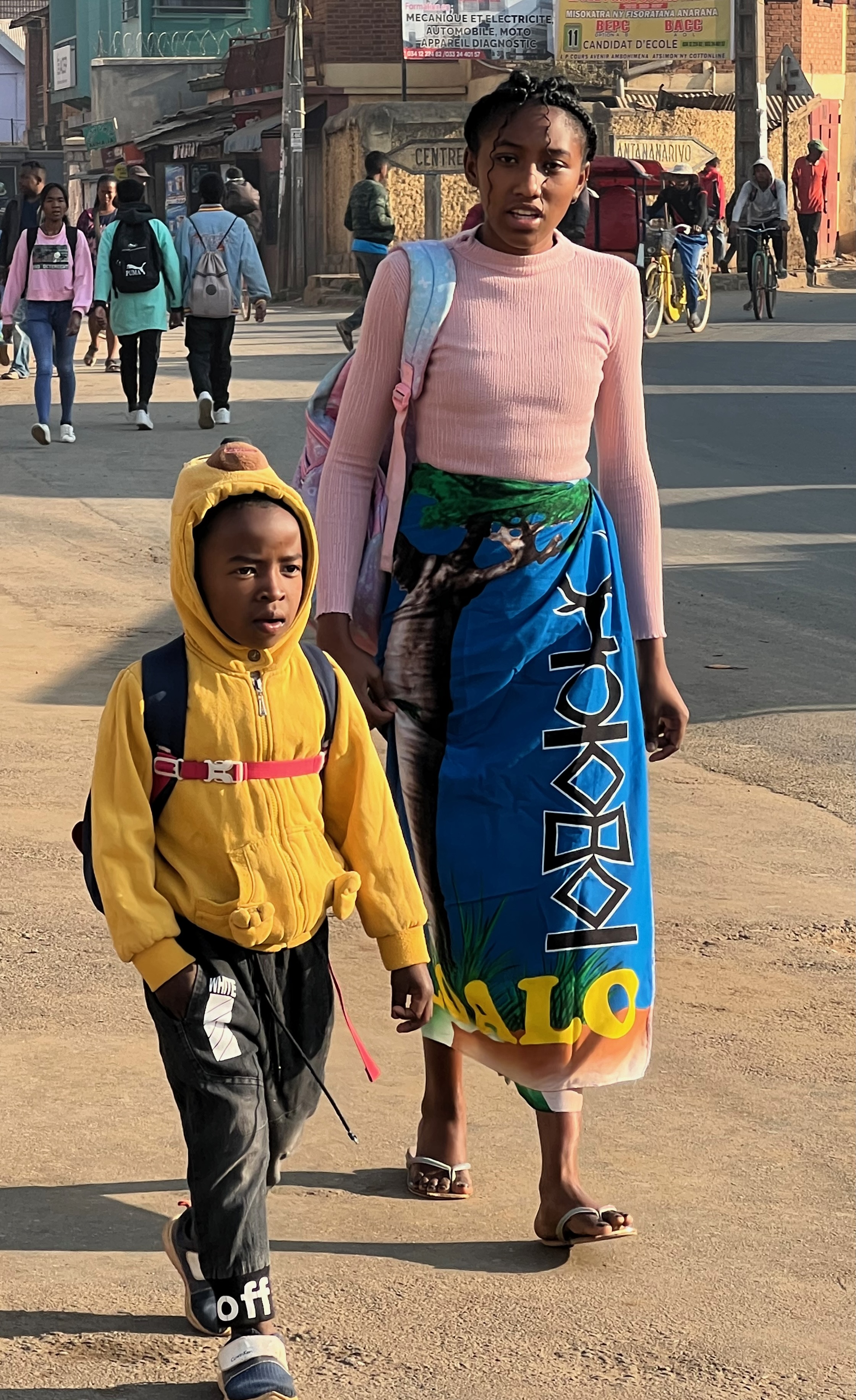

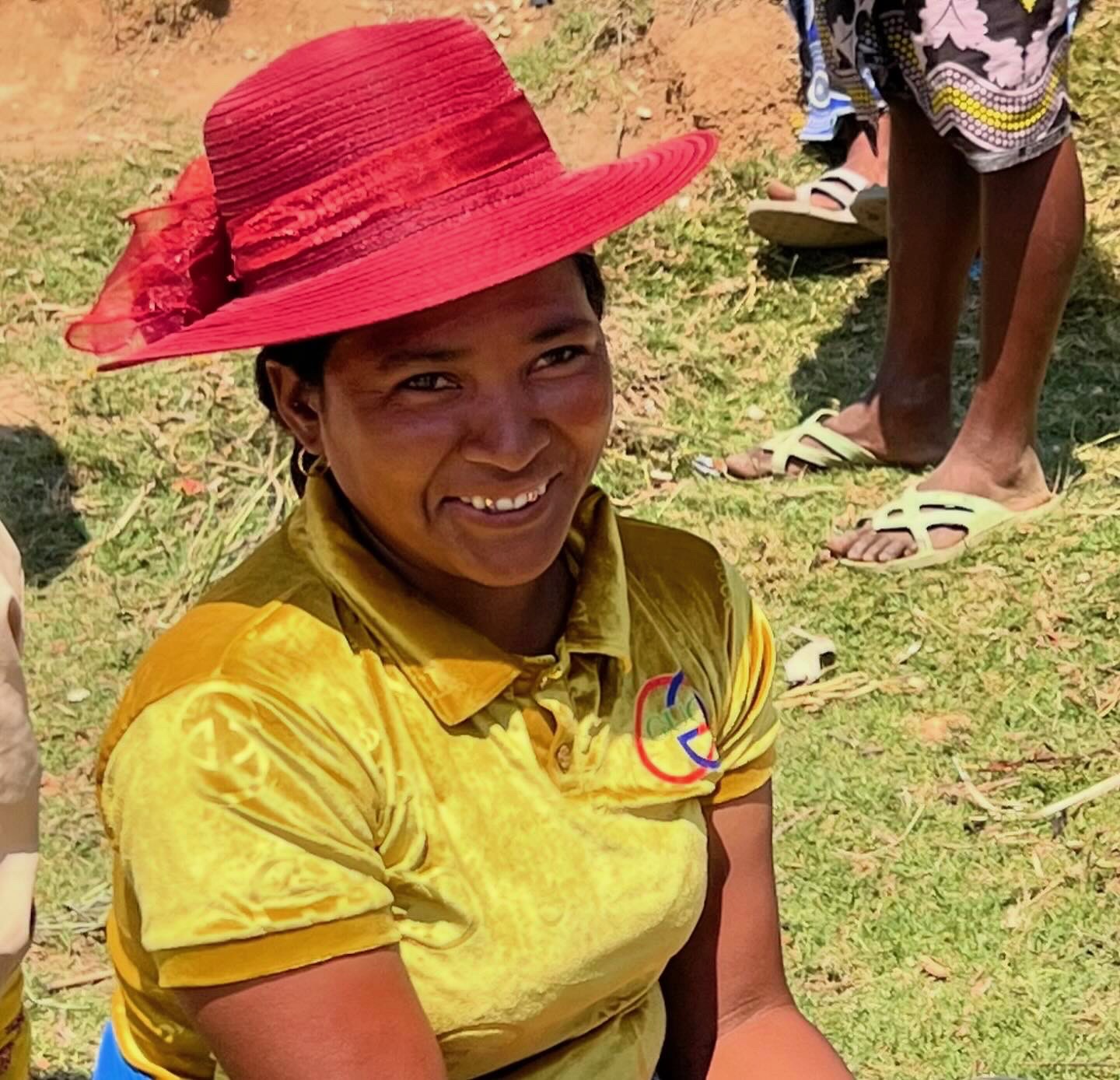

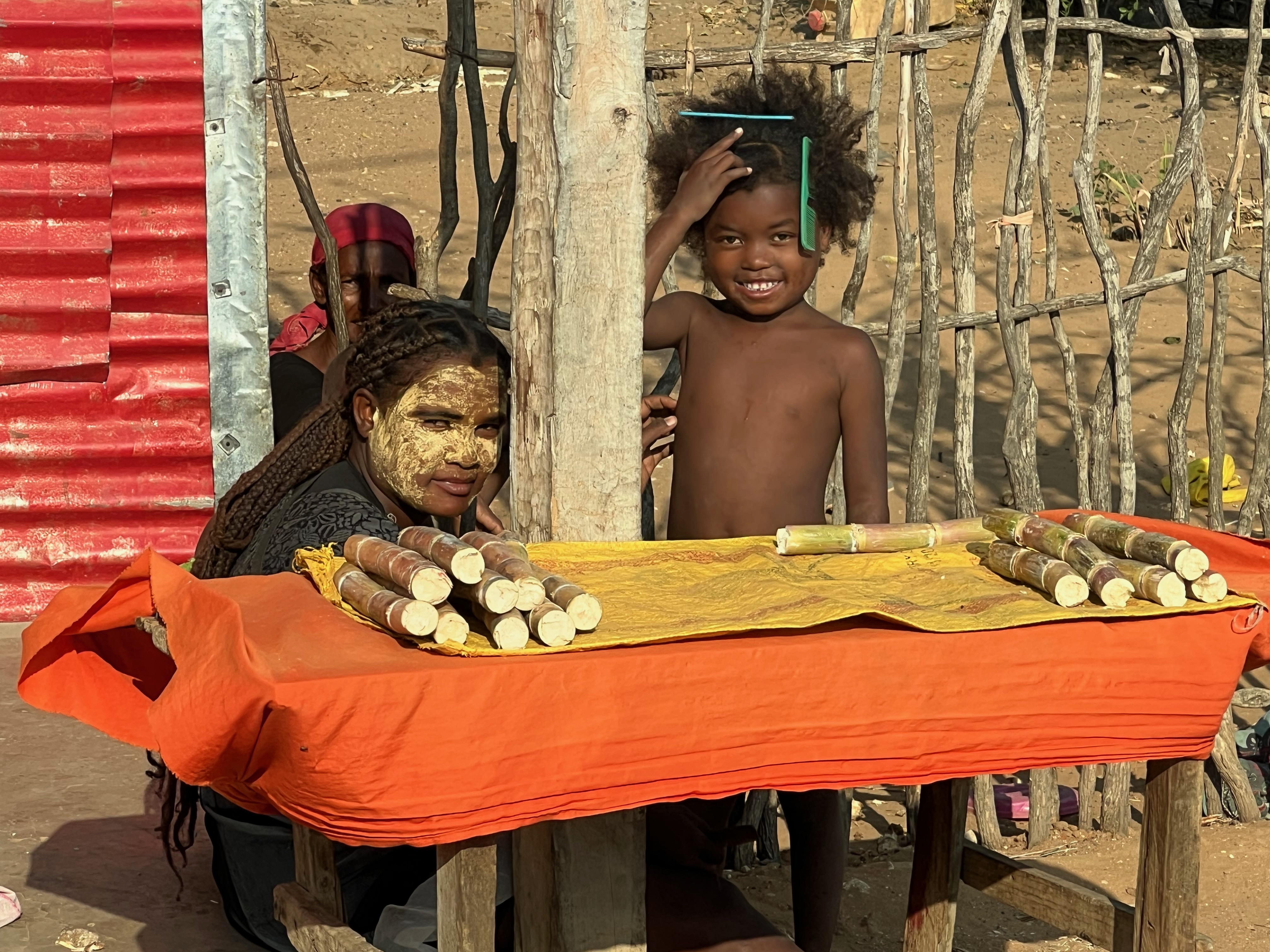
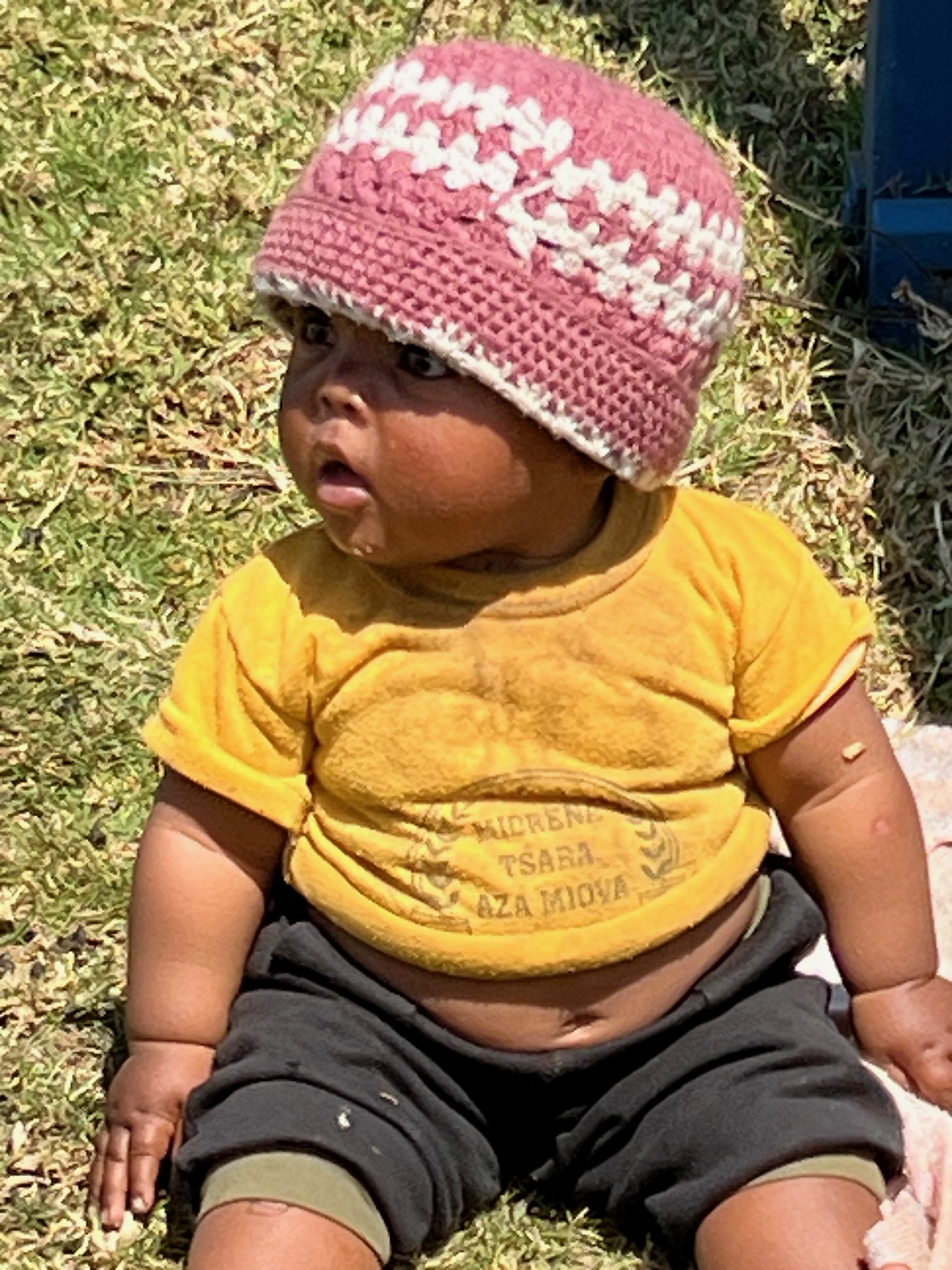
Faces of Madagascar – mostly women and babies! Although the men are devoted dads
This is one of the poorest countries in the world, 9th lowest in the rankings, behind South Sudan, DRC, Burundi, Yemen and a handful of West African former Francophone states. My poverty bench mark is based on the relative numbers of bikes, cars, rickshaws, motorbikes, and pedestrians. As we get further south, e.g. By Toliara, there are virtually no private cars apart from tourist 4x4s, hundreds of pousse pousse (rickshaws both people- and pedal-powered), bicycles and pedestrians. In our school areas ox cart or pirogue are the only means of transport apart from foot and the occasional mini bus if you can afford it.
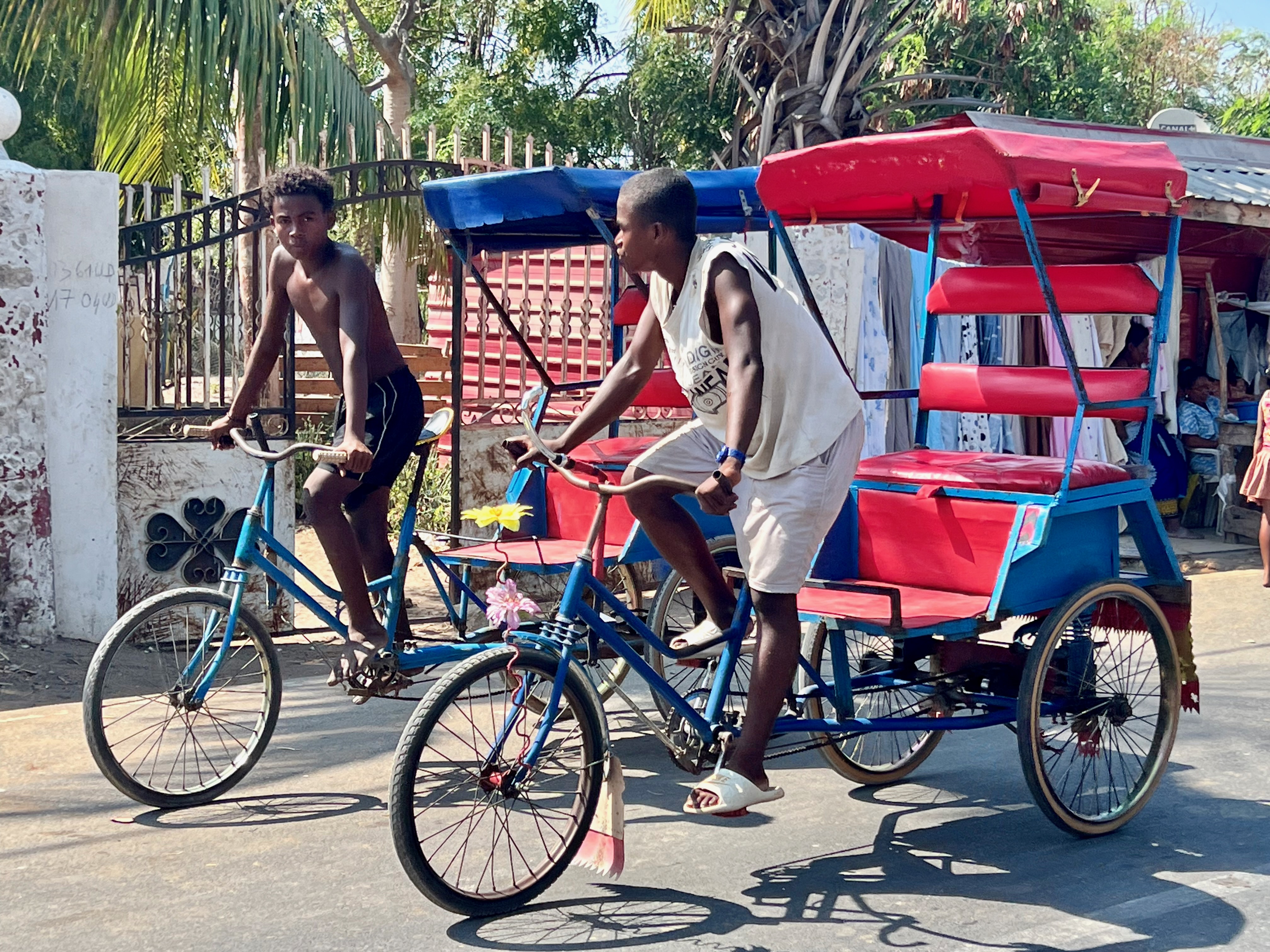
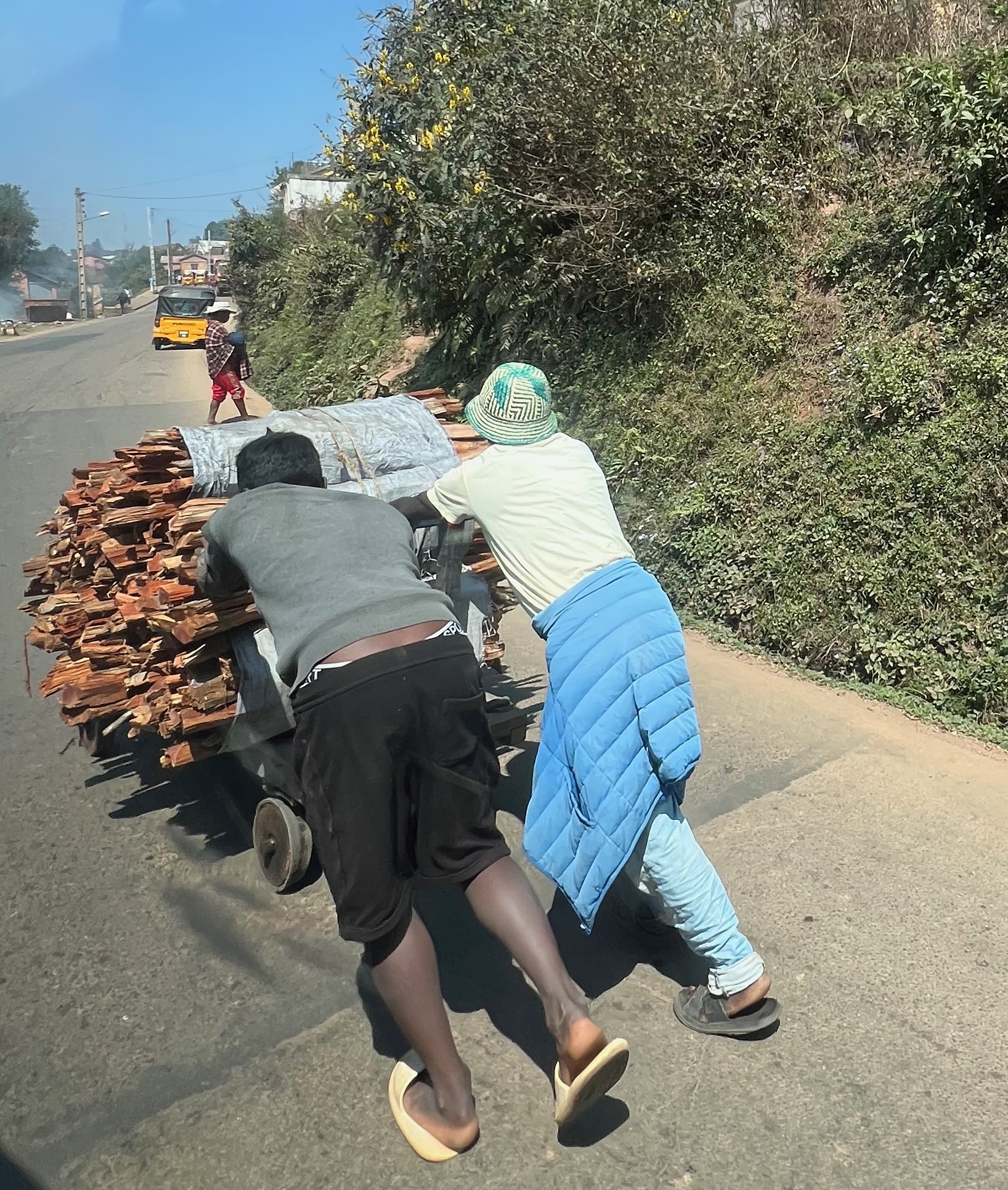
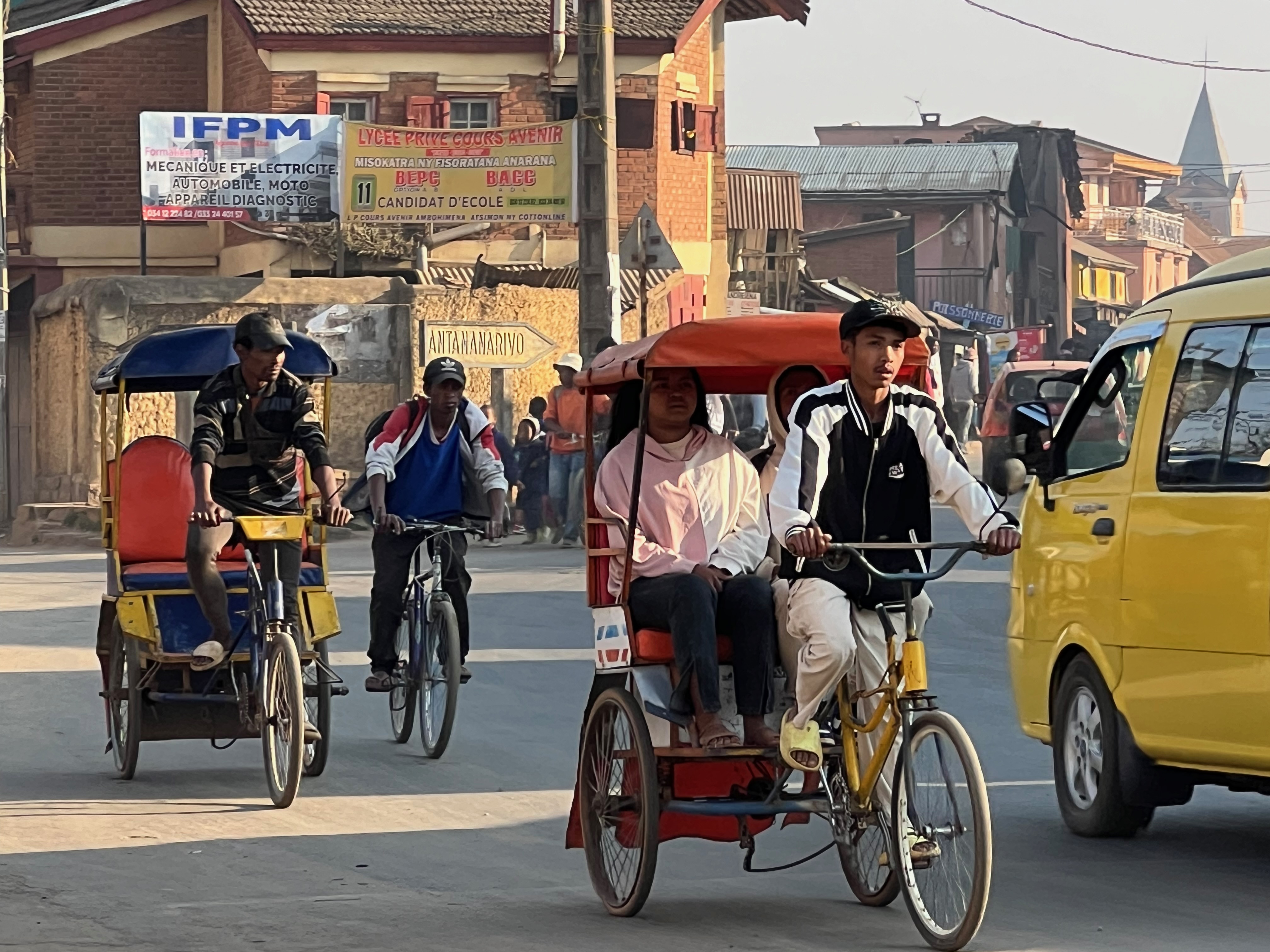
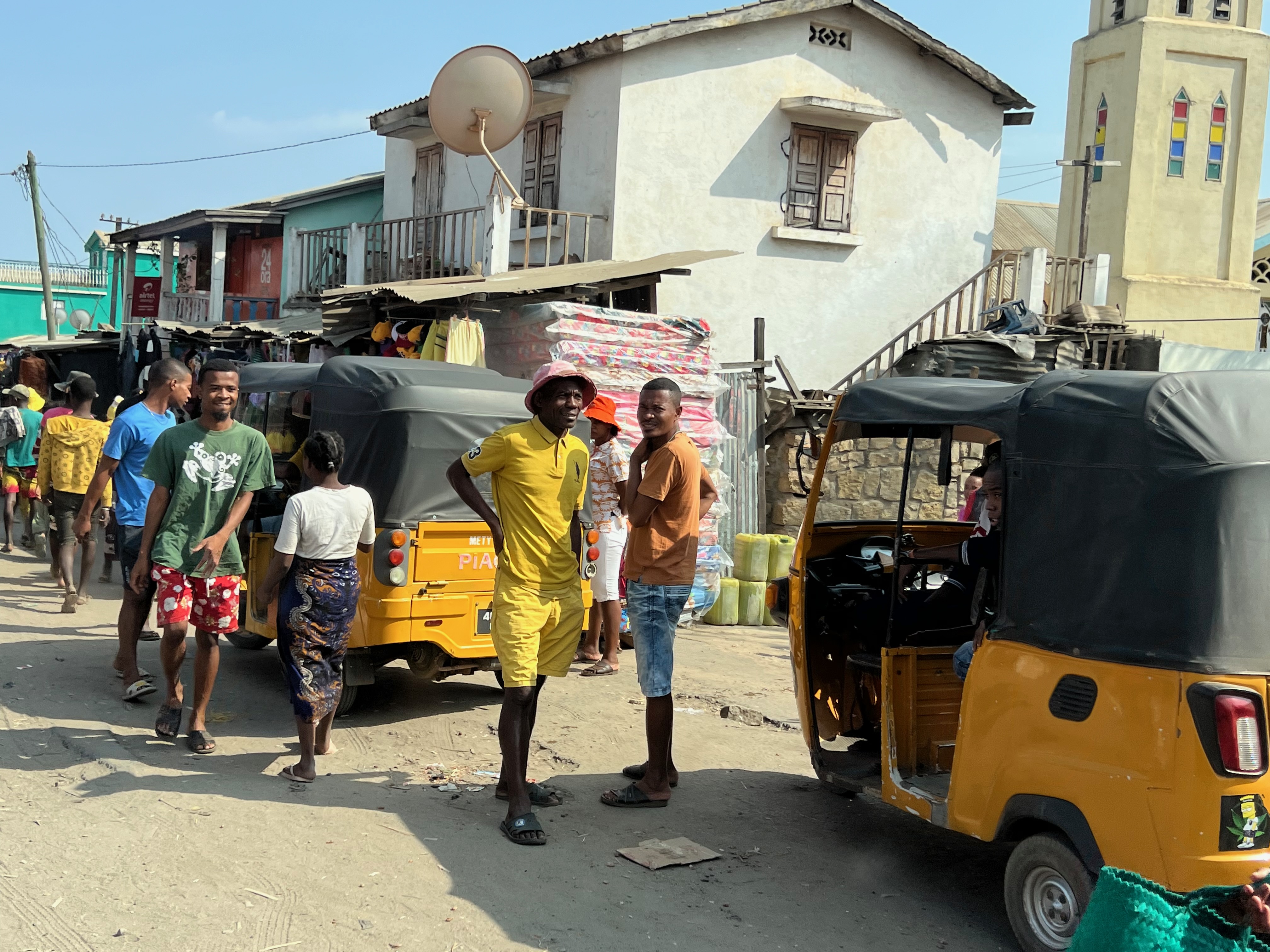
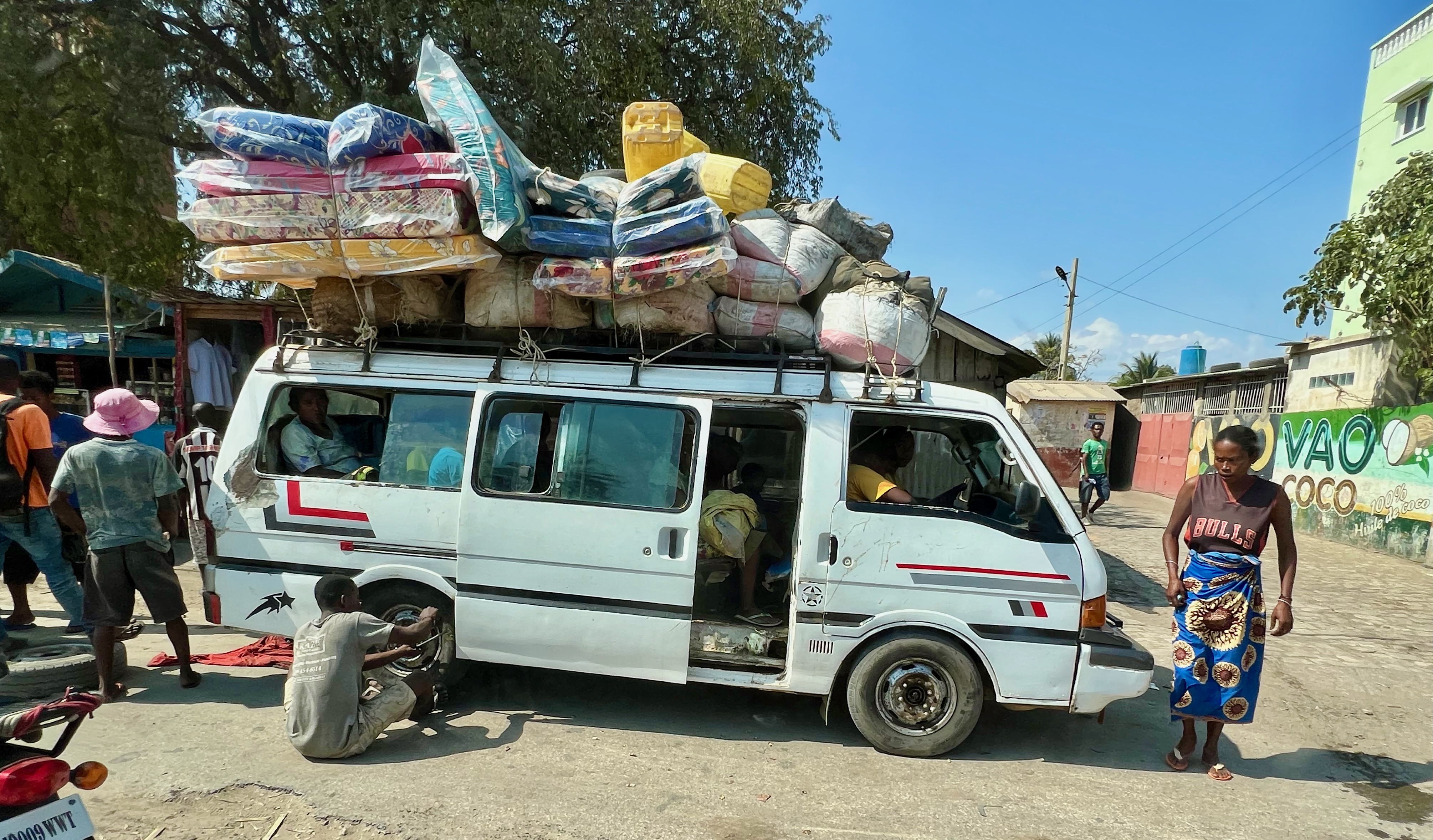
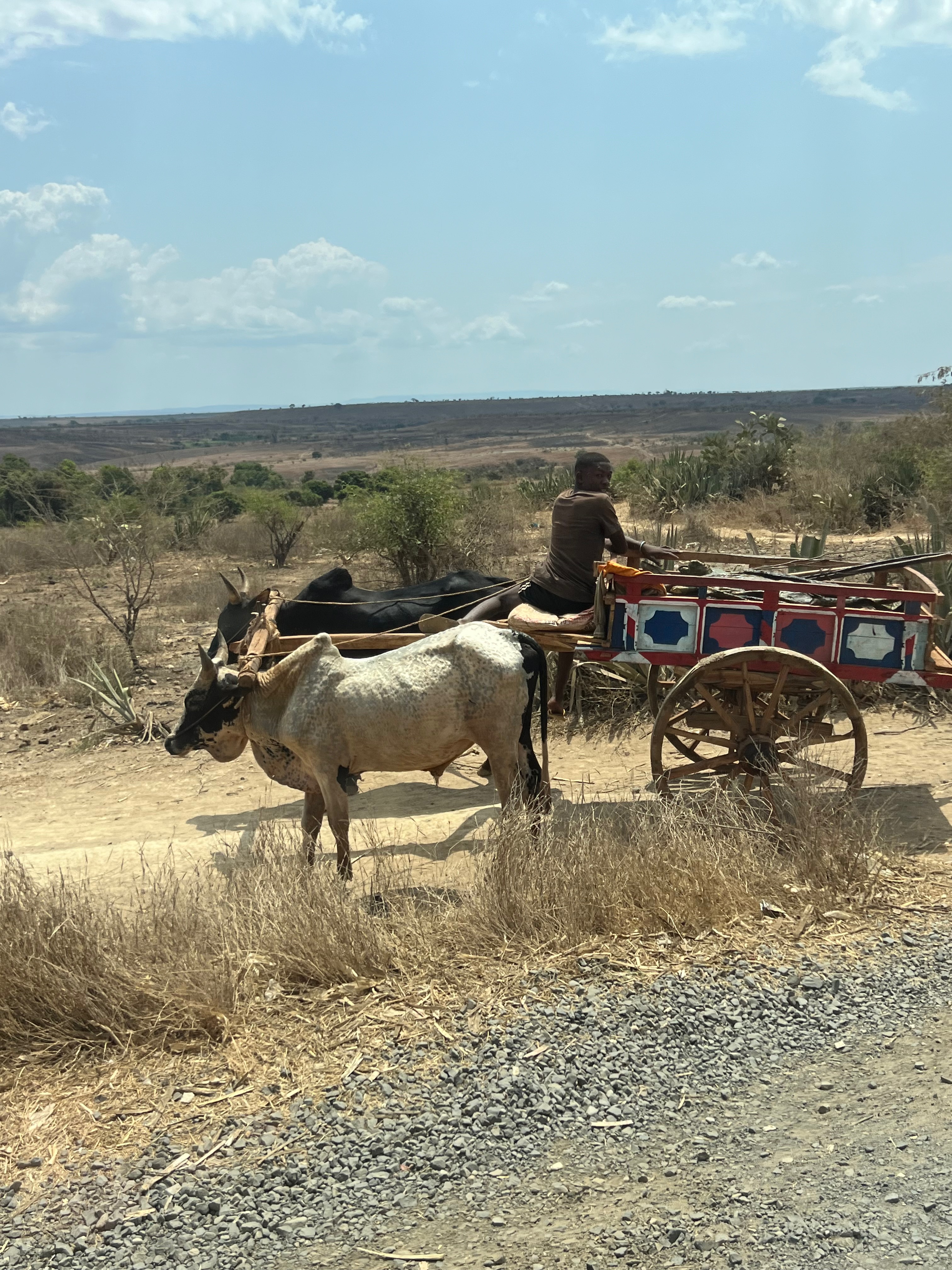
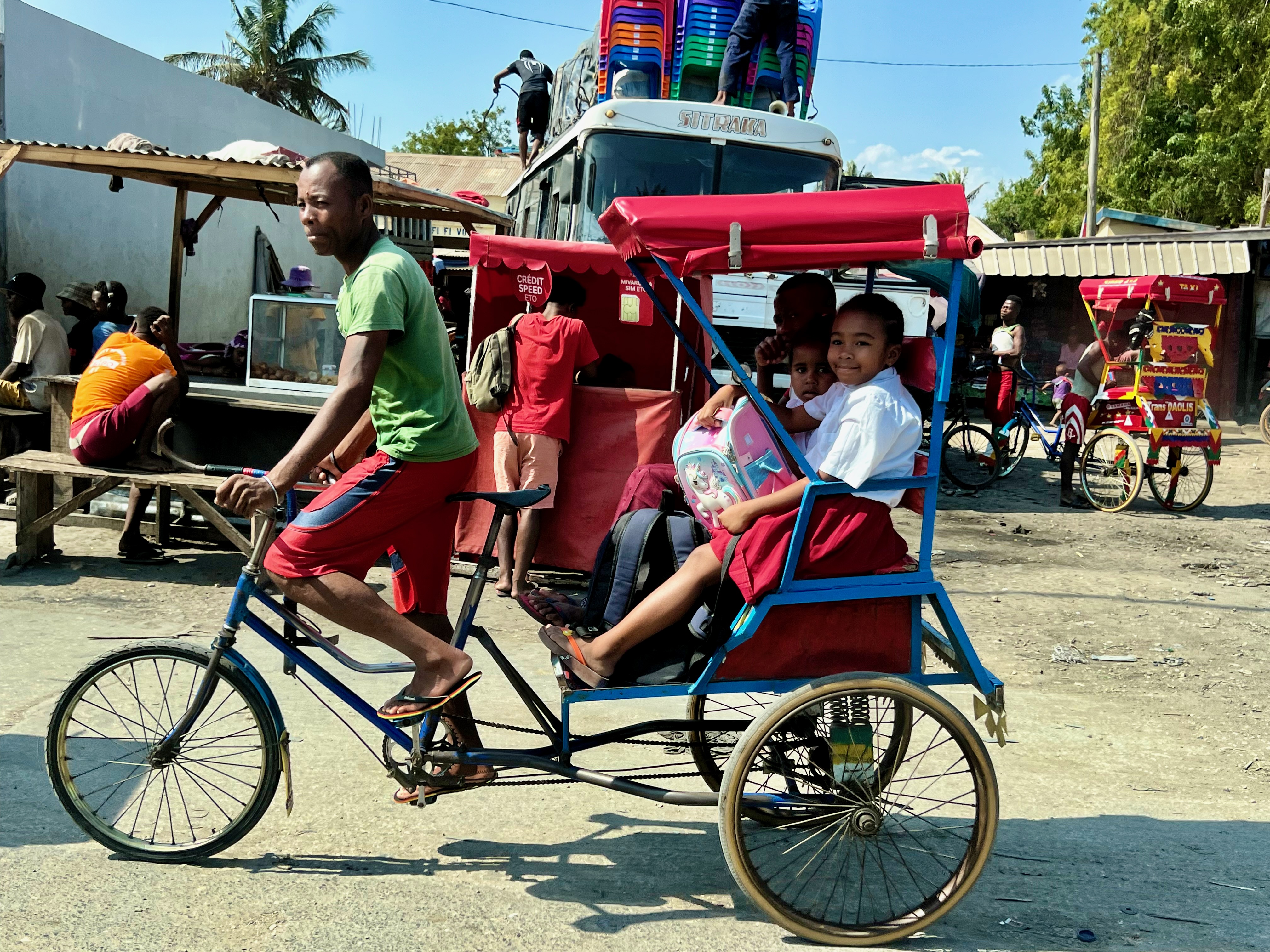
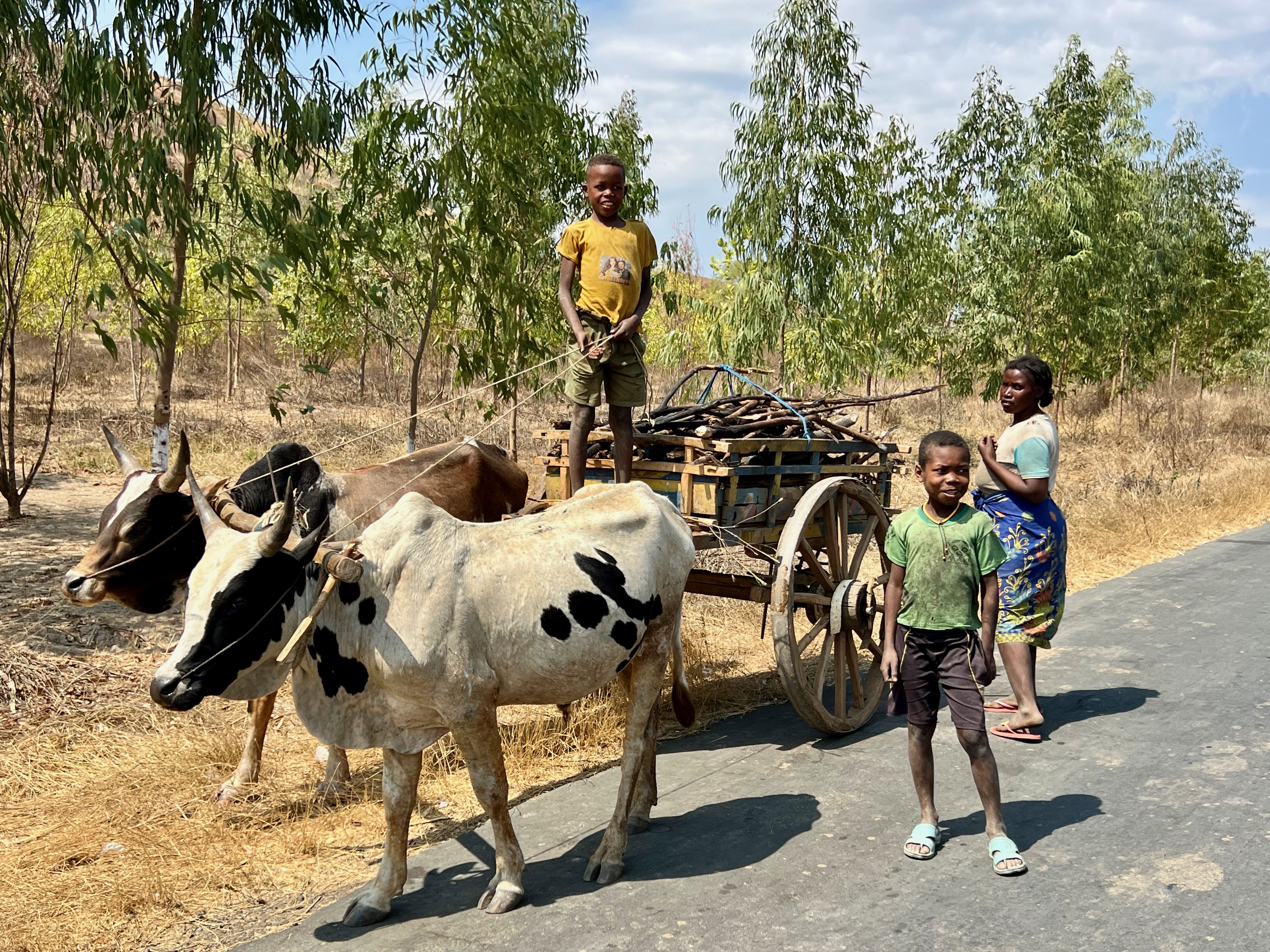

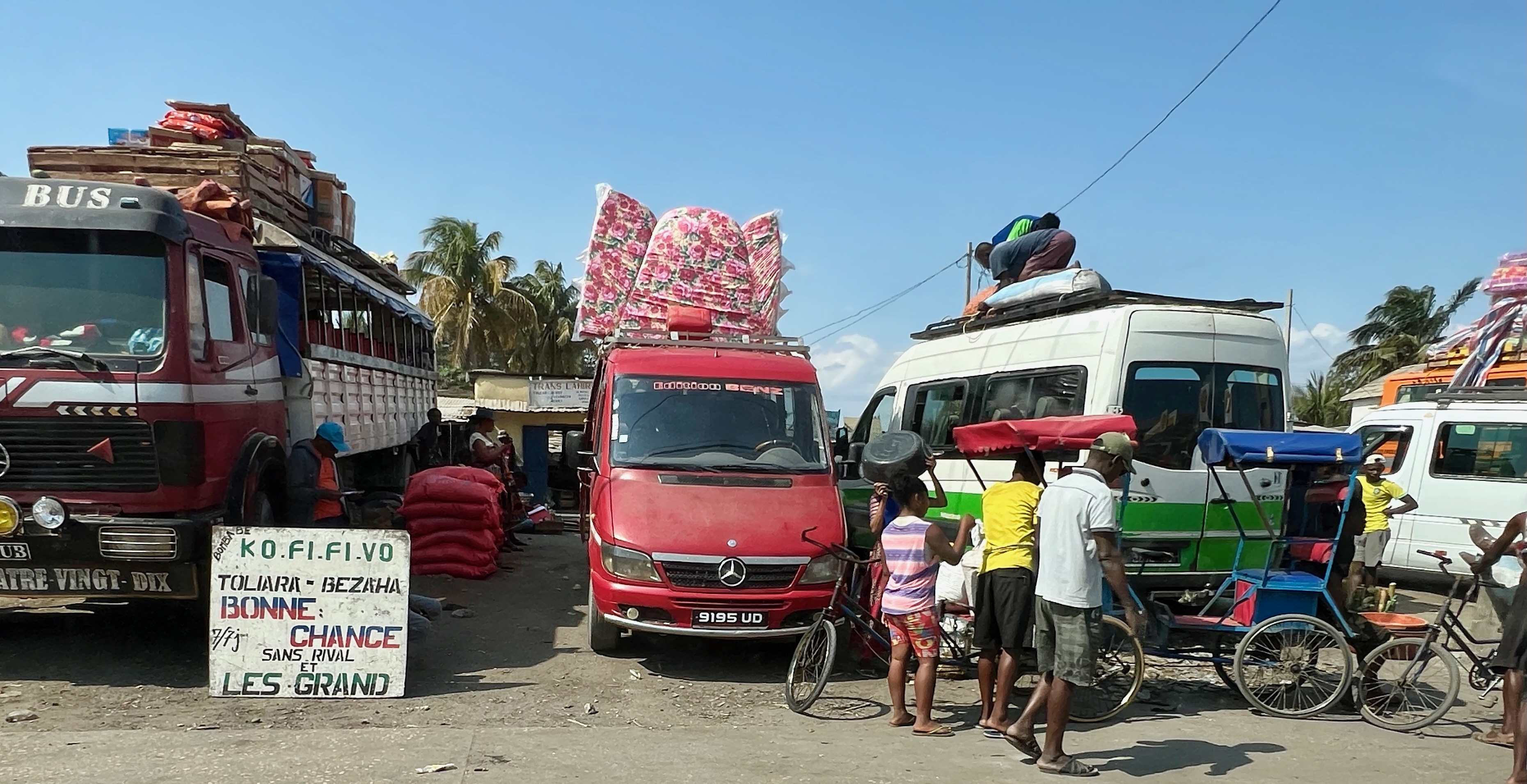
There are free basic health centres in remote areas, but if you have to go to the city you have to pay for medicine or any complications. The ethnic origins of the people are Indonesian, Malay and Bantu – with the African population dominating the southern regions; we could easily be in Tanzania or Kenya, with the mud and reed huts, red soil and women clad in lambas as we get further south, which look like kangas, brightly patterned African wax prints, worn sarong-style.
People first arrived here 3000 years ago from Indonesia and Malaysia and brought rice, the staple diet. All meals are referred to as ‘rice’ – and mountains of it are eaten as we see in the many communal meals we eat on our journey round the schools. The landscape is dominated by paddy fields
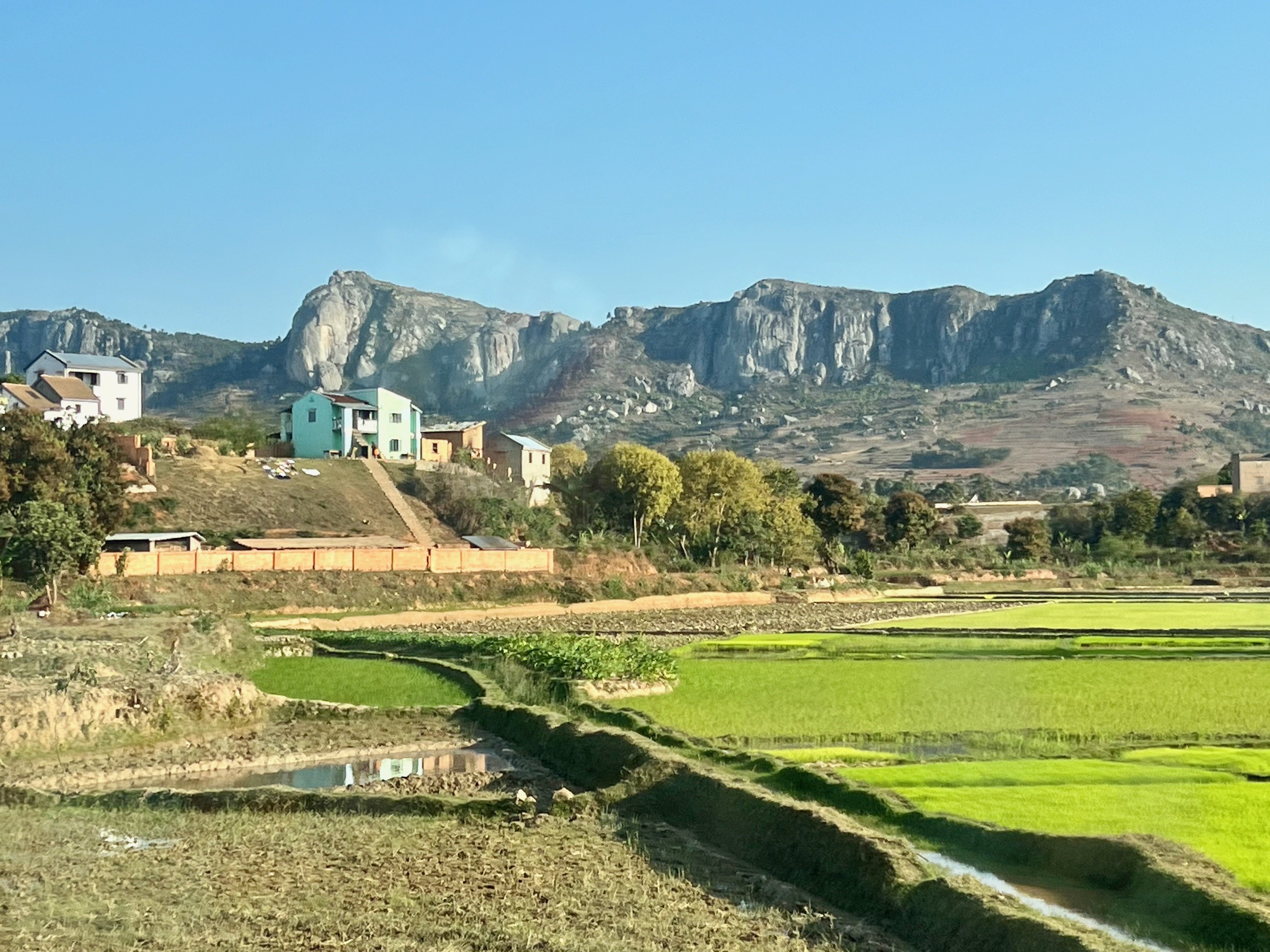
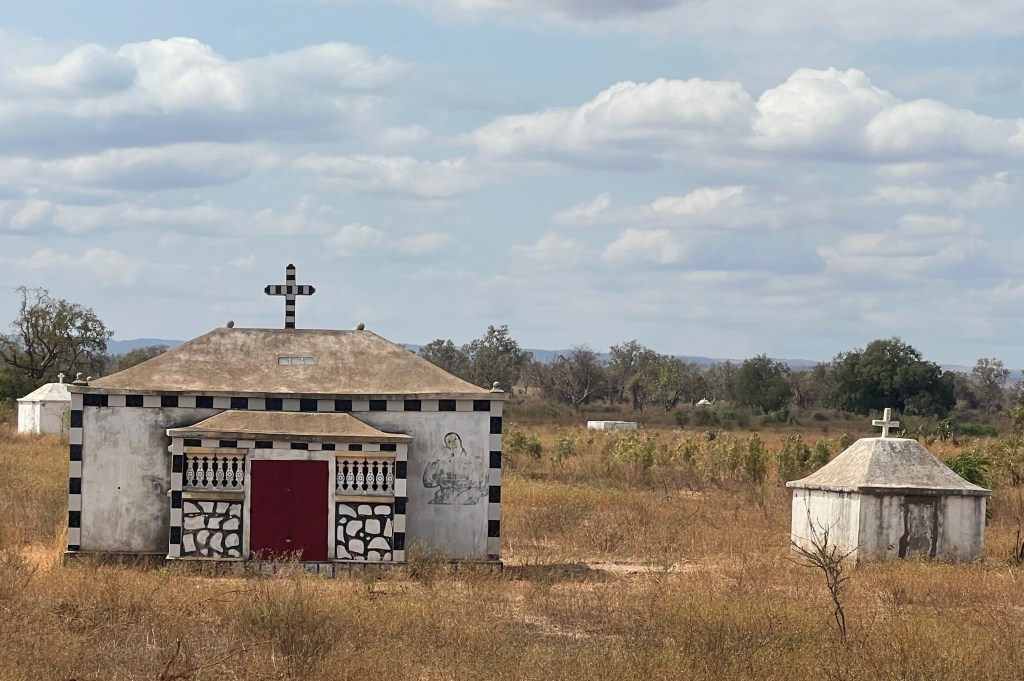
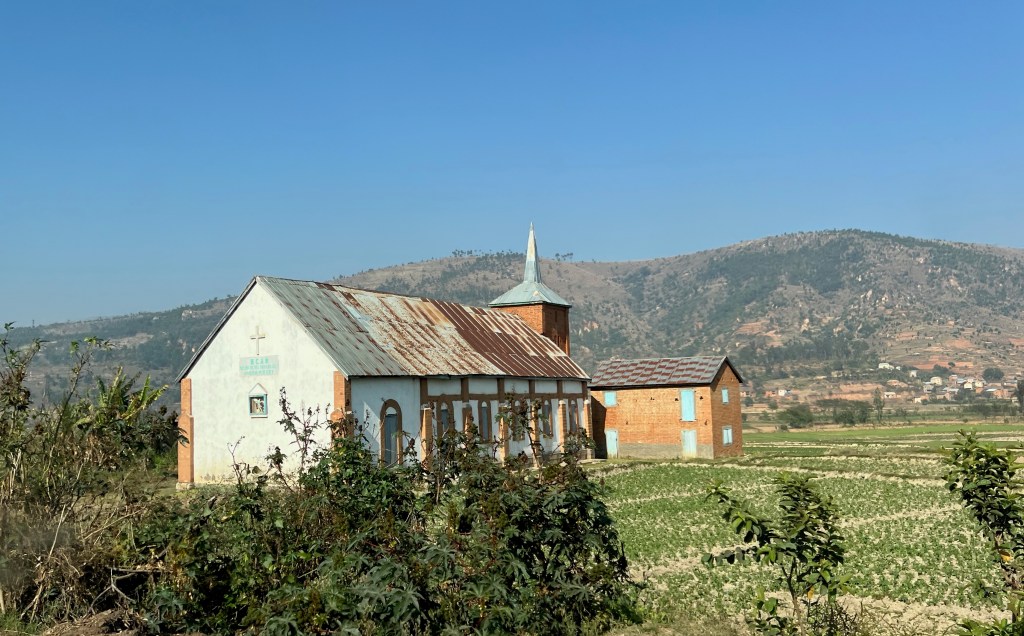
The French bought Catholicism, and Bristol missionaries Protestantism during the brief British occupation. New religions like Pentecostalism are coming, but most rural Malagasy retain their animist roots, and revere ancestors. As we drive from Tana, it is the season for bone-turning, which they do by first wrapping bodies in silk in a communal family tomb and turning the bones every 5-6 years with a big feast. Guests bring the silk as it’s expensive. We see people processioning in their best clothes to exhumations. This is similar to customs in Sarawak among the Torajah and the Iban in Borneo. Interestingly in our beach hotel at the end of this visit there is large group of Indonesians on a mission to bring their culture to Madagascar, and we comment on this and other various parallels. Some of the African tribes we are told have to keep the father’s body in the hut for a year!



There was a coup in 2009 and a good President was deposed. The coup leader installed himself as President and has since won an election, widely believed to be rigged. You can always tell by the free tee-shirts given away during the campaigns! Similar to Zimbabwe (many tee-shirts during elections), the corrupt politicians are unpopular in the cities full of educated young people, while retaining stronger rural support among the less well-educated. Madagascar has strong links with both France and Russia and the Chinese are heavily involved in the gold and sapphire trades.

60% of the world’s sapphires are from Madagascar. We pass through Ilakaka, the centre of the sapphire industry in central southern Madagascar – a real boom town, wild west atmosphere, full of shady characters dealing on the streets, Pakistani and Chinese signs. Only nationals are allowed to dig, and all mining has to be done by hand, but they sure are there to unscrupulously buy the gems on the streets. More in blog no 3.

Nickel and cobalt are the no 1 export, replacing vanilla which is now 4th. There are now 250 clothing companies, mostly American – Colombia, Gap, Nike, using cotton grown in S Madagascar. Classic unskilled labour industry in a poor countries. French call centres utilise the educated young Malagasy, whose French is deemed better than west African French; Orange and Mano Mano have big set ups here.
Tourism is in third place but Covid isolated Madagascar for three years with with three lockdowns. Clothing factories shut down. No flights. Lots of people lost jobs. No taxis or communal travel. The only way to get about was on foot or in your own car. Money for road maintenance was spent on Covid and has had a terrible impact on the roads which are truly awful. But on the plus side (?) there is a magnificent new cable car/bubble lift above Tana to help commuters miss the traffic; a great idea if the French terms of supply didn’t include a massive local taxpayer contribution. It worked well in Medellin.
Corruption exists throughout, even down to the local schools, where government funds get creamed off at all levels, leaving the schools with little from the $2 per child per annum they are meant to get. School supplies are whittled away, especially textbooks, desks, building materials. There’s not much optimism for improvement at present, especially with the impact of man-mad climate change on the country. The cyclones are truly devastating the South, crops are ruined, roads, infrastructure and homes destroyed. There is no tradition of storing food, so when you can’t fish or farm, you starve. Somehow the Malagasy smile through it all and are utterly charming and delightful.
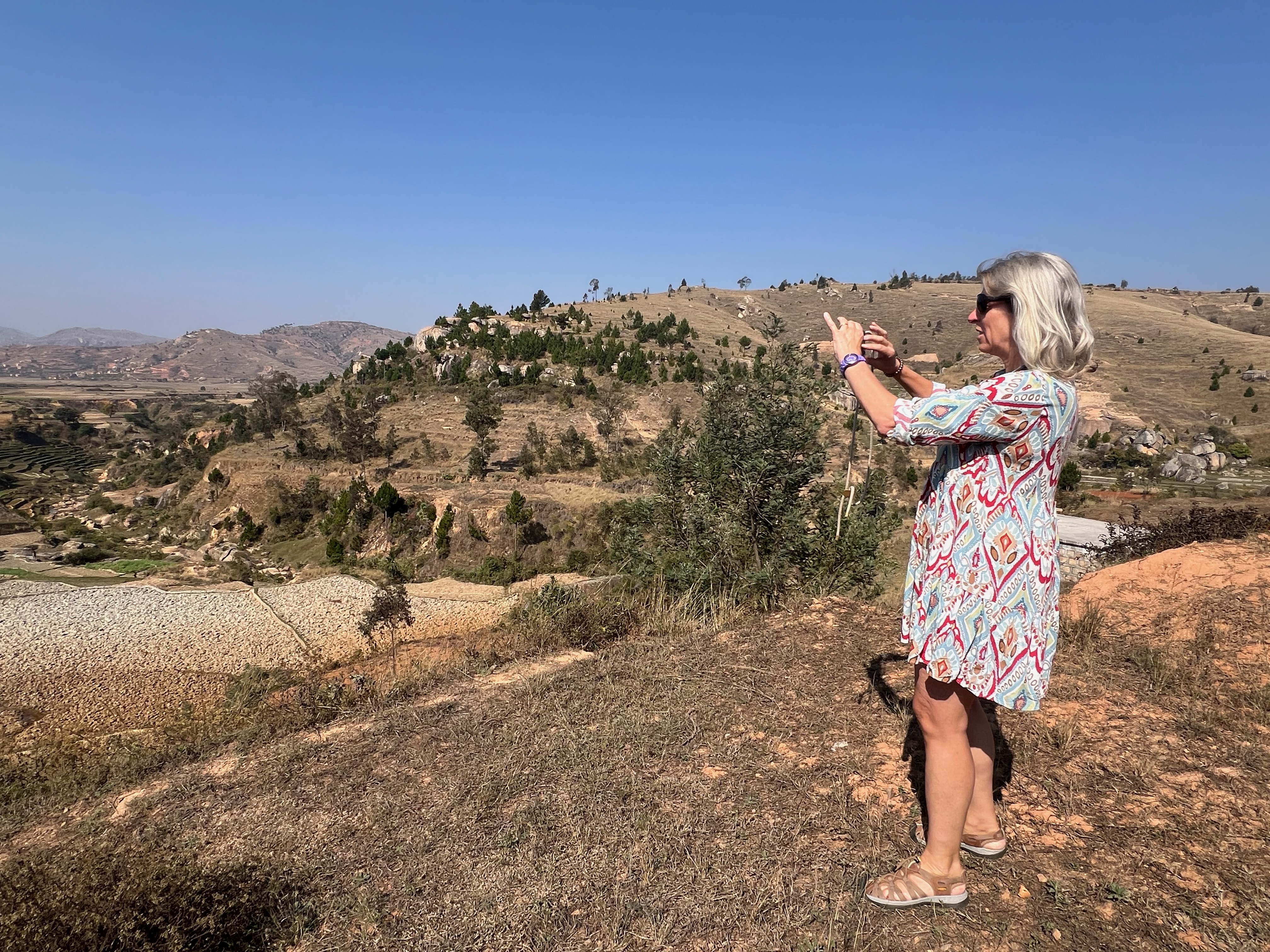
Looking for a place to pee on the RN7
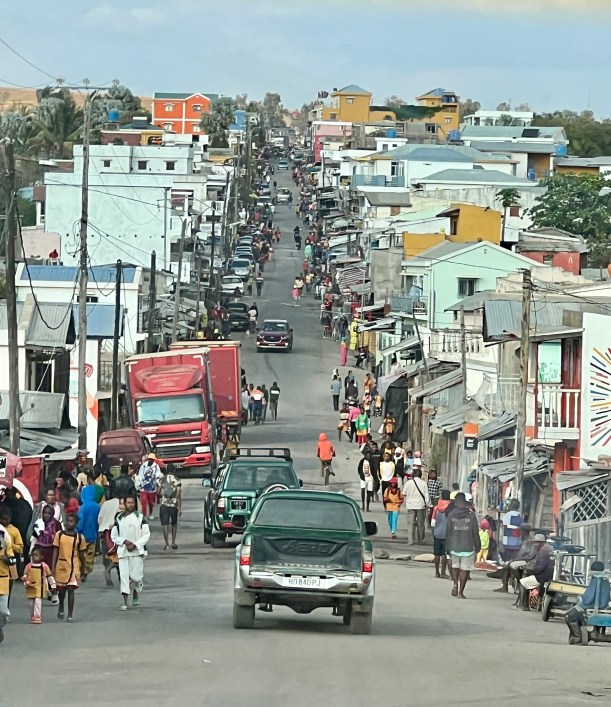
We take all this in as we drive through Tana to get on the main RN7 which will take us all the way Tuliar, our final destination before we hit the school sector of our trip. It takes us two hours to get through Tana, with its crazy traffic, terrible roads, packed with minibuses, tuk tuks imported from India, lorries, pousse pousse (rickshaws both people and pedal-powered), a few bicycles and very few private cars. The kids are going to school, shacks are selling everything by the side of the road – snacks, dry food, cheap Chinese goods, and cash points, not quite as we know them!
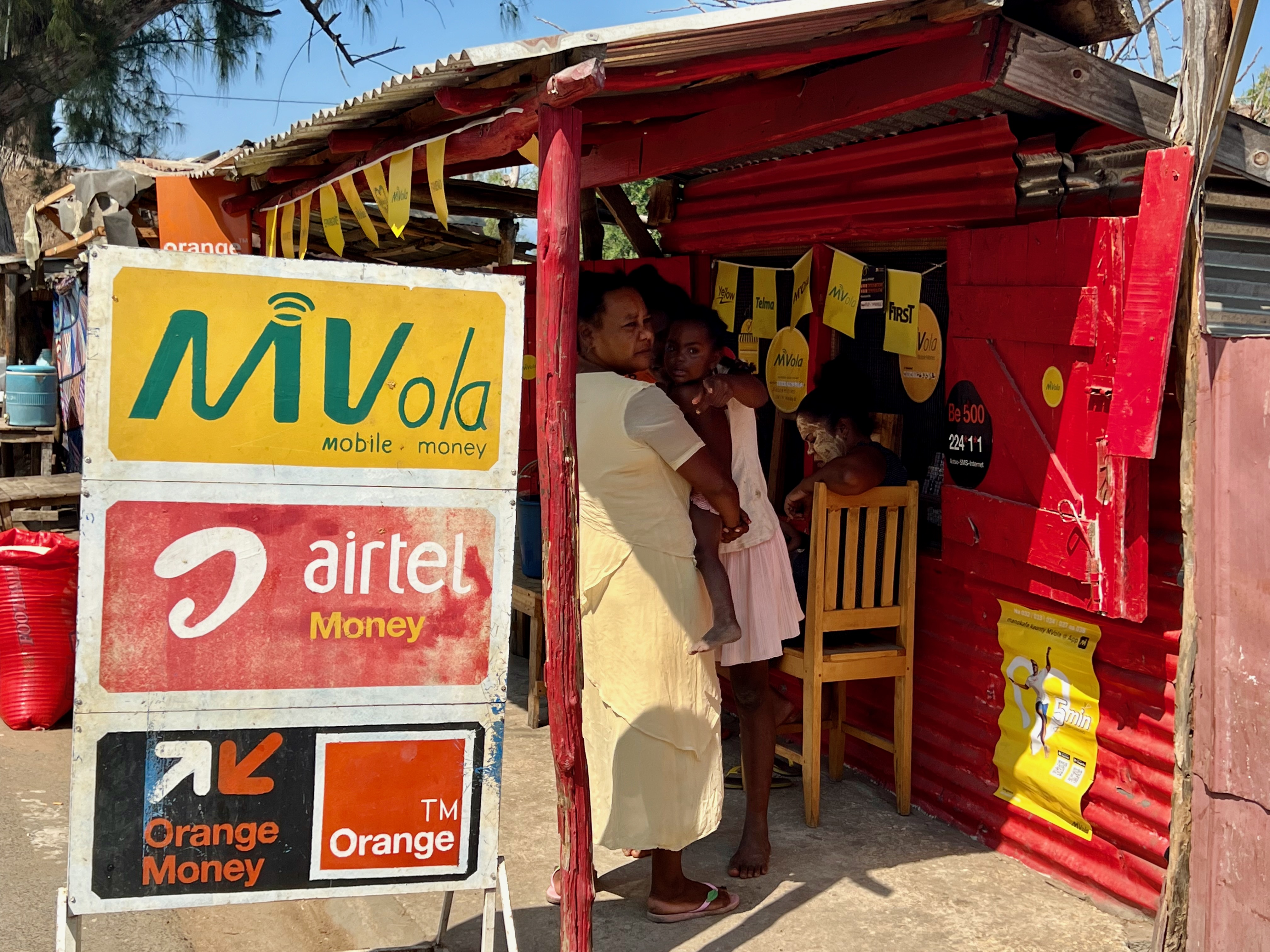
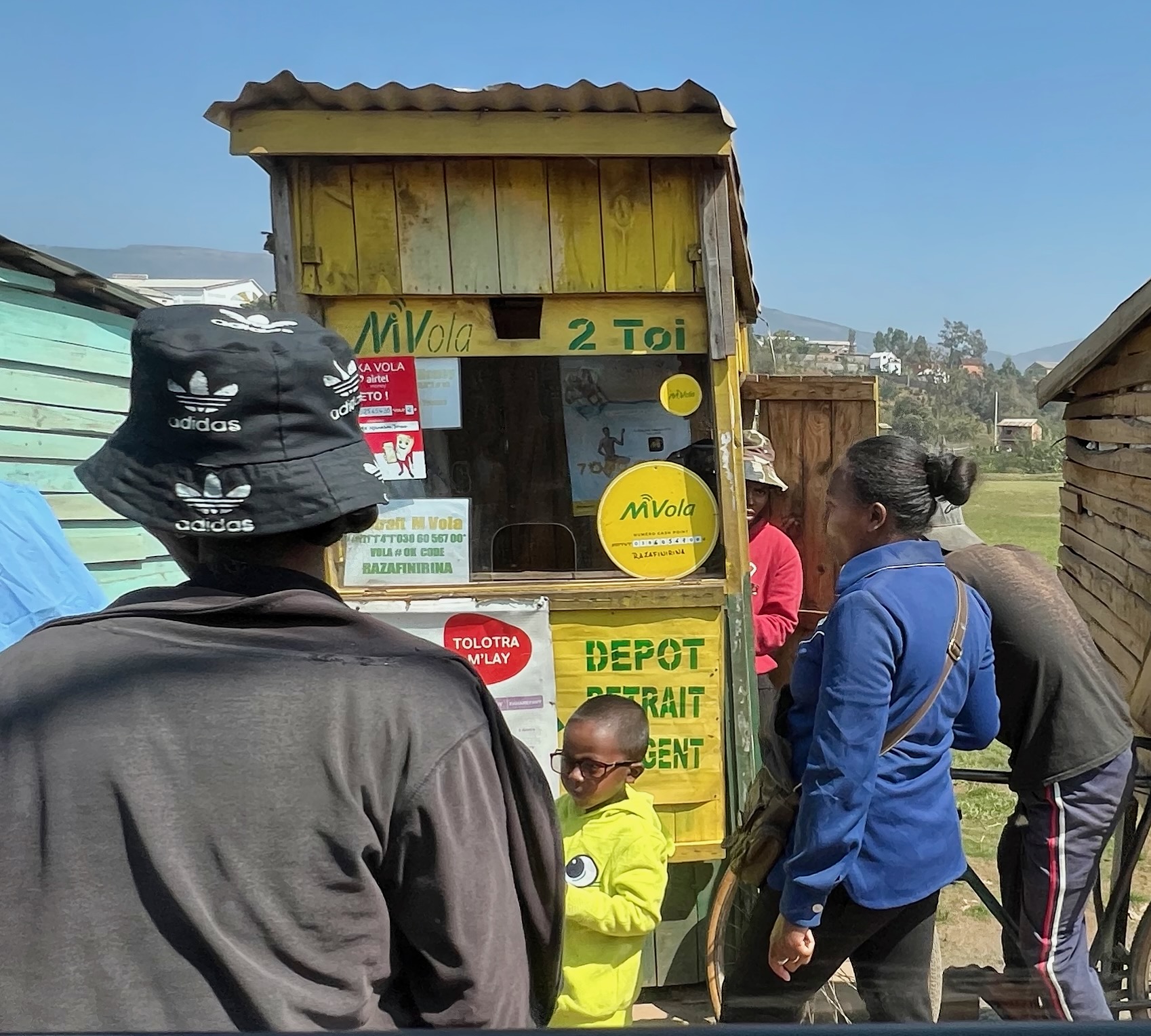
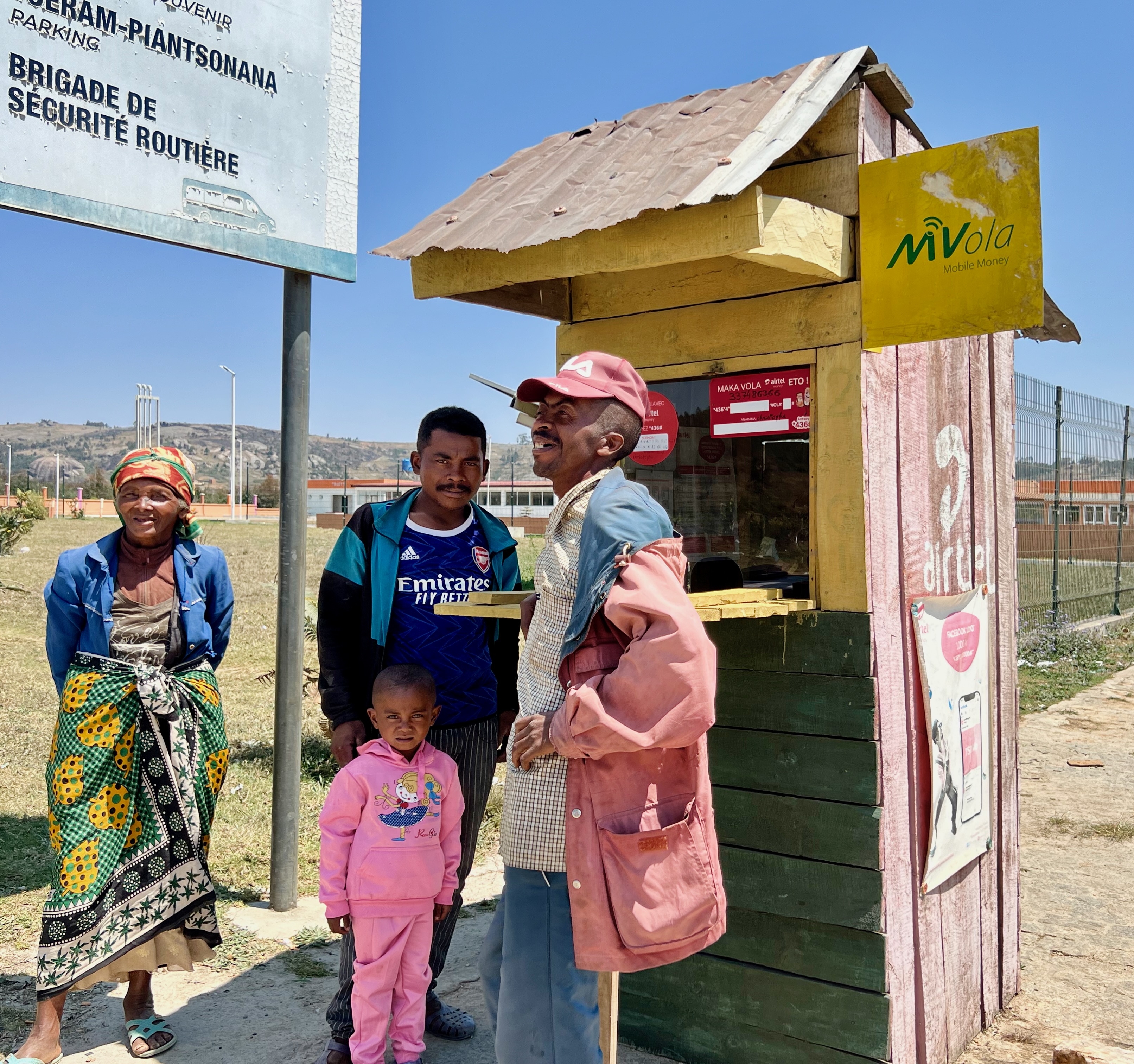
There is smoky haze from cooking fires, exhaust pollution, burning rubbish. The city has sprawled around the old paddy fields, so there is the incongruous sight of green rice sprouting in the waterlogged fields (it is the planting season in the anticipation of November rains) and men are digging to prepare for the women to do the planting. Everywhere is filthy with rubbish, stray dogs, chickens and pigs rooting around it. Gangs of ragged men loiter by the side of the road waiting for casual labour, destitute women with babies on the breast and kids pick over the rubbish heaps. It is depressing as are all big, poor cities. Suddenly we shortcut through a grand lakeside development of houses, malls and businesses for rich people. The juxtaposition is shocking. As is the later sign in the middle of a dusty town of Foie Gras for sale…apparently a local delicacy and obvious a legacy of the colonial era! And frogs legs, fondue and raclette on the lunch menu!


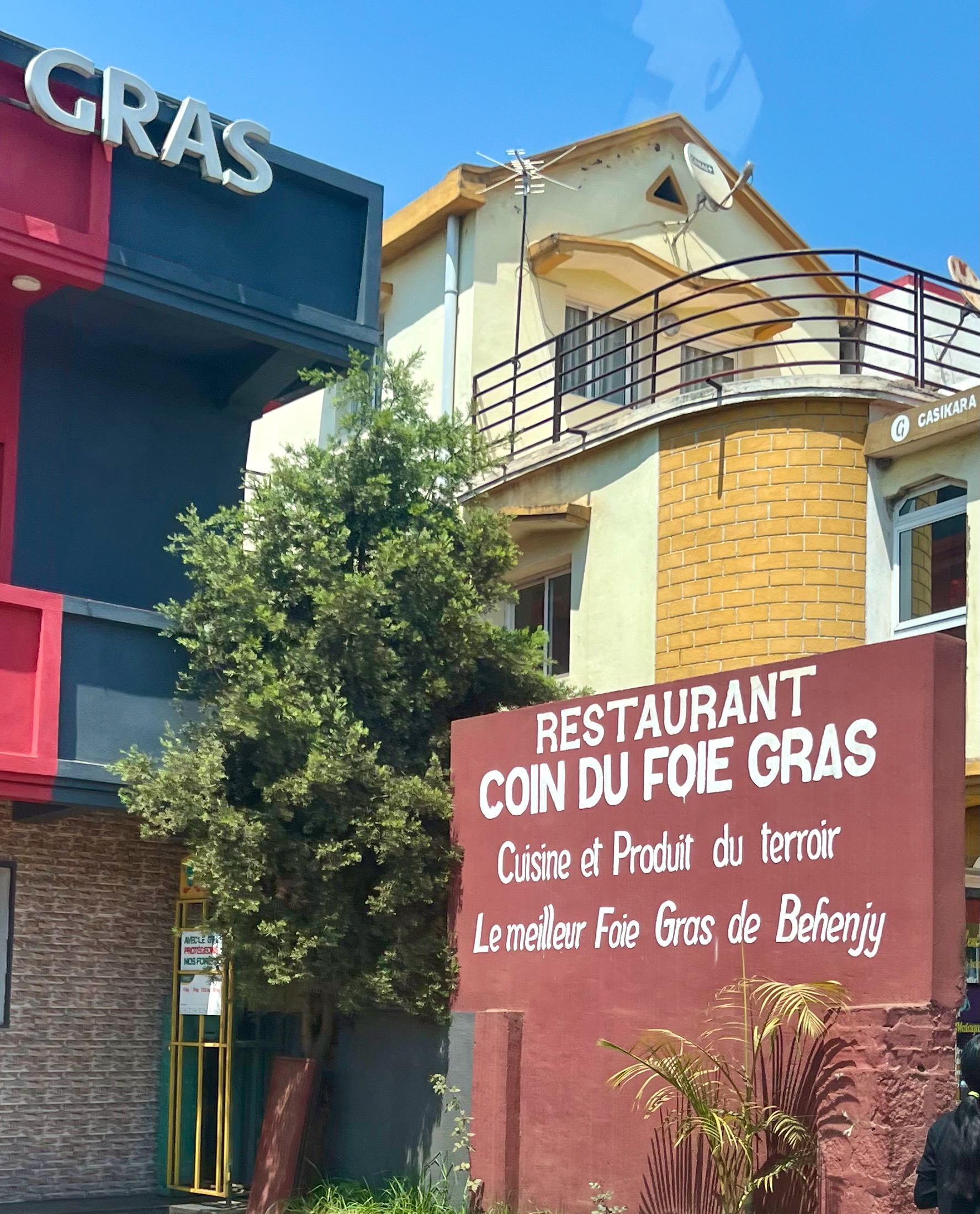
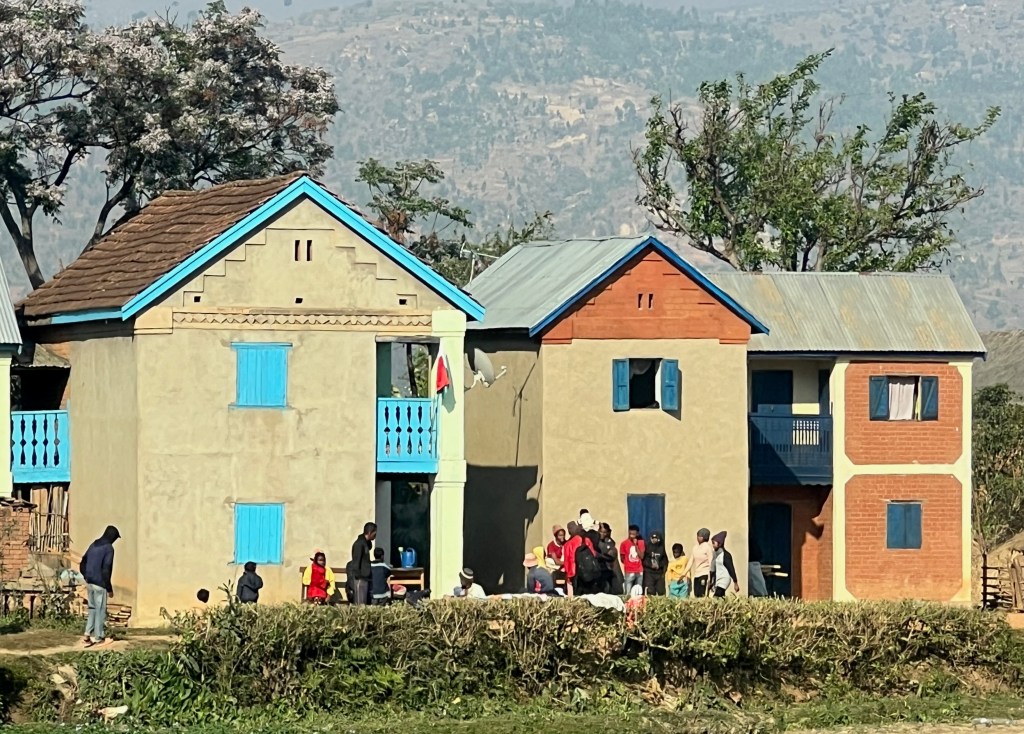
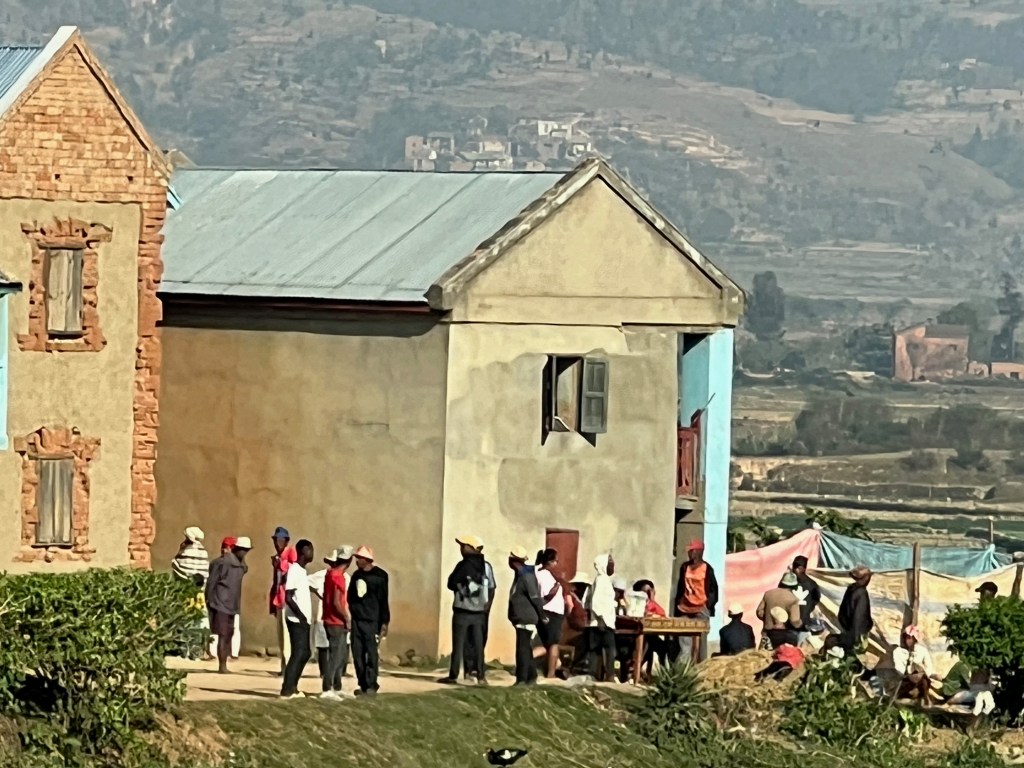
At last we are on the open road – and still rubbish everywhere. It’s hot. Red soil. Fertile flood plain. The houses are solidly build of red adobe plaster and often two stories. Mostly thatched, but the number one ambition of a rural farmer here is to convert to a tin roof as they last longer in cyclones. The houses face west to avoid cold trade winds.
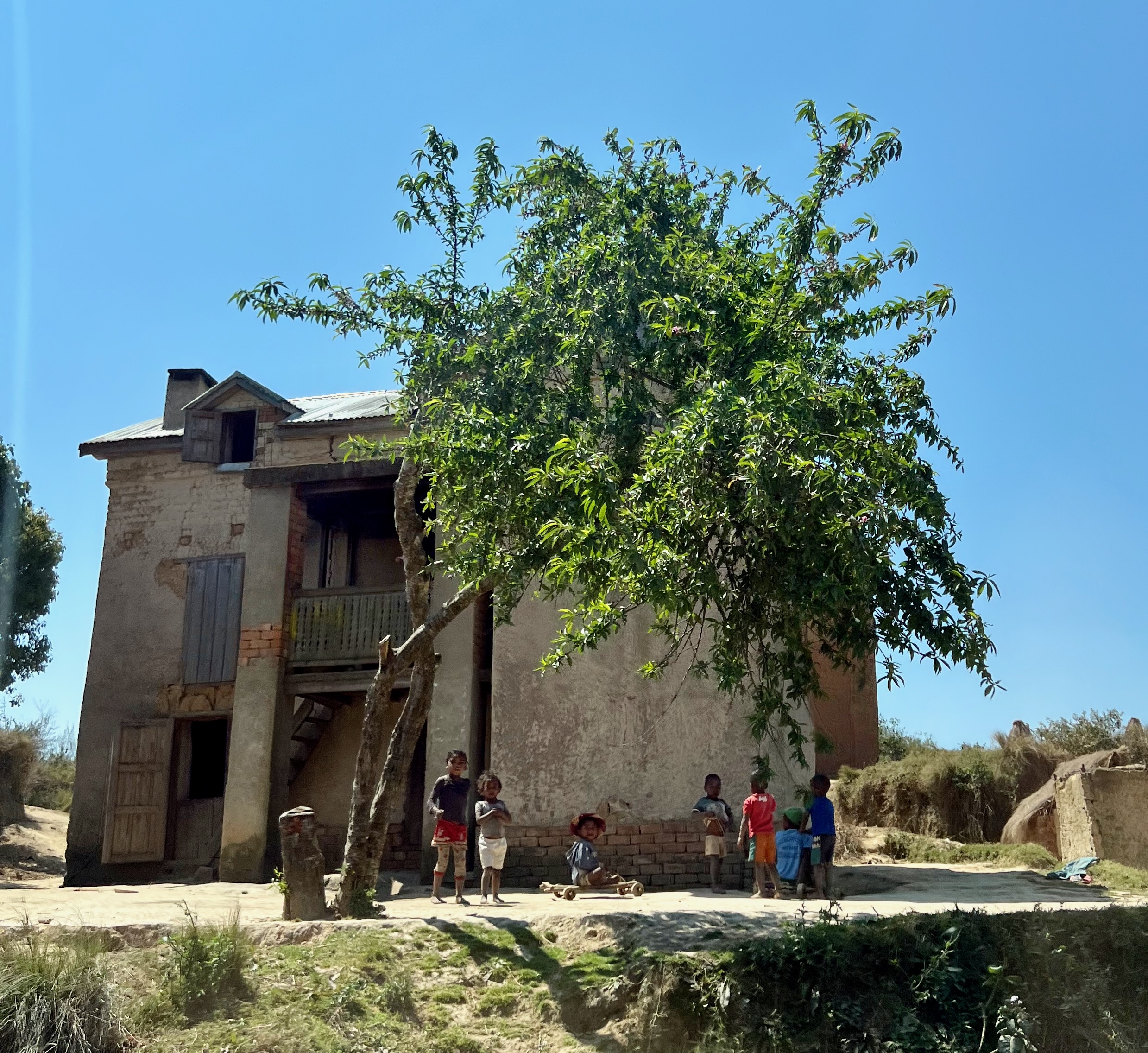
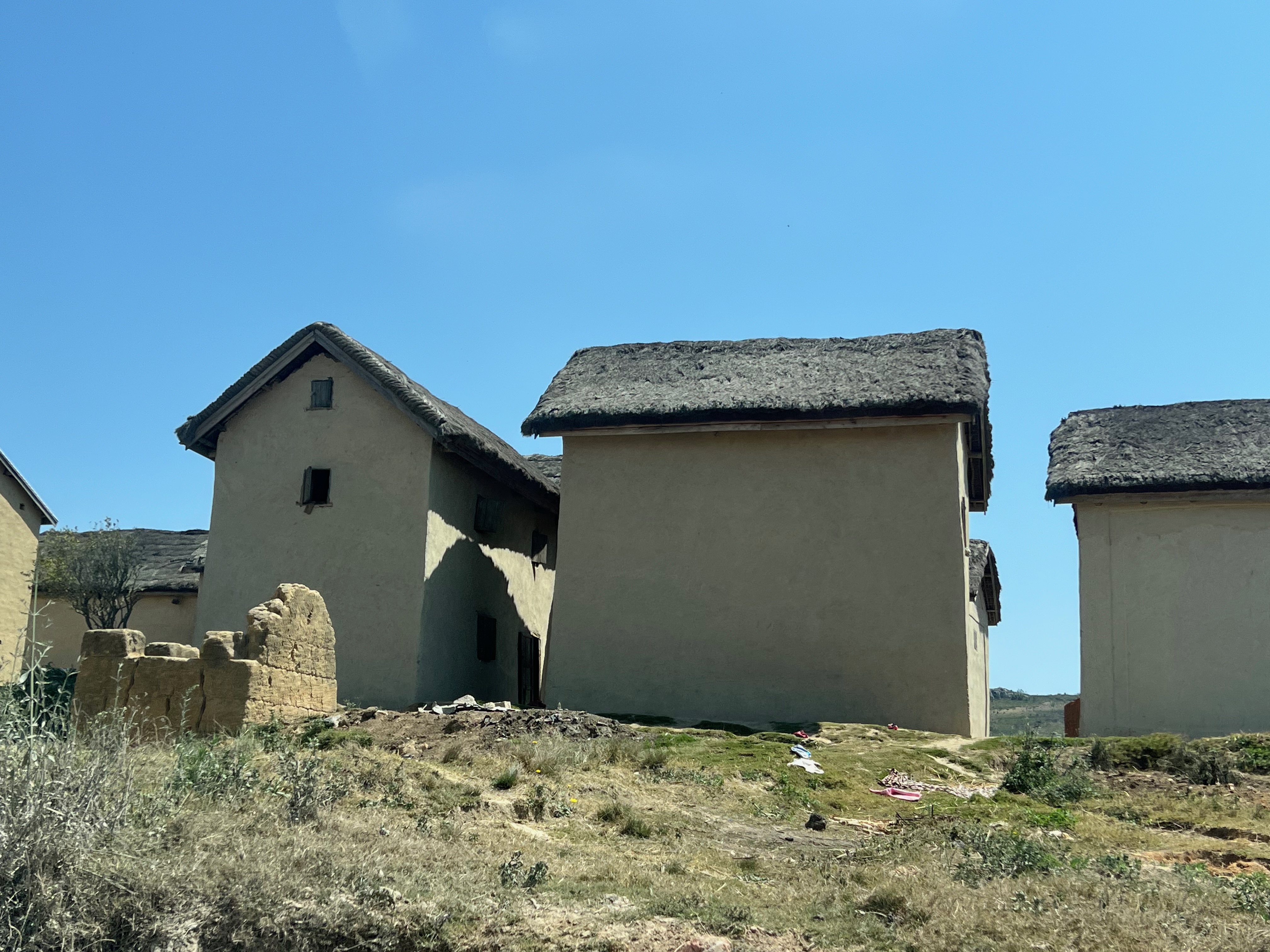
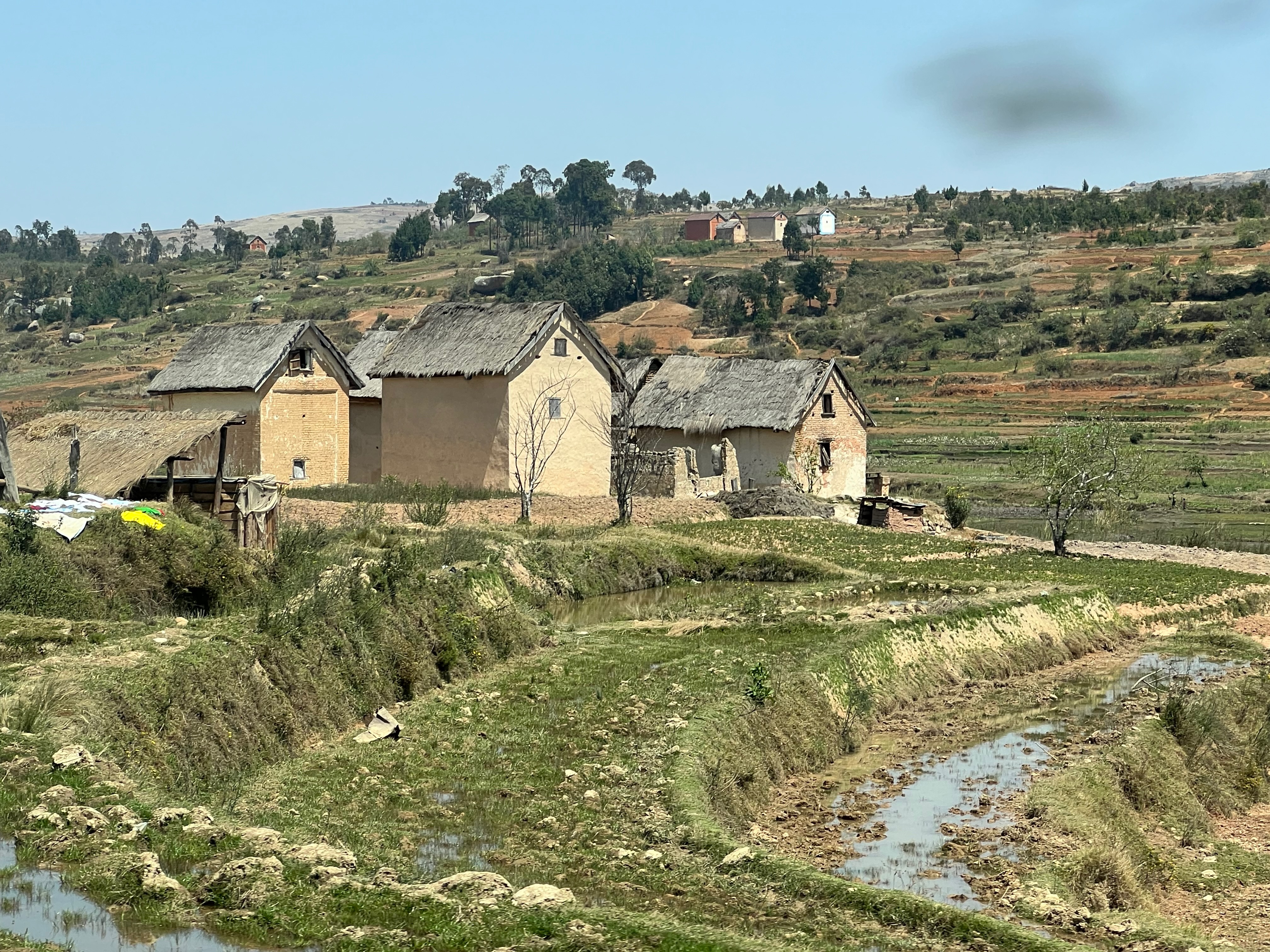
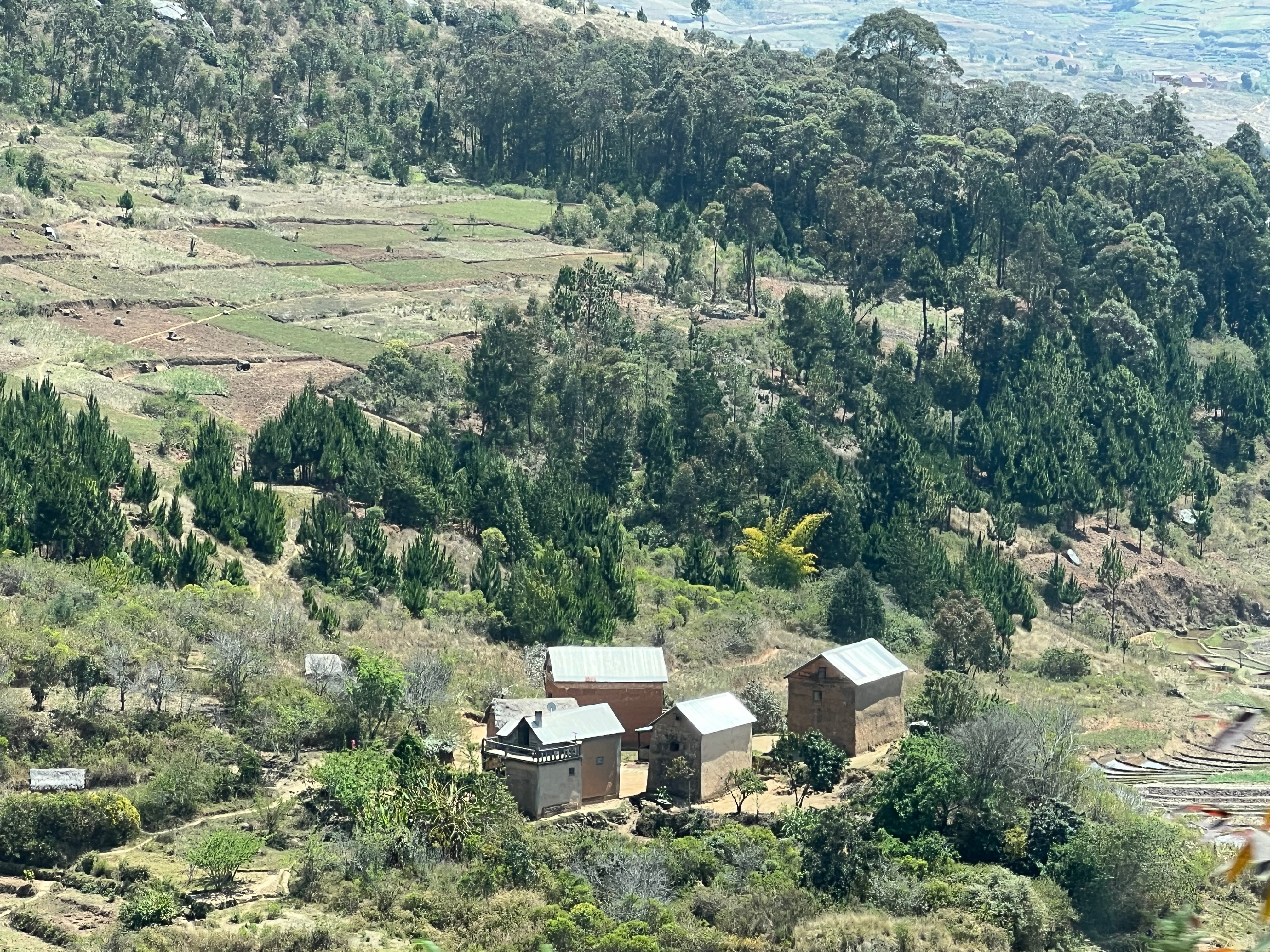

Different types of houses, mostly thatch , but in the valley some have now got tin roofs!
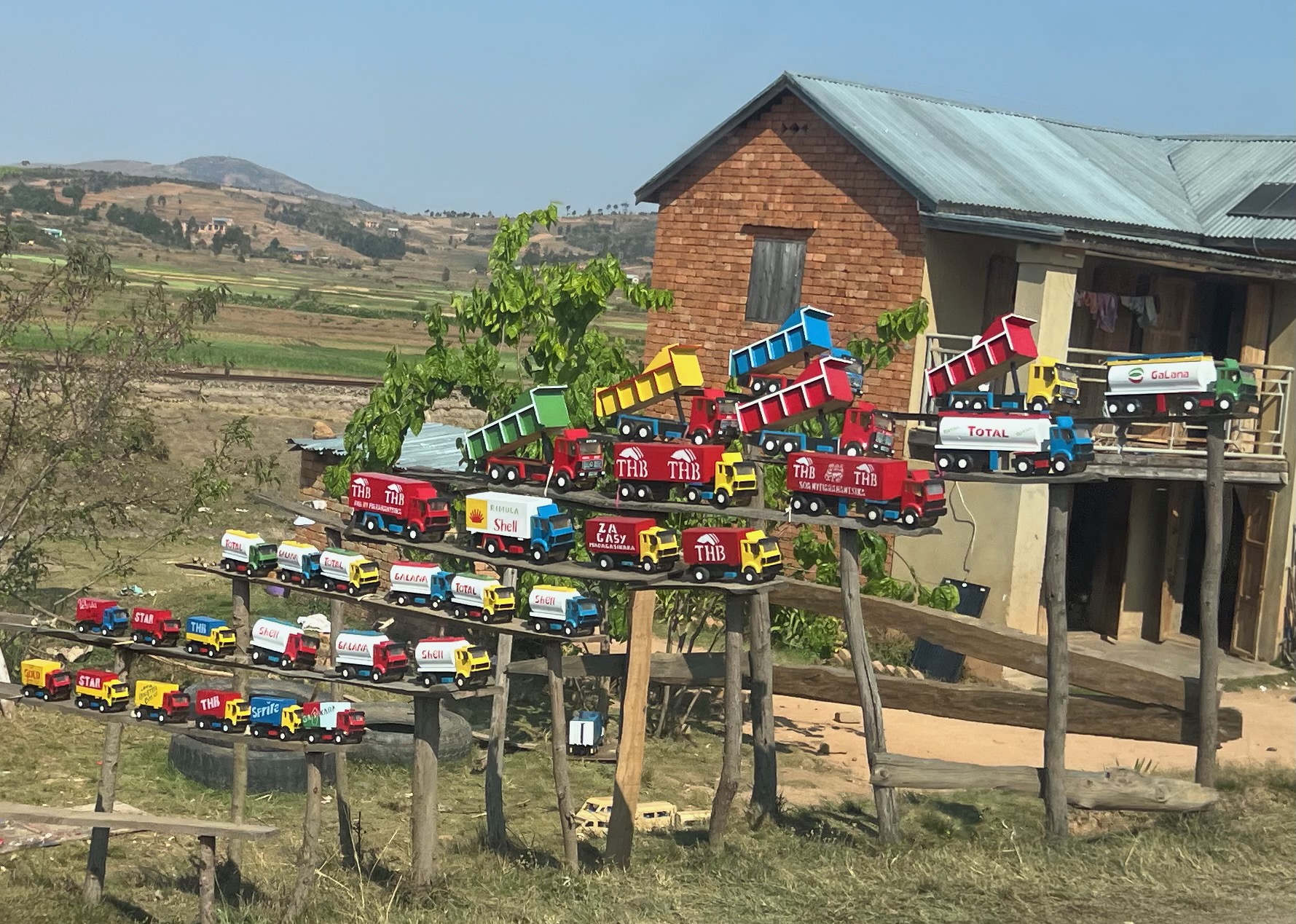
In amongst the paddy, on the fertile flood pains – there is plenty of water and free-flowing rivers – cabbages, cauliflower, broccoli, potatoes are growing and being sold by the side of the road, alongside charcoal, avocadoes, sugar cane, tin instruments and cars, cooking pots, interspersed with brilliant flashes of red from the crown of thorns succulent, and and the occasional Zebu cattle, goats, sheep, ox carts and tuk tuks. Dogs and chickens dodge the traffic, which doesn’t go fast – we only saw one run-over dog the whole trip. Taxi bikes are a new thing here and popular near the cities.
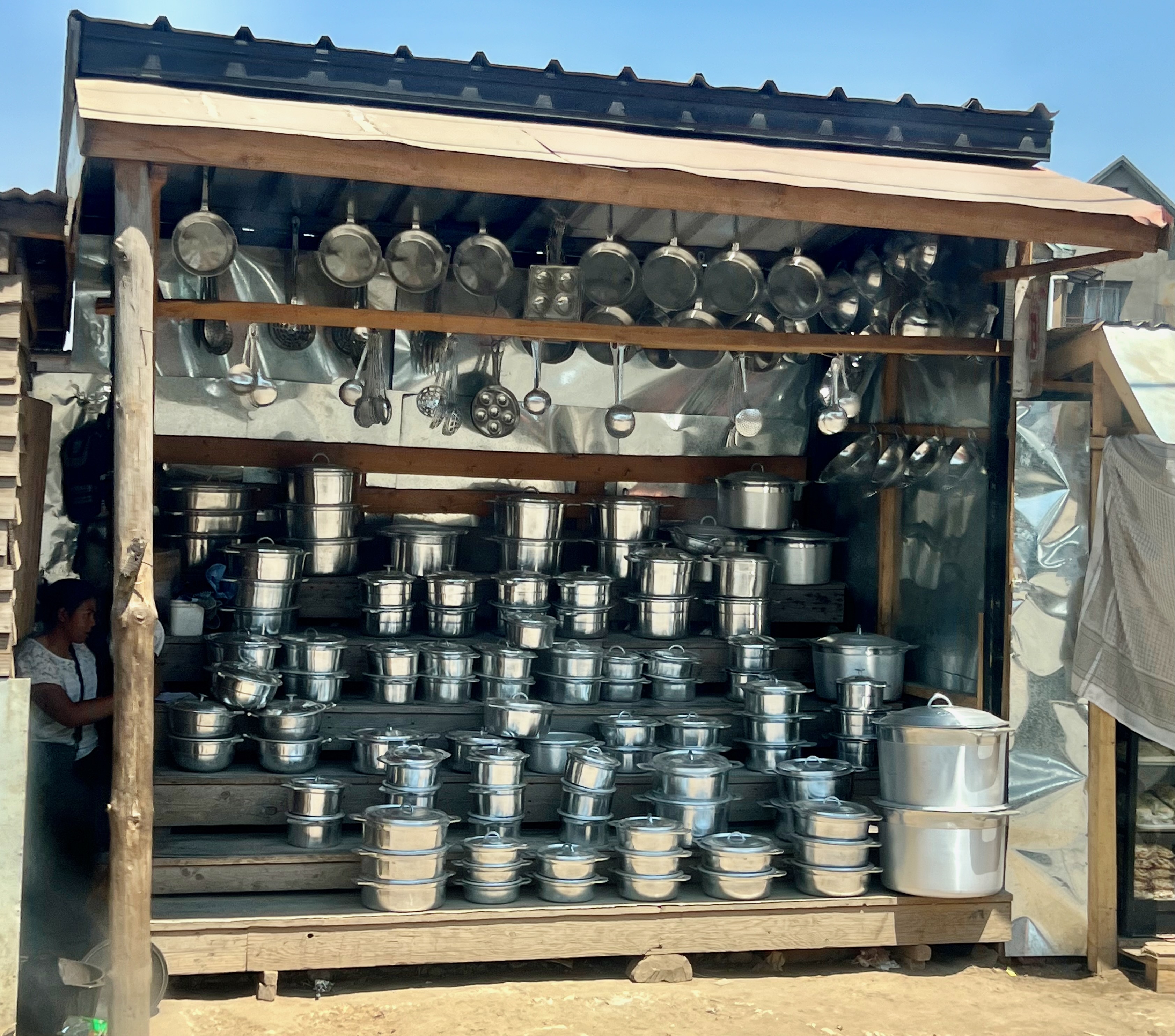
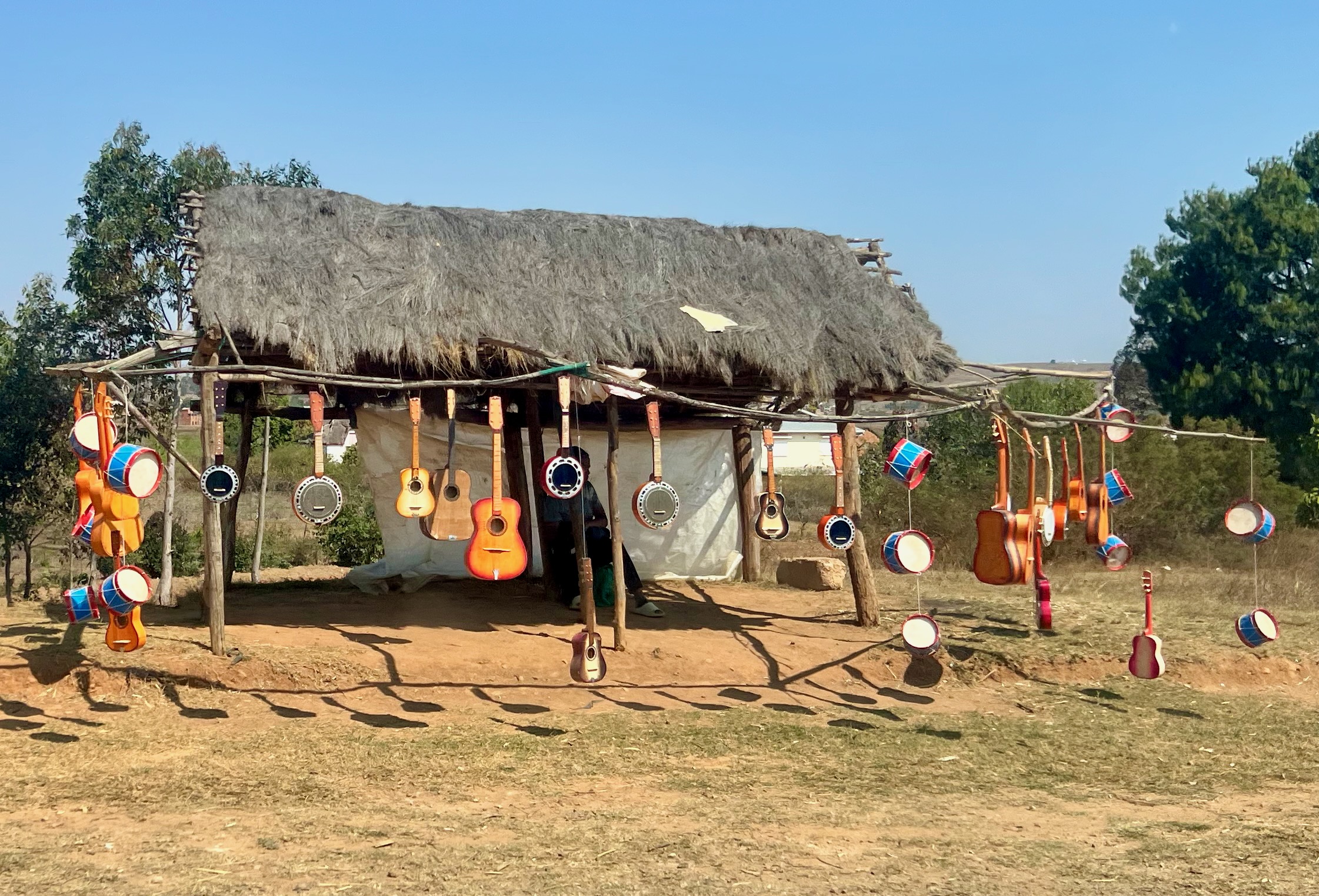
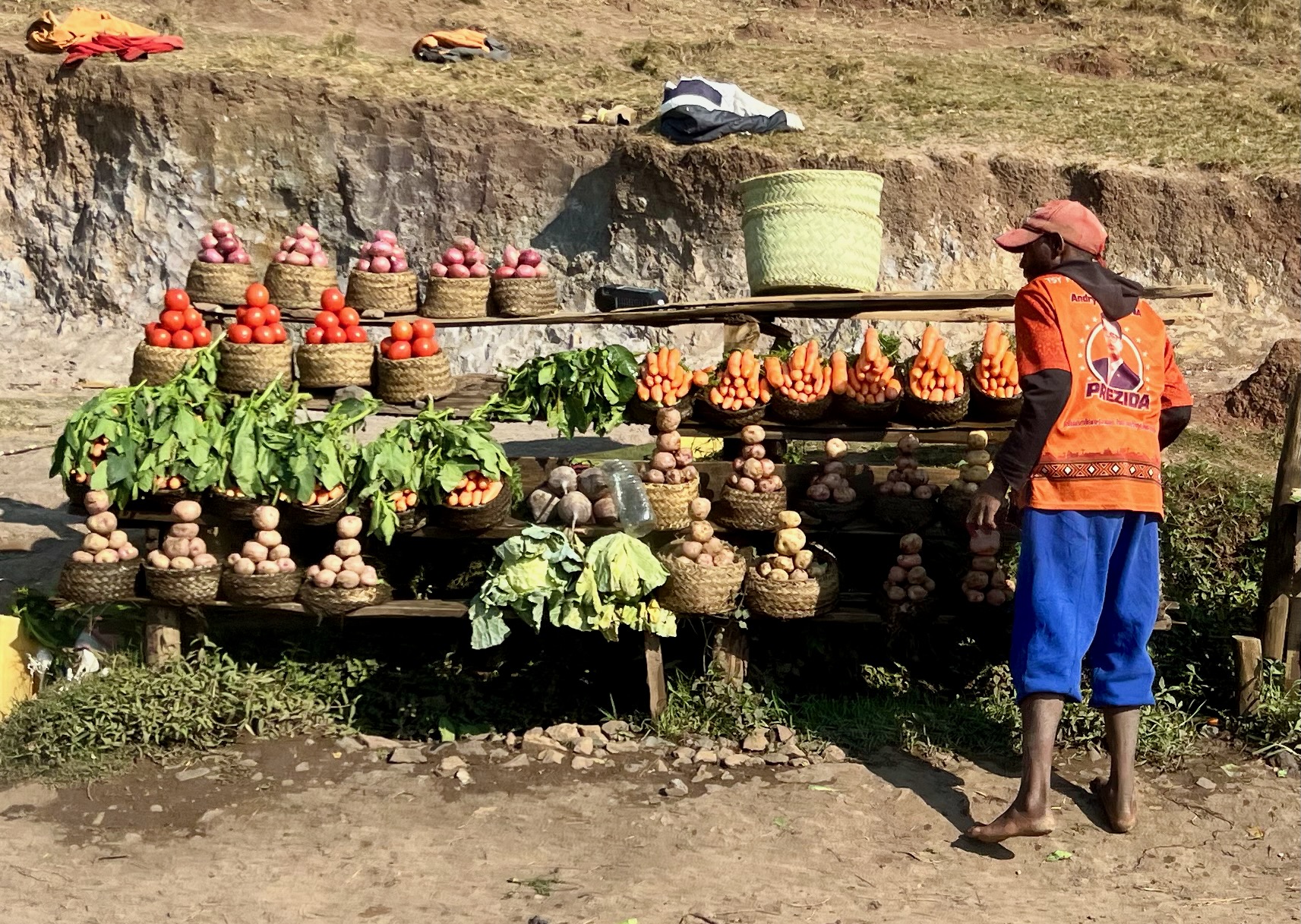
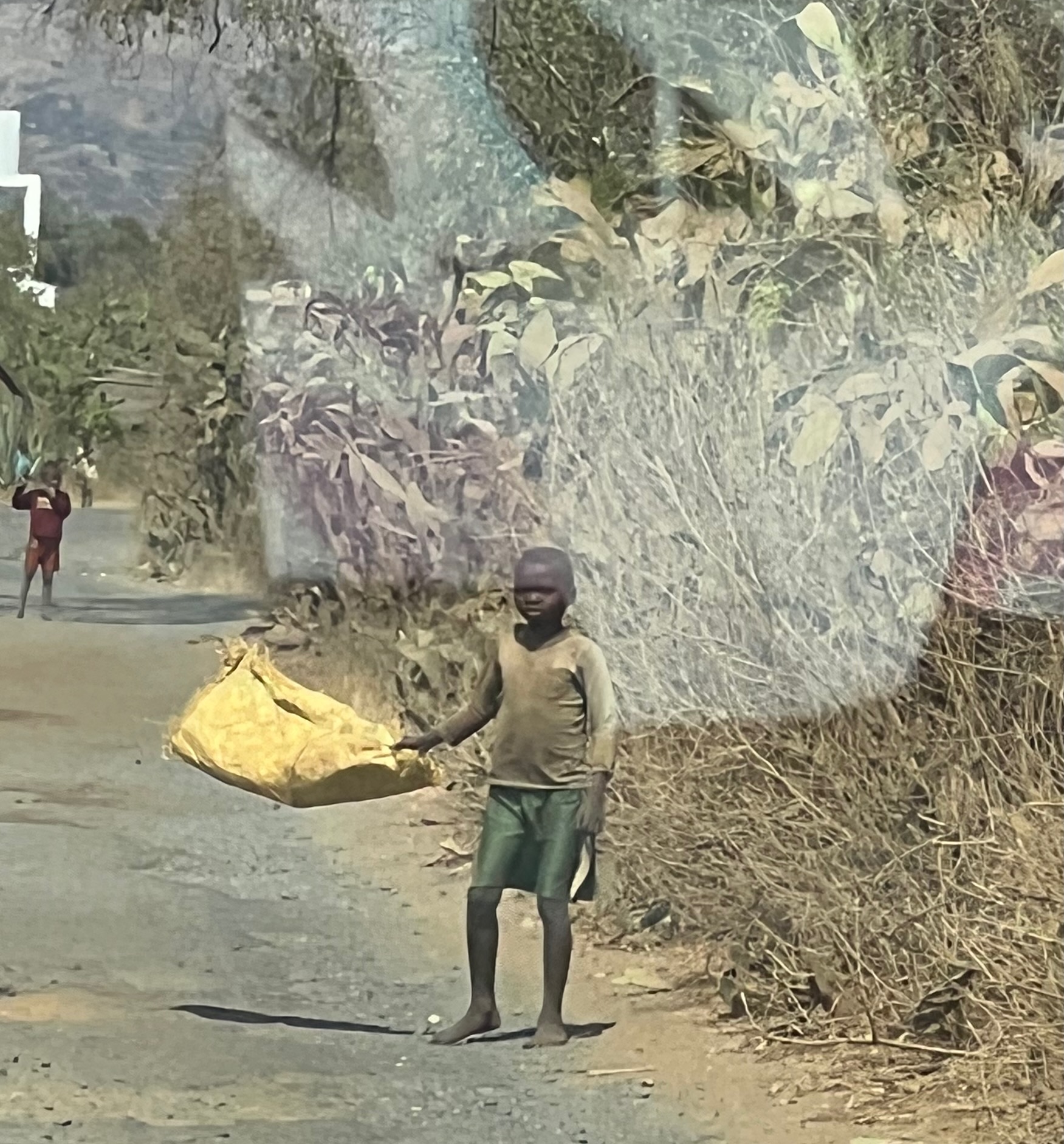
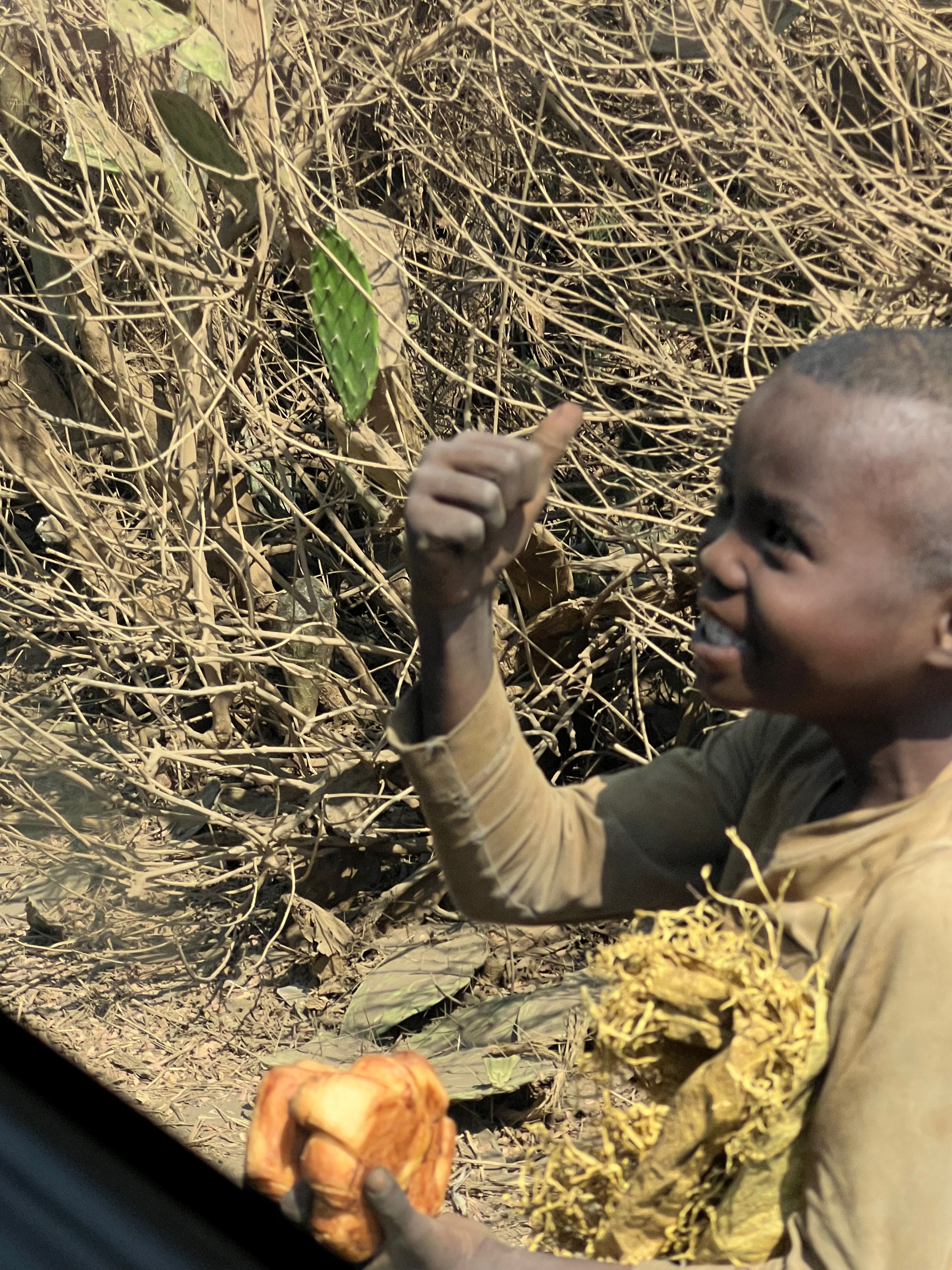
A common sight as we bump along, avoiding the potholes, are gangs of kids (who should be in school) standing the the side of the road, doing break dance moves, waving hats, and pretending to shovel earth into the holes in order to be rewarded for their labour. In fact they do this from time to time so people give them money or bonbons and biscuits.

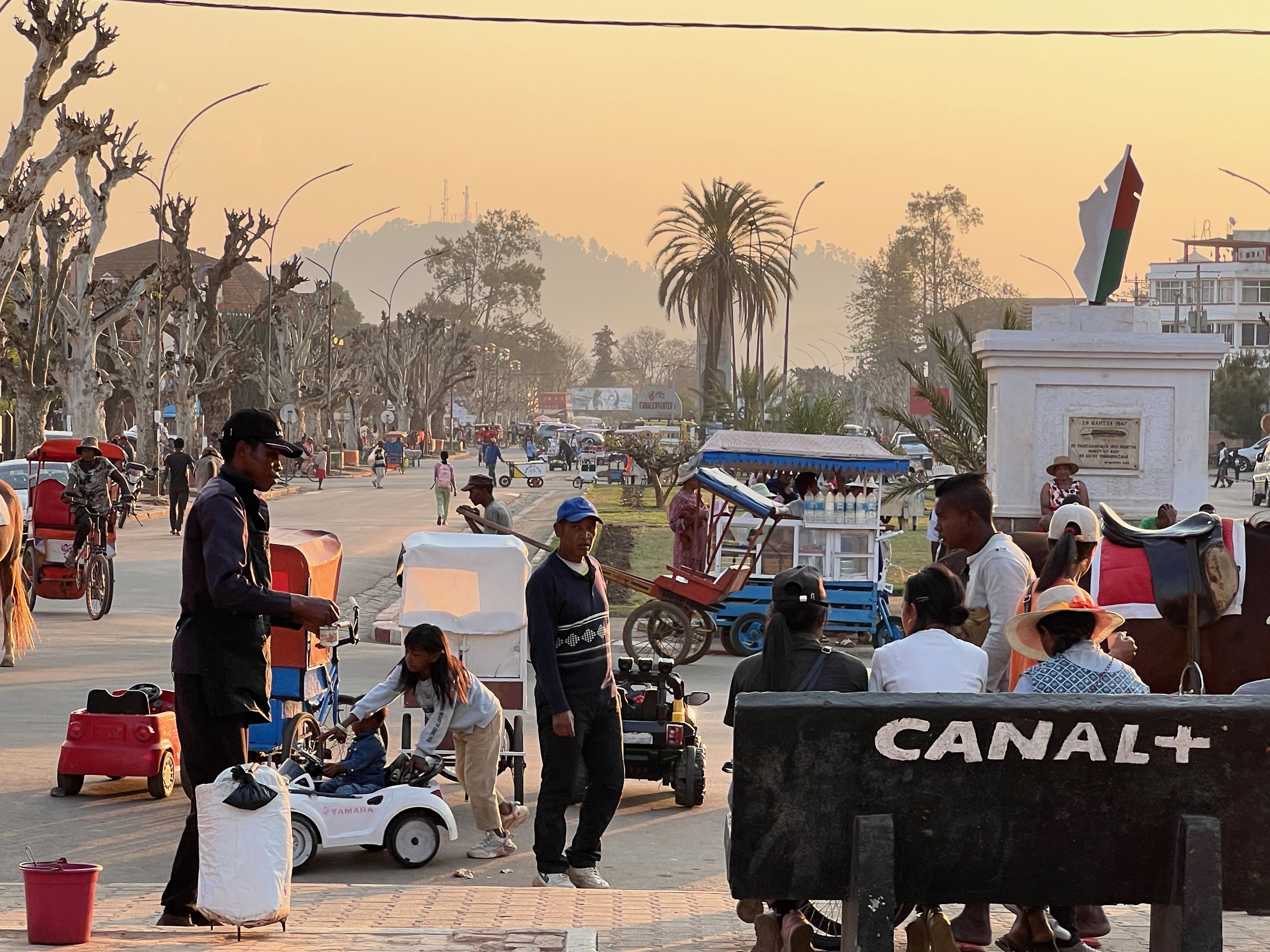
Finally after a gruelling 9 hours’ drive and several outdoor loo stops, we arrive in Antsirabe where we will spend the first night. Antsirabe translates as place of salt and is the central brewery city for the rather good local lager. As it is late we dump our bags and have a quick wander round this faded old town, with its grandiose railway station, spa hotel where the Moroccan royal family fled in exile, and central avenue of trees. Camped out by the national monument are scores of homeless people with babies and children. Our hotel, the Café de Couleurs provides welcome relief, cold beers and a sneaky gin.

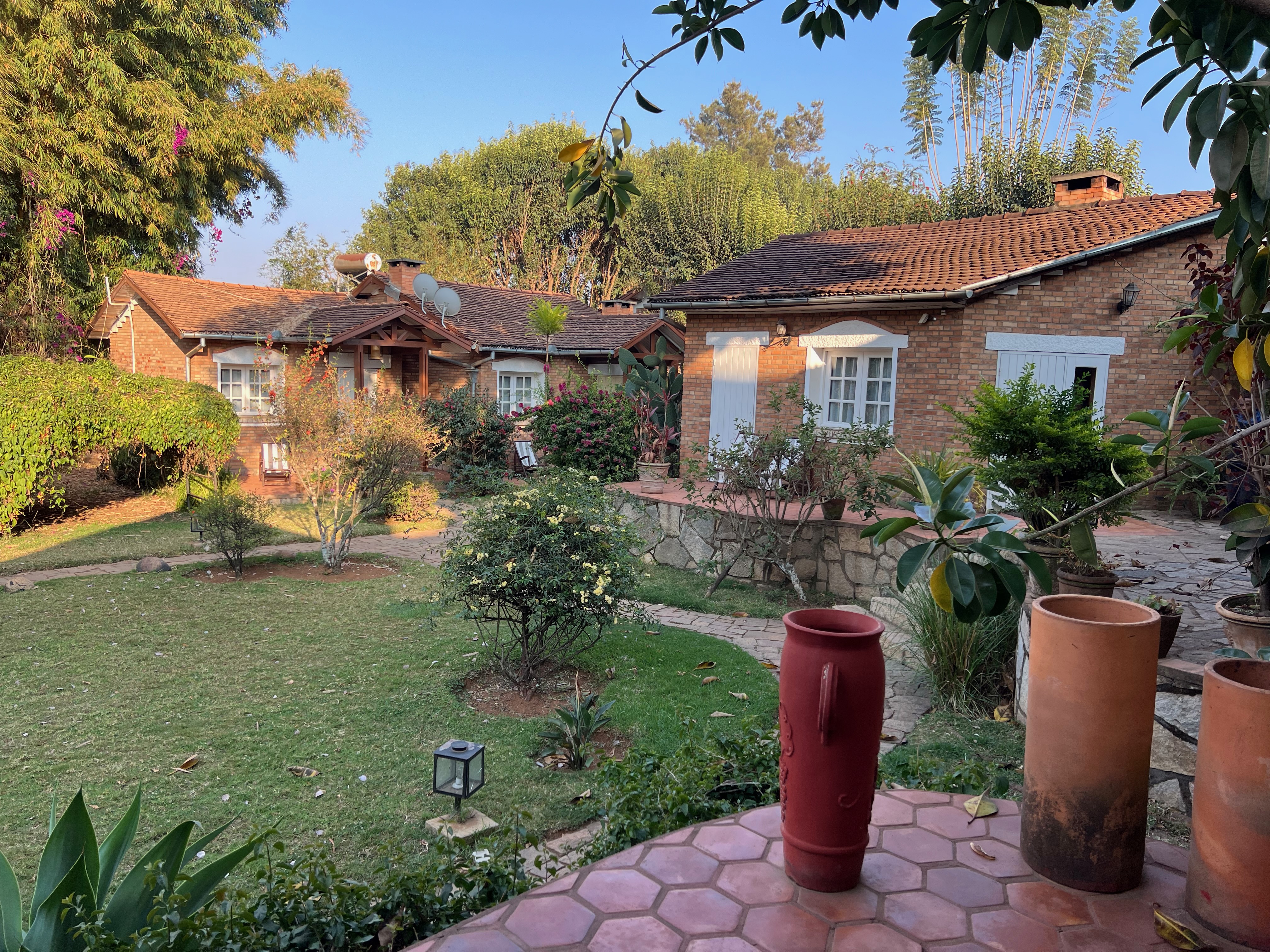
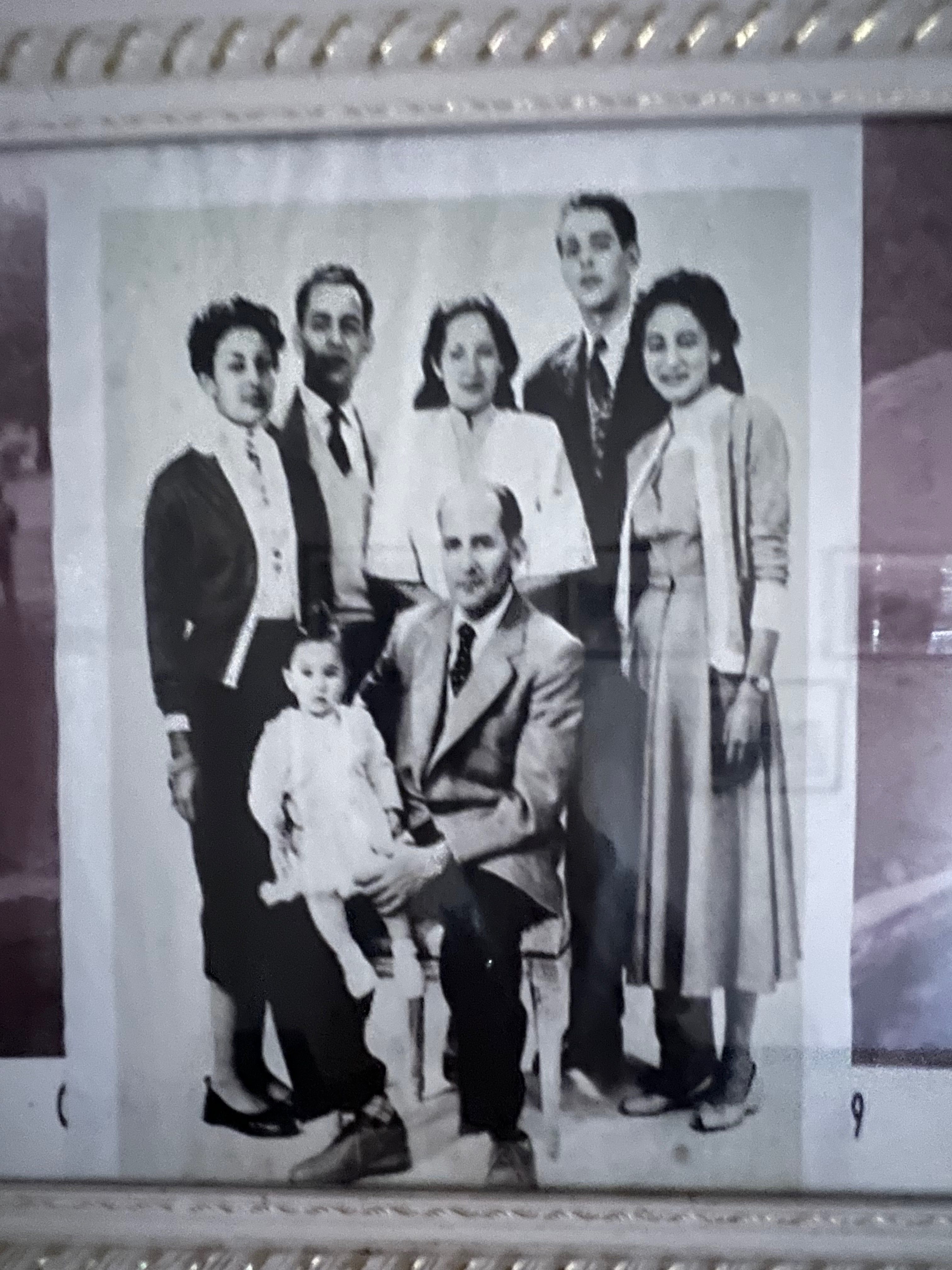

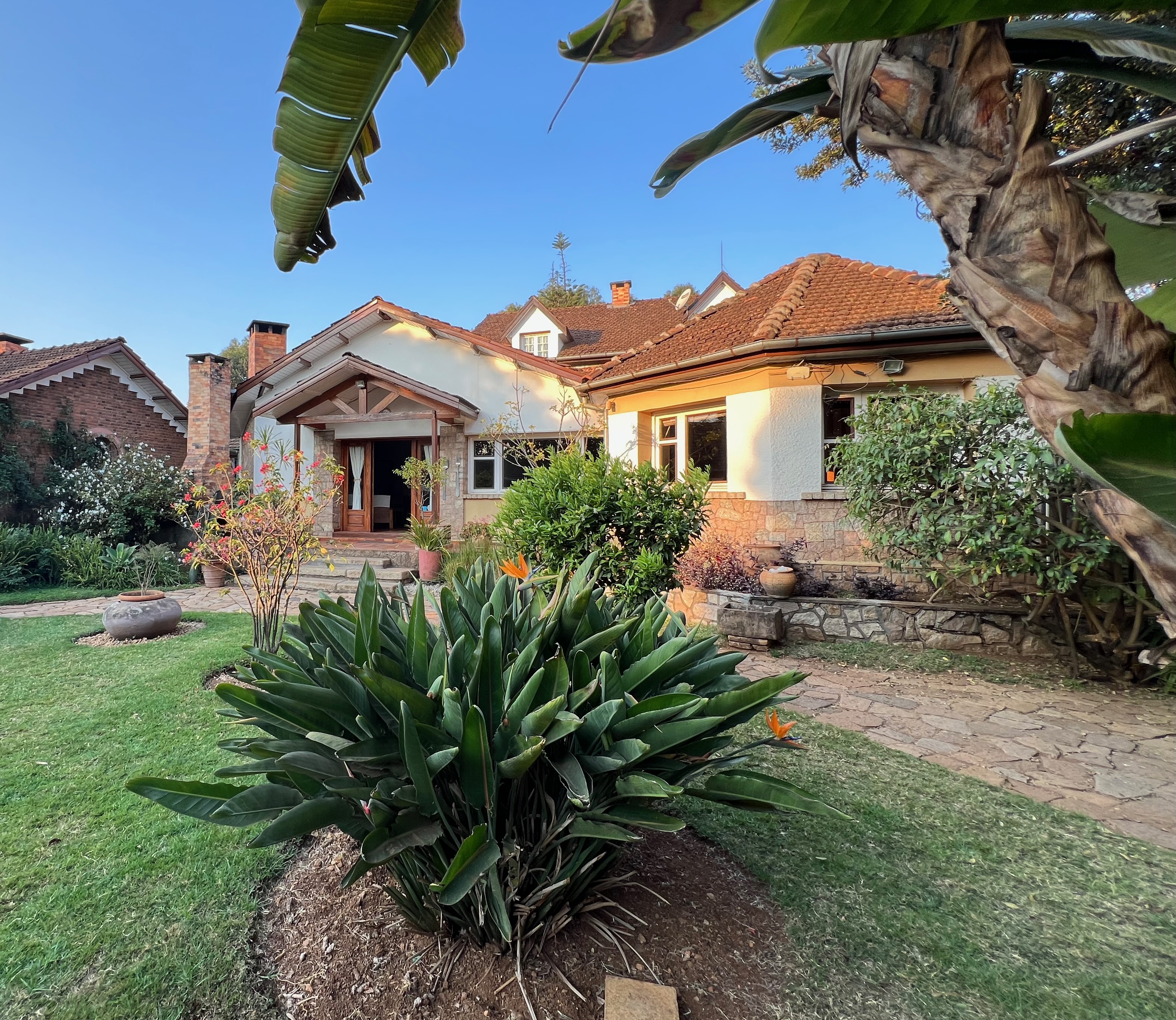


Colonial building in Antsirabe. Top left is the faded spa hotel home to the Moroccan royal family in exile (pictured); our hotel in fine gardens; the railway station, rather dejected and littel used

 vickygoestravelling
October 5, 2024 at 5:13 pm
Very interesting Vicky . Thanks for sharing.
Jules x
October 5, 2024 at 5:25 pm
Thanks Julie! Watch out for the rest…hope all well! x